
In my extensive experience in foundry engineering, I have dedicated significant effort to enhancing the internal quality of machine tool castings, particularly for vertical lathe work tables. These machine tool castings are critical components, as their mechanical properties directly influence machining precision and overall equipment performance. Over the years, I have observed that relying solely on standard test block data—such as Keel blocks—for acceptance criteria often fails to accurately represent the actual properties of the casting本体. This discrepancy can lead to reduced strength and hardness in the final machine tool casting, compromising its functionality. Therefore, I embarked on a comprehensive study to identify the root causes and implement effective control measures for these machine tool castings.
The primary issue stemmed from the variance between test blocks and the casting本体 in terms of graphite spheroidization rate and pearlite content. Traditionally, our acceptance standards were based on Y-type Keel test blocks, but we later switched to Y-type test blocks for better accuracy. However, even with this change, the本体 properties of the machine tool casting did not align perfectly with the test results. Through systematic analysis, I discovered that chemical composition, inoculation practices, and alloy additions played pivotal roles in determining the intrinsic quality of machine tool castings. This article details my approach, from initial analysis to practical implementation, aimed at achieving superior本体 properties in machine tool castings.
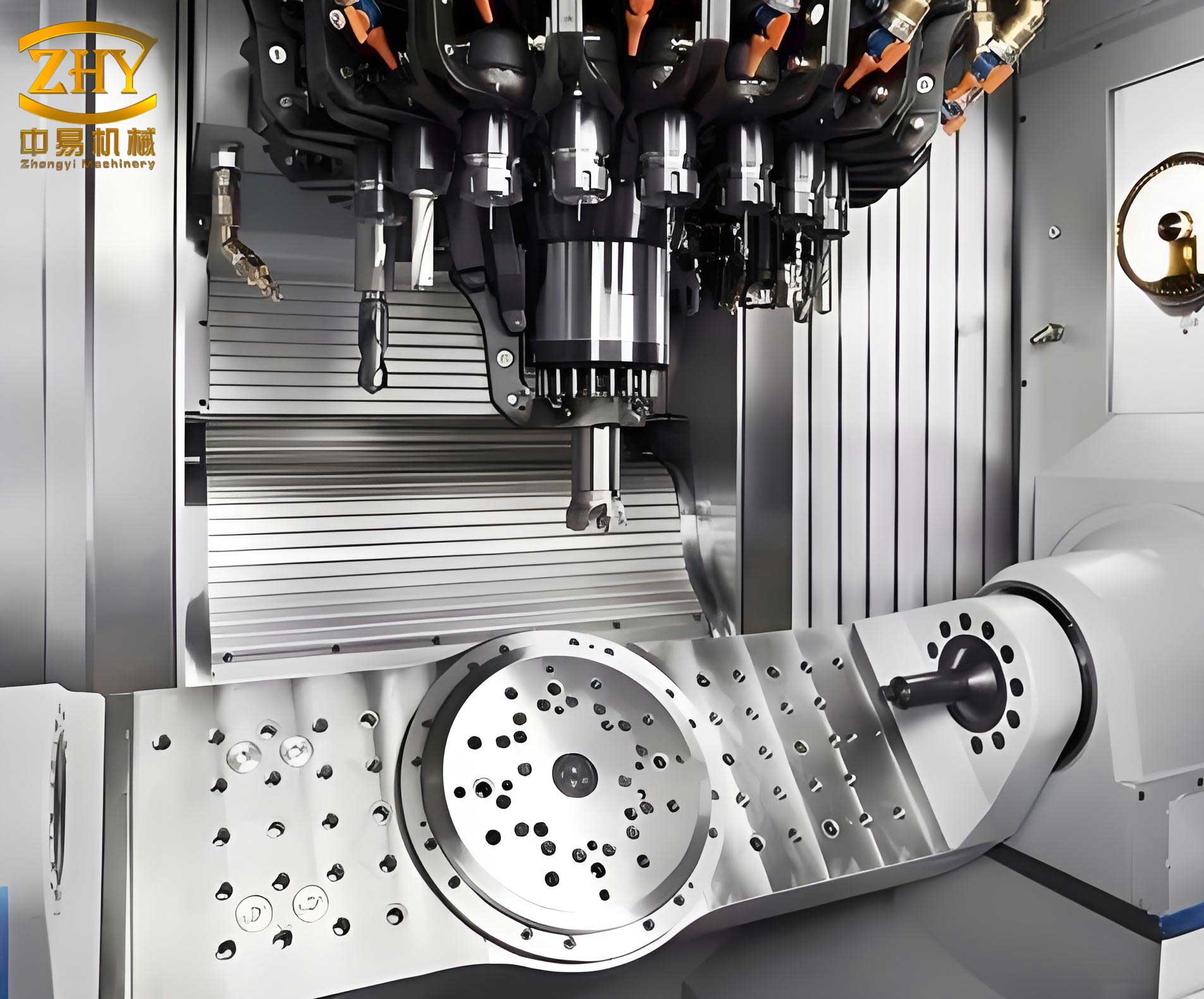
To understand the disparities, I conducted a comparative study between Y-type Keel test blocks and the actual machine tool casting本体. The test blocks and castings were produced under identical conditions, with similar chemical compositions. I collected data from multiple production batches, focusing on key parameters such as carbon (C), silicon (Si), manganese (Mn), rare earth (RE), and magnesium (Mg) content, along with graphite morphology, spheroidization rate, pearlite percentage, tensile strength (σ_b), elongation (δ), and hardness (HB). The results were statistically analyzed to identify trends and variances.
The data revealed significant differences between the test blocks and the machine tool casting本体. For instance, the Y-type test blocks consistently showed higher tensile strength and lower elongation compared to the本体 samples. This indicated that the test blocks were not fully representative of the actual machine tool casting performance. Below is a summary table comparing the average values, standard deviations, and ranges for key chemical elements and mechanical properties from 20 groups of test blocks and本体 samples.
| Sample Type | Element/Property | Average Value | Standard Deviation | Range |
|---|---|---|---|---|
| Y-type Test Block | C (%) | 3.65 | 0.08 | 3.50-3.80 |
| Si (%) | 2.40 | 0.10 | 2.20-2.60 | |
| Mn (%) | 0.35 | 0.05 | 0.30-0.45 | |
| σ_b (MPa) | 650 | 25 | 600-700 | |
| δ (%) | 5 | 1.2 | 3-8 | |
| Casting本体 | C (%) | 3.60 | 0.10 | 3.40-3.80 |
| Si (%) | 2.35 | 0.15 | 2.00-2.70 | |
| Mn (%) | 0.38 | 0.06 | 0.28-0.48 | |
| σ_b (MPa) | 620 | 30 | 580-670 | |
| δ (%) | 7 | 1.5 | 4-10 |
Further analysis of the metallographic structures showed that the本体 spheroidization rate averaged 75%, while the test blocks achieved 85%. Similarly, the pearlite content in the本体 was around 40%, compared to 60% in the test blocks. These discrepancies highlighted the need for tighter control over the production process for machine tool castings. I hypothesized that the cooling conditions差异 due to the casting geometry—such as varying wall thicknesses—contributed to these variances, but chemical composition was the dominant factor.
The influence of chemical composition on the quality of machine tool castings cannot be overstated. Based on my analysis, I derived several key relationships. For example, excessive carbon content can lead to graphite flotation and degenerate graphite forms, reducing the integrity of the machine tool casting. Silicon, while necessary for graphitization, must be controlled to avoid brittleness and graphite abnormalities. The optimal range for Si in thick-section machine tool castings is below 2.5%. Manganese promotes pearlite formation and enhances hardness, but high levels increase shrinkage. Rare earth and magnesium are crucial for spheroidization, but their residuals must be carefully managed.
I formulated empirical equations to describe these relationships. The tensile strength (σ_b) of a machine tool casting can be expressed as a function of pearlite content (P) and spheroidization rate (S):
$$ \sigma_b = k_1 \cdot P + k_2 \cdot S + C_1 $$
where \( k_1 \) and \( k_2 \) are constants derived from regression analysis, and \( C_1 \) is a base strength constant. For our machine tool castings, I found \( k_1 \approx 2.5 \) MPa per percent pearlite, \( k_2 \approx 1.8 \) MPa per percent spheroidization, and \( C_1 \approx 400 \) MPa. Similarly, hardness (HB) relates to pearlite content and manganese level:
$$ HB = \alpha \cdot P + \beta \cdot [Mn] + C_2 $$
with \( \alpha \approx 1.2 \) HB per percent pearlite, \( \beta \approx 20 \) HB per percent Mn, and \( C_2 \approx 150 \) HB. These formulas guided our adjustments in composition and processing for machine tool castings.
Our production conditions involved melting in a 10-ton duplex冲天炉 (cupola), using山西铸造焦 as coke. The charge composition included球铁生铁, scrap steel, and other additives. The base iron chemistry was targeted at: C: 3.6-3.8%, Si: 1.8-2.2%, Mn: 0.3-0.5%, P < 0.07%, S < 0.03%. The tapping temperature ranged from 1450°C to 1500°C. Nodulization was performed in a dedicated ladle with a坝 to ensure proper reaction, using a sandwich method with nodulizing agent (containing Mg and RE) and inoculant.
To address the quality issues in machine tool castings, I implemented a multi-faceted strategy. First, I tightened the control over chemical composition. Based on statistical data, I established optimal ranges for key elements, as shown in the table below, specifically for machine tool castings like work tables.
| Element | Target Range (%) | Reason for Control |
|---|---|---|
| C | 3.5-3.7 | Prevent graphite flotation, ensure soundness |
| Si | 2.0-2.4 | Avoid硅脆性, control graphitization |
| Mn | 0.3-0.4 | Promote pearlite, minimize shrinkage |
| RE (残余) | 0.02-0.04 | Neutralize干扰元素, aid spheroidization |
| Mg (残余) | 0.03-0.05 | Ensure graphite spheroidization, reduce defects |
Second, I enhanced the desulfurization process. Sulfur is a strong anti-spheroidizing element in machine tool castings, so reducing its content in the base iron is essential. We adopted a sequential desulfurization approach: adding CaC₂ in the furnace with limestone, introducing Na₂CO₃ in the tapping stream, and using powdered CaO in the ladle. This reduced the sulfur content from an average of 0.03% to below 0.01%, with a desulfurization efficiency of 60-80%. The lower sulfur level improved graphite spheroidization, achieving球化级别 of 2 or better in the machine tool casting本体.
Third, I optimized the inoculation practice. Inoculation is critical for reducing chilling, refining microstructure, and enhancing mechanical properties in machine tool castings. We moved from a single inoculation to a multiple inoculation process. This included: (1) adding FeSi75 inoculant in the ladle during tapping, (2) performing浮硅孕育 (floating silicon inoculation) during pouring, and (3) using瞬时孕育 (instant inoculation) at the sprue. The total inoculant addition was 0.8-1.0% of the铁水 weight. This approach significantly improved the本体 spheroidization rate and graphite distribution in the machine tool casting.
Fourth, I introduced alloying elements to stabilize pearlite and boost strength. Copper (Cu) and antimony (Sb) were selected for their ability to promote pearlite formation in as-cast conditions. Cu additions of 0.3-0.5% were made to enhance pearlite content without heat treatment. Sb, added in trace amounts (0.002-0.005%), acts as a pearlite stabilizer by inhibiting ferrite formation at the石墨界面. The combined effect of these alloys ensured a pearlite content exceeding 60% in the machine tool casting本体, meeting the higher standards for strength and hardness.
The results after implementing these measures were highly positive. I produced a batch of machine tool castings under the new protocol and conducted thorough testing. The table below summarizes the chemical composition, metallographic structure, and mechanical properties of selected castings, demonstrating the improvements.
| Casting ID | C (%) | Si (%) | Mn (%) | RE (%) | Mg (%) | Spheroidization Rate (%) | Pearlite Content (%) | σ_b (MPa) | δ (%) | Hardness (HB) |
|---|---|---|---|---|---|---|---|---|---|---|
| WT-01 | 3.58 | 2.25 | 0.36 | 0.03 | 0.04 | 90 | 65 | 680 | 6 | 240 |
| WT-02 | 3.62 | 2.18 | 0.38 | 0.02 | 0.05 | 92 | 68 | 695 | 5.5 | 245 |
| WT-03 | 3.55 | 2.30 | 0.34 | 0.04 | 0.03 | 88 | 63 | 670 | 6.5 | 235 |
| WT-04 | 3.60 | 2.22 | 0.37 | 0.03 | 0.04 | 91 | 66 | 685 | 6.0 | 242 |
Comparing the Y-type test blocks with the casting本体 after improvements showed much closer alignment. The本体 spheroidization rate averaged 90%, and pearlite content exceeded 60%, both meeting the enterprise standards of ≥85% and ≥60%, respectively. The mechanical properties also satisfied the requirements for grade QT600-3 machine tool castings. I attribute this success to the integrated approach of composition control, desulfurization, multiple inoculation, and alloy addition, all tailored for machine tool castings.
To quantify the impact, I developed a quality index (QI) for machine tool castings, defined as:
$$ QI = \frac{\sigma_b \times HB}{1000} + 10 \times S $$
where \( \sigma_b \) is tensile strength in MPa, \( HB \) is hardness, and \( S \) is the spheroidization rate (as a decimal). Higher QI values indicate better overall quality. Before improvements, the average QI for our machine tool castings was around 150; after, it increased to over 200. This index helps in monitoring and benchmarking the performance of machine tool castings over time.
In conclusion, through meticulous analysis and实践, I have demonstrated that the intrinsic quality of machine tool castings can be significantly enhanced by controlling chemical composition, implementing effective desulfurization, adopting multiple inoculation techniques, and adding micro-alloys like Cu and Sb. These measures ensure that the本体 properties—such as spheroidization rate and pearlite content—align with or exceed those of standard test blocks, thereby guaranteeing the mechanical strength and hardness required for high-precision machine tool applications. This approach has become a standard practice in our production of machine tool castings, leading to more reliable and durable components. Future work may explore advanced simulation models to further optimize the process for machine tool castings, but the current methodology provides a robust foundation for quality assurance in the foundry industry.
Reflecting on this journey, I emphasize that the key to success lies in a holistic view of the entire production chain for machine tool castings. From raw material selection to final inspection, every step must be calibrated to achieve consistency and excellence. The integration of empirical data with theoretical principles, as shown through the formulas and tables herein, offers a blueprint for others involved in manufacturing machine tool castings. By prioritizing本体 quality over mere test block compliance, we can elevate the performance standards of machine tool castings, contributing to better machinery and industrial productivity worldwide.