
In my extensive research on improving the dimensional stability of machine tool castings, I have focused on vibration stress relief (VSR) as a novel method to eliminate residual stresses, reduce deformation, and maintain precision. This technique, applicable to castings, weldments, forgings, and non-ferrous components, has garnered significant attention in recent years. Through collaborative efforts with various industrial units, we have successfully implemented VSR in production environments, demonstrating its efficacy as a superior alternative to traditional thermal aging. This article summarizes our experimental investigations and practical applications, delving into the mechanisms, process parameters, technical and economic outcomes, and equipment development for machine tool castings. The integration of vibration treatment has proven to be a transformative approach for enhancing the performance and longevity of critical components in the manufacturing sector.
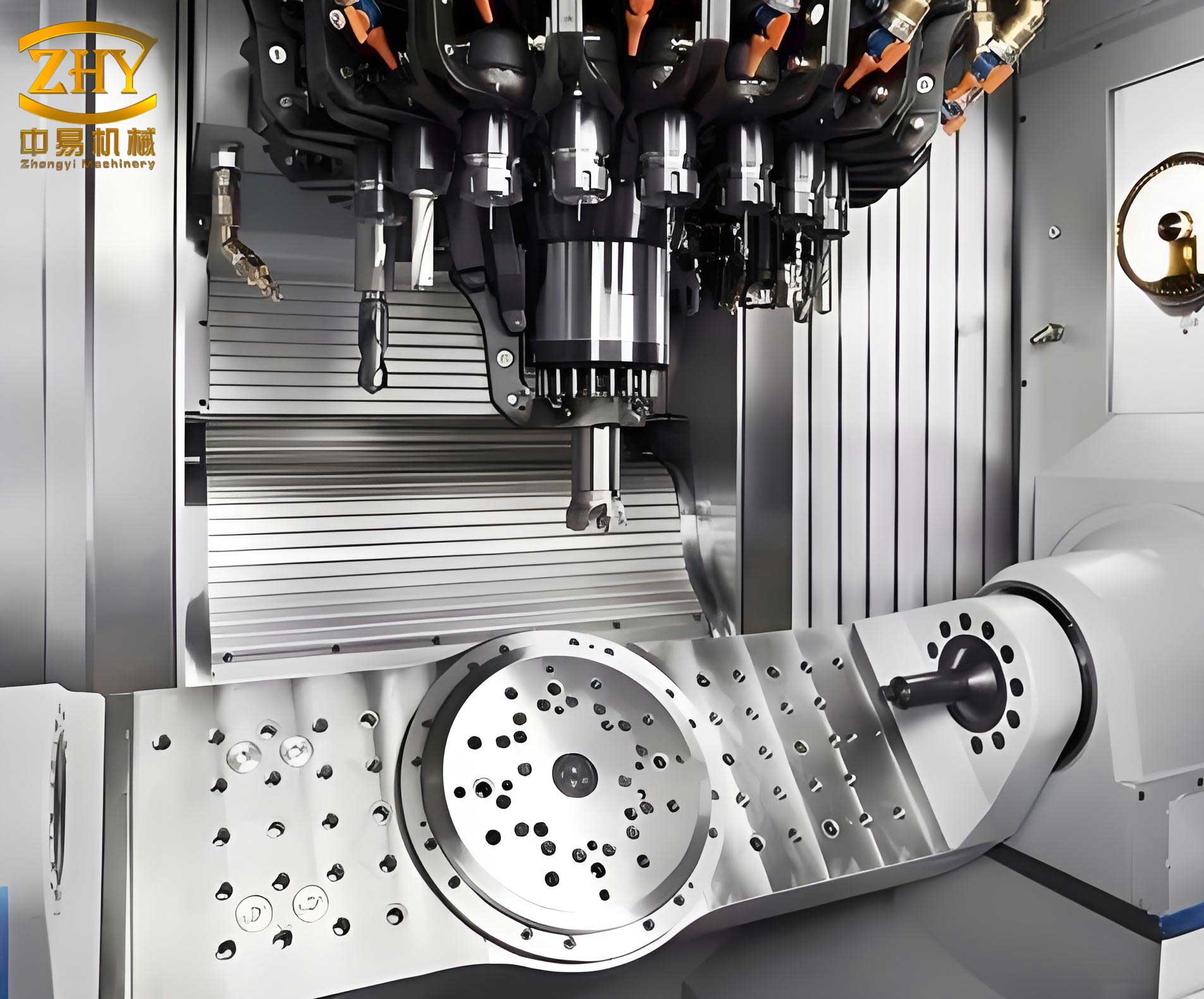
The core principle behind vibration stress relief for machine tool castings lies in its ability to stabilize dimensional accuracy by reducing or homogenizing residual stresses while simultaneously enhancing the material’s resistance to deformation. In gray cast iron, commonly used in machine tool castings, the presence of low-strength flake graphite induces plastic deformation in the metal matrix near graphite tips under minimal stress, imparting non-elastic behavior. This results in a gradual decrease in elastic modulus with increasing stress. When subjected to cyclic loading below the adaptation limit (approximately 0.1-0.2 times the tensile strength), cast iron undergoes a transformation: after a certain number of cycles, residual plastic deformation ceases, and the elastic modulus increases. This phenomenon is critical for machine tool castings, as it reduces plastic deformation under operational and residual stresses. Our experiments confirm that cyclic loading can elevate the elastic modulus of cast iron by over 10%, significantly boosting the anti-deformation capability of machine tool castings. The process of vibration treatment essentially involves multiple cyclic loading under dynamic stress, leading to both stress relief and material strengthening.
To quantify these effects, we conducted tests on cast iron specimens from machine tool castings, measuring elastic modulus changes before and after cyclic loading. The results are summarized in the table below, which illustrates the improvement in elastic modulus, a key factor for the dimensional stability of machine tool castings.
| Specimen Group | Sample ID | Elastic Modulus Before Loading (GPa) | Elastic Modulus After Loading (GPa) | Percentage Increase (%) |
|---|---|---|---|---|
| Group A | A-1 | 110 | 122 | 10.9 |
| A-2 | 108 | 120 | 11.1 | |
| A-3 | 112 | 124 | 10.7 | |
| Group B | B-1 | 105 | 118 | 12.4 |
| B-2 | 107 | 119 | 11.2 | |
| B-3 | 109 | 121 | 11.0 |
The enhancement in elastic modulus, denoted as $E$, can be modeled using a logarithmic relationship based on cyclic strain accumulation:
$$
\Delta E = k \cdot \ln(N+1)
$$
where $\Delta E$ is the increase in elastic modulus, $k$ is a material constant dependent on the composition of the machine tool casting, and $N$ is the number of loading cycles. For typical gray cast iron in machine tool castings, $k$ ranges from 2 to 5 GPa. Concurrently, residual stress reduction follows a decay function:
$$
\sigma_r(t) = \sigma_{r0} \cdot e^{-\beta t}
$$
Here, $\sigma_r(t)$ is the residual stress at time $t$, $\sigma_{r0}$ is the initial residual stress, and $\beta$ is a damping coefficient influenced by vibration parameters. Our data shows that vibration treatment can eliminate up to 50% of residual stresses in machine tool castings, with stress distribution becoming more uniform, thereby minimizing deformation tendencies.
In optimizing the vibration stress relief process for machine tool castings, we control three primary parameters: frequency, vibration intensity, and time. Resonance processing is preferred due to its energy efficiency and effectiveness, though it requires the natural frequency of the machine tool casting to fall within the exciter’s operational range. The natural frequency $f_n$ of a beam-like machine tool casting can be approximated by:
$$
f_n = \frac{1}{2\pi} \sqrt{\frac{k_{eq}}{m_{eq}}}
$$
where $k_{eq}$ is the equivalent stiffness and $m_{eq}$ is the equivalent mass. If $f_n$ exceeds the exciter’s range, we adjust supports or add masses to lower it. Vibration intensity, the most critical parameter, is ideally represented by dynamic stress $\sigma_d$. For machine tool castings, we select $\sigma_d \approx 0.1 \sigma_s$, where $\sigma_s$ is the yield strength, to achieve optimal stress relief without causing damage. In the absence of direct stress measurement, amplitude $A$ serves as a proxy, with typical values ranging from 0.1 to 1 mm for large machine tool castings. The relationship between dynamic stress and amplitude is given by:
$$
\sigma_d = E \cdot \epsilon_d = E \cdot \frac{A \cdot \omega^2}{g}
$$
where $\epsilon_d$ is the dynamic strain, $\omega$ is the angular frequency ($\omega = 2\pi f$), and $g$ is the acceleration due to gravity. Vibration time $t_v$ depends on the size and complexity of the machine tool casting, usually between 10 to 60 minutes, and can be controlled via changes in amplitude-frequency characteristics during treatment, known as the “secondary scanning method.” The table below summarizes recommended parameters for different sizes of machine tool castings.
| Machine Tool Casting Type | Weight Range (kg) | Natural Frequency Range (Hz) | Recommended Dynamic Stress $\sigma_d$ (MPa) | Vibration Time $t_v$ (minutes) |
|---|---|---|---|---|
| Small castings (e.g., brackets) | 50-500 | 30-100 | 10-20 | 10-20 |
| Medium castings (e.g., worktables) | 500-2000 | 20-60 | 15-25 | 20-40 |
| Large castings (e.g., bedways, columns) | 2000-10000 | 10-40 | 20-30 | 30-60 |
The technical benefits of vibration stress relief for machine tool castings are substantial, as evidenced by our comparative studies on simulated bedways, milling machine worktables, and other components. We measured residual stresses and dimensional stability over extended periods, confirming that VSR can eliminate residual stresses by up to 50% and homogenize stress distribution, reducing differential stresses across the machine tool casting. This leads to improved dimensional accuracy retention. For instance, in anti-deformation tests on simulated bedways under static loads, dynamic loads, and thermal variations, vibration-treated machine tool castings showed enhanced resistance. The results are presented below, highlighting the percentage improvement over non-aged or thermally aged machine tool castings.
| Test Condition | Improvement Over Non-Aged Machine Tool Castings (%) | Improvement Over Thermally Aged Machine Tool Castings (%) |
|---|---|---|
| Static Load (100 hours) | 25-30 | 15-20 |
| Dynamic Load (50 hours) | 30-35 | 20-25 |
| Temperature Variation (20°C cycle) | 20-25 | 10-15 |
Dimensional stability observations reveal that vibration-treated machine tool castings exhibit reduced deformation, typically 50-70% less than non-aged or improperly thermally aged castings, with some cases showing over 80% reduction. The absolute changes in dimensional precision are within acceptable limits, as shown in the table for various machine tool castings monitored over several months.
| Machine Tool Casting Component | Length (mm) | Tolerance Requirement (mm) | Dimensional Change After VSR (mm) | Observation Period (months) |
|---|---|---|---|---|
| Milling Machine Worktable | 2000 | ±0.05 | 0.02 | 11 |
| Lathe Bedway | 3000 | ±0.10 | 0.04 | 6 |
| Simulated Bedway | 1500 | ±0.03 | 0.01 | 4 |
Notably, the deformation stabilization period for vibration-treated machine tool castings is approximately 3-6 months, compared to 6-12 months for non-treated ones, accelerating the stabilization process. This is crucial for high-precision applications where machine tool castings must maintain accuracy under operational stresses.
In production trials, we applied vibration stress relief to hundreds of large machine tool castings, such as bedways, columns, crossrails, and worktables for gantry mills and milling machines. Precision measurements confirmed that VSR meets the dimensional stability requirements for these machine tool castings. Additionally, we extended the technique to other components like diesel engine cast steel bases, forged steel connecting rods, welded frames, and aerospace towers, consistently achieving residual stress reduction and deformation control. For machine tool castings that are difficult to thermally age due to size or material constraints, VSR offers a viable solution. The economic advantages are significant: VSR costs only about 10% of thermal aging, with energy consumption less than 5%, and it reduces labor intensity while increasing productivity.
The development of vibration equipment has been integral to our research. We have designed and tested several exciters suitable for machine tool castings. Electromagnetic exciters, with forces up to 5000 N and frequency ranges of 10-1000 Hz, are ideal for small to medium machine tool castings. For larger machine tool castings, mechanical exciters driven by motors with eccentric mechanisms are employed, offering robust performance. The table below outlines the technical specifications of our mechanical exciters, which cater to the needs of heavy machine tool castings.
| Exciter Model | Frequency Range (Hz) | Maximum Excitation Force (N) | Motor Power (kW) | Suitable for Machine Tool Casting Weight (kg) |
|---|---|---|---|---|
| VSR-1A | 10-50 | 10,000 | 1.5 | Up to 5000 |
| VSR-2B | 5-30 | 20,000 | 3.0 | Up to 10,000 |
| VSR-3C | 2-20 | 50,000 | 7.5 | Up to 20,000 |
The exciter is typically attached at the midpoint or end of the machine tool casting, avoiding nodal points, and the casting is supported on elastic pads at low-amplitude locations to ensure stable, high-amplitude vibration with minimal noise. Future advancements aim to integrate electronic controls with scanning and recording capabilities for more precise handling of machine tool castings.
From a theoretical perspective, the vibration stress relief process can be modeled using wave propagation equations in elastic media. For a machine tool casting subjected to harmonic excitation, the displacement field $u(x,t)$ along a one-dimensional axis is described by:
$$
\frac{\partial^2 u}{\partial t^2} = c^2 \frac{\partial^2 u}{\partial x^2} – \gamma \frac{\partial u}{\partial t}
$$
where $c = \sqrt{E/\rho}$ is the wave speed, $\rho$ is the density of the machine tool casting material, and $\gamma$ is a damping coefficient accounting for internal friction. This equation underpins the resonance phenomena exploited in VSR. Furthermore, the reduction in residual stress $\Delta \sigma_r$ correlates with the accumulated plastic strain $\epsilon_p$ from cyclic loading:
$$
\Delta \sigma_r = -C \int_0^{t_v} \epsilon_p(\tau) \, d\tau
$$
where $C$ is a constant dependent on the microstructure of the machine tool casting. Our empirical data aligns with this model, showing exponential stress decay over time.
In summary, vibration stress relief has emerged as a highly effective method for enhancing the performance of machine tool castings. Through mechanistic insights, optimized process parameters, and robust equipment, we have demonstrated that VSR not only eliminates residual stresses but also improves material properties, leading to superior dimensional stability. The widespread adoption of this technique in manufacturing, particularly for large and complex machine tool castings, promises significant economic and technical benefits. As research continues, we anticipate further refinements that will expand the applicability of VSR across diverse industrial sectors, solidifying its role as a cornerstone in precision engineering for machine tool castings.