
In my extensive research and experience in the foundry industry, I have observed that high-end large CNC machine tools are critical equipment in modern manufacturing and the core of intelligent production. The bed, as the most fundamental component of a machine tool, accounting for 70% to 80% of the total weight and ranging from several tons to tens of tons, serves as the base for all other parts and determines geometric accuracy. Currently, there remains a significant gap between domestic machine tool casting capabilities and those of leading global counterparts, particularly in medium to high-end large machine tools, where imports are still heavily relied upon. The quality of machine tool castings is paramount for ensuring machining performance, precision, and precision retention. Therefore, developing high-performance castings and manufacturing technologies is key to advancing the entire machine tool industry.
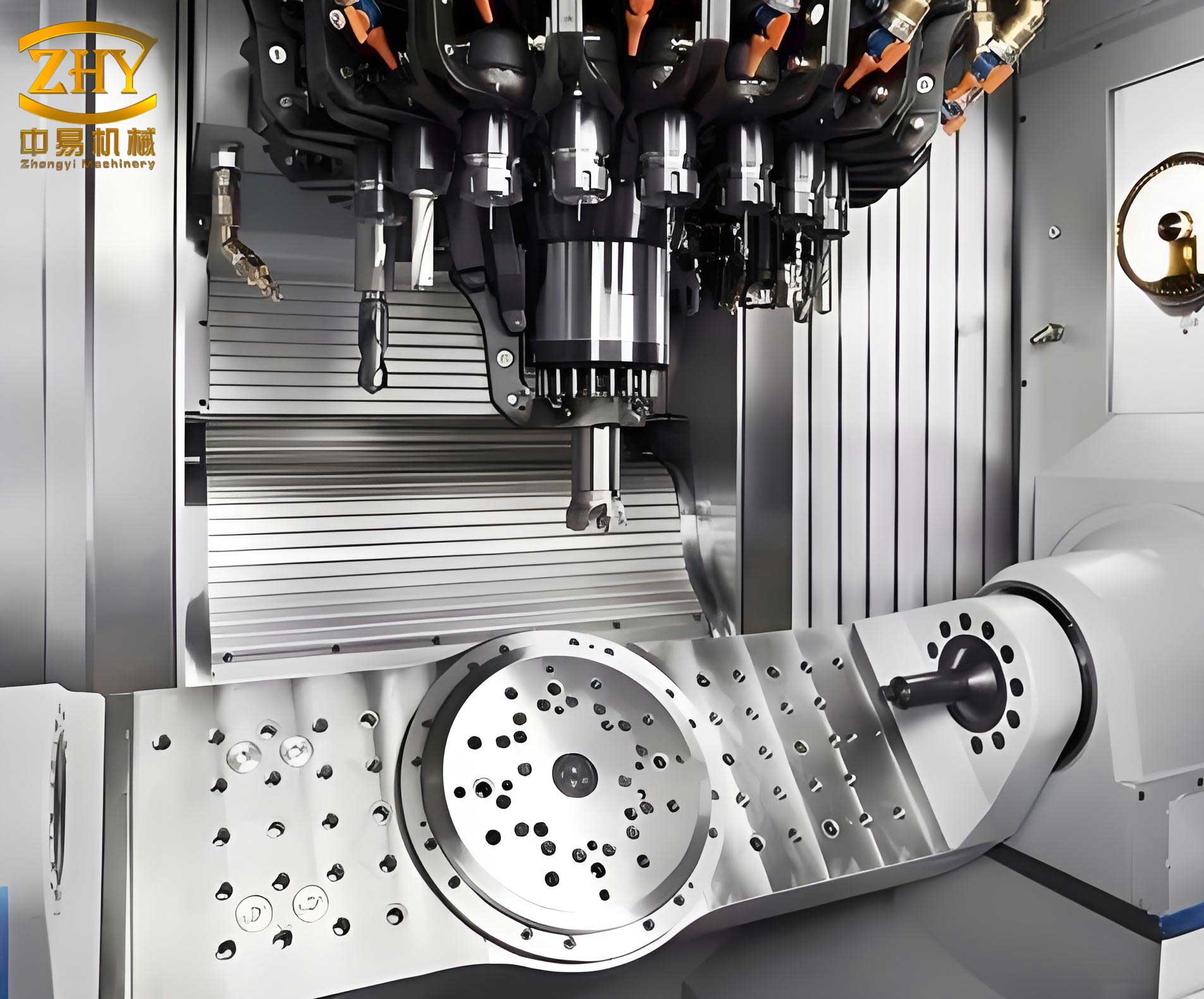
From my perspective, the trends in CNC machine tool castings are evolving towards high precision, powerful cutting, high-speed machining, larger sizes, and thinner walls. These demands require castings with excellent machinability, good castability, and low casting stress. Recent developments indicate that high carbon equivalent (CE) and high-strength gray iron remain the direction for machine tool castings. Specifically, I have identified several key performance indicators that define high-quality machine tool castings: high strength, high stiffness, low stress, good damping capacity, excellent machinability, and suitability for large-scale applications. In this article, I will delve into these aspects, supported by tables and formulas, to outline the path toward achieving superior machine tool castings.
When I analyze the strength requirements for machine tool castings, I note that gray iron grades such as HT250, HT300, and HT350 are commonly used internationally, with a preference for grades 300 and 350 in developed countries. However, many domestic producers achieve high strength by significantly reducing carbon equivalent, which leads to issues like shrinkage porosity, increased casting stress, deformation, and poor machinability due to higher hardness. Based on comparative data, I have found that foreign machine tool castings maintain higher carbon equivalents at the same strength grades. For instance, for HT250, HT300, and HT350, foreign averages are 3.95%, 3.83%, and 3.76% CE, respectively, while domestic values are lower at 3.75%, 3.60%, and 3.48%. This difference of about 0.2% higher CE abroad is crucial for improving material quality. To produce high carbon equivalent, high-strength gray iron for machine tool castings, a systematic approach is necessary, involving high-temperature melting, composition selection, charge preparation, low alloying, and proper inoculation.
In my work, I emphasize that high stiffness is essential for machine tool castings to resist deformation under powerful cutting forces. Elastic modulus is a key indicator of stiffness, and foreign castings often exhibit 10–20 GPa higher elastic modulus than domestic ones at similar strength grades, enabling thinner walls and weight reduction. For example, wall thicknesses have decreased from 20–25 mm to 14–20 mm for medium machine tools, and even 8–12 mm for small ones, reducing weight by 8%–10%. Low carbon equivalent high-strength gray iron poses a barrier to thin-wall and lightweight designs in domestic production.
Low casting stress is critical for dimensional stability and precision retention in high-precision CNC machine tools. I have observed that casting stress increases with tensile strength, but it can be mitigated by raising carbon equivalent. As shown in studies, higher CE reduces residual stress, which is why foreign castings with higher CE exhibit better stability. The relationship between tensile strength and casting stress can be expressed as: $$\sigma_s = k_1 \cdot R_m – k_2$$ where $\sigma_s$ is casting stress, $R_m$ is tensile strength, and $k_1$, $k_2$ are constants. Similarly, the effect of carbon equivalent on casting stress is approximated by: $$\sigma_s \propto \frac{1}{CE}$$ This underscores the need for high CE in low-stress machine tool castings.
Good damping capacity is vital for machining accuracy, as gray iron has superior vibration damping compared to steel. However, damping decreases with increasing strength (or decreasing CE). From my analysis, improving CE is necessary to enhance damping. The damping coefficient $\xi$ can be related to CE as: $$\xi = a \cdot CE + b$$ where $a$ and $b$ are material-dependent constants.
Machinability is another key factor, especially with the rise of CNC machining centers. I evaluate machinability using hardness and the machinability index $m$, defined as $m = R_m / \text{HBW}$. For optimal machining, hardness should be controlled within 160–240 HBW, and $m$ values should align with standards. For instance, German standards specify $m$ ranges for different grades: GG20 (0.95–1.18), GG25 (1.04–1.39), GG30 (1.15–1.50), and GG35 (1.25–1.37). Hardness uniformity, achieved through chilling, inoculation, and alloying, is crucial in production.
For large-scale machine tool castings, issues like reduced mechanical properties, inoculation fading, and section sensitivity arise due to slow cooling. These challenges require solutions for graphite morphology improvement, shrinkage reduction, and property consistency.
Based on my research, I propose the following performance indicators for high-end CNC machine tool castings, summarized in Table 1. These include tensile strength, carbon equivalent range, elastic modulus, and casting stress limits after thermal aging.
| Grade | Tensile Strength (MPa) | Carbon Equivalent CE (%) | Elastic Modulus (GPa) | Casting Stress (MPa) – As-cast | Casting Stress (MPa) – After Thermal Aging |
|---|---|---|---|---|---|
| HT250 | ≥250 | 3.90–4.00 | 115–120 | ≤50 | ≤20 |
| HT300 | ≥300 | 3.80–3.85 | 120–125 | ≤60 | ≤20 |
| HT350 | ≥350 | 3.73–3.78 | 125–130 | ≤60 | ≤20 |
| QT600-3 | ≥600 | 4.35–4.55 | 150–170 | ≤85 | ≤30 |
The metallurgical quality of machine tool castings is assessed using parameters like eutectic degree $S_c$, maturity $R_G$, hardening degree $H_G$, and quality coefficient $Q_i$. The eutectic degree is calculated as: $$S_c = \frac{C}{4.26 – \frac{1}{3}Si}$$ where $C$ and $Si$ are weight percentages of carbon and silicon. For machine tool castings, $S_c$ should be ≥0.85. Maturity and hardening degree are given by: $$R_G = \frac{R_m}{1000 – 800S_c}, \quad H_G = \frac{R_m}{900 – 744S_c}$$ with $R_G \geq 1.0$, $H_G \leq 1.0$, and quality coefficient $Q_i = R_G / H_G \geq 1.0$. These metrics ensure good castability and machinability.
In my practice, I have found that achieving high carbon equivalent, high-strength, high-stiffness, and low-stress machine tool castings requires key technologies and controls. High-temperature melting and scrap carburization are foundational. Overheating molten iron to 1500–1550°C refines graphite and pearlite, improving tensile strength and elastic modulus. The effect of superheating temperature $T$ on tensile strength $R_m$ can be modeled as: $$R_m = \alpha \cdot T + \beta$$ where $\alpha$ and $\beta$ are constants. Overheating also reduces oxide inclusions and increases undercooling, enhancing inoculation effectiveness. The relationship between undercooling $\Delta T$ and superheating temperature is: $$\Delta T = \gamma \cdot (T – T_e)$$ where $T_e$ is the equilibrium temperature and $\gamma$ is a coefficient.
Scrap carburization process, using high scrap ratios (50–80%) with carburizers, improves graphite nucleation and purity, leading to higher strength at high CE. Compared to traditional charges, scrap carburization can increase tensile strength by 40–50 MPa at the same CE, reduce shrinkage tendency, decrease section sensitivity, and minimize chilling tendency. Table 2 compares the properties of scrap carburization versus traditional charges.
| Process | Charge Composition | Tensile Strength (MPa) | Hardness (HBW) | Section Sensitivity (Hardness Difference) | Chilling Tendency (White Depth mm) |
|---|---|---|---|---|---|
| Traditional | Scrap + Pig Iron + Returns | 270–280 | 198–203 | High (40 HBW difference) | 19 (before inoculation) |
| Scrap Carburization | 100% Scrap + Carburizer | 320–325 | 211–217 | Low (15 HBW difference) | 14 (before inoculation) |
The ratio of silicon to carbon $\omega(Si)/\omega(C)$ is crucial for strength. At constant CE, increasing this ratio raises tensile strength and elastic modulus. For example, at CE = 3.66%, increasing $\omega(Si)/\omega(C)$ from 0.51 to 0.6 improves tensile strength from 325 MPa to 350 MPa and elastic modulus from 102.5 GPa to 126.8 GPa. However, at very high CE (e.g., 3.82% for HT300), excessive silicon can coarsen pearlite, so alloying is necessary. I recommend $\omega(Si)/\omega(C)$ ratios of 0.55–0.60 for high-CE gray iron, combined with low alloying elements like Cu, Cr, Sn, or Sb.
Alloying with nitrogen and tin has proven effective in strengthening high-CE gray iron for machine tool castings. Nitrogen refines graphite, making it shorter and blunter, while tin increases eutectic cell count and refines pearlite. The optimal composition for HT300 includes CE of 3.80–3.90%, with $\omega(N) = 0.008–0.010\%$ and $\omega(Sn) = 0.02–0.06\%$. The strengthening mechanism can be described by: $$R_m = R_0 + k_N \cdot [N] + k_{Sn} \cdot [Sn]$$ where $R_0$ is base strength, $[N]$ and $[Sn]$ are weight percentages, and $k_N$, $k_{Sn}$ are strengthening coefficients. This approach reduces the need for expensive alloys and maintains high CE.
In production, I use high-quality scrap steel (60–65%), returns (35–40%), carburizer (1.5–2.0%), silicon carbide (0.6–1.2%), and ferromanganese nitride for nitrogen addition. Inoculation with barium-silicon alloy and stream inoculation ensure fine graphite and uniform properties. Table 3 shows the chemical composition design for HT300 high-CE gray iron.
| Element | Target Range (wt.%) | Role in Machine Tool Castings |
|---|---|---|
| C | 3.20–3.30 | Provides graphite for damping and conductivity |
| Si | 1.75–1.95 | Increases strength and fluidity; controls CE |
| Mn | 0.80–1.00 | Neutralizes sulfur, improves pearlite formation |
| P | ≤0.06 | Minimized to reduce brittleness |
| S | 0.05–0.09 | Controlled for graphite nucleation |
| N | 0.008–0.010 | Refines graphite, increases strength |
| Sn | 0.02–0.06 | Refines pearlite, enhances hardness |
| CE | 3.80–3.90 | Ensures high castability and low stress |
The microstructural requirements for machine tool castings include over 95% type A graphite, size grades 4–6 (6–25 μm at 100x), and pearlite matrix over 98% with fine interlamellar spacing. Table 4 summarizes the metallurgical quality indicators achieved with nitrogen-added castings.
| Indicator | Control Target | Maximum Value | Minimum Value | Average Value |
|---|---|---|---|---|
| Eutectic Degree $S_c$ | ≥0.85 | 0.90 | 0.88 | 0.89 |
| Maturity $R_G$ | ≥1.0 | 1.26 | 1.10 | 1.17 |
| Hardening Degree $H_G$ | ≤1.0 | 0.99 | 0.88 | 0.94 |
| Quality Coefficient $Q_i$ | ≥1.0 | 1.32 | 1.15 | 1.24 |
From my findings, high-carbon-equivalent gray iron with nitrogen and tin additions can achieve tensile strengths over 300 MPa with reduced alloying, meeting the needs of high-stiffness, low-stress machine tool castings. The elastic modulus often exceeds 120 GPa, and casting stress after thermal aging is below 20 MPa. This aligns with the trend toward lightweight, thin-wall designs without compromising performance.
In conclusion, my research underscores that high-end machine tool castings must balance high stiffness and low stress through high carbon equivalent, high strength, and optimized metallurgy. Key technologies like high-temperature melting, scrap carburization, controlled $\omega(Si)/\omega(C)$ ratios, and nitrogen-tin alloying enable this balance. The future of machine tool castings lies in advancing these systematic approaches to close the gap with international standards and support the evolution of precision manufacturing.
To further elaborate, I have developed formulas to guide production. For instance, the carbon equivalent CE is calculated as: $$CE = C + \frac{Si}{3}$$ where $C$ and $Si$ are in weight percent. The relationship between tensile strength $R_m$ and carbon equivalent for high-quality machine tool castings can be expressed as: $$R_m = A – B \cdot CE + C \cdot [Alloy]$$ where $A$, $B$, and $C$ are constants, and $[Alloy]$ represents alloy content. Similarly, the elastic modulus $E$ correlates with strength and CE: $$E = D \cdot R_m + E_0 \cdot CE$$ with $D$ and $E_0$ as material parameters.
For machining performance, the machinability index $m$ should be monitored: $$m = \frac{R_m}{\text{HBW}}$$ Values between 1.0 and 1.5 typically indicate good machinability for high-strength grades. In practice, I adjust composition and inoculation to maintain $m$ within optimal ranges.
Regarding large castings, I address section sensitivity by controlling cooling rates and using late inoculation techniques. The hardness variation across sections can be minimized by optimizing alloy distribution, as described by: $$\Delta \text{HBW} = f(\text{CE}, \text{Cooling Rate})$$ where $f$ is a function that decreases with higher CE and controlled cooling.
In summary, the development of high-carbon-equivalent, high-performance, low-stress machine tool castings is a multifaceted endeavor. Through continuous improvement in melting, alloy design, and process control, we can achieve castings that meet the stringent demands of modern CNC machine tools, enhancing global competitiveness. My ongoing work focuses on refining these techniques to push the boundaries of what is possible in machine tool casting technology.