
In the modernization of national economies, machine tools play a pivotal role as the foundational equipment for manufacturing various mechanical components. These machine tools, often referred to simply as “machine tools,” encompass categories such as metal-cutting machine tools, forging presses, and woodworking machines. While numerous methods exist for processing mechanical parts in modern manufacturing—including casting, forging, welding, stamping, and extrusion—components requiring high precision and fine surface roughness typically undergo final machining via cutting processes on machine tools. Among these, the backing plate, which serves as the worktable for数控 machine tools, is a critical element. The quality of these machine tool castings directly impacts the accuracy and stability of large-scale machine tools, especially in applications involving heavy-duty operations. Large machine tool castings, such as backing plates, often weigh between 20 to 50 tons each, and defects like shrinkage porosity discovered after drilling can compromise overall precision, leading to significant economic losses and production delays. Therefore, optimizing the casting process for these large machine tool castings is of paramount importance to ensure stable quality and enhance manufacturing efficiency.
From my experience in foundry engineering, I have encountered recurring issues with shrinkage defects in thick-section machine tool castings, particularly in backing plates. These defects manifest as cavities within drilled holes, typically located below the upper surface and concentrated in central regions, exhibiting dendritic structures upon analysis. This points to internal shrinkage porosity, a common challenge in large castings due to inadequate feeding during solidification. In this article, I will delve into the original casting process, analyze the root causes of defects, and detail the comprehensive improvements we implemented to mitigate these issues. By focusing on key aspects such as gating system design, riser placement, molten metal composition control, and pouring parameters, we aimed to achieve a robust casting process for high-quality machine tool castings.
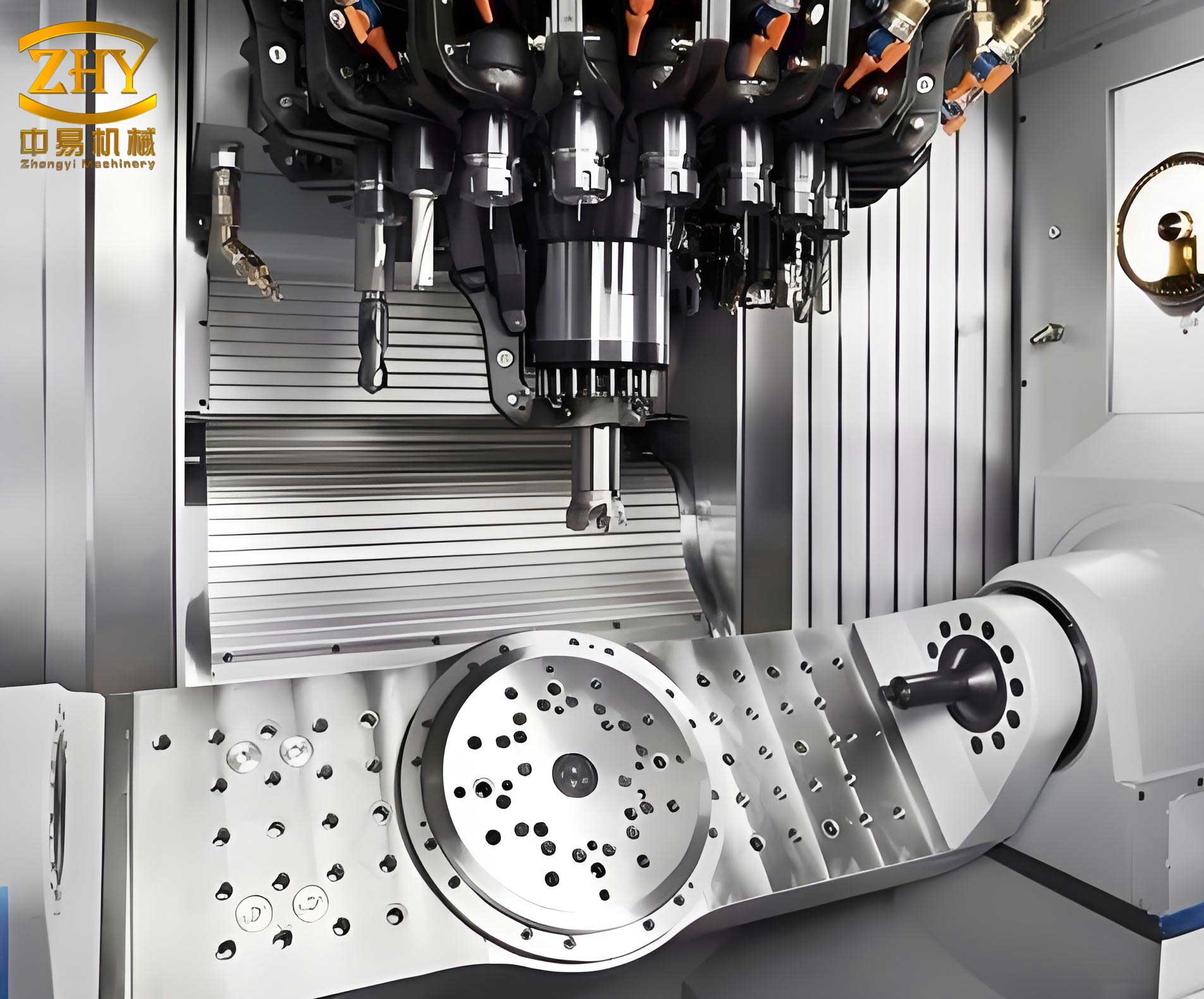
The original casting process for large backing plates, typically made of high-strength cast iron like HT200-300, involved a two-part mold (upper and lower drag) with important machining surfaces positioned in the lower drag. Resin sand was used for molding, and a single-side gating system was employed. The pouring temperature ranged from 1470°C to 1480°C, with a carbon equivalent (CE) controlled between 3.60% and 3.70%. However, post-drilling inspections revealed significant shrinkage porosity within the holes, indicating insufficient feeding during solidification. This defect not only affected the structural integrity but also raised concerns about the long-term performance of these machine tool castings in precision applications. To better understand the limitations, let’s summarize the original parameters in a table:
| Parameter | Original Value |
|---|---|
| Material | HT200-300 Cast Iron |
| Molding Method | Resin Sand, Two-Part Mold |
| Gating System | Single-Side Pouring |
| Pouring Temperature | 1470–1480°C |
| Carbon Equivalent (CE) | 3.60–3.70% |
| Defect Observed | Shrinkage Porosity in Drilled Holes |
Shrinkage porosity in machine tool castings arises from volumetric contraction during solidification, particularly in thick sections where heat dissipation is slow. The original process, with its near-eutectic composition and high pouring temperature, likely promoted a narrow solidification range, leading to concentrated shrinkage cavities. The single-side gating might have caused uneven filling and inadequate thermal gradients, hindering effective riser feeding. To address this, we undertook a systematic optimization of the casting process, focusing on multiple facets to enhance the quality of these large machine tool castings.
First, we revised the molten metal composition by increasing the carbon equivalent. In cast iron, the carbon equivalent is a critical parameter influencing solidification behavior and shrinkage tendency. It is calculated as: $$CE = C + \frac{1}{3}(Si + P)$$ where C, Si, and P are the percentages of carbon, silicon, and phosphorus, respectively. Originally set near the eutectic point (approximately 4.30% for typical cast iron), we elevated the CE to a hypereutectic range of 4.55%. This adjustment reduces the shrinkage propensity because hypereutectic compositions have a broader solidification range, promoting a more gradual freezing pattern that minimizes concentrated shrinkage. Additionally, higher CE lowers the liquidus temperature, improving fluidity and reducing the likelihood of forming brittle carbides that can weaken the matrix. For machine tool castings, this translates to better feeding characteristics and enhanced internal soundness.
Second, we optimized the pouring temperature and related practices. The original pouring temperature of 1470–1480°C was reduced to 1450–1460°C at tapping, with the final pouring temperature controlled between 1320°C and 1340°C. Lower pouring temperatures decrease the total heat input, reducing thermal gradients and minimizing shrinkage defects. Concurrently, we increased the coverage of nodularizing agent (e.g., magnesium-ferrosilicon) from 2.0% to 2.0–2.5% to ensure proper graphite nodularization in ductile iron versions, though the focus here is on gray iron machine tool castings. The relationship between pouring temperature and shrinkage can be expressed empirically as: $$V_s \propto \Delta T \cdot \rho \cdot C_p$$ where \(V_s\) is the shrinkage volume, \(\Delta T\) is the superheat (temperature above liquidus), \(\rho\) is density, and \(C_p\) is specific heat. By lowering \(\Delta T\), we directly reduce \(V_s\), thereby mitigating porosity in machine tool castings.
Third, we redesigned the gating system from a single-side to a double-side configuration. This modification reduces flow resistance, shortens mold filling time, and promotes more uniform temperature distribution. For large machine tool castings, rapid and even filling is crucial to avoid cold shuts and improve feeding efficiency. The filling time \(t_f\) can be estimated using Bernoulli’s principle: $$t_f = \frac{V}{A \cdot v}$$ where \(V\) is the mold cavity volume, \(A\) is the total cross-sectional area of ingates, and \(v\) is the flow velocity. By doubling the gating points, we increase \(A\), thus decreasing \(t_f\) and enhancing thermal management. This change also facilitates better slag trapping and reduces turbulence, which is vital for clean machine tool castings.
Fourth, we enhanced the feeding and risering techniques. Riser design is paramount for compensating shrinkage in thick sections of machine tool castings. The basic principle requires that the riser solidifies later than the casting, expressed as: $$t_r \geq t_c$$ where \(t_r\) is the riser solidification time and \(t_c\) is the casting solidification time. Using Chvorinov’s rule, solidification time is proportional to the square of volume-to-surface area ratio: $$t = k \left( \frac{V}{A} \right)^2$$ where \(k\) is a mold constant. We increased riser sizes and implemented a prolonged “hot topping” practice, where additional molten metal is poured into risers after initial filling. Originally lasting 20 minutes, we extended this to 30–40 minutes using separate, higher-temperature metal to maintain liquidity. This ensures sustained feeding pressure and compensates for both liquid and solidification shrinkage. The feeding distance \(L\) for a riser can be approximated as: $$L = \frac{T_m – T_e}{G}$$ where \(T_m\) is the melting point, \(T_e\) is the eutectic temperature, and \(G\) is the temperature gradient. By optimizing riser placement and using hot topping, we maximize \(L\) for effective coverage in large machine tool castings.
Fifth, we incorporated chilling methods in strategic locations. Chills are used to accelerate cooling in thick sections, promoting directional solidification toward risers. For machine tool castings with complex geometries, such as backing plates, judicious use of external chills helps control solidification patterns. The heat extraction rate \(Q\) by a chill can be modeled as: $$Q = h \cdot A_c \cdot (T_c – T_m)$$ where \(h\) is the heat transfer coefficient, \(A_c\) is the chill surface area, \(T_c\) is the chill temperature, and \(T_m\) is the metal temperature. By placing chills near problematic zones, we enhance thermal gradients, reducing shrinkage risks. Additionally, we adjusted the placement of graphite blocks within the mold to improve heat dissipation, further supporting sound solidification in machine tool castings.
To consolidate these improvements, here is a comparative table summarizing the key changes in the casting process for large machine tool castings:
| Aspect | Original Process | Improved Process | Impact on Machine Tool Castings |
|---|---|---|---|
| Carbon Equivalent (CE) | 3.60–3.70% (Near Eutectic) | 4.55% (Hypereutectic) | Reduces shrinkage tendency, improves fluidity |
| Pouring Temperature | 1470–1480°C (Tapping), High Superheat | 1450–1460°C (Tapping), 1320–1340°C (Pouring) | Minimizes thermal contraction, lowers porosity risk |
| Gating System | Single-Side Pouring | Double-Side Pouring | Enhances filling uniformity, reduces flow resistance |
| Risering & Feeding | Standard Risers, 20-Minute Hot Topping | Enlarged Risers, 30–40-Minute Prolonged Hot Topping | Extends feeding time, ensures better shrinkage compensation |
| Chilling & Cooling | Limited Use | Strategic Chills, Optimized Graphite Block Placement | Promotes directional solidification, controls thermal gradients |
| Defect Rate | High (Shrinkage Porosity Observed) | Zero (No Shrinkage Defects) | Increases yield, enhances casting integrity |
After implementing these optimizations, we conducted trials on various sizes of backing plates for large machine tool castings. Over a year of production, the rejection rate due to shrinkage defects dropped to zero, demonstrating the effectiveness of the revised process. Drilled holes in the castings showed no internal cavities, confirming the elimination of shrinkage porosity. This success underscores the importance of a holistic approach to casting process design, where composition, gating, feeding, and temperature control are synergistically tailored for large machine tool castings. The improved quality not only boosts the performance of the final machine tools but also yields substantial cost savings by reducing scrap and rework.
Further analysis reveals that the key to success lies in managing the solidification dynamics. For machine tool castings, which often have variable section thicknesses, numerical simulation can aid in optimizing riser placement and chill design. The solidification time differential between the casting and riser can be expressed as: $$\Delta t = k \left( \left( \frac{V_r}{A_r} \right)^2 – \left( \frac{V_c}{A_c} \right)^2 \right)$$ where subscripts \(r\) and \(c\) denote riser and casting, respectively. Ensuring \(\Delta t > 0\) guarantees effective feeding. Additionally, the feeding efficiency \(\eta\) of a riser is given by: $$\eta = \frac{V_f}{V_r} \times 100\%$$ where \(V_f\) is the volume of metal fed to the casting and \(V_r\) is the riser volume. By optimizing parameters, we achieved higher \(\eta\) values, reducing waste and improving the economics of producing machine tool castings.
In terms of material science, the increased carbon equivalent in machine tool castings enhances graphitization, which reduces the formation of cementite and its associated shrinkage. The relationship between CE and graphite formation can be described using the equilibrium diagram: $$T_{eutectic} = f(CE)$$ where a higher CE lowers the eutectic temperature, promoting graphite precipitation earlier in solidification. This aligns with our goal of minimizing shrinkage in thick-section machine tool castings. Moreover, the use of hypereutectic compositions improves machinability, a critical factor for post-casting operations like drilling and milling in machine tool applications.
The pouring temperature control also plays a role in reducing gas solubility, as per Sieverts’ law: $$[H] = K_H \sqrt{P_{H_2}}$$ where \([H]\) is hydrogen solubility, \(K_H\) is a constant, and \(P_{H_2}\) is the partial pressure. Lower temperatures decrease \([H]\), minimizing gas porosity that can exacerbate shrinkage defects in machine tool castings. Combined with proper gating design that minimizes turbulence, this contributes to cleaner castings with improved mechanical properties.
Another aspect worth noting is the mold material. Resin sand, while providing good dimensional accuracy, has specific thermal properties affecting solidification. The mold constant \(k\) in Chvorinov’s rule depends on factors like sand density and binder content. By fine-tuning these parameters, we can further optimize the cooling rates for large machine tool castings. For instance, increasing sand compaction raises \(k\), slowing solidification and allowing more time for feeding—a balance that must be carefully managed to avoid other defects like veining or expansion-related issues.
In practice, the implementation of these improvements required close monitoring of process variables. We developed a quality control protocol that includes real-time temperature measurements, spectroscopic analysis for composition, and non-destructive testing like ultrasonic inspection for internal defects. This ensures consistency in producing high-quality machine tool castings. The table below outlines some key quality metrics post-improvement:
| Metric | Target Value for Machine Tool Castings | Achieved Value |
|---|---|---|
| Carbon Equivalent (CE) | 4.50–4.60% | 4.55% (Average) |
| Pouring Temperature | 1320–1340°C | 1330°C (Average) |
| Shrinkage Defect Incidence | 0% | 0% (Over 50 Castings) |
| Mechanical Strength (Tensile) | ≥200 MPa | 210–230 MPa |
| Machinability Rating | High (Minimal Tool Wear) | Excellent (Verified in Drilling) |
The economic impact of these optimizations is significant. By eliminating shrinkage defects, we reduced material waste and minimized downtime associated with rework. For large machine tool castings weighing tens of tons, each saved casting translates to substantial cost savings. Moreover, the enhanced reliability of these components improves the overall performance of the machine tools they support, leading to better productivity in manufacturing operations. This underscores the value of continuous process improvement in foundry practices for machine tool castings.
Looking ahead, further advancements could involve integrating computational fluid dynamics (CFD) and finite element analysis (FEA) to simulate mold filling and solidification. These tools can predict shrinkage zones more accurately, allowing for proactive riser and chill design. For example, the temperature field \(T(x,y,z,t)\) during solidification can be solved using the heat conduction equation: $$\frac{\partial T}{\partial t} = \alpha \nabla^2 T$$ where \(\alpha\) is thermal diffusivity. By simulating this for complex machine tool castings, we can optimize process parameters virtually before physical trials, reducing development time and costs.
In conclusion, the optimization of the casting process for large machine tool castings, such as backing plates, requires a multifaceted approach. By increasing the carbon equivalent to hypereutectic levels, controlling pouring temperatures, redesigning the gating system to double-side pouring, enhancing risering with prolonged hot topping, and employing strategic chilling, we successfully eliminated shrinkage porosity defects. These improvements not only boost the yield and quality of machine tool castings but also contribute to cost-effectiveness and production efficiency. The key takeaway is that a deep understanding of solidification principles, combined with practical adjustments, can transform the manufacturing of critical components like machine tool castings. As the demand for precision machine tools grows, such process optimizations will remain essential for achieving reliable and high-performance castings in industrial applications.