
In the demanding world of machine tool manufacturing, the quest for superior cast iron materials is perpetual. The performance, accuracy retention, and longevity of the final machine are intrinsically linked to the quality of its foundational machine tool castings, such as beds, saddles, headstocks, and gearboxes. For years, the conventional approach to enhancing the tensile strength of gray iron for these critical components involved reducing the carbon equivalent (CE), primarily by lowering both carbon and silicon content. While sometimes effective, this method often came at a significant cost: impaired castability, increased shrinkage and porosity, higher residual stresses, greater tendency for chill (white iron) formation, and consequently, poorer machinability. This created a persistent trade-off between strength and manufacturability.
My practical investigations have focused on challenging this paradigm. The core premise was to explore the application of a “Dual-High” gray iron—characterized by high strength coupled with a high carbon equivalent—specifically for machine tool castings. The goal was to maintain a constant carbon content while judiciously increasing the silicon level, thereby raising the CE. The hypothesis was that this composition could deliver the required mechanical robustness while simultaneously improving casting yield, reducing stresses, and enhancing machining performance, ultimately leading to more stable and precise machine tool castings.
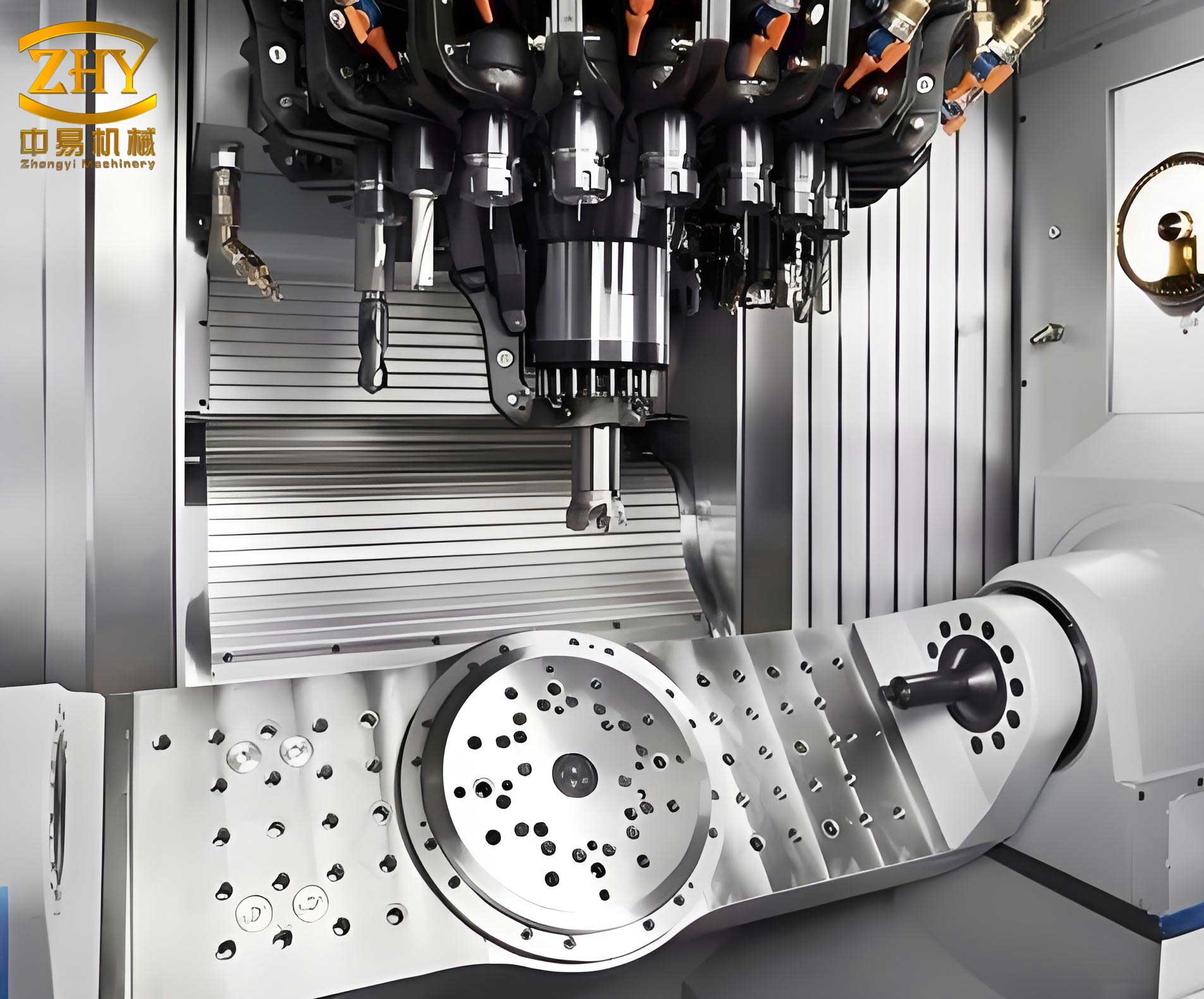
Objectives and Experimental Methodology
The primary objectives of this industrial-scale trial were clear and targeted:
- To achieve a high level of tensile strength in gray iron without resorting to low carbon equivalents.
- To significantly improve the overall castability, reducing defects like shrinkage cavities.
- To minimize the residual stress within the castings, enhancing the dimensional stability of machine tool castings without the need for stress-relief annealing.
- To markedly improve machinability by reducing hardness variation and chill tendency.
The trials were conducted under normal production conditions using a 5-ton cold-blast cupola furnace to ensure the results were directly applicable and scalable. The molten iron temperature was maintained between 1380°C and 1420°C. Inoculation was performed in the pouring stream using a calcium-silicon inoculant (75% Si) at an addition rate of 0.4% of the total iron weight.
The chemical composition was the key variable. Instead of lowering CE, the strategy was to keep the carbon content within a narrow band and adjust the silicon content to achieve the desired CE and Si/C ratio. The target compositions for the test grades, HT250 and HT300, are summarized in Table 1. Representative critical machine tool castings including lathe beds, saddles, feed boxes, apron housings, headstocks, and tailstocks were poured using these iron compositions.
| Grade | C (%) | Si (%) | Mn (%) | P (%) Max | S (%) Max | CE* (%) | Si/C Ratio |
|---|---|---|---|---|---|---|---|
| HT250 | 3.1 – 3.3 | 1.9 – 2.2 | 0.9 – 1.1 | 0.12 | 0.12 | 3.75 – 4.05 | 0.58 – 0.70 |
| HT300 | 3.0 – 3.2 | 2.0 – 2.3 | 1.0 – 1.2 | 0.10 | 0.10 | 3.70 – 4.00 | 0.63 – 0.77 |
* Carbon Equivalent calculated as: $$CE = C\% + \frac{Si\%}{3}$$
Experimental Results and Analysis
1. Mechanical Properties: Defying Conventional Wisdom
The most striking result was the relationship between carbon equivalent, silicon content, and tensile strength. Contrary to traditional belief, increasing the CE (via increased Si at constant C) did not degrade strength; it enhanced it. The data for the HT300 grade trials is presented in Table 2, illustrating this counter-intuitive trend.
| Sample | C (%) | Si (%) | CE (%) | Si/C Ratio | Tensile Strength (MPa) | Hardness (HB) |
|---|---|---|---|---|---|---|
| 1 (Low CE Baseline) | 3.05 | 1.65 | 3.60 | 0.54 | 295 | 212 |
| 2 | 3.12 | 1.90 | 3.75 | 0.61 | 312 | 218 |
| 3 | 3.08 | 2.10 | 3.78 | 0.68 | 325 | 221 |
| 4 | 3.15 | 2.25 | 3.90 | 0.71 | 338 | 225 |
| 5 | 3.10 | 2.40 | 3.90 | 0.77 | 332 | 223 |
| 6 (High CE) | 3.18 | 2.55 | 4.03 | 0.80 | 320 | 220 |
The data reveals a clear optimum. As the CE increased from approximately 3.60% to 3.90%, the tensile strength rose consistently, peaking within the CE range of 3.85% to 3.95%. This represents a significant strength enhancement over the traditional low-CE approach. The role of the Si/C ratio is also critical. The strength improvement can be correlated with this ratio, suggesting a relationship of the form:
$$\sigma_{UTS} = k_0 + k_1 \cdot (Si/C) – k_2 \cdot (Si/C)^2$$
where $\sigma_{UTS}$ is the ultimate tensile strength, and $k_0$, $k_1$, $k_2$ are constants dependent on the base composition and processing conditions. This parabolic trend indicates an optimal Si/C range (approximately 0.68-0.75 for HT300) for maximum strength.
2. Hardness Uniformity and Stability
Traditional low-CE irons often suffer from inconsistent hardness, both from batch to batch and within a single casting (section sensitivity). The Dual-High iron exhibited remarkable hardness stability. Measurements on step-block castings showed minimal variation. For a block with sections ranging from 15mm to 150mm, the Brinell hardness difference between the thickest and thinnest sections was only 10-15 HB (e.g., 205 HB vs. 218 HB). This uniformity indicates a highly consistent metallurgical structure throughout the casting, which is paramount for predictable machining behavior in machine tool castings. Furthermore, castings subjected to flame or induction hardening consistently achieved a hardened case with a Shore hardness of 60-65 HS, corresponding to a Leeb hardness of 750-800 HL, fully meeting the wear-resistance requirements for slideways.
3. Microstructural Characteristics
Metallographic analysis of a casting with CE=3.92% and Si/C=0.71 revealed the underlying reasons for the improved properties:
- Graphite Morphology: The structure consisted of Type A (uniformly distributed) graphite with some undercooled (Type D) tendencies. The graphite flake length was significantly refined, consistently rated at a fine 4-5 grade according to standard charts.
- Matrix Structure: The matrix was primarily a fine pearlitic/ferritic mixture, with the pearlite exhibiting a very fine, almost sorbitic, lamellar spacing. Free cementite (carbides) were negligible, measured at less than 1%.
- Eutectic Cell Refinement: The eutectic cell size was notably small, rated at 5-6 grade. This refined eutectic structure is a direct consequence of effective inoculation and the composition, contributing directly to strength and uniformity.
The refined and uniform microstructure is the fundamental reason for the enhanced mechanical properties and reduced property gradients in these machine tool castings.
4. Chill Tendency and Machinability
A direct and beneficial outcome of the higher CE and silicon content was a drastic reduction in the chill tendency. Wedge test (chill depth) measurements at the furnace spout showed white iron depths reduced to 1-3 mm, compared to 4-7 mm typical of lower-CE irons. This is of critical importance for machine tool castings which often feature complex geometries with varying wall thicknesses. Thin sections and edges are now far less prone to forming hard, unmachinable carbides. The practical result was a dramatic improvement in machinability: faster cutting speeds, longer tool life, better surface finish, and the elimination of “hard spot” issues that previously halted production. The economic benefits in reduced tooling cost and increased productivity are substantial.
5. Casting Performance and Residual Stress
The improved castability was immediately evident in production. The higher CE iron, with its constant carbon content, exhibited excellent fluidity, leading to better mold filling and sharper definition. More importantly, the feeding characteristics and solidification shrinkage behavior improved. The incidence of shrinkage porosity, particularly at thermal centers like junction points, ingate roots, and riser necks, was markedly reduced. This directly translated to lower scrap and rework rates for complex machine tool castings.
Perhaps one of the most valuable attributes for precision machine tool castings is dimensional stability. High residual stresses from uneven cooling can cause distortion during machining or in service. The Dual-High iron, due to its more favorable solidification pattern and reduced thermal gradients, consistently produced castings with measurably lower inherent stress. Numerous medium-sized castings were machined successfully without any prior stress-relief annealing, holding tight tolerances. This “as-cast” stability offers a tremendous advantage by simplifying the manufacturing process, saving energy, and reducing lead times.
Discussion: The Metallurgical Principles Behind Dual-High Iron
The success of this approach can be explained by several interconnected metallurgical principles, moving beyond the simplistic “graphite as crack” model.
1. Graphite Refinement and Matrix Utilization: Increasing the silicon content (at constant carbon) expands the temperature difference, $\Delta T$, between the stable (austenite-graphite) and metastable (austenite-cementite) eutectic reactions. This increased $\Delta T$ promotes a greater undercooling before solidification begins. Greater undercooling leads to a higher nucleation rate for both graphite and austenite, resulting in a finer eutectic cell structure and shorter, more branched graphite flakes. While graphite still weakens the matrix, the degree of weakening is less with finer graphite. The matrix is less severely partitioned and disrupted, allowing it to bear load more effectively. The strengthening effect can be conceptually related to the inter-flake spacing $\lambda$:
$$\sigma \propto \frac{1}{\sqrt{\lambda}}$$
A higher silicon content promotes a smaller $\lambda$, contributing to higher strength.
2. Solid Solution Strengthening by Silicon: Silicon dissolves extensively in both the ferrite and austenite phases of iron. It is a potent solid-solution strengthener. The increase in silicon content directly strengthens the metallic matrix itself. This effect is often underestimated in gray iron but is a primary contributor in Dual-High iron. The strengthening increment $\Delta \sigma_{ss}$ from silicon can be approximated by:
$$\Delta \sigma_{ss} = K_{Si} \cdot (\%Si)^{2/3}$$
where $K_{Si}$ is a strengthening coefficient. This matrix strengthening works synergistically with graphite refinement.
3. Optimized Pearlite and Phase Fractions: The composition window promotes a fully pearlitic matrix without excessive carbide formation. Silicon also acts to refine the pearlite lamellar spacing. The fine pearlite, combined with solid-solution strengthened ferrite lamellae, creates a strong, wear-resistant matrix ideal for the functional surfaces of machine tool castings.
The combination of these factors—refined graphite, solid-solution strengthened matrix, and fine pearlite—creates a material where the classic inverse relationship between CE and strength is not only broken but reversed within a specific, optimized compositional window.
Conclusion and Industrial Application
Based on extensive trials and full-scale production runs, the application of High Strength, High Carbon Equivalent Gray Iron for machine tool castings is not only feasible but highly advantageous. It successfully resolves the long-standing conflict between strength and castability/machinability.
The key to implementing this technology is precise compositional control. For most medium-to-heavy section machine tool castings requiring grades like HT250 to HT300, the following parameters are recommended:
- Maintain Carbon content: 3.0% – 3.3%.
- Target Carbon Equivalent: 3.75% – 4.00%.
- Optimize Silicon-to-Carbon Ratio: 0.65 – 0.75.
- Employ effective late-stream inoculation.
- Ensure adequate melting and pouring temperatures (>1380°C).
This approach delivers a superior material that meets all mechanical property requirements while offering transformative secondary benefits: exceptional dimensional stability (often eliminating thermal stress relief), outstanding machinability, reduced casting defects, and overall improved manufacturing economy. For foundries producing precision machine tool castings, adopting the Dual-High iron methodology represents a significant step towards higher quality, reliability, and competitiveness. The material’s inherent stability and performance directly contribute to building machine tools that are more accurate, durable, and productive for the end-user.