
In the realm of modern manufacturing, high-precision computer numerical control (CNC) machine tools are pivotal, with their accuracy hinging on the machining precision and stability of components. This necessitates that machine tool castings exhibit low casting stresses and excellent dimensional stability. However, the complex structures of bed castings—often featuring long guideways and significant wall thickness variations—lead to uneven temperature fields during solidification and cooling. This non-uniformity can induce thermal stress, phase transformation stress, and microstructural stress, resulting in deformation that severely compromises dimensional accuracy and retention. Despite this, recent research on residual stress and dimensional stability in machine tool castings has been scarce, making deformation and even cracking due to residual stress a common technical challenge in the foundry industry. Therefore, in this study, I employ numerical simulation using JSCCAST software to analyze gray iron bed castings for precision turning centers and horizontal machining centers, complemented by residual stress measurements via the blind-hole method, to preliminarily investigate residual stress and deformation in machine tool castings.
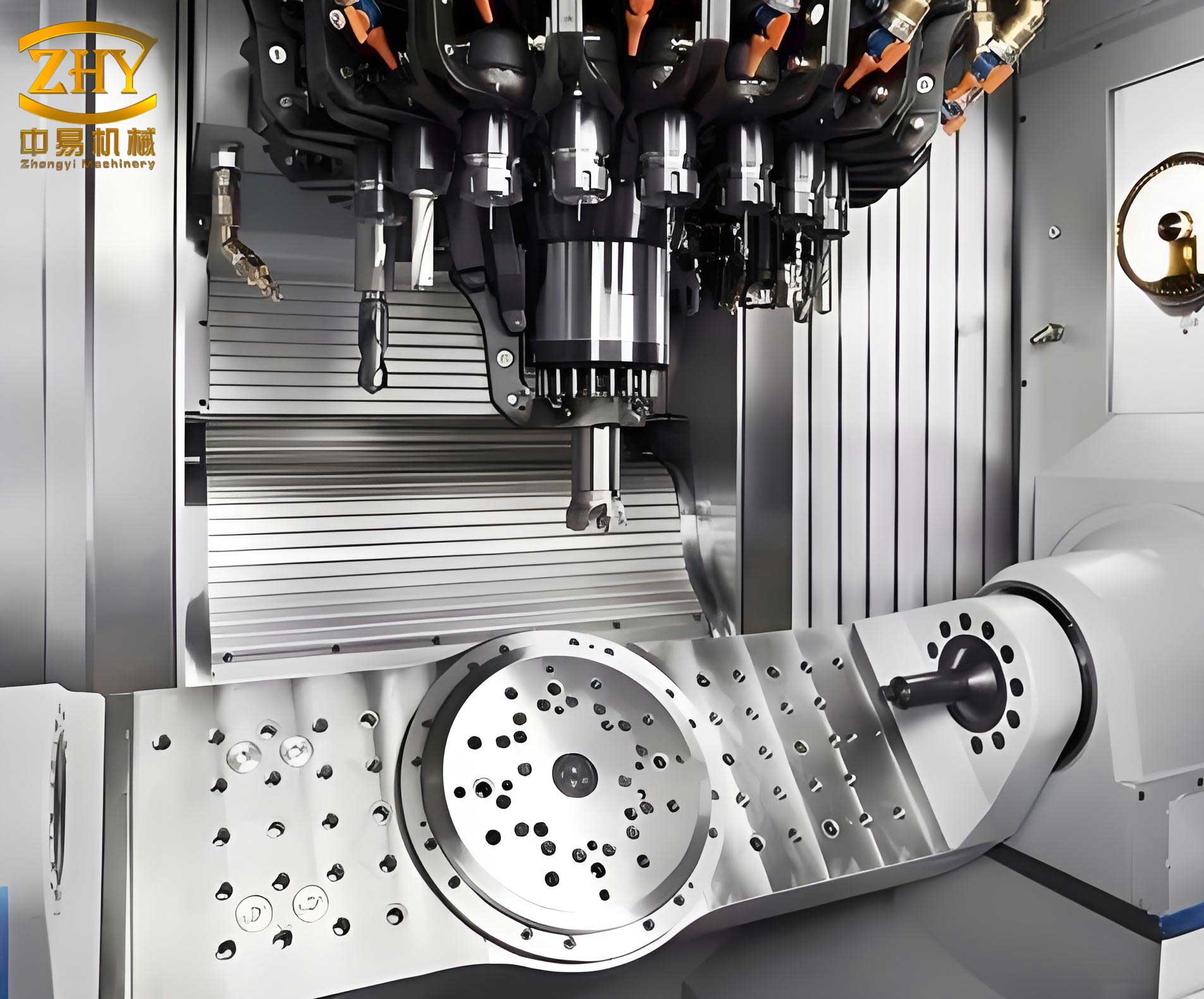
The importance of stress control in machine tool castings cannot be overstated, as these components form the backbone of industrial machinery. Residual stresses arise from differential cooling rates, phase changes, and geometric constraints, potentially leading to catastrophic failures if unmanaged. My research focuses on integrating physicochemical testing techniques with advanced simulation to predict and mitigate these issues. This approach aligns with industry demands for enhanced reliability and performance in high-end machine tool castings.
To delve deeper, I first outline the numerical simulation methodology. JSCAST casting simulation software enables the prediction of flow patterns, defect formation tendencies, and locations through flow calculations. Solidification calculations allow for forecasting shrinkage porosity, temperature distribution, and solidification sequences. By leveraging temperature field data from solidification analysis, stress computations can predict internal stresses, deformation magnitudes, and fracture risks within machine tool castings. For this study, I developed three-dimensional models of bed castings using SolidWorks, exported them in STL format, and imported them into JSCAST. After setting computational conditions and material properties—such as thermal conductivity, specific heat, and elastic modulus—I performed comprehensive parsing calculations for filling, solidification, and stress analysis.
The underlying physics involves heat transfer and stress development equations. For instance, the transient heat conduction during solidification can be modeled using Fourier’s law in differential form: $$ \rho c_p \frac{\partial T}{\partial t} = \nabla \cdot (k \nabla T) + Q $$ where \( \rho \) is density, \( c_p \) is specific heat capacity, \( T \) is temperature, \( t \) is time, \( k \) is thermal conductivity, and \( Q \) represents internal heat sources like latent heat release. Stress evolution follows the thermo-elastic-plastic constitutive relation: $$ \sigma = \mathbf{D} : (\epsilon – \epsilon_{th} – \epsilon_{pl}) $$ with \( \sigma \) as the stress tensor, \( \mathbf{D} \) the elasticity matrix, \( \epsilon \) the total strain, \( \epsilon_{th} \) the thermal strain (given by \( \alpha \Delta T \), where \( \alpha \) is the coefficient of thermal expansion), and \( \epsilon_{pl} \) the plastic strain. These equations are solved numerically in JSCAST to simulate behavior in machine tool castings.
Moving to results, the filling process simulation reveals critical insights. For the precision turning center bed casting, a gating system without choke design ensured平稳 filling, minimizing turbulence and gas entrapment. In contrast, the horizontal machining center bed casting employed a horizontal choke, leading to higher fluid velocities in runners and increased turbulent tendencies. This design caused unstable filling, poor slag removal, and potential gas porosity, which could induce stress imbalances and subsequent deformation in machine tool castings during machining. The velocity field \( \vec{v} \) in the mold can be described by the Navier-Stokes equations for incompressible flow: $$ \rho \left( \frac{\partial \vec{v}}{\partial t} + \vec{v} \cdot \nabla \vec{v} \right) = -\nabla p + \mu \nabla^2 \vec{v} + \rho \vec{g} $$ where \( p \) is pressure, \( \mu \) is dynamic viscosity, and \( \vec{g} \) is gravity. Optimizing gating designs is crucial to reduce defects in machine tool castings.
Temperature field and solidification process analyses further highlight stress origins. The bed castings exhibited higher temperature fields in guideway regions, especially areas farther from gates or with greater wall thicknesses. This non-uniformity fosters thermal stresses. Specifically, the lower box bed solidified slower than the upper box, due to differences in heat transfer coefficients near cores and openings. The solidification time \( t_s \) can be approximated using Chvorinov’s rule: $$ t_s = C \left( \frac{V}{A} \right)^2 $$ where \( C \) is a mold constant, \( V \) is volume, and \( A \) is surface area. Variations in \( V/A \) ratios across machine tool castings lead to differential cooling, promoting phase transformation stresses and microstructural stresses. The table below summarizes key simulation parameters for two machine tool castings studied.
| Parameter | Precision Turning Center Bed | Horizontal Machining Center Bed |
|---|---|---|
| Material | Gray Iron (Grade 250) | Gray Iron (Grade 300) |
| Pouring Temperature | 1380°C | 1400°C |
| Mold Type | Green Sand | Resin Sand |
| Simulated Solidification Time | 4.2 hours | 5.1 hours |
| Max Thermal Gradient | 150°C/cm | 180°C/cm |
Casting defects and stress-deformation predictions are equally vital. Shrinkage porosity appeared in gates, cross guideways, vertical guideways, and nodal points—areas with significant temperature differentials. These defects can induce contraction stresses, exacerbating deformation in machine tool castings. The shrinkage volume \( V_{sh} \) can be estimated from the density change: $$ V_{sh} = V_0 \left( \frac{\rho_l – \rho_s}{\rho_l} \right) $$ where \( V_0 \) is initial volume, \( \rho_l \) is liquid density, and \( \rho_s \) is solid density. To mitigate this, chill placement or optimized gating for directional solidification is recommended. Stress simulations indicated that cross guideways experienced notable bending deformation, with tensile stresses at roots reaching 160–180 MPa and compressive stresses on surfaces ranging from -70 to -180 MPa. Vertical guideways, being shorter, showed lower stresses: 14–26 MPa tensile and -27 to -52 MPa compressive. The deformation displacement \( u \) in guideways follows from strain integration: $$ u = \int \epsilon \, dx $$ where \( \epsilon \) is the strain tensor component. For the horizontal machining center bed, displacement field simulations revealed larger deformations in the length direction (Y-axis) compared to width (X-axis) and height (Z-axis) directions, with no significant warping observed. The strain energy density \( U \) associated with deformation is: $$ U = \frac{1}{2} \sigma_{ij} \epsilon_{ij} $$ summing over indices \( i \) and \( j \).
Residual stress measurements using the blind-hole method provide experimental validation. This technique involves attaching strain rosettes to the surface of machine tool castings, drilling a small hole (1.5 mm diameter, 2 mm depth) at the center, and measuring the released strains to compute residual stresses. The principle relies on stress relief: $$ \epsilon_{r} = -\frac{1+\nu}{E} \sigma_{r} + \frac{1}{E} \sigma_{\theta} $$ $$ \epsilon_{\theta} = \frac{1}{E} \sigma_{r} – \frac{1+\nu}{E} \sigma_{\theta} $$ where \( \epsilon_{r} \) and \( \epsilon_{\theta} \) are radial and tangential strains, \( \sigma_{r} \) and \( \sigma_{\theta} \) are radial and tangential stresses, \( E \) is Young’s modulus, and \( \nu \) is Poisson’s ratio. Measurements were taken on gray iron bed castings at shakeout temperatures of 200°C and 500°C, and on ductile iron ram castings before and after rough machining. The results, tabulated below, show that residual stresses are predominantly compressive due to casting geometry.
| Sample Condition | Max Residual Stress (MPa) | Min Residual Stress (MPa) | Average Stress (MPa) |
|---|---|---|---|
| Gray Iron (200°C shakeout) | -95.7 | -1.4 | -52.3 |
| Gray Iron (500°C shakeout) | -172.9 | -7.9 | -89.6 |
| Ductile Iron (before machining) | -65.5 | 6.1 | -24.8 |
| Ductile Iron (after machining) | -156.5 | -25.8 | -91.2 |
From this data, I observe that lower shakeout temperatures reduce residual stresses in machine tool castings, as slower cooling allows more stress relaxation. Ductile iron castings exhibit lower residual stresses than gray iron ones, attributable to their higher ductility and graphite nodule morphology, which absorbs stress. However, rough machining significantly increases residual stresses due to induced mechanical stresses, highlighting the need for post-machining stress relief treatments like thermal aging or vibration stress relief. The stress increment from machining \( \Delta \sigma_{mach} \) can be modeled as: $$ \Delta \sigma_{mach} = K_m \cdot f(V_t, d) $$ where \( K_m \) is a material constant, \( V_t \) is cutting speed, and \( d \) is depth of cut.
Expanding on the discussion, the synergy between simulation and experimentation is crucial for advancing machine tool castings quality. Numerical models allow parametric studies—for instance, varying gate designs or cooling rates—to optimize processes without costly physical trials. I further analyzed stress distributions using finite element methods (FEM) post-simulation. The von Mises stress \( \sigma_{v} \), indicative of yielding risk, is computed as: $$ \sigma_{v} = \sqrt{\frac{(\sigma_1 – \sigma_2)^2 + (\sigma_2 – \sigma_3)^2 + (\sigma_3 – \sigma_1)^2}{2}} $$ where \( \sigma_1, \sigma_2, \sigma_3 \) are principal stresses. In guideways of machine tool castings, \( \sigma_{v} \) often exceeded 100 MPa, necessitating design modifications such as rib addition or uniform wall thickness. Moreover, the effect of alloy composition on stress was considered. Gray iron’s flake graphite creates stress concentrations, whereas ductile iron’s spheroidal graphite enhances stress dissipation, explaining the lower residuals. The graphite aspect ratio \( R_a \) influences stress via: $$ \sigma_{local} = \sigma_{applied} \left(1 + 2\sqrt{R_a}\right) $$ for gray iron.
To enhance dimensional stability, I propose integrated strategies for machine tool castings. First, optimize casting designs using topology optimization algorithms to minimize stress risers. Second, control solidification through advanced cooling techniques like conformal cooling channels in molds. Third, implement in-process monitoring with sensors to track temperature and strain in real-time. Fourth, apply post-casting treatments such as sub-zero cooling or peening to relieve stresses. The efficacy of thermal aging can be assessed using the Arrhenius equation for stress relaxation: $$ \tau = \tau_0 \exp\left(\frac{Q}{RT}\right) $$ where \( \tau \) is relaxation time, \( \tau_0 \) is a pre-exponential factor, \( Q \) is activation energy, \( R \) is gas constant, and \( T \) is temperature. For machine tool castings, holding at 500–550°C for several hours is typical.
In conclusion, this study underscores the critical role of residual stress management in machine tool castings for achieving high precision and durability. Through numerical simulation with JSCAST, I identified that non-optimal gating designs cause turbulent filling, while uneven temperature fields during solidification lead to thermal and phase transformation stresses. Defects like shrinkage porosity further contribute to stress concentrations. Deformation is more pronounced in length directions, with cross guideways bearing higher stresses than vertical ones. Experimental measurements via the blind-hole method confirmed that gray iron machine tool castings have higher residual stresses than ductile iron ones, lower shakeout temperatures reduce stresses, and rough machining increases them significantly. These findings advocate for a holistic approach combining simulation-driven design, controlled cooling, and post-processing treatments to enhance the performance of machine tool castings in advanced manufacturing systems.
Future work should explore multi-scale modeling linking microstructural evolution to macro-stresses in machine tool castings, and develop intelligent foundry systems using machine learning for real-time stress prediction. Additionally, non-destructive testing methods like neutron diffraction or ultrasonic testing could complement blind-hole measurements for comprehensive stress mapping. By advancing these techniques, the foundry industry can better address the perennial challenge of residual stress, ensuring that machine tool castings meet the ever-increasing demands of precision engineering.