
As a foundry engineer specializing in the production of heavy-duty machine tool castings, I have encountered numerous challenges in ensuring the quality of critical components like work tables for CNC gantry machines. The work table is a vital part of machine tools, where its strength, stiffness, hardness, and residual stress directly influence the machining accuracy and longevity of the equipment. High-end machine tools demand exceptional quality in these castings, but common defects such as surface porosity, slag inclusions, and shrinkage porosity in T-slots often arise during production. These issues, particularly T-slot shrinkage that only becomes apparent after machining, can lead to significant client losses in processing time and even delay delivery schedules. Therefore, preventing these defects requires continuous learning, thoughtful analysis, and practical summarization in the casting process. In this article, I will share my first-hand experience in addressing these problems through optimized gating system design, meticulous melting and pouring controls, and detailed molding operations, all aimed at enhancing the reliability of machine tool castings.
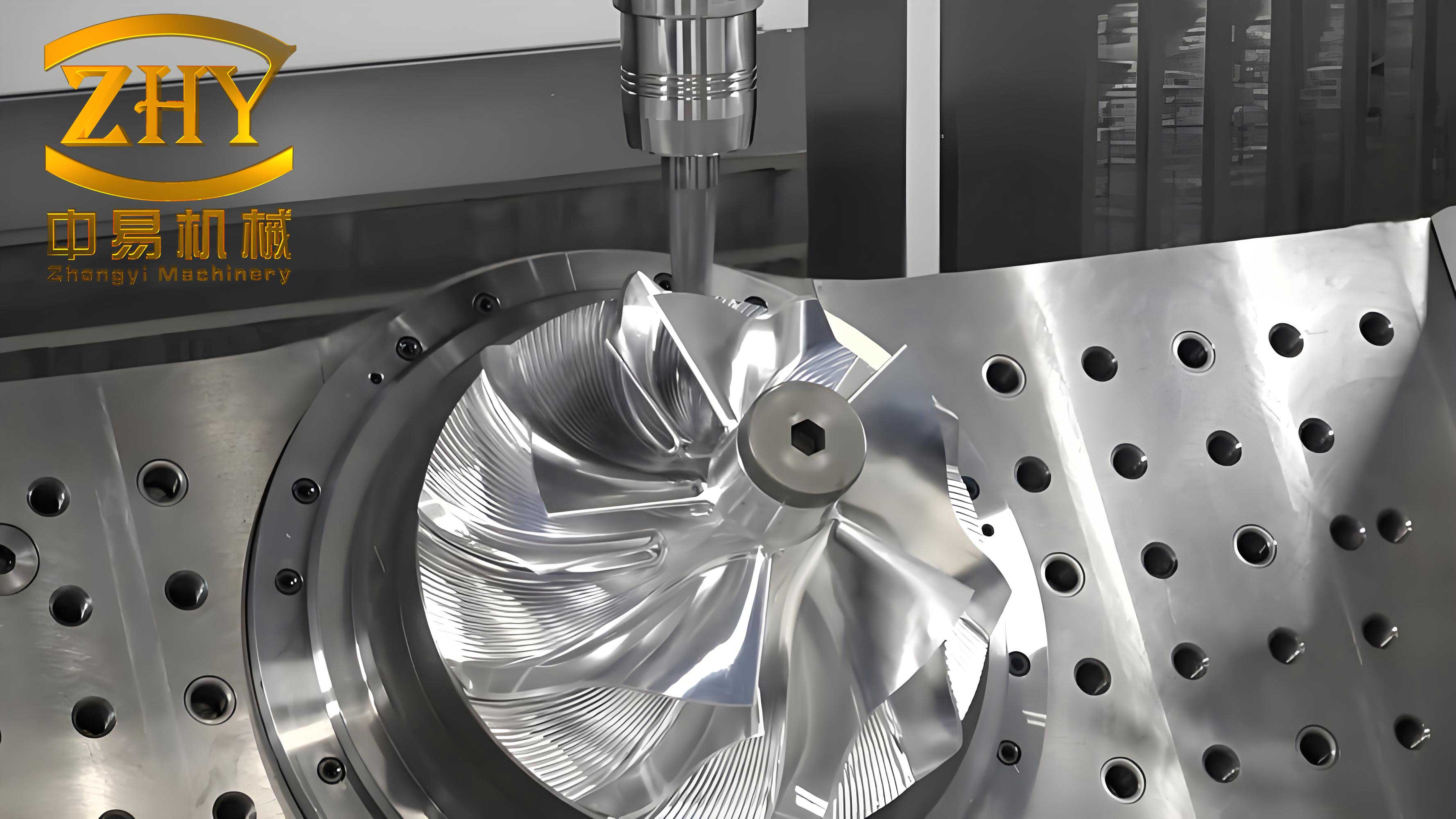
The work table for a gantry machining center, with overall dimensions of 3,020 mm × 1,520 mm × 260 mm and a weight of approximately 3,100 kg, serves as a prime example of such high-demand machine tool castings. The material specified is HT300 gray iron, with a hardness requirement of 180–200 HBW and dimensional tolerances adhering to the DCTG11 grade per GB/T 6414-2017. Our production utilized furan resin sand for manual molding, induction furnace melting, and a synthetic cast iron process. Through iterative improvements, we successfully mitigated defects like surface porosity, slag inclusions, T-slot shrinkage, and nitride fissures on slide rail surfaces. This journey involved refining every aspect of the casting process, from initial design to final inspection, ensuring that these machine tool castings meet the stringent standards required for precision applications.
In the realm of machine tool castings, the design of the gating system is paramount. For this work table, the T-slot plane is the most critical surface, necessitating its placement in the drag (lower mold) to minimize defects. The entire casting was positioned in the cope (upper mold), with a bottom-gating system employed to ensure smooth metal flow. Since core supports were prohibited on the table surface, a hanging core technique was adopted for the upper mold cores. The pattern was divided lengthwise into three large cores, each with six positioning core prints. During core making, pre-embedded iron wires were placed in four core prints for lifting, and six nested core prints were set for upward venting to prevent gas holes from core gases. The gating system featured a U-shaped runner with symmetrically distributed ingates on both sides and a sprue at the center. The cross-sectional areas were carefully calculated: total ingate area ΣS_ingate = 5,760 mm², total runner area ΣS_runner = 7,700 mm², and sprue area ΣS_sprue = 6,358 mm², with a ratio ΣS_ingate : ΣS_runner : ΣS_sprue = 1 : 1.3 : 1.1. The choke was set at the ingates. Sixteen ceramic filters (75 mm × 75 mm) were vertically placed between the runner and ingates to ensure calm filling and effective slag trapping. Thirty-three flat vents (40 mm × 12 mm × 400 mm) were distributed at junctions of ribs and bosses on the cope to facilitate gas escape. This design aimed to achieve a balanced temperature field and reduce turbulence, critical for high-quality machine tool castings.
Molding operations were equally crucial. Cores were produced using a 10-ton fixed mixer, with reinforcement grids made of ø14 mm threaded steel bars to ensure strength. Vent ropes (ø6 mm) were attached to the reinforcement, and lifting wires were embedded at designated spots. After stripping and coating, cores were placed on flat plates to prevent deformation. For molding, a 20-ton fixed mixer was used, with the pattern positioned on a level plate to avoid distortion during flask placement. Wooden rods were inserted in specified cope areas to create vent holes and hanging points for cores. Flat vents were placed at marked locations. During closing, the three large cores were sequentially lifted and positioned using core prints, secured with wires, and the cope was slowly rotated to a vertical position for cleaning with compressed air before being turned horizontally. The drag was leveled with cross lines and supported with wedge blocks, with sealing clay strips (ø8 mm) placed in fire grooves to prevent metal leakage. After closing, pouring cups were placed on vents, and vent ropes (ø10 mm) were inserted into core print vents and surrounded by resin sand to prevent clogging from overflow metal.
Melting and pouring were conducted in a 3-ton medium-frequency induction furnace. A synthetic cast iron process was employed, using scrap steel, pig iron, and returns, with additions of carburizer and silicon carbide for carbon and silicon adjustment. The melting temperature ranged from 1,500 to 1,520°C, and micro-alloys such as antimony (ω(Sb) 0.015%–0.030%) and tin (ω(Sn) 0.020%–0.040%) were added to enhance properties. Inoculation involved 0.3%–0.4% silicon-calcium-barium inoculant during tapping and 0.07%–0.10% 75% ferrosilicon powder for stream inoculation during pouring. The pouring temperature was maintained between 1,380 and 1,400°C. These parameters were optimized to control the microstructure and minimize defects in these machine tool castings.
Initial production of 31 pieces revealed several defects after client machining, as summarized in Table 1. This analysis guided our subsequent improvements, focusing on the root causes and targeted solutions for each issue.
| Defect Type | Location | Number of Defects | Defect Rate (%) |
|---|---|---|---|
| Surface Porosity | Table Surface | 2 | 6.44 |
| Slag Inclusions | Table Surface | 1 | 3.22 |
| Shrinkage Porosity | T-Slot Bottom | 1 | 3.22 |
| Nitride Fissures | Slide Rail Surface | 1 | 3.22 |
| Total Defects | All | 5 | 16.1 |
Surface porosity and slag inclusions were primarily attributed to inadequate core coating and turbulent metal flow. During coating, prolonged冲刷 of the mold cavity allowed alcohol solvent to penetrate deeply, and insufficient baking after combustion led to侵入性 gas holes. Additionally, the original gating system caused two streams of metal to converge in the middle, creating turbulence that reduced velocity and temperature at the ends, trapping slag and gas. To address this, we optimized the gating system to a single-side ingate with bottom-pouring tubes, as shown in simulations using casting CAE software. This change promoted smoother filling and a more uniform temperature field, reducing gas entrapment. Overflow risers were positioned opposite the metal flow direction to capture cold, dirty metal. The improved design can be represented by the fluid flow equation for laminar filling:
$$ v = \frac{Q}{A} $$
where \( v \) is the flow velocity, \( Q \) is the volumetric flow rate, and \( A \) is the cross-sectional area. By increasing \( A \) at critical points, we reduced \( v \) to minimize turbulence. Furthermore, baking procedures were enhanced: after coating, the mold cavity was evenly烘烤 with a torch to evaporate residual solvents. These steps significantly curtailed surface defects in the machine tool castings.
T-slot shrinkage porosity resulted from low carbon equivalent and overlapping thermal gradients. The original chemical composition had ω(C) 3.05%–3.15% and ω(Si) 1.60%–1.70%, giving a carbon equivalent (CE) calculated as:
$$ CE = C + \frac{Si}{3} $$
For the initial composition, CE was approximately 3.65%, which偏低 and increased shrinkage tendency. We adjusted to ω(C) 3.15%–3.25% and ω(Si) 1.65%–1.75%, raising CE to about 3.76%. This higher CE reduces the freezing range and improves feeding characteristics. Additionally, CAE simulation of the original gating system showed that flow-induced hot spots coincided with geometric hot spots at the T-slot, exacerbating shrinkage. The optimized single-side gating with bottom tubes distributed heat more evenly, as evidenced by temperature field simulations. The heat transfer during solidification can be modeled using Fourier’s law:
$$ q = -k \nabla T $$
where \( q \) is the heat flux, \( k \) is the thermal conductivity, and \( \nabla T \) is the temperature gradient. By flattening \( \nabla T \) through better gating, we minimized localized shrinkage. Table 2 compares the key parameters before and after optimization for these machine tool castings.
| Parameter | Original Process | Optimized Process |
|---|---|---|
| Carbon Content ω(C) (%) | 3.05–3.15 | 3.15–3.25 |
| Silicon Content ω(Si) (%) | 1.60–1.70 | 1.65–1.75 |
| Carbon Equivalent CE (%) | ~3.65 | ~3.76 |
| Gating System | U-Shaped Runner with Symmetrical Ingates | Single-Side Ingate with Bottom Tubes |
| Pouring Temperature (°C) | 1,380–1,400 | 1,380–1,400 |
| Inoculation Type | Silicon-Calcium-Barium | Zirconium-Containing Inoculant |
Nitride fissures on slide rail surfaces were linked to high nitrogen content and hydrogen from mold moisture. Analysis of defective samples revealed ω(N) up to 105 ppm. In thick sections like slide rails, slow solidification allows nitrogen segregation, leading to porosity. This is described by Sieverts’ law for gas solubility in iron:
$$ [N] = k_N \sqrt{P_{N_2}} $$
where \( [N] \) is the nitrogen concentration, \( k_N \) is the equilibrium constant, and \( P_{N_2} \) is the partial pressure of nitrogen. To reduce \( [N] \), we controlled charge materials: using high-quality carbon steel scrap, graphite-based carburizer with ω(N) ≤ 500 ppm, low-nitrogen furan resin (ω(N) 3–5%), and returns that were shot-blasted. Moreover, zirconium-containing inoculant was applied during tapping and stream inoculation; zirconium forms stable nitrides, lowering free nitrogen. The reaction can be expressed as:
$$ Zr + [N] \rightarrow ZrN $$
This reduced final melt nitrogen to 70–90 ppm. Additionally, molds were thoroughly baked before closing to eliminate moisture, minimizing hydrogen contribution. The combined effect is summarized in Table 3, showing nitrogen control measures for machine tool castings.
| Control Measure | Target | Effect on Nitrogen (ppm) |
|---|---|---|
| Charge Material Selection | Low-Nitrogen Sources | Reduction by ~20% |
| Use of Zirconium Inoculant | Formation of ZrN | Reduction to 70–90 |
| Mold Baking | Eliminate Moisture | Minimize Hydrogen |
| Resin Type | Low-Nitrogen Furan | Base Level Control |
After implementing these improvements, we produced 66 pieces of machine tool castings for client validation. Post-machining inspection revealed no defects—zero instances of surface porosity, slag inclusions, T-slot shrinkage, or nitride fissures. The defect rate dropped from 16.1% to 0%, demonstrating the effectiveness of our approach. This success underscores the importance of holistic process optimization in manufacturing high-integrity machine tool castings.
In conclusion, the production of high-end CNC gantry machine tool castings requires meticulous attention to detail across all stages. Key lessons include: optimizing gating systems for平稳 filling and uniform temperature distribution; adjusting chemical composition to higher carbon equivalents for reduced shrinkage; controlling nitrogen through charge selection and zirconium inoculation; and ensuring thorough mold preparation to eliminate gas sources. These strategies not only resolve specific defects but also enhance overall casting quality. As a foundry practitioner, I emphasize that continuous improvement—rooted in simulation, analysis, and practical tweaks—is essential for advancing the reliability of machine tool castings. Future work may explore advanced simulation techniques or new alloy developments to further push the boundaries of performance in these critical components.
The journey from defect-ridden to flawless machine tool castings highlights the synergy between traditional craftsmanship and modern technology. By integrating CAE simulations with hands-on process controls, we can achieve remarkable consistency. For instance, the gating design optimization involved iterative simulations to minimize Reynolds number (Re) for laminar flow:
$$ Re = \frac{\rho v D}{\mu} $$
where \( \rho \) is density, \( v \) is velocity, \( D \) is hydraulic diameter, and \( \mu \) is viscosity. Keeping Re low reduces turbulence, a principle vital for machine tool castings. Similarly, solidification modeling helped predict shrinkage spots using the Chvorinov rule:
$$ t_s = B \left( \frac{V}{A} \right)^n $$
where \( t_s \) is solidification time, \( V \) is volume, \( A \) is surface area, \( B \) is a mold constant, and \( n \) is an exponent. By modifying gating to alter \( V/A \) ratios in critical zones, we improved feeding. These technical nuances, combined with rigorous quality checks, ensure that every batch of machine tool castings meets the highest standards. Ultimately, this practice not only satisfies client demands but also contributes to the broader field of precision manufacturing, where dependable machine tool castings form the backbone of industrial productivity.