
As someone deeply involved in the foundry industry for decades, I have witnessed the transformative journey from being a casting giant to aspiring for foundry power status. This transition hinges on the collective strength of numerous enterprises undergoing transformation, renovation, and product upgrading. One of the most critical aspects of this era is the shift toward producing high-end castings, particularly those essential for advanced machinery like machine tool castings. In this article, I will elaborate on the key issues surrounding product upgrading and the development of high-end castings, drawing from extensive experience and industry observations. The focus will be on the indispensable role of machine tool castings in this landscape, emphasizing performance requirements, quality stability, foundational technologies, and management capabilities.
The concept of high-end castings is not merely about complexity or cost; it revolves around two non-negotiable conditions: high performance specifications and exceptional quality consistency. In sectors such as high-speed rail, wind energy, and precision manufacturing, the failure of a single component can lead to catastrophic consequences. For instance, in machine tool castings, the demand for high rigidity, low stress, and dimensional accuracy is paramount because these castings form the backbone of precision machine tools, directly influencing their performance and longevity. Without both high performance and stable quality, castings cannot be deemed truly high-end. This duality is what sets apart leading foundries from the rest, and it is a principle I have always upheld in my work.
To achieve this, foundational technical work must be executed meticulously. This includes optimizing melting processes, ensuring high-quality raw materials, and implementing rigorous process controls. Over the years, I have seen that cutting corners in these areas inevitably leads to quality fluctuations. For machine tool castings, the melting temperature, chemical composition, and treatment methods are critical. Let me illustrate this with some formulas and tables that summarize key parameters. The relationship between carbon equivalent (CE) and properties in cast iron can be expressed as:
$$ CE = C + \frac{Si + P}{3} $$
where C is carbon content, Si is silicon, and P is phosphorus. For high-end machine tool castings, maintaining a precise CE range is vital to ensure adequate fluidity and strength while minimizing shrinkage defects. Additionally, the influence of alloying elements on mechanical properties can be modeled. For example, the yield strength (σ_y) of nodular iron often depends on factors like silicon and copper content:
$$ \sigma_y = A + B \cdot Si + C \cdot Cu $$
where A, B, and C are constants derived from empirical data. These formulas underscore the need for precise control in metallurgy.
Below is a table summarizing typical chemical composition ranges for high-performance machine tool castings, based on industry benchmarks:
| Element | Range (wt%) | Influence on Properties |
|---|---|---|
| C | 3.6-3.9 | Enhances graphitization, reduces shrinkage |
| Si | 2.0-2.8 | Improves strength and hardness, but must be controlled for low stress |
| Mn | 0.2-0.4 | Increases hardenability, but can segregate |
| P | <0.03 | Minimized to prevent brittleness |
| S | <0.01 | Low levels crucial for nodularization |
| Mg | 0.04-0.06 | Essential for spheroidal graphite formation |
| Cu | 0.5-1.0 | Improves strength and wear resistance |
Such tables are instrumental in standardizing production processes. Moreover, the mechanical properties of these castings must be consistently high. For machine tool castings, tensile strength, yield strength, and elongation are key metrics. Here’s another table showing typical values for high-end nodular iron used in machine tools:
| Property | Target Value | Tolerance Range |
|---|---|---|
| Tensile Strength | ≥500 MPa | ±20 MPa |
| Yield Strength | ≥350 MPa | ±15 MPa |
| Elongation | ≥10% | ±2% |
| Hardness (HBW) | 180-220 | ±10 |
| Residual Stress | <50 MPa | Measured via X-ray diffraction |
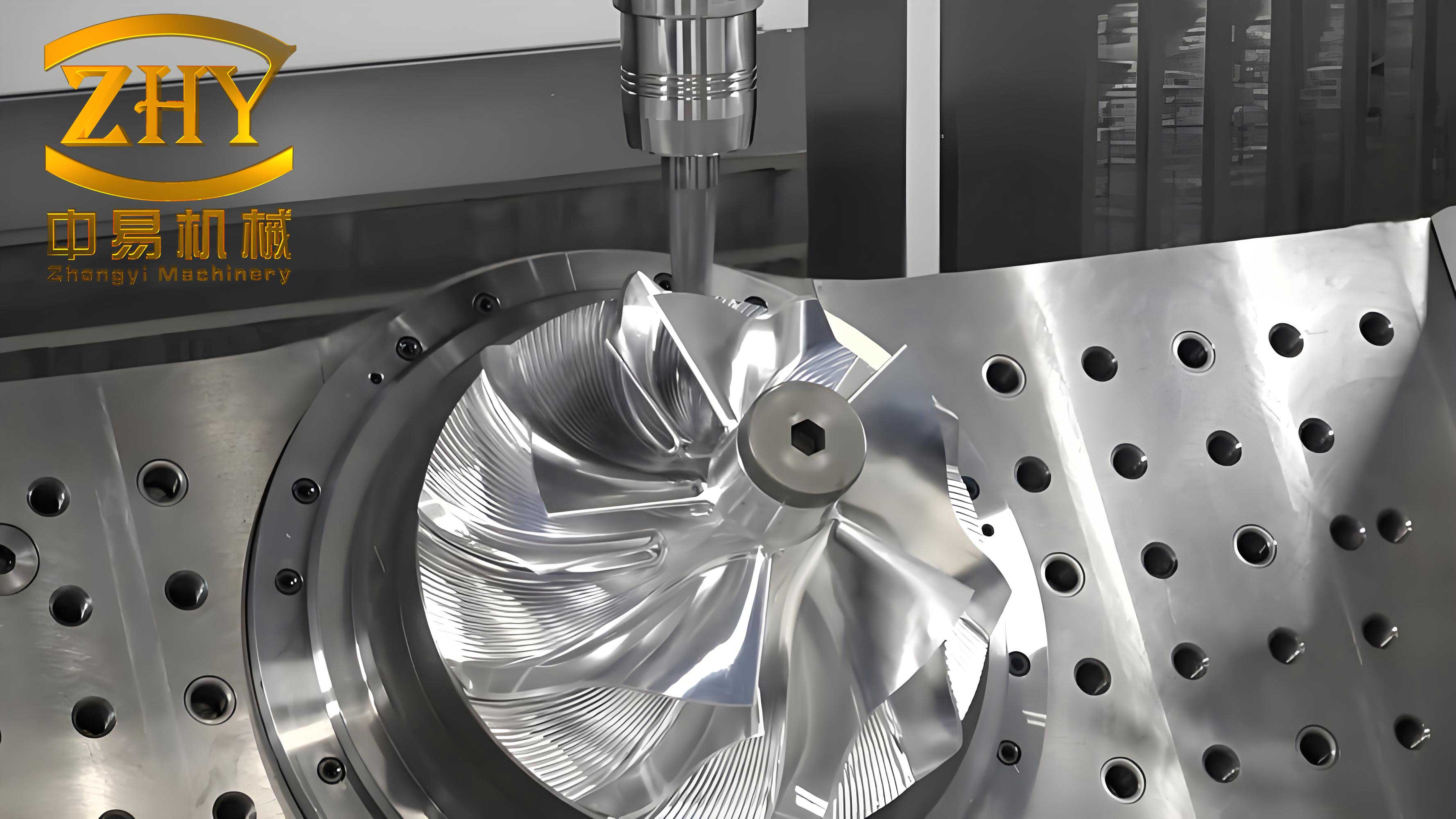
These targets are not arbitrary; they stem from the rigorous demands of precision engineering. To visualize the importance of machine tool castings in this context, consider the following image that highlights their structural role:
Beyond technical specifications, the melting process itself requires profound attention. I recall instances where fluctuations in tapping temperature led to inconsistent results. The ideal tapping temperature for high-end castings, especially machine tool castings, should exceed 1500°C to ensure proper fluidity and reduced inclusions. This can be expressed through the heat transfer equation during melting:
$$ Q = m \cdot c \cdot \Delta T $$
where Q is the heat input, m is the mass of iron, c is the specific heat capacity, and ΔT is the temperature rise. Maintaining this requires high-quality coke or alternative energy sources, as compromising on raw materials invariably compromises quality. Over time, I have documented the correlation between tapping temperature and defect rates, which can be summarized as:
| Period | Tapping Temperature Range (°C) | Overall Rejection Rate (%) | Melting-Related Defects (%) |
|---|---|---|---|
| Early Phase | 1440-1470 | 8-12 | 10-15 |
| Mid Phase | 1460-1490 | 7-10 | 3-5 |
| Current Phase | 1490-1510 | 3-5 | 1-3 |
This table clearly shows that as temperature control tightened, rejection rates plummeted. For machine tool castings, such stability is non-negotiable because even minor variations can affect dimensional accuracy and stress levels.
Another critical aspect is the treatment of molten iron. In nodular iron production, the spheroidization process must be tightly controlled. The reaction kinetics can be described as:
$$ \frac{d[Mg]}{dt} = -k \cdot [Mg] \cdot [S] $$
where [Mg] and [S] are concentrations of magnesium and sulfur, respectively, and k is the rate constant. Ensuring a consistent Mg recovery rate, typically between 40-60%, is essential for uniform graphite nodules. This is particularly vital for machine tool castings, where graphite morphology influences damping capacity and thermal stability. I often use the following formula to estimate nodule count per unit area (N_A):
$$ N_A = \frac{4 \cdot N}{\pi \cdot d^2} $$
where N is the number of nodules observed in a micrograph and d is the average diameter. A high nodule count (e.g., >150/mm²) correlates with better mechanical properties.
However, technology alone is insufficient. Management capability and quality philosophy are the decisive factors in achieving consistent quality. In my experience, many foundries excel in prototyping but falter in mass production due to lax management. For high-end castings like machine tool castings, every step—from raw material inspection to final testing—must be governed by strict protocols. This involves statistical process control (SPC) methods, such as monitoring chemical composition using control charts. The mean (μ) and standard deviation (σ) for key elements should be tracked:
$$ \mu = \frac{\sum_{i=1}^{n} x_i}{n}, \quad \sigma = \sqrt{\frac{\sum_{i=1}^{n} (x_i – \mu)^2}{n}} $$
where x_i are individual measurements. For instance, in producing machine tool castings, the silicon content might be controlled to μ = 2.5% with σ ≤ 0.1%. This narrow range ensures uniformity across batches.
Furthermore, quality assurance extends to non-destructive testing. Techniques like ultrasonic testing (UT) can detect internal flaws, with the sound velocity (v) related to material density (ρ) and elastic modulus (E):
$$ v = \sqrt{\frac{E}{\rho}} $$
For nodular iron, v typically ranges from 5400-5800 m/s. Deviations indicate potential defects. In one project focused on machine tool castings, we implemented 100% UT inspection, which reduced field failures by over 30%.
The human element cannot be overstated. Training operators to adhere to procedures and fostering a culture of zero tolerance for defects are imperative. I have seen foundries where management prioritized cost over quality, leading to subpar machine tool castings that undermined end-product reliability. Conversely, those that invested in continuous improvement and employee engagement achieved remarkable stability. For example, implementing a Total Productive Maintenance (TPM) system can reduce downtime and variability. The overall equipment effectiveness (OEE) can be calculated as:
$$ OEE = Availability \times Performance \times Quality $$
where each factor is a percentage. In high-end casting production, targeting OEE > 85% is common, with quality contributions exceeding 99%.
Let’s delve deeper into the specifics of machine tool castings. These components demand exceptional geometric stability and minimal distortion under load. The stiffness (K) of a casting can be approximated by:
$$ K = \frac{E \cdot I}{L^3} $$
where E is Young’s modulus, I is the moment of inertia, and L is the length. For gray iron or nodular iron used in machine tools, E ranges from 120-180 GPa. Enhancing stiffness often involves optimizing rib design and wall thickness, which requires advanced simulation tools. Finite element analysis (FEA) models, such as those based on the heat transfer equation during solidification:
$$ \frac{\partial T}{\partial t} = \alpha \nabla^2 T $$
where α is thermal diffusivity, help predict shrinkage and stress patterns. This computational approach is indispensable for developing high-performance machine tool castings.
Moreover, the role of alloying elements in achieving desired properties cannot be ignored. For instance, adding copper (Cu) and molybdenum (Mo) enhances tensile strength and fatigue resistance. The fatigue limit (σ_f) of nodular iron can be estimated using:
$$ \sigma_f = 0.5 \cdot \sigma_u + 100 \text{ MPa} $$
where σ_u is the ultimate tensile strength. For machine tool castings subjected to cyclic loads, this is critical. Below is a table comparing different grades of nodular iron used in various applications, highlighting the prominence of machine tool castings:
| Grade | Typical Application | Tensile Strength (MPa) | Elongation (%) | Key Alloying Elements |
|---|---|---|---|---|
| QT400-18 | Low-temperature components | 400-450 | 18-22 | Low Mn, P |
| QT500-14 | General engineering | 500-550 | 14-18 | Si, Cu |
| QT600-10 | Gears and brackets | 600-650 | 10-14 | Cu, Mo |
| QT800-5 | High-fatigue parts | 800-850 | 5-8 | Cu, Mo, Ni |
| High-Si Iron | Machine tool castings | 450-600 | 10-22 | Elevated Si, low stress |
As evident, machine tool castings often require a balance of strength and ductility, achieved through tailored compositions. The high-silicon variants, for example, offer good machinability and thermal stability, which are essential for precision machine tools.
In terms of production volume, consistency is paramount. I advocate for statistical methods like process capability indices (Cpk) to measure how well a process meets specifications:
$$ Cpk = \min\left( \frac{USL – \mu}{3\sigma}, \frac{\mu – LSL}{3\sigma} \right) $$
where USL and LSL are upper and lower specification limits. For critical dimensions in machine tool castings, a Cpk ≥ 1.67 is desirable, indicating a highly capable process. This mathematical rigor transforms subjective quality assessments into objective metrics.
Beyond technicalities, the business aspect of product upgrading cannot be overlooked. Transitioning from low-value castings to high-end ones like machine tool castings requires strategic investments. The return on investment (ROI) can be modeled as:
$$ ROI = \frac{\text{Net Profit}}{\text{Investment Cost}} \times 100\% $$
Net profit often increases due to higher margins on premium castings, but initial costs for advanced equipment and training are substantial. However, as demand for precision machinery grows globally, focusing on machine tool castings can secure long-term competitiveness.
Environmental considerations also play a role. Sustainable practices, such as optimizing melting energy use, contribute to green manufacturing. The specific energy consumption (SEC) in casting production can be expressed as:
$$ SEC = \frac{E_{\text{total}}}{M_{\text{castings}}} $$
where E_total is total energy input and M is mass of castings produced. Reducing SEC through efficient furnace designs not only cuts costs but aligns with global sustainability goals, enhancing the appeal of high-end castings like machine tool castings in international markets.
In conclusion, the journey toward producing high-end castings, with a special emphasis on machine tool castings, is multifaceted. It demands unwavering commitment to foundational technologies, precise control over metallurgical and process parameters, and a management ethos that prioritizes quality above all. Through formulas, tables, and systematic approaches, foundries can navigate this path successfully. The integration of advanced simulations, statistical controls, and human-centric management forms the bedrock of consistency. As I reflect on my experiences, it is clear that the future of casting lies in embracing these principles—where every machine tool casting produced not only meets stringent specifications but does so with relentless stability, driving progress across industries and solidifying our position in the global foundry landscape.
To further illustrate the interconnectedness of these factors, consider the following summary table that encapsulates the key elements for high-end casting production, particularly relevant to machine tool castings:
| Aspect | Key Parameters | Target Values for Machine Tool Castings | Control Methods |
|---|---|---|---|
| Melting | Tapping temperature, CE, holding time | ≥1500°C, CE 4.2-4.5, ≤10 min | Thermocouples, spectrometers |
| Chemistry | C, Si, Mn, P, S, alloying elements | As per grade-specific tables | OES analysis, SPC charts |
| Treatment | Mg recovery, nodule count, inoculant type | 40-60% Mg, >150 nodules/mm² | Optical microscopy, process logs |
| Solidification | Cooling rate, mold rigidity, feeding | Controlled gradient, high rigidity molds | Simulation software, sand properties |
| Testing | Tensile strength, hardness, NDT | Per specification tables, 100% UT for critical zones | UT, RT, mechanical testers |
| Management | OEE, Cpk, employee training hours | OEE >85%, Cpk ≥1.67, ≥40 hrs/year | Digital dashboards, audits, workshops |
This holistic approach ensures that machine tool castings and other high-end components are not only produced but perfected, contributing to the overarching goal of industrial advancement. As we move forward, continuous innovation in materials science and process engineering will further elevate the standards, making high-end castings the cornerstone of modern manufacturing.