
In my extensive experience in the manufacturing industry, I have observed that residual stresses in machine tool castings pose significant challenges to dimensional stability and performance. These stresses arise during various冷热加工 processes, such as casting, forging, and welding, due to factors like thermal gradients, mechanical constraints, and phase transformations. Traditional methods like natural aging and thermal stress relief have been employed, but they come with drawbacks: natural aging is time-consuming, often taking months or years, while thermal stress relief requires substantial energy investment and specialized equipment. Consequently, vibration stress relief (VSR) has emerged as a viable alternative, particularly for machine tool castings, which demand high precision and durability. This article delves into the机理,工艺参数, and practical applications of VSR, emphasizing its efficacy for machine tool castings through detailed explanations, tables, and formulas.
The fundamental mechanism of vibration stress relief involves subjecting a workpiece, such as a machine tool casting, to cyclic forces that induce resonance. When the casting resonates, alternating stresses superimpose with existing residual stresses, leading to localized plastic deformation that redistributes and reduces these residual stresses. Mathematically, this can be described using the principle of应力叠加. Let the residual stress field be denoted by $\sigma_r(x,y,z)$, and the alternating stress from vibration be $\sigma_a(x,y,z,t) = \sigma_{a0} \sin(\omega t)$, where $\sigma_{a0}$ is the amplitude and $\omega$ is the angular frequency. The total stress becomes:
$$\sigma_{\text{total}} = \sigma_r + \sigma_a$$
When $\sigma_{\text{total}}$ exceeds the material’s yield strength $\sigma_y$ at certain points, microscopic plastic deformation occurs, effectively relaxing the residual stress. Over time, this process homogenizes the stress distribution, enhancing the stability of machine tool castings. The effectiveness of VSR is often quantified by the reduction in residual stress magnitude, which can be modeled using viscoelastic or plasticity theories. For instance, a simplified model for stress relaxation during vibration can be expressed as:
$$\frac{d\sigma_r}{dt} = -k (\sigma_r – \sigma_e) \cdot f(\sigma_a)$$
where $k$ is a material constant, $\sigma_e$ is the equilibrium stress, and $f(\sigma_a)$ is a function of the alternating stress amplitude. This underscores that proper selection of vibration parameters is crucial for optimal results in machine tool castings.
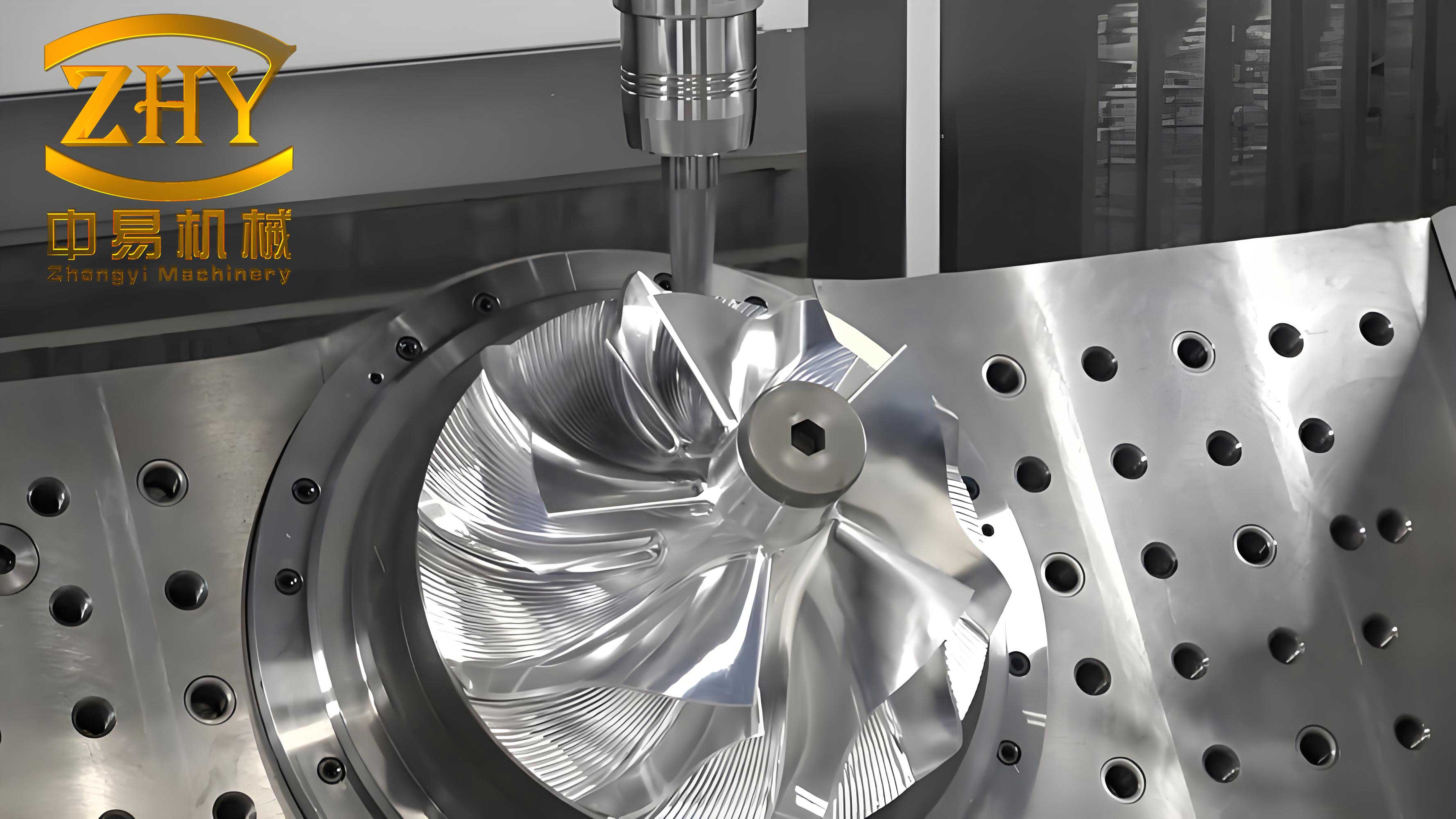
To implement VSR successfully on machine tool castings, several工艺参数 must be carefully determined. These include workpiece支承,激振器 placement, frequency selection,动应力值, and treatment duration. Below, I summarize key considerations in a table format, based on my实践 with various machine tool castings like beds, columns, and slides.
| Parameter | Description | Guidelines for Machine Tool Castings |
|---|---|---|
| Workpiece支承 | Supporting the casting to allow free vibration | Use elastic materials (e.g., rubber pads or wooden blocks); place supports near nodal points to minimize energy loss. |
| 激振器 Installation | Attaching the vibrator to induce resonance | Mount on antinodes (peak vibration areas), often at mid-length for beam-like castings; ensure secure clamping. |
| Frequency Selection | Choosing the激振频率 to achieve resonance | Scan frequencies to find固有频率; operate in亚共振区 (typically 80-90% of resonant frequency) for stability. |
| 动应力值 | Amplitude of alternating stress applied | Set动应力 to 30-70% of material yield strength; adjust via偏心距 on mechanical vibrators. |
| Treatment Time | Duration of vibration application | Typically 20-60 minutes; monitor amplitude and frequency shifts to determine endpoint. |
The selection of these parameters directly impacts the efficacy of VSR on machine tool castings. For instance, frequency determination often involves modal analysis. The fundamental frequency $f_0$ of a casting can be estimated using beam theory for simple geometries:
$$f_0 = \frac{1}{2\pi} \sqrt{\frac{k}{m}}$$
where $k$ is the stiffness and $m$ is the mass. However, complex shapes of machine tool castings require finite element analysis or experimental methods like the撒砂法 mentioned in the reference. Once resonance is achieved, the动应力值 must be optimized. A common criterion is to ensure that the combined stress reaches the yield surface, described by von Mises criterion for ductile materials:
$$\sigma_{\text{von Mises}} = \sqrt{\frac{1}{2}[(\sigma_1 – \sigma_2)^2 + (\sigma_2 – \sigma_3)^2 + (\sigma_3 – \sigma_1)^2]} \geq \sigma_y$$
where $\sigma_1, \sigma_2, \sigma_3$ are principal stresses. By controlling vibration parameters, we can satisfy this condition locally, leading to stress relief in machine tool castings.
In terms of equipment, I have utilized devices similar to the黑龙江海伦振动时效设备厂 model referenced, which feature微机控制 for precise frequency and amplitude regulation. These systems often include sensors to monitor acceleration,频率, and时间, enabling automated process control. For machine tool castings, a typical setup involves a vibrator with a variable-speed motor, accelerometers, and a data logger. The vibrator’s偏心距 $e$ determines the force amplitude $F$ according to:
$$F = m_e e \omega^2$$
where $m_e$ is the eccentric mass. This force induces stresses in the casting, and by adjusting $e$ and $\omega$, we can tailor the动应力值 for different machine tool castings.
To illustrate the practical application, let me discuss a case study involving a slide casting—a common component in machine tools. This machine tool casting is prone to distortion due to residual stresses from casting and machining. By applying VSR, we achieved significant improvements. Below is a table summarizing the工艺参数 used for this machine tool casting:
| Parameter | Value | Notes |
|---|---|---|
| Casting Weight | 500 kg | Typical for medium-sized machine tool castings |
| 支承 Material | Wooden blocks | Placed at 1/4 and 3/4 length points |
| 激振器 Position | Mid-span | Confirmed via modal testing |
| Frequency | 45 Hz | 亚共振区 of 50 Hz固有频率 |
| 动应力值 | 60 MPa | 约 50% of yield strength (120 MPa for cast iron) |
| Acceleration | 15 m/s² | Measured with accelerometer |
| Treatment Time | 30 minutes | Until amplitude stabilized |
The effectiveness of VSR on this machine tool casting was evaluated by measuring residual stress reduction and dimensional stability. Using magnetic stress testing or strain gauges, we observed an average stress reduction of 40-50%, comparable to thermal stress relief. Moreover, dimensional changes over time were minimized. The following formula can estimate the post-VSR stress state:
$$\sigma_r^{\text{final}} = \sigma_r^{\text{initial}} \cdot e^{-\alpha t}$$
where $\alpha$ is a decay constant dependent on vibration intensity. For machine tool castings, this leads to enhanced geometric accuracy, crucial for components like guides and beds.
Comparing VSR with traditional methods is essential. Below, I present a table highlighting the differences, particularly for machine tool castings:
| Aspect | Natural Aging | Thermal Stress Relief | Vibration Stress Relief |
|---|---|---|---|
| Time Required | Months to years | 10-24 hours | 20-60 minutes |
| Energy Consumption | Negligible | High (furnace heating) | Low (electric motor) |
| Cost | Low (但占用空间) | High (equipment and energy) | Moderate (initial investment) |
| Effectiveness | Gradual, variable | Significant stress reduction | Good stress homogenization |
| Suitability for Machine Tool Castings | Limited due to long lead times | Effective but costly | Ideal for batch processing |
From my experience, VSR offers distinct economic advantages for machine tool castings. The savings can be quantified using cost-benefit analysis. Let $C_{\text{thermal}}$ represent the cost of thermal stress relief per casting, including energy, furnace maintenance, and time. For VSR, the cost $C_{\text{vibration}}$ includes equipment depreciation and electricity. Typically, for machine tool castings, the ratio is:
$$\frac{C_{\text{vibration}}}{C_{\text{thermal}}} \approx 0.2 \text{ to } 0.5$$
indicating a 50-80% reduction in operational costs. Additionally, VSR reduces processing time, allowing faster turnaround for machine tool castings. The energy savings are substantial; while a furnace might consume 50-100 kW for hours, a VSR system uses under 1 kW for minutes. This aligns with sustainability goals in manufacturing.
However, VSR is not without limitations. Its effectiveness varies with casting geometry and material properties. Complex machine tool castings with irregular shapes may require multiple vibrator placements or frequency adjustments. Moreover, the process requires skilled operators to interpret resonance curves and adjust parameters. Despite this, the benefits for machine tool castings are compelling, as evidenced by widespread adoption in industries.
To further validate VSR’s impact, consider long-term dimensional stability studies. For machine tool castings like滑枕, measurements over six months show that VSR-treated castings exhibit less deformation than untreated ones, and even comparable to thermally treated ones. The cumulative deformation $\delta$ can be modeled as:
$$\delta(t) = \delta_0 + \beta \cdot \ln(t)$$
where $\delta_0$ is initial deformation and $\beta$ is a stability coefficient. VSR reduces $\beta$, enhancing precision retention in machine tool castings.
In conclusion, vibration stress relief is a highly effective technique for managing residual stresses in machine tool castings. Through proper parameter selection—including频率,动应力值, and时间—it achieves stress reduction and homogenization, leading to improved dimensional stability and performance. The economic benefits, such as lower energy consumption and shorter cycles, make it attractive for批量生产 of machine tool castings. While it requires tailored approaches for different castings, its advantages over traditional methods are clear. As manufacturing evolves, VSR will continue to play a vital role in ensuring the quality and reliability of machine tool castings, driving efficiency in the industry.
Looking ahead, research could focus on optimizing VSR parameters using machine learning algorithms or integrating real-time monitoring for adaptive control. For machine tool castings, this could further enhance process robustness. Ultimately, my firsthand experience confirms that vibration stress relief is a cornerstone technology for advancing the precision and durability of machine tool castings, contributing to the broader goals of smart manufacturing and quality assurance.