
The pursuit of precision, stability, and longevity in machine tools is fundamentally linked to the quality of their foundational components—the castings. As a practitioner deeply involved in advancing foundry techniques, I have observed that machine tool castings, such as bedways, saddles, and columns, present a unique set of challenges. These components often feature dramatic variations in wall thickness, complex geometries, and stringent, localized requirements for mechanical properties like hardness and wear resistance. Traditional monolithic casting with a single grade of iron frequently forces a compromise: using a high-grade iron like HT350 for critical wear surfaces risks casting defects like hot tears, shrinkage porosity, and undesirable chill (white iron) structures in thin sections. Conversely, opting for a more castable lower-grade iron like HT200 results in inadequate hardness and strength for key functional areas, compromising the machine’s accuracy and service life. This dichotomy has long been a bottleneck. My experience and research point to bimetal (or composite) casting not merely as an alternative but as a transformative solution, enabling the strategic placement of different materials within a single casting to optimally meet divergent performance and manufacturability needs.
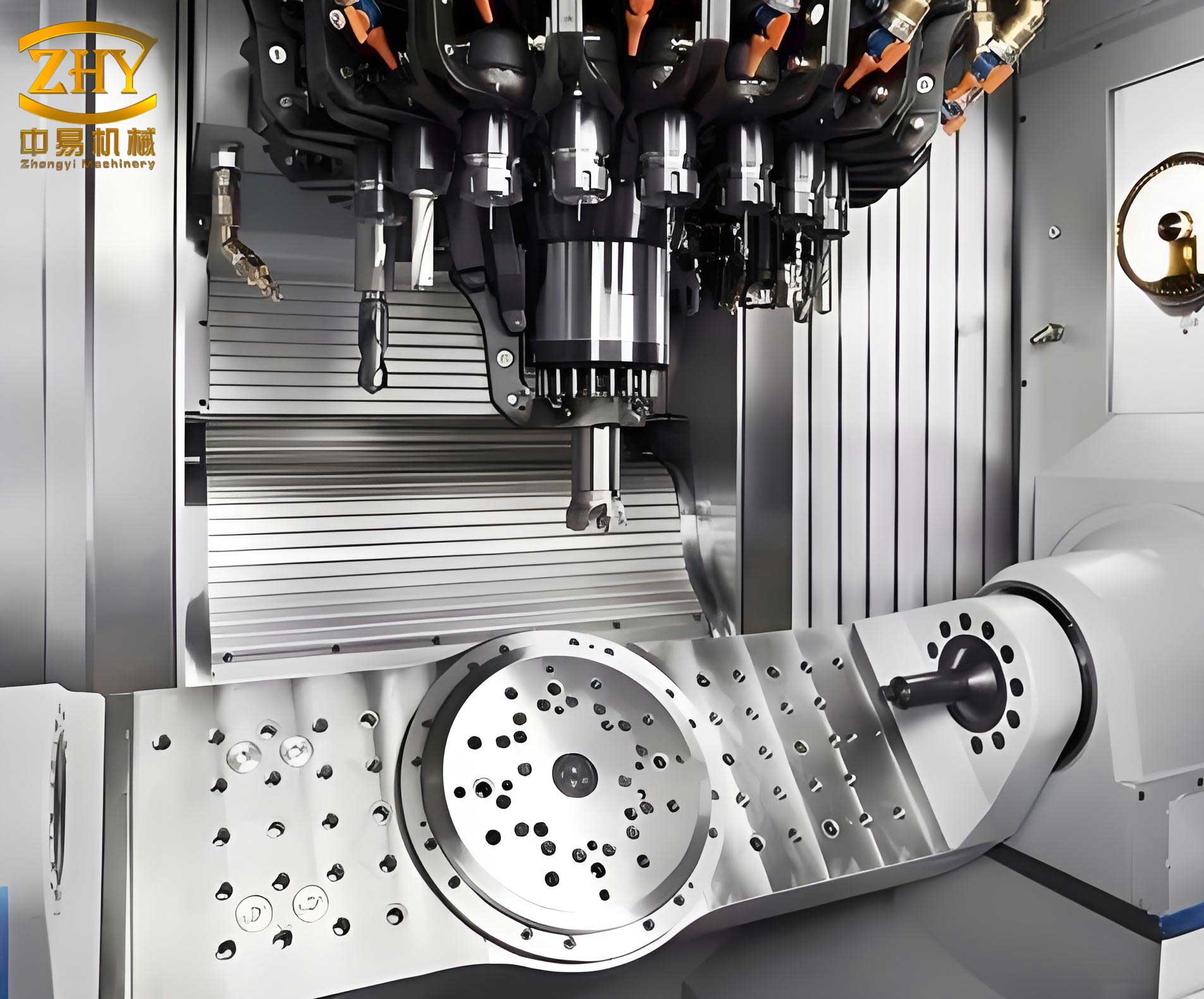
The core philosophy of bimetal casting for machine tool castings is elegant in its pragmatism. It involves sequentially or simultaneously pouring two different molten metal alloys into a single mold cavity, with the goal of creating a metallurgical bond between them, ensuring one material forms the critical wear surface (e.g., the guideway) and the other forms the supporting structure. For a typical machine tool slide, this means casting the guideway section from a high-strength, high-hardness flake graphite iron (e.g., HT300/350) and the main body from a more ductile and cost-effective grey iron (e.g., HT200/250). The technical imperative is to control the mixing zone at the interface to be as narrow and predictable as possible, preserving the distinct properties of each alloy. The success of this process hinges on a symbiotic relationship between meticulous gating system design, precise control of thermal parameters, and a deep understanding of the solidification behavior of both metals.
Foundational Principles and Thermal Dynamics
The successful implementation of bimetal casting is governed by fundamental principles of fluid dynamics, heat transfer, and solidification. The primary objective is to achieve a clean, narrow diffusion band at the interface while preventing macroscopic mixing or the infiltration of the second pour into the already solidifying first metal.
1. Thermal Gradient and Solidification Front Control: The first-poured metal (Metal A, e.g., HT350) must be allowed to develop a sufficiently advanced solidification front before the second metal (Metal B, e.g., HT200) is introduced. Ideally, Metal A at the intended interface should be in a mushy, partially solidified state—a coherent network of dendrites surrounded by liquid. This semi-solid state presents a high viscosity barrier that physically hinders the convective flow and turbulent mixing of the incoming Metal B. The required local solid fraction, $f_s$, at the interface at the time of the second pour is critical. It can be approximated by considering the thermal history:
$$ T_i(t) = T_{pour,A} – \int_0^t \frac{h}{\rho c_p}(T_i(\tau) – T_{mold}) d\tau – \frac{L}{c_p} f_s(t) $$
Where $T_i(t)$ is the interface temperature at time $t$, $T_{pour,A}$ is the pouring temperature of Metal A, $h$ is the interfacial heat transfer coefficient, $\rho$ is density, $c_p$ is specific heat, $L$ is latent heat, and $T_{mold}$ is the mold temperature. The goal is for $f_s(t_{pour,B})$ to be between 0.4 and 0.7 at the interface location.
2. Density and Fluidity Considerations: To further stabilize the interface, it is advantageous if Metal A has a higher density than Metal B. This minimizes buoyancy-driven instabilities (Fremont instability) where the lighter, hotter second metal might try to rise through the first. The fluidity of both metals must also be balanced; excessively high fluidity in Metal B can promote penetration into the dendrite mesh of Metal A.
3. Metallurgical Compatibility: The two alloys must be metallurgically compatible to form a sound bond. They should have mutual solubility in the liquid state and compatible solidification ranges. For grey irons, this is generally satisfied as they share a similar base composition (Fe-C-Si), differing primarily in the levels of strengthening alloys (e.g., Cr, Mo, Cu, Sn) and carbon equivalent (CE). The carbon equivalent is calculated as:
$$ CE = \%C + \frac{1}{3}(\%Si + \%P) $$
A higher CE generally improves castability but reduces strength. In our bimetal system, Metal A (guideway) has a lower CE for high strength, while Metal B (body) has a higher CE for better feedability and reduced shrinkage tendency in complex, thin sections.
Dual Gating System Architecture for Machine Tool Castings
The heart of the bimetal casting process for a component like a machine slide is the design of two independent, yet coordinated, gating systems. Each system is tailored to the specific requirements of the metal it delivers and its target location within the mold cavity.
Gating System for Metal A (High-Strength Iron – Guideway): This system is designed for controlled, low-turbulence filling to minimize oxide formation and slag entrainment in the critical wear surface. It is typically a pressurized (choke at bottom) system.
- Strategy: Bottom-filling via ingates located directly beneath the guideway tracks.
- Ratios: A choked system like: Ingate : Runner : Sprue = 1 : 1.15 : 1.25. The smallest cross-section at the ingate ensures rapid filling and immediate pressurization of the system, promoting a smoother flow.
- Slag Control: A ceramic foam filter is placed in the sprue well or runner. Furthermore, the runner is designed with a swirl or vortex slag trap to capture any eroded mold material or deoxidation products.
- Pouring Mechanism: For long machine tool castings where continuous pouring from a single ladle is impractical, a stoppered pouring basin or tundish is used. Metal A is first poured into this reservoir, allowing the operator to then open the stopper for a steady, continuous flow into the mold, maintaining thermal consistency.
Gating System for Metal B (Ductile Iron – Body): This system is designed for rapid filling of the larger, more complex body section after Metal A has partially solidified. It is an unpressurized (choke at top) or open system.
- Strategy: Top or side-filling at a level significantly above the intended interface zone (e.g., 40-50mm above the guideway top).
- Ratios: An open system like: Sprue : Runner : Ingate = 1 : 1.15 : 1.20. The largest cross-section at the ingates minimizes flow velocity, reducing mold erosion during the filling of the already delicate, partially solidified cavity below.
- Objective: To quickly fill the upper portion of the mold without exerting significant dynamic pressure on the semi-solid Metal A interface.
The spatial arrangement of these systems is crucial. They are often placed on opposite sides or ends of the mold for the machine tool castings to avoid thermal interference and ensure clear metallurgical transition.
| Parameter | Gating System A (For HT350 Guideway) | Gating System B (For HT200 Body) |
|---|---|---|
| Function | Form critical wear surface | Form structural body |
| Filling Position | Bottom-filling | Top-filling |
| System Type | Pressurized (Choked) | Unpressurized (Open) |
| Typical Ratio (I:R:S) | 1 : 1.15 : 1.25 | 1 : 1.15 : 1.20 |
| Key Feature | Ceramic filter, slag trap, stoppered pour | Wide ingates, positioned high |
| Pouring Temp. Target | Lower (~Tliquidus + 15-25°C) | Higher (~Tliquidus + 35-60°C) |
Process Parameter Optimization: The Key to a Defined Interface
Precise control over timing and temperature is non-negotiable. The process window is defined by three interlinked parameters:
1. Pouring Temperature of Metal A (TA): This is kept as low as feasibly possible while still ensuring complete mold filling. A lower superheat reduces the total heat content, allowing the guideway section to develop the necessary semi-solid skin faster. The target is just above the liquidus temperature:
$$ T_{pour,A} \approx T_{liq,A} + \Delta T_{min} $$
where $\Delta T_{min}$ is the minimum superheat required for fluidity, typically 15-30°C for grey iron.
2. Pouring Temperature of Metal B (TB): This is higher than TA to ensure it remains fluid enough to fill the complex body section without prematurely chilling. However, it must not be so high as to cause excessive remelting of the Metal A interface.
$$ T_{pour,B} \approx T_{liq,B} + \Delta T_{high} $$
where $\Delta T_{high}$ is typically 35-60°C.
3. Inter-Pour Delay Time (Δt): This is the most critical operational variable. It is the time elapsed between the start of the pour of Metal A and the start of the pour of Metal B. It must be long enough for the intended interface zone in Metal A to reach the target solid fraction ($f_s$ ~ 0.4-0.7), but not so long that Metal A becomes completely solid, preventing a metallurgical bond. For medium-section machine tool castings, this delay typically ranges from 20 to 90 seconds, determined empirically or via solidification simulation.
4. Simultaneous Pouring Duration: Once Metal B starts pouring, the two streams often continue simultaneously for a short, critical period (2-6 seconds). This overlap must be carefully synchronized by the pouring teams to maintain stable metal fronts and prevent back-pressure or splashing.
| Process Variable | Target Value / Range | Rationale & Effect |
|---|---|---|
| Metal A (HT350) Pour Temp. | 1330 – 1350 °C | Minimizes total heat, accelerates skin formation. |
| Metal B (HT200) Pour Temp. | 1380 – 1400 °C | Ensures fluidity for complex body filling. |
| Inter-Pour Delay (Δt) | 40 – 70 seconds | Allows guideway interface to reach mushy zone. |
| Simultaneous Pour Time | 3 – 5 seconds | Ensures smooth transition and cavity filling. |
| Mold Temperature | 60 – 80 °C (preheated) | Reduces thermal shock, stabilizes initial solidification. |
Microstructure, Properties, and Performance Validation
The ultimate validation of the bimetal process for machine tool castings lies in the microstructure and mechanical properties across the casting, particularly at the interface.
Microstructural Gradient: A well-executed process yields a gradual transition over a narrow band of 2-5mm. Metallographic analysis reveals:
- Metal A Zone (Guideway): A fully pearlitic matrix (95%+) with uniformly distributed, Type A flake graphite. Hardness is consistently in the range of 220-250 HB.
- Transition Zone: A mixed microstructure showing a gradient from pearlite to increasing ferrite. Graphite morphology may show slight changes. The width of this zone is the direct measure of process control.
- Metal B Zone (Body): A pearlitic-ferritic matrix (e.g., 70-80% P, 20-30% F) with coarser graphite flakes, corresponding to HT200/250 specifications and excellent machinability.
Mechanical Property Analysis: Test coupons cast in situ alongside the actual machine tool castings provide quantitative data.
- Hardness Traverse: Measurements from the guideway surface into the body show a steep, then gradual decline, confirming the placement of the high-hardness material exactly where needed.
- Tensile Strength: Specimens taken from the guideway section meet or exceed HT350 requirements ($\sigma_u \geq 350$ MPa), while those from the body conform to HT200 ($\sigma_u \geq 200$ MPa).
- Wear Resistance: The pearlitic guideway offers superior wear resistance. Furthermore, this high-carbon-pearlite base structure is ideal for subsequent surface hardening processes like induction or flame hardening, allowing localized hardness to reach 55-60 HRC, which is critical for high-performance machine tool castings.
The bonding strength at the interface is typically higher than the lower-strength parent metal (Metal B). Failure in push-off tests usually occurs in the HT200 body, not at the interface, confirming a sound metallurgical bond.
Economic and Quality Impact on Machine Tool Castings Production
The adoption of bimetal casting delivers profound benefits beyond technical performance:
1. Defect Reduction & Yield Improvement: By using a more castable iron (HT200) for the complex, crack-prone body, the incidence of hot tears and shrinkage defects plummets. The high-strength iron is confined to a relatively simple, chunky section (the guideway) where it solidifies under favorable conditions, eliminating chill spots. This significantly improves the overall foundry yield for complex machine tool castings.
2. Material Cost Optimization: High-alloy, high-strength irons are considerably more expensive than standard grades. Bimetal casting reduces the volume of this premium material by 60-80% in a typical slide, replacing it with lower-cost iron. The cost savings per ton of casting can be substantial. A simplified cost model illustrates this:
$$ C_{total} = (V_A \cdot P_A) + (V_B \cdot P_B) + C_{process} $$
Where $C_{total}$ is total cost, $V$ is volume, $P$ is price per unit volume, and $C_{process}$ is the added processing cost. For a slide where $V_A = 0.3V_{total}$, $P_A = 1.5P_B$, and $C_{process}$ is modest, the overall material cost reduction often exceeds 15-20%.
3. Enhanced Performance and Lifecycle Value: The end-user receives a component that is both easier to machine (in the body) and supremely wear-resistant (on the guideway). This translates to longer service life, reduced maintenance downtime, and sustained precision for the machine tool—a key competitive advantage.
4. Sustainability: Using less high-alloy material reduces the environmental footprint associated with mining and processing alloying elements like chromium and molybdenum.
Future Perspectives and Advanced Modeling
The future of bimetal casting for machine tool castings is intertwined with digital foundry technologies. Numerical simulation using Finite Element Method (FEM) and Computational Fluid Dynamics (CFD) software is becoming indispensable. These tools can predict:
- The temperature field evolution and solid fraction ($f_s$) development in Metal A in real-time.
- The optimal inter-pour delay (Δt) for a specific geometry and molding material.
- The flow pattern of Metal B and its thermal impact on the interface.
- The final stress distribution and potential distortion.
This allows for virtual prototyping and optimization of the gating systems and pouring schedule before any metal is melted, drastically reducing development time and cost for new machine tool castings designs. Furthermore, research is exploring combinations beyond grey irons, such as pairing grey iron with ductile iron or even incorporating reinforced metal matrix composites specifically at wear surfaces.
In conclusion, bimetal casting is not just a specialized foundry technique; it is a paradigm shift in the design and manufacture of high-value, performance-critical components. For machine tool castings, it resolves the intrinsic conflict between localized high performance and global manufacturability. By mastering the interplay of design, thermal management, and precise process control, foundries can deliver castings that are simultaneously more reliable, more economical, and superior in function—a true revolution grounded in metallurgical ingenuity. The journey from a concept to a robust production process demonstrates that sometimes, the most sophisticated solutions arise from the intelligent combination of simpler, well-understood materials.