
In my extensive experience in the casting industry, I have witnessed the transformative role of three-dimensional modeling, particularly for machine tool castings. These castings are critical components in manufacturing equipment, requiring high precision and structural integrity. The adoption of 3D models has revolutionized the entire workflow, from initial design and simulation to mold production and final inspection. This article delves into the practical methodologies I employ for constructing 3D models of large machine tool castings, leveraging advanced software tools to enhance accuracy and efficiency.
The application of 3D models in foundry processes is vast. For machine tool castings, which often feature complex geometries and substantial sizes, 3D models facilitate thorough工艺评审 (process review), detailed three-dimensional process design, MAGMA simulation,模具制作 (mold making), CNC programming, and subsequent三维划线检测 (3D marking inspection). This holistic integration minimizes errors, reduces lead times, and optimizes material usage. The ability to visualize and manipulate digital prototypes before physical production is invaluable, especially for large-scale components where mistakes are costly.
Central to this endeavor is Siemens NX 8.0, a robust computer-aided design (CAD) software. Its capabilities extend beyond mere 2D drafting; it excels in 3D modeling, finite element analysis, dynamic simulation, and数控代码生成 (NC code generation). The software’s comprehensive suite allows for seamless transition from design to manufacturing, making it a preferred choice for handling intricate machine tool castings. Its parametric modeling features enable easy modifications, while simulation tools predict potential defects like shrinkage or stress concentrations, ensuring the工艺可靠性 (process reliability).
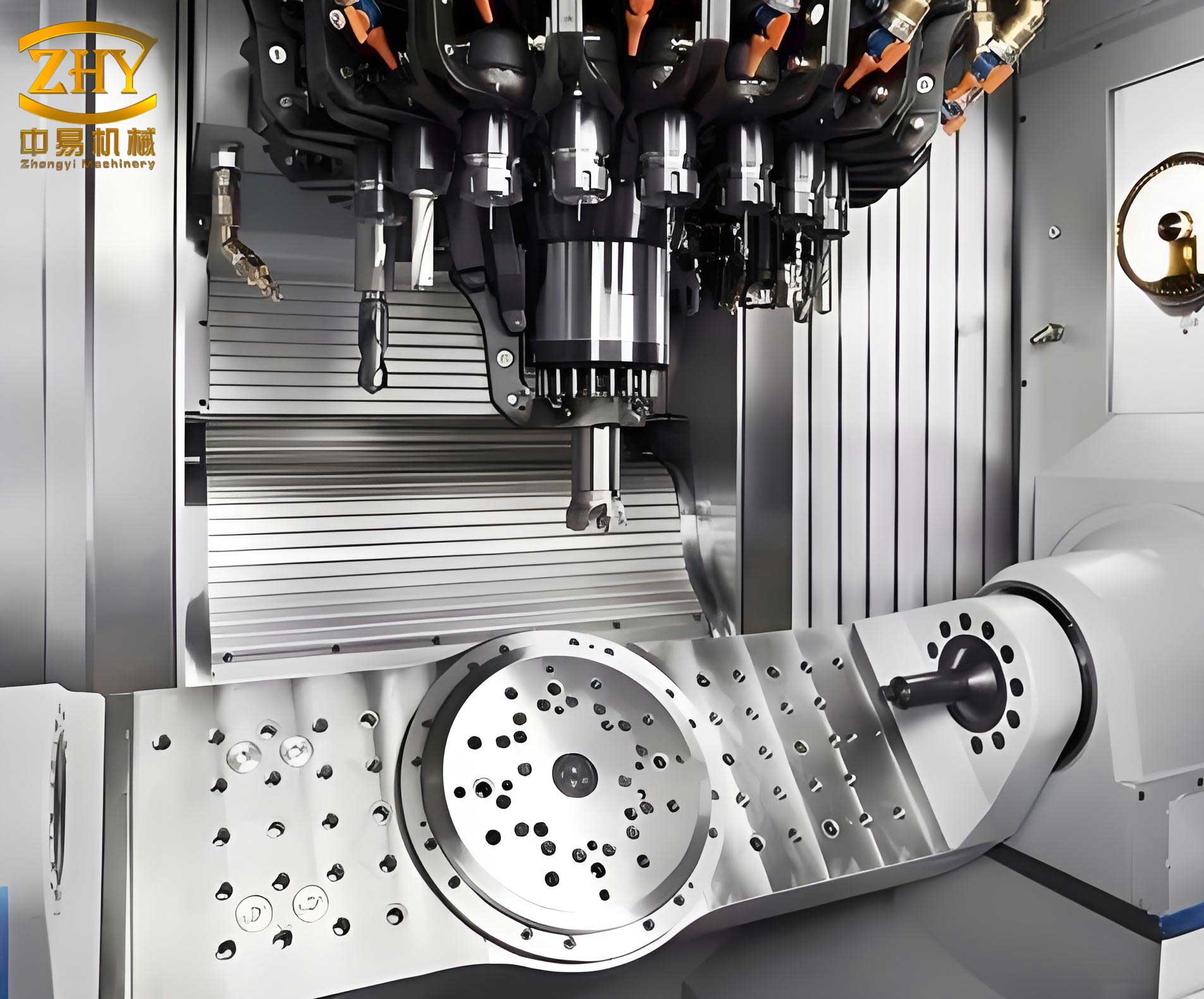
When building 3D models for large machine tool castings, the initial step involves a meticulous structural analysis of the provided drawings. I begin by examining the main body of the casting. If the主体结构 (main structure) is consistent throughout, I model it as a single entity. However, for machine tool castings with varying sections, segmentation is essential. This approach simplifies the modeling process and ensures accuracy. For instance, a large机床 bed (machine tool bed) might have distinct regions with different cross-sectional profiles, necessitating分段建立 (segmented modeling).
After segmentation, I identify the关键截面剖视图 (key cross-sectional views) for each segment. These views, such as A-A, B-B, or C-C sections, provide the necessary dimensions and contours. Using NX 8.0, I extract or sketch these截面轮廓线 (sectional profile lines). The goal is to create closed curves for each profile, as封闭曲线 (closed curves) are prerequisite for generating solid bodies via extrusion. For example, the轮廓线 for a segment might be derived from multiple剖视图, ensuring alignment with the orthographic投影原则 (projection principles): “longitudinal alignment, height leveling, and width consistency.”
The core of the modeling process involves transforming these 2D profiles into 3D solids. The拉伸指令 (extrude command) in NX 8.0 is pivotal. Mathematically, extrusion of a closed curve沿一个向量 (along a vector) produces a volume. If the profile has area \(A\) and is extruded by a length \(L\), the resulting volume \(V\) is given by:
$$V = \int A \, dl \approx A \times L \quad \text{(for constant cross-section)}$$
For complex profiles, the area might vary, requiring integration. In practice, I input the dimensional constraints from drawings to define the extrusion distance. This step generates the primary solid bodies for each segment of the machine tool casting.
Subsequently, I address auxiliary structures such as mounting pads, ribs, and holes. Each feature is treated independently. I establish its spatial relationship with the main body, using接触面 (contact surfaces) as reference planes. By analyzing multiple投影视图 (projection views), I deduce the feature’s geometry and dimensions. For instance, a肋板 (rib) might be defined by its width \(w\), height \(h\), and length \(l\), with its position determined by offsets from datum planes. The modeling sequence I follow is: first, create external features on the main body; then, modify internal cavities; next, add ribs and walls; and finally, incorporate holes and cut-outs. This systematic approach prevents conflicts and ensures model integrity.
To summarize the key steps in building 3D models for machine tool castings, I have compiled the following table, which outlines the phase, activity, and relevant NX 8.0 tools:
| Phase | Activity | NX 8.0 Tools/Commands | Key Considerations for Machine Tool Castings |
|---|---|---|---|
| 1. Analysis & Segmentation | Examine drawings; divide main body into logical segments | View Section, Analyze Geometry | Identify consistent sections; note variations in wall thickness |
| 2. Profile Sketching | Derive closed contour curves from cross-sectional views | Sketch, Project Curve, Constrain | Ensure profiles are closed; align with orthographic views |
| 3. Main Body Extrusion | Extrude profiles to create solid segments | Extrude, Boolean Unite | Apply correct lengths; maintain dimensional accuracy |
| 4. Feature Addition | Model external and internal structures (pads, ribs, cavities) | Pad, Pocket, Rib, Draft | Use datum planes; follow “长对正, 高平齐, 宽相等” |
| 5. Detailing | Add holes, fillets, chamfers | Hole, Edge Blend, Chamfer | Consider casting draft angles; avoid sharp corners |
| 6. Validation | Check model against drawings; run simulations | Measure, Compare, Simulation | Verify critical dimensions; simulate filling and solidification |
Beyond basic geometry, the 3D model of machine tool castings serves as input for advanced analyses. For example, finite element analysis (FEA) predicts mechanical behavior under load. The stress \(\sigma\) in a casting can be approximated using linear elasticity:
$$\sigma = E \cdot \epsilon$$
where \(E\) is Young’s modulus and \(\epsilon\) is strain. Similarly, thermal simulations during solidification involve solving the heat transfer equation:
$$\rho c_p \frac{\partial T}{\partial t} = \nabla \cdot (k \nabla T) + \dot{q}$$
where \(\rho\) is density, \(c_p\) is specific heat, \(T\) is temperature, \(k\) is thermal conductivity, and \(\dot{q}\) is heat source term. These simulations help optimize the casting process for machine tool castings, minimizing defects like porosity or hot tears.
Another critical aspect is the generation of数控代码 (NC code) for machining the molds or cores. Using the 3D model, NX 8.0’s CAM module calculates tool paths. The material removal rate \(MRR\) can be expressed as:
$$MRR = f \cdot d \cdot w \cdot v$$
where \(f\) is feed rate, \(d\) is depth of cut, \(w\) is width of cut, and \(v\) is cutting speed. Optimizing these parameters ensures efficient production of模具 (molds) for machine tool castings.
In practice, I often encounter challenges specific to large machine tool castings, such as warpage due to residual stresses. The deflection \(\delta\) can be modeled as:
$$\delta = \frac{F L^3}{3 E I}$$
for a cantilever beam, where \(F\) is force, \(L\) is length, \(E\) is modulus, and \(I\) is moment of inertia. By simulating these effects early, I can design compensating geometries in the 3D model.
To further illustrate the importance of accurate modeling, consider the weight calculation of a machine tool casting. The mass \(m\) is:
$$m = \rho \cdot V$$
where \(\rho\) is the density of the casting material (e.g., cast iron) and \(V\) is the volume derived from the 3D model. This is crucial for logistics and cost estimation.
Moreover, the integration of 3D models with additive manufacturing for rapid prototyping of machine tool castings is gaining traction. The layer-by-layer fabrication process can be described by parameters like layer thickness \(t_l\) and scan speed \(v_s\). The build time \(T_b\) approximates to:
$$T_b = \frac{V}{A_l \cdot t_l}$$
where \(A_l\) is the area per layer. This synergy accelerates innovation in casting design.
In my workflow, I emphasize verification. After constructing the 3D model of a machine tool casting, I cross-check every feature against the二维图纸 (2D drawings). Discrepancies are rectified promptly. I also utilize NX 8.0’s PMI (Product Manufacturing Information) to annotate dimensions directly on the 3D model, enhancing communication with downstream teams.
The versatility of 3D modeling extends to post-casting inspection. Coordinate measuring machines (CMM) use the model as a reference for三维划线检测 (3D marking inspection). The deviation \(\Delta\) between the actual casting and the model is computed as:
$$\Delta = \sqrt{(x_a – x_m)^2 + (y_a – y_m)^2 + (z_a – z_m)^2}$$
where \((x_a, y_a, z_a)\) are actual coordinates and \((x_m, y_m, z_m)\) are model coordinates. This ensures that machine tool castings meet stringent tolerances.
Throughout this discussion, the term ‘machine tool castings’ has been reiterated to underscore its centrality. These components form the backbone of industrial machinery, and their digital representation is pivotal for modern foundry practices. The methodologies I’ve described are not rigid; they adapt to the specificities of each project. However, the core principles remain: analyze, segment, profile, extrude, detail, and validate.
In conclusion, building accurate 3D models for large machine tool castings is a multifaceted process that blends engineering insight with advanced software capabilities. By leveraging tools like Siemens NX 8.0 and adhering to systematic modeling strategies, I can create digital prototypes that streamline the entire casting lifecycle. The integration of simulations, CNC programming, and inspection further enhances the value of these models. As technology evolves, so too will the techniques for modeling machine tool castings, driving greater efficiency and innovation in the casting industry.