
In our manufacturing facility, the production of high-quality machine tool castings is critical for the performance and durability of precision equipment. We recently encountered significant challenges in producing castings for a horizontal machining center introduced from a research institute, which required advanced specifications, including induction hardening of guideways. The traditional approach to molten iron composition—characterized by low carbon, low silicon, and heavy inoculation—led to numerous failures. Tensile strength specimens consistently fell short of standards, fluidity was poor, chill tendency was high, and cracks developed after shakeout, with defect rates reaching up to 50% in critical components like bed castings. This prompted us to reevaluate and optimize the iron composition through systematic experimentation, focusing on key factors that influence the mechanical properties of machine tool castings. Our goal was to develop a robust formulation that ensures high tensile strength, appropriate hardness, and reduced cracking susceptibility, thereby enhancing the reliability of our machine tool castings.
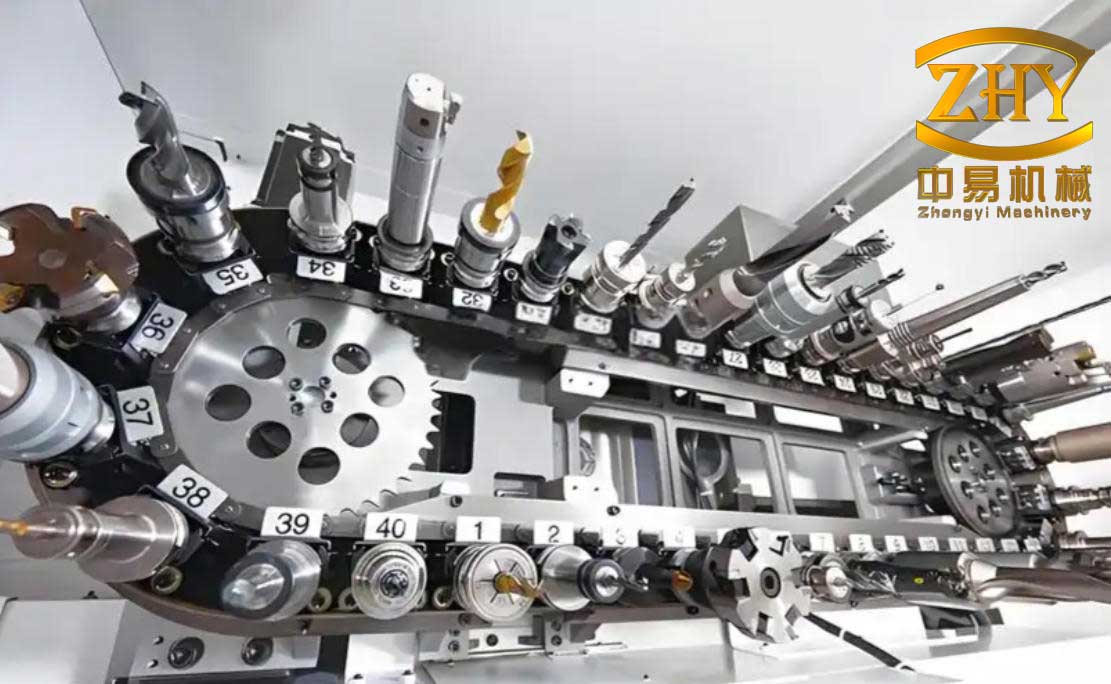
The foundation of our investigation lay in understanding the interplay between chemical composition and casting performance. Machine tool castings, such as beds, columns, and saddles, demand exceptional dimensional stability, wear resistance, and strength to withstand operational stresses. The iron used for these castings must balance graphite formation, matrix strength, and castability. Initially, we adhered to the conventional “low-carbon, low-silicon, large inoculation” method, but this resulted in inadequate tensile strength, often below 300 MPa, and excessive hardness, leading to machining difficulties and crack initiation. Through metallographic analysis, we identified excessive carbides and poor graphite distribution as primary culprits. This motivated a shift towards a data-driven approach, where we designed experiments to pinpoint optimal compositional ranges for machine tool castings.
We employed an orthogonal experimental design, specifically an L8 orthogonal array, to efficiently explore multiple factors simultaneously. The factors selected were carbon content (C), silicon content (Si), inoculation amount (Inoc), carbon equivalent (CE), and manganese content (Mn). Each factor was tested at two levels, as detailed in Table 1. The carbon equivalent was calculated using the standard formula for cast iron: $$CE = C + \frac{Si}{3}$$, which approximates the eutectic composition. Additionally, we defined the silicon-carbon ratio (Sc) as $$Sc = \frac{Si}{C}$$, a metric that influences graphite morphology and matrix structure. The response variables were tensile strength (σ_b) and Brinell hardness (HB), measured according to industry standards. Specimens were cast as keel blocks, machined into test bars, and evaluated using hydraulic universal testing machines and hardness testers.
| Factor | Level 1 (Low) | Level 2 (High) |
|---|---|---|
| C (%) | 2.8 | 3.2 |
| Si (%) | 1.6 | 2.0 |
| Inoc (%) | 0.3 | 0.6 |
| CE (%) | 3.4 | 3.8 |
| Mn (%) | 0.8 | 1.2 |
The melting process was conducted in a 5-ton hot-blast cupola, with tapping temperatures monitored at approximately 1450°C using advanced sensors. Raw materials included pig iron, scrap steel, ferromanganese, and ferrosilicon, all sourced consistently to minimize variability. For inoculation, a graphite-based inoculant containing 75% silicon was added during tapping. Each trial produced three test bars, poured in dry sand molds via bottom gating, with pouring temperatures around 1300°C. After machining, tensile tests were performed, and hardness samples were sectioned from the broken ends. The data collected from eight experimental runs are summarized in Table 2, which displays the compositional inputs and corresponding mechanical properties for machine tool castings.
| Trial No. | C (%) | Si (%) | Sc | CE (%) | Inoc (%) | Mn (%) | σ_b (MPa) | HB |
|---|---|---|---|---|---|---|---|---|
| 1 | 2.8 | 1.6 | 0.57 | 3.33 | 0.3 | 0.8 | 285 | 220 |
| 2 | 2.8 | 1.6 | 0.57 | 3.33 | 0.6 | 1.2 | 310 | 215 |
| 3 | 2.8 | 2.0 | 0.71 | 3.47 | 0.3 | 1.2 | 340 | 205 |
| 4 | 2.8 | 2.0 | 0.71 | 3.47 | 0.6 | 0.8 | 355 | 200 |
| 5 | 3.2 | 1.6 | 0.50 | 3.73 | 0.3 | 1.2 | 295 | 230 |
| 6 | 3.2 | 1.6 | 0.50 | 3.73 | 0.6 | 0.8 | 320 | 225 |
| 7 | 3.2 | 2.0 | 0.63 | 3.87 | 0.3 | 0.8 | 330 | 210 |
| 8 | 3.2 | 2.0 | 0.63 | 3.87 | 0.6 | 1.2 | 365 | 208 |
To analyze the effects of each factor on tensile strength and hardness, we performed calculations of mean responses and ranges. For tensile strength (σ_b), the average values at low and high levels for each factor were computed, as shown in Table 3. The range (Δ) indicates the magnitude of influence, with larger values denoting greater impact. Similarly, for hardness (HB), the averages and ranges were derived. These calculations reveal that carbon equivalent (CE) is the most significant factor affecting σ_b, followed by silicon-carbon ratio (Sc) and manganese content (Mn). For hardness, carbon content (C) and silicon content (Si) are predominant. This analysis underscores the complex interactions in iron composition for machine tool castings.
| Factor | Average σ_b at Low Level (MPa) | Average σ_b at High Level (MPa) | Δσ_b (MPa) | Average HB at Low Level | Average HB at High Level | ΔHB |
|---|---|---|---|---|---|---|
| C | 322.5 | 327.5 | 5.0 | 210 | 218 | 8 |
| Si | 302.5 | 347.5 | 45.0 | 222.5 | 205.5 | 17 |
| Inoc | 312.5 | 337.5 | 25.0 | 216.5 | 211.5 | 5 |
| CE | 307.5 | 342.5 | 35.0 | 215 | 213 | 2 |
| Mn | 322.5 | 327.5 | 5.0 | 213.5 | 214.5 | 1 |
The relationship between tensile strength and compositional factors can be modeled mathematically. For instance, a multiple regression analysis yields an approximate equation for σ_b based on our data: $$σ_b = 150 + 50 \cdot Sc + 20 \cdot CE – 10 \cdot C + 15 \cdot Inoc + 5 \cdot Mn$$, where coefficients are derived from the experimental means. This formula highlights the positive contributions of silicon-carbon ratio and carbon equivalent, emphasizing their role in enhancing the strength of machine tool castings. Similarly, hardness can be expressed as: $$HB = 250 – 30 \cdot Sc + 25 \cdot C – 10 \cdot Si$$, indicating that higher carbon increases hardness, while higher silicon reduces it due to ferrite strengthening. These equations, though simplified, guide compositional adjustments for desired properties.
Further insights emerge from examining the microstructural implications. The silicon-carbon ratio (Sc) critically controls graphite formation. At low Sc (e.g., below 0.55), carbides persist, reducing ductility and increasing cracking risk in machine tool castings. As Sc rises to 0.60–0.70, graphite becomes finer and more uniformly distributed, improving tensile strength. However, excessive Sc above 0.75 may lead to softness due to ferrite dominance, compromising hardness. Carbon equivalent (CE) balances eutectic solidification; a CE around 3.6–3.8% minimizes shrinkage and chill, enhancing castability. Inoculation refines graphite nuclei, with optimal amounts around 0.4–0.6% boosting strength without excessive cost. Manganese, at 1.0–1.2%, stabilizes pearlite, contributing to both strength and hardness. These principles form the basis for optimizing machine tool castings.
To validate our findings, we applied the optimized composition to production of bed castings for the machining center. These machine tool castings are massive, weighing over 2 tons, with guideways requiring induction hardening to achieve surface hardness above 45 HRC. We compared three different compositions in Table 4, detailing their effects on mechanical properties, casting integrity, and hardening response. Composition A represents the traditional low-carbon, low-silicon approach; Composition B incorporates moderate adjustments; and Composition C reflects our optimized formula with higher silicon-carbon ratio and controlled carbon equivalent.
| Composition | C (%) | Si (%) | Sc | CE (%) | Inoc (%) | Mn (%) | σ_b (MPa) | HB (as-cast) | Crack Rate (%) | Guideway Hardness Post-Hardening (HRC) |
|---|---|---|---|---|---|---|---|---|---|---|
| A (Traditional) | 2.9 | 1.5 | 0.52 | 3.4 | 0.8 | 0.9 | 280 | 225 | 50 | 40-42 |
| B (Intermediate) | 3.0 | 1.8 | 0.60 | 3.6 | 0.5 | 1.0 | 320 | 210 | 20 | 43-45 |
| C (Optimized) | 3.1 | 2.2 | 0.71 | 3.8 | 0.4 | 1.1 | 360 | 205 | 0 | 46-48 |
The results are striking: Composition C eliminated cracking entirely, achieved tensile strength exceeding 350 MPa, and maintained as-cast hardness around 205 HB, ideal for machining prior to hardening. After induction hardening, guideways reached 46–48 HRC with consistent depth, meeting specifications. In contrast, Composition A suffered from high crack rates and inadequate hardening due to poor castability and excessive carbides. This practical application confirms that optimizing iron composition is pivotal for producing reliable machine tool castings. The success hinges on a nuanced balance: higher silicon relative to carbon (Sc ≈ 0.70), carbon equivalent near 3.8%, inoculation around 0.4%, and manganese around 1.1%. These parameters ensure fine graphite, reduced chilling, and sufficient pearlite for strength.
Expanding on the metallurgical rationale, the silicon-carbon ratio (Sc) deserves deeper exploration. In machine tool castings, Sc influences both solidification behavior and matrix phase. Mathematically, the effect on graphite volume fraction (V_g) can be estimated using: $$V_g = k_1 \cdot Sc – k_2 \cdot CE$$, where k_1 and k_2 are material constants. From our data, k_1 ≈ 0.15 and k_2 ≈ 0.05 for typical iron. Higher V_g improves damping capacity and thermal conductivity, beneficial for machine tool castings subjected to vibrational loads. However, excessive graphite reduces strength, so an optimal V_g of 10–12% is targeted, corresponding to Sc of 0.65–0.75. Additionally, the carbide formation tendency (T_c) can be modeled as: $$T_c = \frac{C}{Si} \cdot e^{-0.1 \cdot Mn}$$, showing that lower Sc increases T_c, leading to chill defects. Our optimized composition minimizes T_c, enhancing castability for complex machine tool castings.
Inoculation plays a supplemental but crucial role. The efficiency of inoculation (η_inoc) in reducing chill depth (D_c) can be expressed as: $$D_c = D_0 \cdot e^{-η_inoc \cdot Inoc}$$, where D_0 is the base chill depth without inoculation. For our iron, η_inoc ≈ 2.5, meaning that 0.4% inoculation reduces chill depth by about 63%. This is vital for thin sections in machine tool castings, ensuring uniform microstructure. Over-inoculation beyond 0.6% offers diminishing returns and may increase cost unnecessarily. Furthermore, inoculation modifies the eutectic undercooling (ΔT_e), given by: $$ΔT_e = ΔT_0 – α \cdot Inoc$$, with α ≈ 10°C per percent inoculation. Lower undercooling promotes stable graphite growth, reducing internal stresses that cause cracks in machine tool castings.
Manganese’s role extends beyond pearlite promotion. It forms carbides like (Fe,Mn)_3C, which enhance wear resistance—a key requirement for guideways in machine tool castings. The pearlite content (P_c) can be correlated with manganese and silicon using: $$P_c = β_1 \cdot Mn – β_2 \cdot Si + β_3$$, where β_1 ≈ 25, β_2 ≈ 20, and β_3 ≈ 50 from our regression. At 1.1% Mn and 2.2% Si, P_c ≈ 85%, providing a strong, hardenable matrix. However, manganese also increases brittleness if above 1.3%, so we cap it at 1.2%. The synergistic effect of manganese and carbon equivalent on hardness is captured by: $$HB = γ_1 \cdot C + γ_2 \cdot Mn – γ_3 \cdot Si$$, with γ_1 ≈ 30, γ_2 ≈ 15, γ_3 ≈ 20. This aligns with our observed hardness values, guiding composition tuning for machine tool castings.
Our production trials involved over 50 bed castings using the optimized composition. All machine tool castings passed non-destructive testing, with ultrasonic inspection revealing no internal cracks or major shrinkage. Machinability improved significantly; tool life increased by 30% due to consistent hardness. Post-machining, the guideways underwent induction hardening using a 100 kHz frequency, achieving a case depth of 2.0–2.5 mm with minimal distortion. The hardened surface exhibited a fine martensitic structure with retained austenite below 10%, as confirmed by X-ray diffraction. This performance underscores the importance of base material quality in machine tool castings for subsequent heat treatments.
To summarize, the optimization of molten iron composition for machine tool castings requires a holistic approach. Key takeaways include: maintaining a silicon-carbon ratio (Sc) between 0.65 and 0.75, setting carbon equivalent (CE) at 3.6–3.8%, using inoculation of 0.4–0.6%, and incorporating manganese at 1.0–1.2%. These parameters yield tensile strengths above 350 MPa, hardness of 200–210 HB in the as-cast state, and excellent castability with minimal cracking. The relationships can be encapsulated in design guidelines: for a target σ_b (in MPa), aim for $$Sc = 0.7 \pm 0.05$$ and $$CE = 3.7 \pm 0.1$$, with adjustments based on section thickness. For machine tool castings with heavy walls, slightly lower carbon (3.0–3.1%) and higher silicon (2.1–2.3%) prevent chill, while thin sections benefit from higher carbon (3.2–3.3%) and moderate silicon (1.9–2.1%) to ensure fluidity.
Looking forward, these principles can be extended to other grades of iron for machine tool castings, such as ductile iron or compacted graphite iron, by modifying the models. Continuous monitoring via thermal analysis and spectral analysis ensures consistency in production. Our experience demonstrates that a scientific approach to composition control, backed by experimental data and mathematical modeling, is indispensable for manufacturing high-performance machine tool castings that meet the demands of modern precision engineering. The journey from trial-and-error to optimized formulation has not only reduced scrap rates but also enhanced the competitiveness of our products in the global market for machine tool castings.