
From my extensive experience in the foundry industry, I can assert that the use of continuously prepared self-hardening sands for molding is the best production method for medium to large castings such as machine tool castings, press frames, compressor bodies, turbine casings, and rolling mill housings. The designer’s task lies in correctly selecting the appropriate molding method, which decisively influences the overall mechanization of the molding department. In practice, several self-hardening sand systems are suitable for such production, and I will delve into their characteristics, mechanization strategies, and specific applications, with a focus on machine tool castings.
The adoption of self-hardening sands eliminates the need for drying molds and cores, though a slight drying might still be necessary when using water-based coatings. The primary systems I have worked with include furan resin-based molding materials, water glass-based self-hardening sands (both in loose and fluid states), cement fluid sands, and for core-making, the resin-bonded fluid sand process. Each has distinct properties that affect the mechanization approach. From a designer’s perspective, the most critical points are the cost of molding materials, the number and nature of their components, the initial hardening time (the minimum time from sand filling to pattern stripping or core box removal), the total hardening time (from filling to mold closing or pouring), the knock-out properties after pouring, and the possibility of reclamation. Table 1 summarizes a comparative analysis of these key properties based on my observations and data.
| Property | Furan Resin Sand | Water Glass Sand (Loose) | Water Glass Fluid Sand | Cement Fluid Sand | Resin Fluid Sand (“ZZ” Process) |
|---|---|---|---|---|---|
| Cost of Materials | High | Moderate | Moderate | Low | Very High |
| Number of Components | 2-3 | 3-4 | 3-4 | 3-4 | 2-3 |
| Initial Hardening Time (min)* | 5-30 | 10-60 | 15-90 | 30-120 | 5-20 |
| Total Hardening Time (hr)* | 1-4 | 2-8 | 4-12 | 6-24 | 1-3 |
| Knock-out Properties | Good | Fair | Fair to Good | Poor | Excellent |
| Reclamation Possibility | Difficult | Difficult | Fairly Difficult | Difficult | Very Difficult |
* Note: Dependent on room temperature and catalyst usage.
Furan resin sand undoubtedly has advantages, such as high strength and short hardening times, making it suitable for producing precise machine tool castings. However, it has serious drawbacks: high cost, limited availability, and the presence of nitrogen in cheaper variants, which can impair performance. Despite this, its use remains economical in certain scenarios. For instance, I have designed a molding department for machine tool castings (with a maximum weight of 5 tons) where the main equipment is a movable continuous mixer. All molds are made using flasks, and the mechanization relies on crane systems for handling. The high strength of furan resin sand even allows for flaskless molding, which I implemented in a production line for valve castings, featuring closed roller conveyors and dedicated pouring cranes.
Water glass-based sands, both loose and fluid, offer a cost-effective alternative. Their mechanization requires careful consideration due to the multiple components. I typically use continuous mixers with two mixing chambers: dry components are blended in the upper chamber, and liquid components are added in the lower one. A modern production line for machine tool castings using loose water glass self-hardening sand involves a mixer positioned above a roller conveyor. After filling, flasks are transferred to a belt conveyor for hardening to avoid accidental vibration. Pattern flow can be optimized vertically in multi-story buildings to save space, which I applied in a workshop where pattern storage is on the ground floor, and molding occurs on the second level.
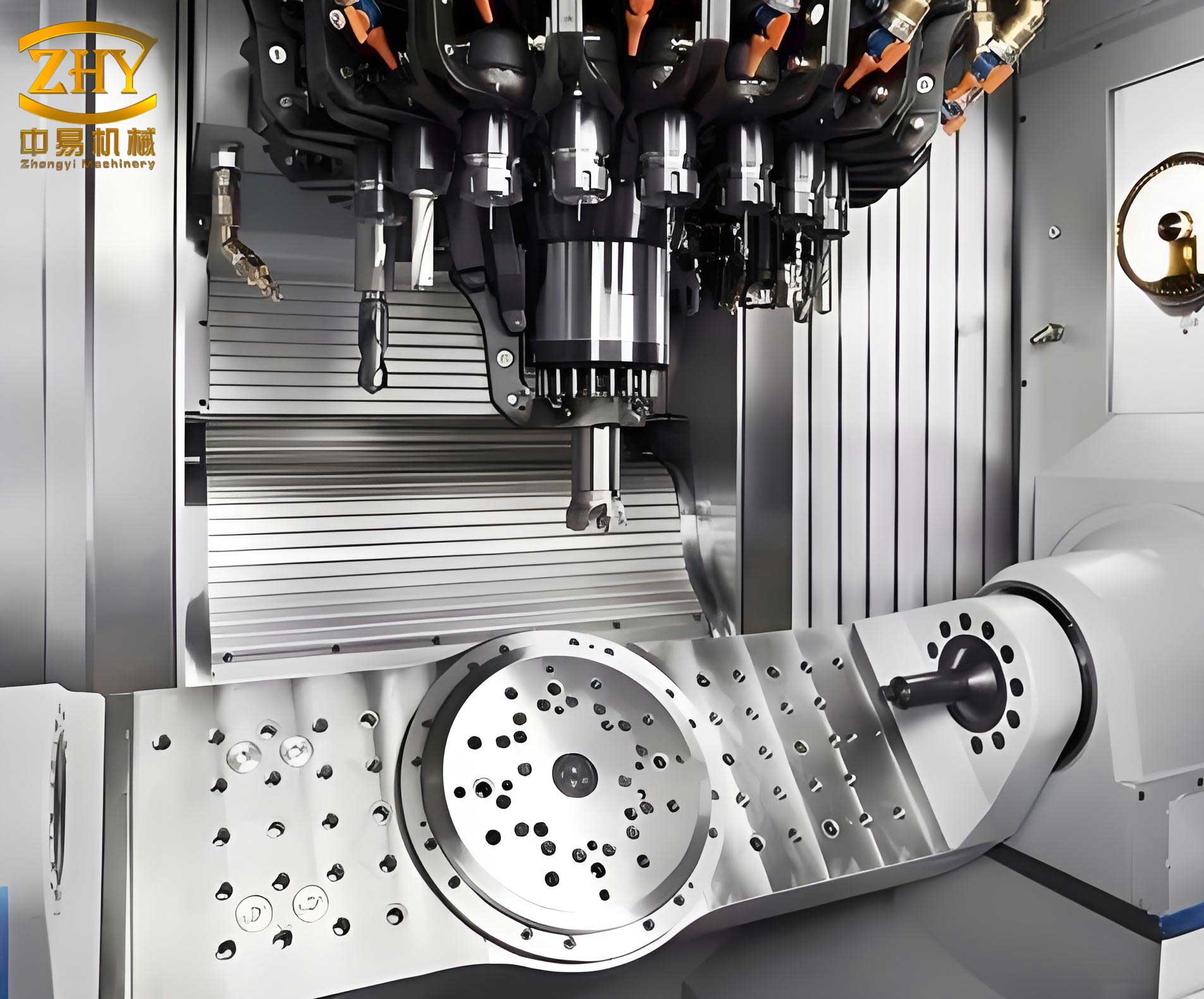
The image above illustrates a typical setup in a foundry workshop focusing on machine tool castings. It highlights the integration of continuous mixers and conveyor systems, which are pivotal for mechanized production. In my projects, such layouts have significantly enhanced productivity for medium to large castings.
Cement fluid sands are another option, particularly for large molds. Their longer hardening times necessitate well-planned production schedules. I have implemented lines where two continuous mixers are used—one for backing sand and one for facing sand—with a vibration table incorporated at the facing station for compaction. A turnover device is employed for pattern stripping, and patterns are recycled via elevators. This vertical arrangement minimizes floor space usage, which is crucial in areas with poor soil conditions or high land costs.
For core-making, the resin-bonded fluid sand process (“ZZ” method) is excellent due to its superior knock-out properties, though its high cost limits application to cores. I designed a mechanized core-making department for large machine tool castings, featuring a dedicated mixer, core sand distributors, and drying chambers. The cores produced exhibit excellent dimensional stability, critical for complex machine tool castings.
The mechanization of these processes relies heavily on continuous mixers. The output rate of a mixer, $Q$ (in tons per hour), can be expressed as a function of its design parameters and sand properties. For a typical continuous mixer, the mixing efficiency $\eta_m$ affects the final sand quality. I often use the following relation to estimate the required mixer capacity for a production line:
$$ Q = \frac{V \cdot \rho \cdot n}{\tau} $$
where $V$ is the volume of sand per mold (m³), $\rho$ is the sand density (kg/m³), $n$ is the number of molds per hour, and $\tau$ is the cycle time adjustment factor. For machine tool castings, which often have large mold volumes, $Q$ typically ranges from 10 to 50 tons per hour.
Hardening kinetics are critical for line balancing. The hardening time $t_h$ for self-hardening sands can be modeled using an Arrhenius-type equation, considering temperature $T$ and catalyst concentration $C$:
$$ t_h = A \cdot e^{\frac{E_a}{R T}} \cdot C^{-\alpha} $$
where $A$ is a pre-exponential factor, $E_a$ is the activation energy, $R$ is the gas constant, and $\alpha$ is an empirical exponent. For furan resin sands used in machine tool castings, $E_a$ is relatively low, leading to faster hardening, whereas cement sands have higher $E_a$, requiring longer times. This formula helps in designing conveyor lengths for hardening zones; for instance, if $t_h$ is 2 hours and the conveyor speed is $v$ (m/min), the hardening zone length $L$ should be:
$$ L = v \cdot t_h \cdot 60 $$
In practice, I set $v$ to 0.5-1 m/min for machine tool casting lines, resulting in $L$ of 60-120 meters for a 2-hour hardening time.
Strength development is another key aspect. The compressive strength $\sigma_c$ of self-hardening sand over time $t$ can be approximated by:
$$ \sigma_c(t) = \sigma_{\infty} \left(1 – e^{-k t}\right) $$
where $\sigma_{\infty}$ is the ultimate strength and $k$ is the hardening rate constant. For furan resin sands, $k$ is high, providing quick strength build-up for early pattern stripping. This is essential for machine tool castings to maintain dimensional accuracy. Table 2 summarizes typical strength parameters for various sands used in machine tool casting production.
| Material | Ultimate Strength $\sigma_{\infty}$ (MPa) | Hardening Rate Constant $k$ (hr⁻¹) | Time to Reach 80% Strength (hr) |
|---|---|---|---|
| Furan Resin Sand | 2.5 – 3.5 | 0.8 – 1.2 | 1.0 – 1.5 |
| Water Glass Loose Sand | 1.5 – 2.5 | 0.3 – 0.6 | 2.5 – 4.0 |
| Water Glass Fluid Sand | 1.0 – 2.0 | 0.2 – 0.4 | 4.0 – 6.0 |
| Cement Fluid Sand | 1.0 – 1.8 | 0.1 – 0.2 | 8.0 – 12.0 |
| Resin Fluid Sand (“ZZ”) | 2.0 – 3.0 | 0.5 – 0.8 | 1.5 – 2.5 |
When designing mechanized lines for machine tool castings, I consider the overall layout to optimize material flow. A typical line includes sand preparation, molding, hardening, pouring, cooling, and knock-out. For small-batch production, flexibility is key. I often use modular conveyor systems with programmable logic controllers to handle varying mold sizes. The energy consumption $E$ per ton of castings can be estimated as:
$$ E = E_m + E_c + E_h $$
where $E_m$ is mixing energy, $E_c$ is conveying energy, and $E_h$ is hardening energy (e.g., for heated hardening zones). For a line producing machine tool castings, $E$ ranges from 50 to 100 kWh/ton, with furan resin systems at the lower end due to faster processing.
Reclamation of used sand is a significant environmental and economic concern. The reclamation efficiency $\eta_r$ affects the amount of new sand required. If $W_n$ is the weight of new sand per mold and $W_r$ is the weight of reclaimed sand, then:
$$ \eta_r = \frac{W_r}{W_n + W_r} \times 100\% $$
For furan resin sands, $\eta_r$ is often below 50%, while water glass sands can achieve 60-70% with proper treatment. This impacts the overall cost per ton of machine tool castings. I have implemented sand reclamation units that use mechanical and thermal methods to improve $\eta_r$, though they add to initial investment.
Labor conditions are greatly improved with mechanization. Noise levels $L_p$ in decibels can be reduced by using enclosed mixers and conveyors. Compared to pneumatic molding machines, continuous mixers operate at $L_p < 75$ dB, which is acceptable for long-term exposure. Dust emission $D$ (in mg/m³) is also lowered through closed systems and local exhaust ventilation. For machine tool casting workshops, I aim for $D < 5$ mg/m³ to meet health standards.
In terms of economic analysis, the total cost $C_{total}$ for producing machine tool castings includes material cost $C_m$, labor cost $C_l$, energy cost $C_e$, and depreciation $C_d$. For a mechanized line:
$$ C_{total} = C_m + C_l + C_e + C_d $$
Material cost $C_m$ dominates for resin-bonded sands, while labor cost $C_l$ is reduced by mechanization. Based on my projects, the payback period $T_p$ for investing in mechanization can be calculated as:
$$ T_p = \frac{I}{\Delta S} $$
where $I$ is the investment cost and $\Delta S$ is the annual savings from increased productivity and lower labor costs. For machine tool casting lines, $T_p$ typically ranges from 2 to 5 years.
Case studies from my experience highlight the effectiveness of these methods. For example, a workshop producing machine tool castings up to 10 tons implemented a furan resin sand line with a movable mixer and rotary conveyors. Productivity increased by 30%, and defect rates dropped by 15% due to consistent sand quality. Another facility using water glass fluid sand for compressor bodies achieved a 25% reduction in energy consumption through optimized hardening zones.
The choice between flask and flaskless molding depends on the casting geometry and batch size. For machine tool castings, which often have complex shapes, flask molding provides better support, but flaskless systems save on flask costs and handling. I have used both: flaskless for simpler valve castings and flask-based for intricate machine tool beds. The decision matrix involves factors like pattern wear, required tolerance, and production volume.
Future trends in mechanization for machine tool castings include the integration of IoT sensors for real-time monitoring of sand properties and adaptive control of mixers. This can further optimize hardening times and reduce waste. Additionally, developments in bio-based binders may address environmental concerns with current resin systems.
In conclusion, the mechanization of foundry workshops for medium to large castings, especially machine tool castings, through self-hardening sands is a proven approach. It enhances productivity, improves labor conditions, and offers flexibility for small-batch production. The key lies in selecting the appropriate sand system and designing a balanced mechanized line that considers hardening kinetics, strength development, and economic factors. As I continue to innovate in this field, the focus remains on achieving sustainable and efficient production of high-quality machine tool castings.