
The performance and reliability of high-end machine tools are fundamentally dictated by the quality of their core structural components—the machine tool castings. Among the various metallurgical factors influencing these castings, graphite morphology plays a pivotal, yet often understated, role. For gray iron machine tool castings, the presence of a uniform, non-directional A-type graphite structure is paramount. It directly contributes to superior vibrational damping, consistent mechanical properties across varying sections, reduced casting stress, and excellent machinability—all critical for achieving and maintaining high precision.
Traditional production methodologies for high-strength grades like HT300 often relied on lowering the carbon equivalent (CE) to promote a stronger pearlitic matrix. The carbon equivalent is typically calculated as:
$$CE = C + \frac{Si}{3}$$
While this approach can yield acceptable tensile strength, it introduces a cascade of drawbacks for complex machine tool castings. Lower CE reduces fluidity, necessitating higher pouring temperatures and increasing the risk of shrinkage defects in heavy sections like guideways. More critically, it leads to the formation of undercooled graphite (D- and E-types) in thin-walled sections, significantly increasing the断面敏感性. This, coupled with inherently higher casting stresses from a lower CE, often results in casting cracks, distortion, and ultimately, poor accuracy retention of the final machine.
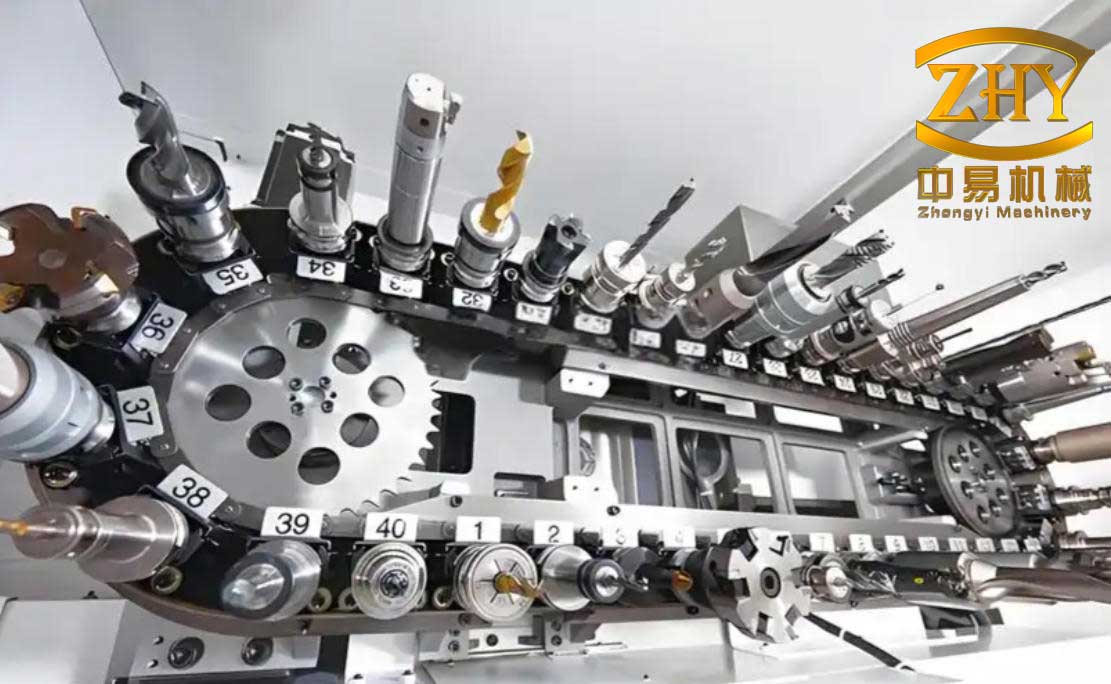
This was precisely the challenge encountered. A turning bed casting, with a weight of 2500 kg and complex internal geometry featuring guideways (60 mm thick) and thin ribs (down to 15 mm), consistently exhibited cracks at specific stress-concentration points under the traditional low-CE formula. Analysis confirmed a high residual stress level (~102 MPa) and a predominance of directional E-type graphite at the crack origins, highlighting the failure of the conventional approach.
| Parameter | Traditional Process | Initial Improved Process |
|---|---|---|
| Charge Ratio (Mass %) | Pig Iron: 20, Scrap Steel: 50, Returns: 30 | Pig Iron: 0, Scrap Steel: 70, Returns: 30 |
| Target Carbon Equivalent (CE) | ~3.55% | 3.67% – 3.83% |
| Target Carbon (C) | ~3.00% | 3.10% – 3.20% |
| Target Silicon (Si) | ~1.66% | 1.70% – 1.90% |
The optimization journey began with a fundamental shift in charge make-up and chemistry. Eliminating pig iron and increasing the scrap steel ratio to 70% was the first step. This practice breaks the genetic inheritance of coarse graphite from pig iron, promoting a finer initial melt structure. Concurrently, the target CE was deliberately increased above 3.70%. This higher CE enhances the natural tendency to form A-type graphite, improves fluidity (allowing lower pouring temperatures), and inherently reduces the thermal stress during solidification, a key factor for dimensional stability in machine tool castings.
While this initial shift successfully increased the proportion of A-type graphite and reduced cracking, it revealed a secondary challenge: the dilution of the pearlitic matrix. The hardness of the guideways dropped, underscoring that graphite morphology control must be balanced with matrix strengthening. The relationship between hardness (HB) and the matrix can be conceptually viewed as a function of graphite form and pearlite content:
$$HB \propto f(P_{content}, G_{type}, G_{size})$$
where $P_{content}$ is pearlite percentage, $G_{type}$ is graphite type, and $G_{size}$ is graphite size. We needed a process that optimized all variables.
The heart of the new methodology lies in advanced melt treatment. First, a pretreatment stage was introduced. After the charge is fully melted and superheated to 1510-1530°C for 5-8 minutes for purification, a 0.2% addition of a specialized preconditioner is made. This agent, added before final tapping, creates a high population of heterogeneous nucleation sites within the melt, effectively “preparing” the iron to be more responsive to subsequent inoculation. This is crucial for electric furnace melts, which lack the innate nucleation benefits of cupola melting.
The selection of the primary inoculant was rigorously tested. Comparative trials were conducted using standard 75SiFe, a长效孕育剂 SiBaCa, and a Sr-containing复合孕育剂 SiSrZr. While all improved graphite structure compared to uninoculated iron, the SiSrZr inoculant delivered superior results in the context of producing high-integrity machine tool castings.
| Inoculant Type | Dominant Graphite Morphology | Average Tensile Strength (MPa) | Key Metallurgical Observation |
|---|---|---|---|
| 75SiFe | A-type with some E-type | 220 | Coarser graphite, some blocky graphite present. |
| SiBaCa | A-type | 217 | Finer graphite than 75SiFe. |
| SiSrZr | A-type | 232 | Finest and most uniform A-type graphite, no blocky graphite. |
The SiSrZr inoculant’s ability to refine and uniformly distribute A-type graphite, thereby increasing the tensile strength by over 10 MPa in the test samples, made it the clear choice. Its efficacy in preventing undercooled graphite formations is vital for the complex, varying sections of machine tool castings.
Based on these findings, a comprehensive, optimized production process was established for the high-precision turning bed machine tool castings.
1. Finalized Chemistry & Alloying: A high CE base (3.75% average) was maintained to favor A-type graphite and low stress. To compensate for the matrix softening effect of high CE and to achieve the required hardness and strength, a low-alloy addition was employed. This strategic combination is key: the high CE ensures good graphite morphology and low stress, while the lean alloying ensures matrix strength without promoting carbides or harming machinability.
$$Final Strength = f(CE_{high}, [Alloy], Inoculation_{effective})$$
| Element | Target Range (wt.%) | Primary Function |
|---|---|---|
| C | 3.15 – 3.20 | Base for CE, promotes A-type graphite. |
| Si | 1.80 – 2.00 | Base for CE, strong graphitizer. |
| Mn | 0.80 – 1.00 | Stabilizes pearlite, neutralizes S. |
| S | 0.08 – 0.10 | Necessary for inoculation efficacy. |
| Cu | 0.50 – 0.70 | Strengthens matrix, improves hardness uniformity. |
| Cr | 0.20 – 0.25 | Increases strength and hardness. |
| Sn | 0.03 – 0.05 | Powerful pearlite stabilizer. |
2. Integrated Melt Treatment Protocol: A three-stage treatment process was institutionalized.
| Stage | Material | Addition Rate (wt.%) | Particle Size (mm) | Purpose |
|---|---|---|---|---|
| Pretreatment | Preconditioner | 0.2 | 0 – 10 | Create nucleation sites in the furnace. |
| Primary Inoculation | SiSrZr Alloy | 0.3 | 0.7 – 3.0 | Refine graphite, promote A-type formation at tap. |
| Late-Stream Inoculation | SiSrZr Alloy | 0.1 | 0.2 – 0.7 | Counteract fade, ensure nucleation during pouring. |
3. Complementary Foundry Practices: The gating system was redesigned to feature multiple, dispersed ingates along the guideway surface instead of end-gating. This prevents localized overheating, which can lead to coarse graphite and shrinkage. Furthermore, a strict shakeout temperature of below 280°C was enforced to minimize the development of thermal stress.
The results from implementing this holistic approach on production machine tool castings were comprehensive and highly positive.
Metallurgical Quality: The graphite morphology was consistently A-type, with a length rating of 4 (fine) according to standard metallographic analysis. The pearlite content was maintained at 98%, with phosphide/carbide networks kept below 1%. This ideal microstructure is the foundation for reliable performance.
Mechanical Properties: Separately cast test bars exhibited a tensile strength of 345 MPa, significantly exceeding the HT300 specification. Hardness measurements across the four guideways (multiple points per guideway) showed exceptional uniformity.
| Performance Metric | Result |
|---|---|
| Hardness Range (All Points) | 191 – 202 HBW |
| Maximum Hardness Deviation on a Single Guideway | -4 / +5 HBW |
This level of hardness uniformity is critical for consistent wear resistance and minimal distortion during precision machining of the machine tool castings.
Residual Stress: Blind-hole strain gauge measurements on the guideways revealed a decisive reduction in residual stress compared to castings produced by the traditional low-CE method. The maximum principal stress was reduced from approximately -102 MPa to -78 MPa, representing a 24% reduction. This decrease directly translates to improved dimensional stability and accuracy retention for the final machine tool. The stress state improvement can be conceptually linked to the more uniform, isotropic contraction allowed by the A-type graphite structure:
$$\sigma_{residual} \propto \frac{E \cdot \Delta \alpha \cdot \Delta T}{1-\nu} \cdot g(G_{uniformity})$$
where a function $g(G_{uniformity})$ representing graphite uniformity is significantly improved, thereby reducing $\sigma_{residual}$.
In conclusion, controlling graphite morphology in machine tool castings is not a single-step operation but a systems-based metallurgical strategy. The successful production of high-precision, high-stability castings requires abandoning the simplistic low-CE paradigm. Instead, it demands: 1) A high scrap steel charge free of pig iron to reduce genetic coarse graphite, 2) A deliberately elevated carbon equivalent (CE > 3.70%) to promote A-type graphite formation and lower inherent stress, 3) The application of advanced melt treatment sequences involving preconditioning and powerful Sr-containing inoculation, and 4) Strategic low-alloying to achieve the required matrix strength and hardness without compromising the benefits of the high-CE, well-inoculated base iron. This integrated approach ensures that machine tool castings possess the necessary combination of A-type graphite, high strength, exceptional hardness uniformity, and low residual stress—the fundamental pillars for machining precision and long-term operational stability.