
As a professional deeply involved in the manufacturing industry, I have witnessed a significant shift towards innovative materials that enhance precision and sustainability. One such material that has captured my attention is mineral castings, particularly for machine tool castings. At exhibitions like CIMT2019, I observed machines such as vertical machining centers and five-axis milling-turn complexes incorporating high-strength artificial granite mineral castings, replacing traditional cast iron. This trend highlights a growing industry focus on eco-friendly and high-performance solutions for machine tool castings.
Mineral castings, also known as polymer concrete or resin concrete, represent a composite material made from modified epoxy resins, hardeners, and aggregates like granite and quartz sand. In my analysis, this material offers exceptional properties ideal for machine tool castings, including high damping capacity, wear and corrosion resistance, and dimensional stability. Unlike traditional cast iron, which requires energy-intensive high-temperature processing, mineral castings are cured at room temperature, reducing energy consumption and environmental impact. This makes them a compelling choice for advancing machine tool castings in various sectors.
The manufacturing technology for mineral castings originated in Germany but has since been adopted and refined domestically. From my perspective, companies have developed proprietary techniques, enabling widespread use in数控设备 and other industrial fields. The appeal lies in its cost-effectiveness and performance benefits, driving adoption for machine tool castings. Below, I delve into the technical aspects, comparing it to traditional materials through tables and formulas to underscore its advantages.
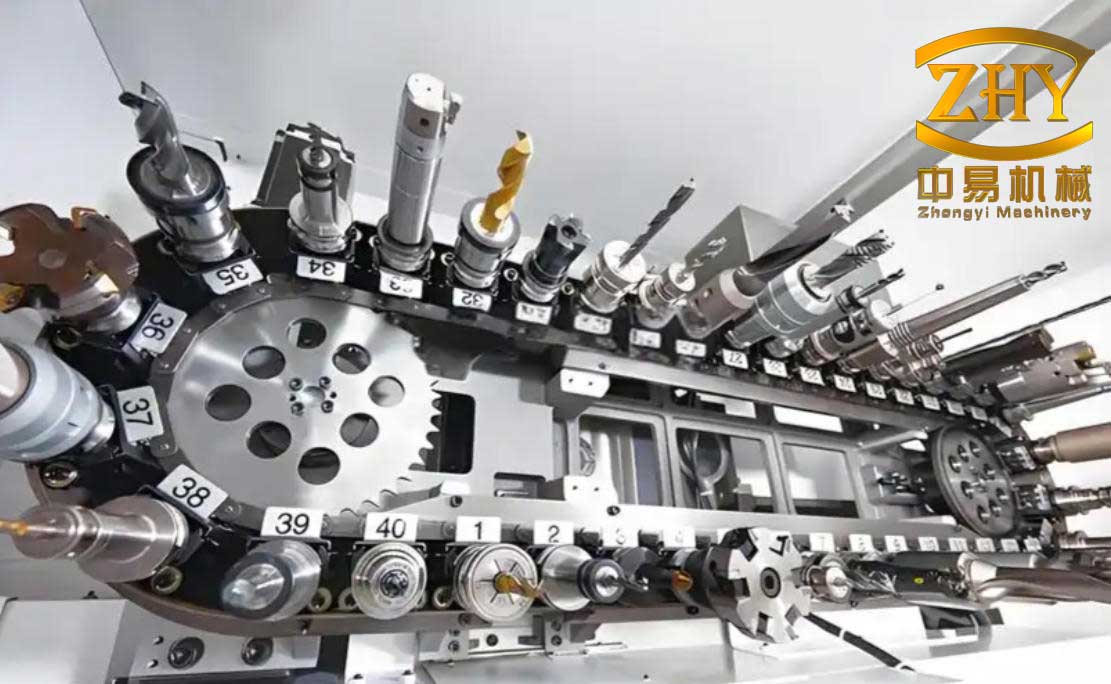
From my experience, the forming principle of mineral castings involves a cold-curing process where resins and aggregates are mixed and poured into molds. This method allows for precise shaping, facilitating the integration of components like cable conduits, hydraulic pipes, and steel inserts directly into machine tool castings. The key characteristics that I find remarkable include superior vibration damping, with damping coefficients significantly higher than cast iron. For instance, the damping factor $\zeta$ for mineral castings can be expressed as:
$$\zeta_{\text{mineral}} \approx 0.01 \text{ to } 0.02, \quad \text{while} \quad \zeta_{\text{cast iron}} \approx 0.001 \text{ to } 0.002$$
This equation illustrates how mineral castings absorb vibrations up to 10 times better, crucial for maintaining accuracy in machine tool castings during high-speed operations. Additionally, the thermal stability is exceptional due to low thermal conductivity, typically ranging from 1 to 3 W/mK, compared to cast iron’s 40 to 50 W/mK. The heat transfer equation can be modeled as:
$$q = -k \nabla T$$
where $q$ is heat flux, $k$ is thermal conductivity, and $\nabla T$ is temperature gradient. For machine tool castings, lower $k$ values mean reduced thermal deformation, enhancing precision.
The manufacturing process for mineral castings, as I have studied, involves several steps: raw material proportioning, mixing, mold preparation, assembly, pouring, and curing. Each step is optimized to produce durable machine tool castings. For example, the mix ratio includes aggregates, fillers, resins, and additives, with proportions affecting final strength. A common formulation might involve:
$$\text{Resin content} = 10-15\% \text{ by weight}, \quad \text{Aggregate size distribution} = \text{graded for maximum packing}$$
This ensures minimal voids and high integrity. The table below compares technical parameters, emphasizing why mineral castings are gaining traction for machine tool castings.
| Parameter | Mineral Castings | Cast Iron Castings | Natural Marble |
|---|---|---|---|
| Density (g/cm³) | 2.30–2.45 | 6.6–7.4 | 3.0–4.5 |
| Compressive Strength (N/mm²) | 140–170 | 300–900 | 200–300 |
| Flexural Strength (N/mm²) | 25–45 | 100–300 | 20–30 |
| Elastic Modulus (N/mm²) | 30–50 | 80–120 | 50–100 |
| Thermal Conductivity (W/mK) | 1–3 | 40–50 | 2.5–3.5 |
| Coefficient of Thermal Expansion (10⁻⁶/K) | 10–20 | 10–15 | 5–7 |
| Poisson’s Ratio | 0.25–0.3 | 0.2–0.3 | 0.2–0.3 |
| Damping Coefficient | 0.01–0.02 | 0.001–0.002 | 0.002–0.003 |
As shown, mineral castings offer lower density and thermal conductivity, which I believe reduces machine tool weight and heat-related errors. Although compressive strength is lower, designers compensate by increasing wall thickness, typically 3–4 times that of cast iron for machine tool castings. The bending strength can be approximated by the formula:
$$\sigma_b = \frac{3F L}{2b h^2}$$
where $\sigma_b$ is bending stress, $F$ is load, $L$ is span, $b$ is width, and $h$ is thickness. For mineral castings, higher $h$ values ensure adequate strength for machine tool castings under operational loads.
In terms of production efficiency, I have noted that mineral castings shorten lead times to 10–15 days, compared to months for cast iron. This is due to room-temperature curing, described by the kinetic equation for epoxy resin polymerization:
$$\frac{d\alpha}{dt} = k (1-\alpha)^n$$
where $\alpha$ is conversion degree, $k$ is rate constant, and $n$ is reaction order. The low exotherm minimizes shrinkage, ensuring high accuracy for machine tool castings with surface roughness often below 10 µm. Moreover, the ability to embed components reduces assembly costs, making mineral castings economically viable for mass-producing machine tool castings.
The corrosion resistance of mineral castings is another aspect I value. They withstand chemicals like coolants and cutting fluids, unlike cast iron that rusts easily. This inertness stems from the epoxy matrix, which can be modeled using chemical resistance indices. For machine tool castings, this prolongs lifespan and reduces maintenance, aligning with sustainable practices.
Looking at applications, mineral castings are revolutionizing various industries. From my observations, machine tool castings form the backbone of加工 centers, lathes, and milling machines. In electronics, they serve as bases for drilling and analytical equipment; in energy, for turbine foundations; and in metrology, for coordinate measuring machines. The versatility stems from their design inclusivity, allowing complex geometries that optimize space and functionality. Below is a summary of applications where machine tool castings play a pivotal role.
| Industry Sector | Applications of Mineral Castings |
|---|---|
| Machine Tool Industry | Bases and frames for various machining centers, lathes, and grinders |
| Electronics Industry | Drilling machines, analyzer equipment bases |
| Energy Industry | Steam turbine and generator foundations |
| Measurement Industry | 三坐标测量机, balancing machines, high-precision gauges |
| Other Industries | Packaging, textile, and chemical machinery components |
This broad adoption underscores the material’s potential. In my view, the future of machine tool castings is bright, driven by ongoing R&D. Formulations are being enhanced with nanofillers to improve mechanical properties. For instance, the Halpin-Tsai equation can predict composite modulus:
$$E_c = E_m \frac{1 + \xi \eta V_f}{1 – \eta V_f}, \quad \eta = \frac{E_f/E_m – 1}{E_f/E_m + \xi}$$
where $E_c$ is composite modulus, $E_m$ is matrix modulus, $E_f$ is filler modulus, $V_f$ is filler volume fraction, and $\xi$ is shape factor. Such advancements will yield stronger, lighter machine tool castings.
Environmental regulations are pushing industries toward greener solutions. Mineral castings, with their low VOC emissions and recyclability, offer a sustainable alternative to cast iron, which generates waste and pollution. From a lifecycle perspective, the carbon footprint can be calculated as:
$$\text{Carbon footprint} = \sum (\text{Energy input} \times \text{Emission factor})$$
Mineral castings reduce this due to energy-efficient production, benefiting sectors prioritizing eco-friendly machine tool castings.
In conclusion, as I reflect on the evolution of manufacturing materials, mineral castings stand out as a transformative option for machine tool castings. Their unique blend of damping, thermal stability, and design flexibility addresses key challenges in precision engineering. With continuous innovation, I anticipate wider adoption across aerospace, medical, and automotive fields, where high-performance machine tool castings are critical. The shift away from traditional cast iron not only boosts efficiency but also supports global sustainability goals, making mineral castings a cornerstone of future industrial advancements.