
The pursuit of high-performance, dimensionally stable, and cost-effective machine tool castings, such as beds, columns, and tables, is a constant driver in the manufacturing sector. These components form the foundational structure of precision machinery, and their inherent quality directly dictates the machine’s accuracy, damping capacity, and long-term reliability. Among various materials, gray cast iron, particularly grades with a high carbon equivalent (CE), has been a mainstay due to its excellent castability, good machinability, and superior vibration damping characteristics. However, the traditional production of high-strength gray iron often necessitates a lower CE, which can compromise fluidity and increase the risk of casting defects and residual stresses. This research focuses on innovating a short-flow production methodology specifically for high-carbon-equivalent gray iron, aiming to produce machine tool castings that simultaneously exhibit high mechanical properties, low residual stress, and exceptional metallurgical quality, thereby optimizing cost, cycle time, and performance.
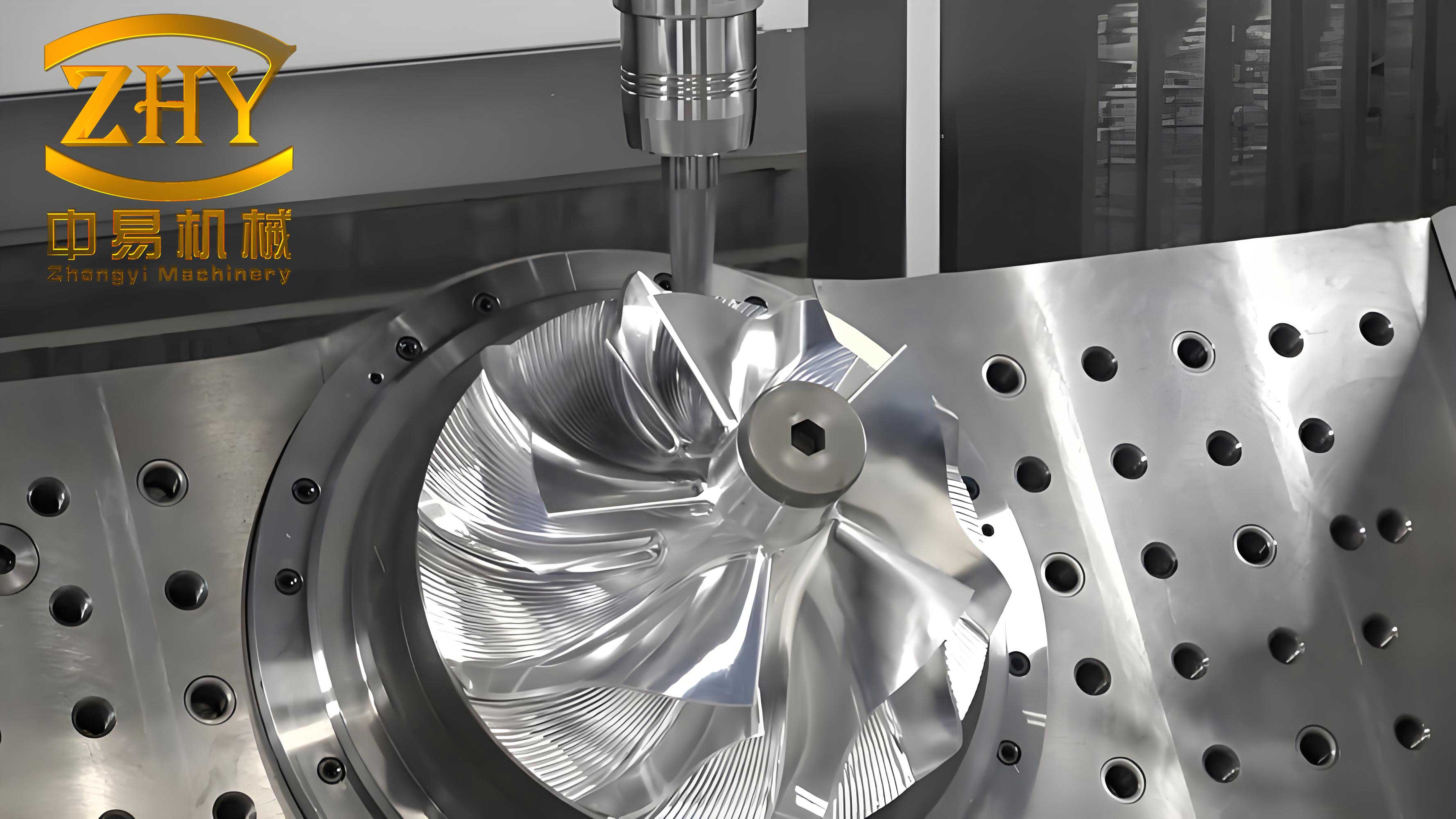
The core challenge addressed here is the inherent trade-off in gray iron: higher CE improves castability and reduces shrinkage tendencies but typically leads to a higher ferrite content and lower strength. The short-flow process integrates several advanced techniques to break this paradigm. It combines a novel melting practice using pre-treated hot metal from a blast furnace with precise inoculation, alloying, and innovative sand molding using 3D printed cores. This holistic approach controls the solidification process and matrix structure to achieve a high-performance material suitable for demanding machine tool castings.
Characteristics of High Carbon Equivalent Gray Iron for Machine Tool Castings
Gray cast iron for heavy-section machine tool castings requires a unique set of properties. A high Carbon Equivalent, typically above 3.8%, is desirable for several reasons related to the casting process and final component behavior.
- Superior Castability: High CE iron exhibits excellent fluidity, allowing it to fill complex and thin-walled sections of large mold cavities with minimal risk of mistruns or cold shuts, which is crucial for intricate machine tool castings.
- Reduced Shrinkage Defects: During solidification, the precipitation of graphite expands. In high CE irons, this graphite expansion can effectively compensate for the shrinkage of the iron matrix, minimizing the formation of internal shrinkage porosity and sinks, leading to denser, more sound castings.
- Lower Founding Stresses: The improved feeding characteristic and the morphology of the graphite formed can contribute to a reduction in thermal gradients during cooling, inherently leading to lower residual stresses in the as-cast state.
The key metallurgical parameters defining this material are the Carbon Equivalent (CE), the Silicon-to-Carbon ratio (Si/C), and the resulting eutectic saturation (Sc).
$$ CE = C + \frac{1}{3}(Si + P) $$
$$ S_c = \frac{C}{4.26 – \frac{1}{3}(Si+P)} $$
Where C, Si, and P are the weight percentages of carbon, silicon, and phosphorus, respectively. A high Sc value (closer to 1) indicates a composition near the eutectic point, favoring the aforementioned benefits. However, to achieve high strength (e.g., HT300 grade or above) with a high CE, meticulous control over graphite morphology and matrix structure is non-negotiable. The goal is to promote a uniform distribution of Type A graphite within a predominantly pearlitic matrix, free from excessive ferrite or coarse carbides.
The Short-Flow Production Process for Machine Tool Castings
The developed process was applied to produce a large horizontal machining center bed casting. The process sequence is designed for efficiency and control, encompassing material selection, melting, molding, pouring, and post-casting operations.
1. Material Selection and Charge Composition
The charge makeup is critical for achieving the target chemistry consistently and cost-effectively. The short-flow advantage is leveraged by using a significant proportion of pre-treated blast furnace hot metal.
| Charge Material | Proportion (wt.%) | Purpose & Requirement |
|---|---|---|
| Blast Furnace Hot Metal | 45% | Base iron, pre-desulfurized and dephosphorized in a transfer ladle. Provides thermal and chemical efficiency. |
| Steel Scrap | 30% | To adjust final chemistry and provide nucleation sites. Must be clean and of known composition. |
| Returns (Internal) | 20% | Improves yield, must be properly segregated and cleaned to avoid contamination. |
| Alloys (Si, Mn, Cr, etc.) | 5% | For final micro-alloying and composition adjustment. |
2. Melting and Chemical Control
Melting is conducted in a medium-frequency induction furnace. The pre-treated hot metal is charged and superheated alongside scrap and returns. The melting temperature is maintained between 1,480°C and 1,550°C. The key aspect is the precise targeting of a high CE coupled with a high Si/C ratio, supported by micro-alloying.
| Element/Parameter | Target Range | Function |
|---|---|---|
| Carbon Equivalent (CE) | 3.80% – 3.85% | Ensures excellent castability and low shrinkage tendency. |
| Carbon (C) | 3.00% – 3.05% | |
| Silicon (Si) | 2.40% – 2.50% | High Si/C ratio (>0.75) enhances graphitization potential and strength. |
| Manganese (Mn) | 0.80% – 0.90% | Combines with sulfur to form MnS and strengthens pearlite. |
| Chromium (Cr) | 0.10% – 0.20% | Pearlite stabilizer, refines graphite and pearlite. |
| Tin (Sn) | 0.04% – 0.06% | Powerful pearlite promoter, counteracts ferrite formation from high Si. |
| Nitrogen (N) | 90 – 110 ppm | Added via nitrogen-bearing alloys. Strengthens matrix and synergizes with Sn. |
| Phosphorus (P) | < 0.04% | Kept low to minimize brittleness. |
| Sulfur (S) | 0.04% – 0.08% | Necessary for inoculation efficacy; controlled level. |
The successful implementation of this chemistry for high-strength machine tool castings relies on the synergistic effect of N, Sn, and Cr to ensure a fully pearlitic matrix despite the high Si content that would otherwise promote ferrite.
3. Inoculation Practice
A multi-stage inoculation strategy is employed to ensure a high count of graphite nuclei, resulting in a fine, uniform Type A graphite distribution.
- Pre-inoculation: 0.1 wt.% fine silicon carbide (SiC, 0.2-1 mm) is sprinkled on the molten metal surface in the furnace. SiC dissolves and provides abundant nucleation sites for graphite.
- Ladle Inoculation: During tapping, 0.4 wt.% of a silicon-barium-calcium (Si-Ba-Ca) inoculant is added to the stream entering the pouring ladle. This is the primary inoculation step.
- Stream Inoculation: During pouring, 0.1 wt.% of fine 75% ferrosilicon (0.2-0.7 mm) is added to the metal stream as it enters the mold. This late inoculation compensates for fading effects.
4. Molding and Core Making with 3D Printing
For complex, high-precision machine tool castings, the molding process utilizes furan resin-bonded sand. A significant innovation is the adoption of 3D sand printing for core manufacturing.
- Advantages: This allows for the creation of highly intricate internal geometries (like coolant passages and reinforcement ribs) with exceptional dimensional accuracy and excellent surface finish. It eliminates the need for complex core boxes, reducing lead time and cost for prototype and low-volume production of critical machine tool castings.
- Process Control: Key parameters for the resin sand process are strictly controlled: resin addition (1.0-1.1%), catalyst ratio (30-50% of resin), compressive strength (0.8-1.2 MPa), and permeability (120-200). A proprietary refractory coating with a viscosity of 38°Bé is uniformly applied to the mold surfaces to prevent metal penetration and improve casting finish.
5. Gating, Pouring, and Cooling
The gating system is designed for a quiescent, non-turbulent fill to avoid slag entrainment and mold erosion. A pressurized system with a choke at the sprue base is often used. The designed area ratios for the studied bed casting were:
$$ \Sigma A_{sprue} : \Sigma A_{runner} : \Sigma A_{ingate} = 1.2 : 1.0 : 0.9 $$
Pouring temperature is critical and is maintained between 1,380°C and 1,410°C. The pour time for the large bed casting was controlled between 60 and 90 seconds. After pouring, controlled cooling within the mold is allowed to prevent thermal shock and the development of excessive stresses before shakeout.
6. Post-Casting Operations
After shakeout, castings are cleaned, and gates and risers are removed. A stress-relief annealing is typically performed, involving heating to a temperature between 500°C and 550°C, holding for several hours (based on section thickness), and furnace cooling. This is a vital step for machine tool castings to ensure dimensional stability during machining and service.
Quality Assessment and Metallurgical Analysis of Machine Tool Castings
The efficacy of the short-flow process is validated through rigorous testing of mechanical properties, residual stress, hardness, and metallographic structure.
1. Mechanical Properties and Hardness
Separately cast test bars from the same heat exhibited a tensile strength (Rm) of 310.9 MPa and a Brinell hardness (HBW) of 207. The relationship between strength and hardness is a key indicator of machinability, often expressed by the machinability coefficient (m).
$$ m = \frac{R_m}{HBW} = \frac{310.9}{207} \approx 1.5 $$
An m value of 1.5 is considered excellent, indicating that the material offers high strength without excessive hardness, leading to favorable tool life and surface finish during the machining of the machine tool castings. On-site hardness measurements on the actual bed casting showed consistent values between 201 and 216 HBW.
2. Residual Stress Measurement
Low residual stress is paramount for the long-term geometric stability of machine tool castings. Measurements were taken at multiple points on the as-cast bed (prior to annealing) using strain gauge rosettes. The principal stresses calculated were relatively low, with most values below 90 MPa in compression or tension. This demonstrates the inherent low-stress characteristics achieved by the high CE composition and controlled solidification.
3. Metallurgical Quality Indices
Advanced gray iron specifications evaluate more than just tensile strength. Key derived indices provide insight into the overall quality and performance potential of the iron for machine tool castings.
| Quality Index | Formula | Calculated Value | Interpretation |
|---|---|---|---|
| Relative Hardness (RH) | $$ RH = \frac{HBW_{measured}}{530 – 344 \times S_c} $$ | 0.91 | Indicates the achieved hardness is lower than the “normal” hardness for its strength level, signifying good machinability. |
| Degree of Maturity (RG) | $$ RG = \frac{R_{m(measured)}}{1000 – 800 \times S_c} $$ | 1.05 | A value >1.0 indicates the iron has a higher strength than normally expected for its CE, showing effective use of alloying/inoculation. |
| Quality Coefficient (Qi) | $$ Q_i = \frac{RG}{RH} $$ | 1.19 | A value >1.0 signifies a superior combination of strength, castability, and machinability. |
The calculated values (RH < 1, RG > 1, Qi > 1.15) confirm the production of a high-quality, high-carbon-equivalent iron ideally suited for demanding machine tool castings.
4. Microstructural Analysis
Metallographic examination of the test bar revealed the optimal microstructure targeted for high-performance machine tool castings:
- Graphite Morphology: >96% Type A (randomly oriented flakes), size rating 4 (fine/medium). This uniform graphite distribution is key for good damping, thermal conductivity, and machinability.
- Matrix Structure: >98% fine pearlite, with minimal ferrite. This is the direct result of the balanced micro-alloying with Cr, Sn, and N, which effectively suppressed the ferritizing effect of the high silicon content, ensuring high strength and wear resistance.
Conclusion and Outlook
The research and application detailed herein successfully demonstrate a viable and optimized short-flow production process for manufacturing high-performance gray iron machine tool castings with a high carbon equivalent (3.80-3.85%). The integration of specific techniques—utilizing pre-treated hot metal, implementing a multi-stage inoculation strategy with SiC and efficient inoculants, targeting a high Si/C ratio (>0.75), and employing precise micro-alloying with N, Sn, and Cr—has proven effective in overcoming the traditional limitations of high CE iron.
The resulting material exhibits an excellent synergy of properties: high tensile strength (exceeding 310 MPa), low as-cast residual stress, a fully pearlitic matrix with Type A graphite, and, crucially, a high machinability coefficient (m ≈ 1.5). The derived metallurgical quality indices (RG=1.05, RH=0.91, Qi=1.19) quantitatively confirm that these machine tool castings possess superior comprehensive quality, marrying good castability with high strength and excellent machining behavior.
Future work will focus on further refining the process windows, exploring the use of other innovative inoculants and alloying elements, and extending this short-flow, high-CE philosophy to even higher grade ductile and compacted graphite irons for specialized machine tool castings. The adoption of digital tools for process simulation and real-time metallurgical quality prediction will also be integral to the next stage of advancement, ensuring consistent production of premium castings that meet the evolving demands of the precision machine tool industry.