
In the precision investment casting of intricate, thin-walled components, achieving consistent soundness, particularly in sections with drastic thickness variations and complex geometries, presents a significant engineering challenge. This discussion details a first-person perspective on the process design, problem diagnosis, and systematic optimization undertaken for a specific category of challenging shell castings. The primary issue was the persistent occurrence of shrinkage porosity in localized thin-wall sections adjacent to thick features, severely impacting yield. The shell castings in question were characterized by an external envelope of 28 mm × 38 mm × 14 mm, a mass of approximately 6 grams, and a highly variable wall thickness ranging from a nominal 2 mm to a substantial 12 mm. The most problematic area was a 2 mm thick wall section that incorporated a deep, recessed channel or groove on one side. This geometry not only created a natural hot spot but also complicated the shell-building process. The alloy was a low-alloy steel, and the technical specification mandated rigorous inspection via magnetic particle and X-ray testing, which consistently revealed shrinkage defects in the thin web area.
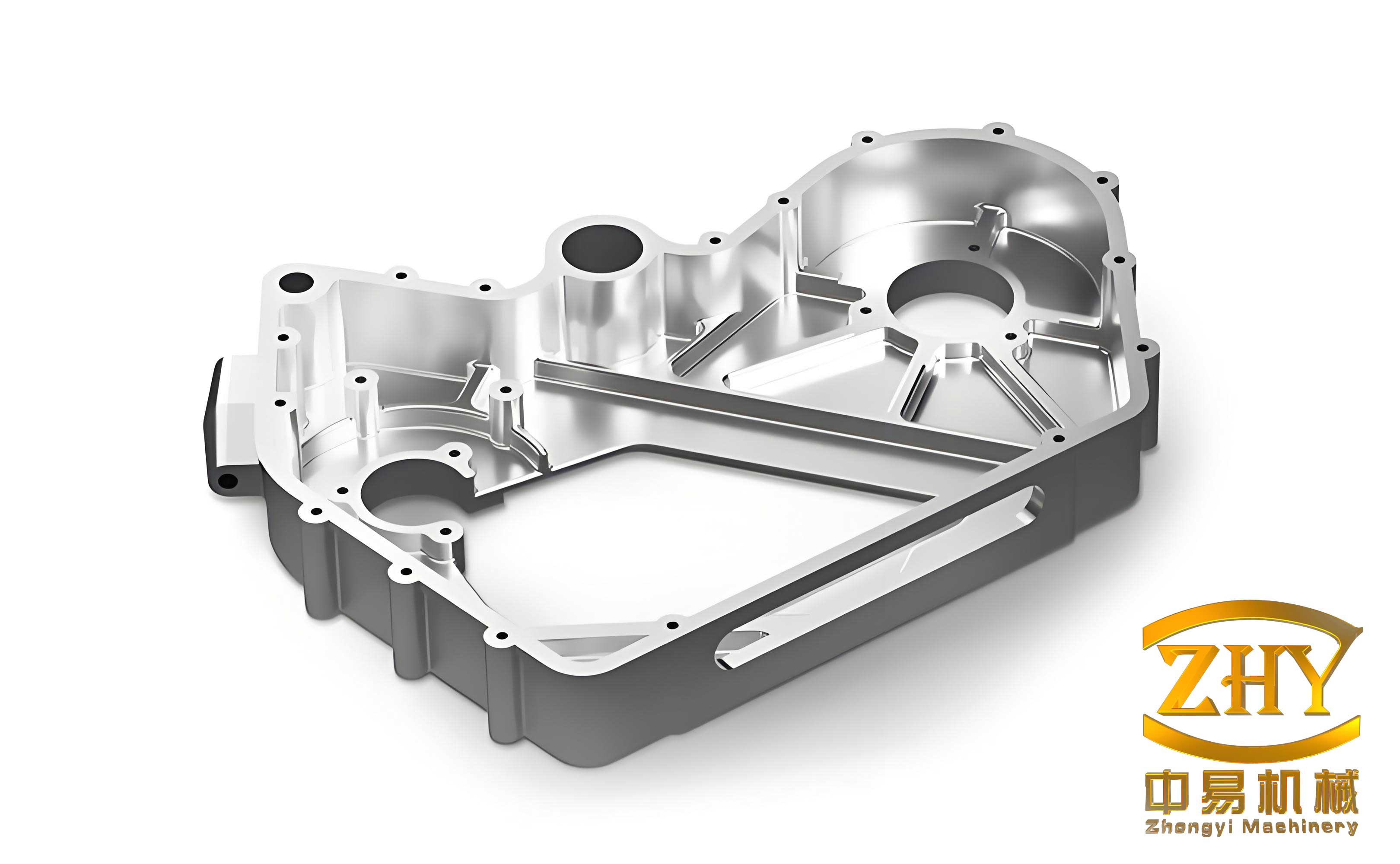
The initial analysis pinpointed the root cause as a combination of unfavorable heat dissipation and inadequate feeding during solidification. The recessed groove acted as a pocket that trapped ceramic slurry and stucco during the shell-building process. This resulted in a locally thicker ceramic shell in that specific cavity. During casting solidification, this excessive insulation created a “thermal mass” effect, slowing down the cooling rate of the already thin metal section adjacent to it. Consequently, this area remained liquid longer than the surrounding metal, becoming isolated from the feeding source (the ingate) as surrounding paths solidified, leading to internal shrinkage porosity. The challenge was twofold: to manage the shell-building process for this geometry and to redesign the feeding system to ensure directional solidification towards an effective feed metal source.
Foundational Principles and Feed System Design Optimization
The core principle governing the redesign was Chvorinov’s Rule, which states that solidification time is proportional to the square of the volume-to-surface area ratio (modulus).
$$ t = k \left( \frac{V}{A} \right)^2 $$
Where \( t \) is solidification time, \( k \) is the mold constant, \( V \) is the volume of the casting section, and \( A \) is its surface area. For the problematic thin wall with the integrated groove, the effective cooling surface area \( A \) was drastically reduced because the groove-side surface was in contact with a thick, insulating shell rather than a normal shell thickness. This increased the local modulus, making it solidify slower than a simple 2mm wall would, effectively turning it into a hidden hot spot.
The initial gating scheme placed ingates at obvious thick sections (hot spots) of the shell castings. However, the critical thin web was located between two such ingates. Solidification simulation (both mental and later confirmed by software) indicated that these ingates were not effectively feeding the web area. The solidification fronts from the ingates and the web itself met, creating an isolated liquid pool prone to shrinkage.
The optimized design introduced a dedicated, judiciously sized ingate directly onto the planar area adjacent to the problematic thin web and its groove. The key was to provide a direct thermal and feeding path. The ingate cross-section was designed using a simplified feed volume calculation. The required feed metal volume \( V_{feed} \) to compensate for shrinkage in the web region can be estimated as:
$$ V_{feed} = \beta \cdot V_{web} $$
Where \( \beta \) is the volumetric shrinkage coefficient of the alloy (approximately 0.03-0.04 for steels). Knowing \( V_{web} \) (the volume of the isolated hot spot), the necessary feed metal volume is calculated. The ingate must remain liquid long enough to supply this volume. Therefore, its modulus \( M_{ingate} \) must be greater than the modulus of the feeding area \( M_{web} \).
$$ M_{ingate} > M_{web} \quad \text{where} \quad M = \frac{V}{A} $$
For a rectangular ingate of thickness \( t \) and width \( w \) (assuming length is the third dimension), its modulus can be approximated. A 4 mm × 12 mm cross-section was selected. This provided sufficient feeding capacity while remaining relatively easy to cut and grind off during post-casting finishing, a crucial practical consideration for these small, precise shell castings. The table below contrasts the two feeding approaches for the critical area of the shell castings.
| Aspect | Initial Design | Optimized Design |
|---|---|---|
| Ingate Placement | At major thick sections, away from the 2mm web. | Directly adjacent to the 2mm web with the groove. |
| Feeding Path to Web | Indirect, through longer paths; blocked by early solidifying junctions. | Direct and short, ensuring an open channel until web solidification is complete. |
| Thermal Influence | Minimal on the insulated groove area. | Provides direct heat to counter the insulating effect of the thick shell in the groove. |
| Modulus Comparison | \( M_{ingate} \gg M_{web} \) but path not accessible. | \( M_{ingate} > M_{web} \) with accessible path, satisfying directional solidification criteria. |
| Post-Casting Removal | Easy, on thick sections. | Requires care but is feasible due to controlled ingate size on a flat surface. |
Cluster Assembly and Shell-Building Strategy
The orientation of the wax pattern cluster is paramount for process reliability. For these shell castings, the rule established was: complex internal cavities or deep grooves must face outward from the central sprue. This principle was applied rigorously. The cluster was designed with a Ø30 mm central pour cup and sprue. Twelve shell castings patterns were assembled radially, maintaining a minimum distance of 25 mm from the sprue to minimize radiant heat transfer during pouring, which could cause local slow cooling. Crucially, the recessed groove on each pattern was oriented to face the external environment of the cluster.
This outward orientation delivers multiple critical advantages for manufacturing robust shell castings:
- Slurry Application & Drainage: During dipping, slurry can flow freely into and out of the groove, preventing air entrapment (which causes shell voids) and allowing excess slurry to drain, avoiding localized excessive buildup.
- Stucco Application: During sanding, the fluidized stucco particles have a direct line of sight to all surfaces of the groove, promoting even coating and preventing “bridging” where stucco particles lock across the opening without adhering properly to the slurry inside.
- Process Visibility: Operators can visually inspect the groove after each dip-coat cycle to ensure proper coverage and lack of defects.
- Drying Dynamics: Air circulation in the drying chamber can freely flow over and into the outward-facing groove, ensuring uniform and rapid drying of all shell layers. An inward-facing groove would create a stagnant, humid pocket leading to uneven drying, potential delamination, and shell weakness.
The shell-building process itself was meticulously controlled. A six-layer system was employed: one primary (facecoat) layer, four backup layers, and a final seal coat. Parameters were tailored for the small size and delicate features of these shell castings.
| Layer | Slurry Material | Slurry Viscosity (Ford Cup #4, sec) | Stucco Material & Grain Size | Key Process Control for Groove Area | Drying Condition (Temp, RH, Airflow) |
|---|---|---|---|---|---|
| 1 (Face) | Zirconia-based | 36 ± 1 | Zircon Sand, 120 mesh | Slow, controlled dip and rotation to ensure wetting without air bubbles. Visual inspection mandatory. | 23±2°C, 50±5% RH, Gentle airflow (0.5 m/s) |
| 2 (Transition) | Fused Silica/Mullite-based | 15 ± 1 | Mullite, 30/60 mesh | Use compressed air or soft brush to remove loose stucco from groove before dipping. | 23±2°C, 45±5% RH, Medium airflow (2-3 m/s) |
| 3 (Backup 1) | Fused Silica/Mullite-based | 12 ± 1 | Mullite, 16/30 mesh | Ensure drainage; avoid slurry pooling in the groove. | 23±2°C, 40±5% RH, Strong airflow (3-5 m/s) |
| 4 (Backup 2) | Fused Silica/Mullite-based | 12 ± 1 | Mullite, 16/30 mesh | Same as layer 3. | 23±2°C, 40±5% RH, Strong airflow (3-5 m/s) |
| 5 (Backup 3) | Fused Silica/Mullite-based | 12 ± 1 | Mullite, 16/30 mesh | Same as layer 3. | 23±2°C, 40±5% RH, Strong airflow (3-5 m/s) |
| 6 (Seal) | Fused Silica/Mullite-based | 10 ± 1 | — (No Stucco) | Thin, even coat. Goal is to lock in stucco, not add significant thickness. | 23±2°C, 35±5% RH, Very Strong airflow (>5 m/s) |
The seal coat is critical. It must be thin. An overly thick seal coat compromises the shell’s permeability, hindering the escape of gases during metal pour and potentially creating back-pressure that can lead to incomplete filling or surface defects on the shell castings.
De-waxing, Firing, and Metal Pouring Protocols
Consistent de-waxing is essential to prevent shell cracking from rapid wax expansion. The clusters were loaded with the pour cup down and transferred to the autoclave within 60 seconds of removal from the drying area to prevent moisture absorption. High-pressure saturated steam (0.76-0.8 MPa) at ~180°C was used for a rapid, controlled burst to melt and remove the wax. The parameters were fine-tuned for the cluster size and shell thickness relevant to these shell castings.
Shell firing serves to remove residual volatiles, burn off any remaining wax patterns, and sinter the ceramic for strength. The firing temperature must achieve sufficient sintering without causing distortion or phase changes that weaken the shell. For the mullite-based backup system, a temperature of 1050°C was held for 50 minutes. This ensures the shell has high hot strength and good permeability when the metal is poured.
The pouring temperature is a calculated balance between fluidity and grain structure. It must account for the superheat needed to fill thin sections, the heat loss from the furnace to the mold, and the chilling effect of the ceramic shell on the thin-walled shell castings. A general formula to estimate the target pouring temperature \( T_{pour} \) is:
$$ T_{pour} = T_{liq} + \Delta T_{superheat} + \Delta T_{loss} $$
Where \( T_{liq} \) is the alloy’s liquidus temperature, \( \Delta T_{superheat} \) is the additional temperature for fluidity (typically 50-100°C for steels), and \( \Delta T_{loss} \) is an empirical factor for handling and transfer heat loss (typically 20-50°C). For these shell castings, with their 2mm sections, a superheat at the higher end was necessary. The molten alloy was heated to 1630°C ±10°C. Crucially, the fired shells were poured immediately upon removal from the furnace to maximize their heat content, which aids fluidity. After pouring, the entire mold was placed on a sand bed, and exothermic insulating powder was added to the pour cup. This practice significantly enhances the thermal gradient, keeping the sprue and ingates molten longest to feed the shrinking shell castings effectively. The feeding distance \( L_f \) from an ingate can be empirically related to the web thickness \( t \) and the temperature gradient \( G \):
$$ L_f \propto \frac{\sqrt{t}}{G} $$
By adding the exothermic topping, the gradient \( G \) between the hot ingate and the cooler casting body is increased, effectively extending the effective feeding distance \( L_f \) to ensure the remote thin web section is fed.
Results, Validation, and Statistical Process Control
The efficacy of the optimized process was validated through controlled production trials. Five clusters (60 shell castings) were produced using the initial gating design, and five clusters (60 shell castings) were produced using the optimized design. All other process variables were held constant. Each casting was subjected to visual inspection, cut-off, grinding, and finally X-ray inspection to detect internal shrinkage in the critical web area.
The results were starkly different. The initial design yielded a first-pass qualification rate of only 10%, with the dominant defect being shrinkage porosity in the predicted location. The optimized design raised the qualification rate to 86.7%. A statistical analysis of the proportion difference confirms the significance of this improvement. The confidence interval for the improvement in yield is substantial.
| Metric | Initial Process | Optimized Process | Improvement Analysis |
|---|---|---|---|
| Total Castings Produced | 60 | 60 | — |
| Sound Castings (No Shrinkage) | 6 | 52 | — |
| First-Pass Yield (p) | \( p_{old} = 0.10 \) | \( p_{new} = 0.867 \) | — |
| Estimated Standard Error | \( SE_{old} = \sqrt{\frac{p_{old}(1-p_{old})}{n}} \approx 0.039 \) | \( SE_{new} = \sqrt{\frac{p_{new}(1-p_{new})}{n}} \approx 0.044 \) | — |
| Point Estimate of Improvement | \( \Delta p = p_{new} – p_{old} = 0.767 \) | — | |
| 95% Confidence Interval for Improvement | \( \Delta p \pm 1.96 \cdot \sqrt{SE_{old}^2 + SE_{new}^2} \) \( 0.767 \pm 1.96 \cdot 0.059 \approx (0.651, 0.883) \) |
Does not contain 0. | |
| Percentage Yield Increase | \( \frac{\Delta p}{p_{old}} \times 100\% \approx 767\% \) | Qualitatively transformative. | |
The confidence interval for the yield improvement (65.1% to 88.3%) is far above zero, providing strong statistical evidence that the process change caused the improvement, beyond random chance. The optimized process was subsequently released for full-scale production. With sustained attention to the detailed shell-building and pouring controls described, the ongoing production yield for these challenging shell castings has stabilized above 95%.
Conclusion and Generalizable Principles
The successful resolution of the shrinkage problem in these thin-walled shell castings with complex geometry underscores several fundamental principles in investment casting process design:
- Thermal Management is Holistic: It involves both the design of the metal feed system and the management of the ceramic shell. A localized thick shell section acts as an insulator and can create an effective hot spot even in a nominally thin casting wall.
- Strategic Cluster Orientation: For shell castings with internal channels, recesses, or deep grooves, orienting these features outward is critical. This facilitates proper shell construction, inspection, and drying, directly impacting final casting quality.
- Direct and Calculated Feeding: Feeding paths must be designed with a clear understanding of solidification sequences. Ingates should be placed to create direct thermal and mass-transfer channels to areas at risk of shrinkage, obeying the modulus rule \( M_{feed} > M_{casting} \). The size of such ingates must balance feeding efficiency with post-casting removability.
- Process Integration: The benefits of a good gating design can be nullified by poor shell-building practice or suboptimal pouring technique. A systems approach—integrating pattern assembly, shell-building controls, de-waxing, firing, and pouring with exothermic aids—is essential for consistently producing sound, high-integrity shell castings.
This case study demonstrates that by applying these principles—root cause analysis based on solidification science, strategic geometric orientation, and tightly controlled process parameters—persistent defects in complex investment castings can be systematically eliminated, leading to robust and high-yielding manufacturing processes for precision shell castings.