
In my experience within the foundry industry, the production of large shell castings, particularly those with complex geometries like T-shaped configurations, presents significant challenges. These shell castings are critical components in various industrial applications, such as piping systems and machinery housings, where integrity and performance under pressure are paramount. The reference material highlights key aspects of casting process control, including pouring temperature, time, molten metal purification, and identification, which are essential for achieving high-quality shell castings. This article will delve into the improvements made to the casting process for large T-shaped shell castings, drawing from firsthand insights and emphasizing the integration of rigorous quality measures. Throughout this discussion, the term “shell castings” will be frequently referenced to underscore its centrality in our process optimization efforts.
The primary issue we encountered with large shell castings, specifically a T-shaped housing weighing 1455 kg and made of HT250 gray iron, was leakage during hydrostatic testing. This defect, often unpredictable in location, led to costly repairs or scrapping of shell castings. Through analysis, we identified sand inclusion as a major culprit. In the original process, the internal cavity was formed by a monolithic sand core, which, due to structural constraints, required placement after molding the middle section. This sequence, involving heavy core handling with cranes, often damaged core seats and left residual sand particles in the mold cavity. Given the thin walls of these shell castings, incomplete removal of debris resulted in sand inclusions, compromising the casting’s density and leading to leakage.
To address these challenges, we overhauled the casting process for shell castings with a focus on several key areas: pouring parameters, mold design, and quality tracking. The improvements are summarized in the following table, which outlines the critical control points for shell castings production:
| Process Parameter | Specification for Shell Castings | Rationale |
|---|---|---|
| Pouring Temperature | Above 1300°C | Reduces gas porosity and incomplete filling defects in shell castings. |
| Pouring Time | Within 7 minutes per 500 kg ladle | Prevents nodularization and inoculation fading in ductile iron shell castings, ensuring consistent microstructure. |
| Molten Metal Purification | Use of high-temperature fiber filter nets (e.g., XR-II type with 1.5×1.5 mm mesh, 55% porosity) | Filters slag and impurities, enhancing the cleanliness of shell castings. |
| Batch Identification | Each 500 kg batch tracked with single-cast Keel blocks for mechanical and metallographic tests | Ensures traceability and quality correlation for shell castings from pouring to cleaning stages. |
| Casting Orientation | Vertical pouring for large T-shaped shell castings | Facilitates riser placement and improves feeding in thin-walled shell castings. |
| Core Design | Segmented core assembly for internal cavities | Avoids sand inclusion by allowing sequential molding and core placement, maintaining cavity cleanliness. |
| Dimensional Compensation | Addition of machining allowances on flanges | Accounts for shrinkage in long-span shell castings, ensuring final dimensions after machining. |
The pouring temperature is a critical factor in minimizing defects in shell castings. Based on empirical data, we enforce a minimum pouring temperature of 1300°C for small shell castings, as lower temperatures increase the risk of gas porosity and misruns. This relationship can be expressed using an empirical formula for porosity probability $P$ as a function of temperature $T$:
$$ P = k \cdot e^{-\alpha T} $$
where $k$ and $\alpha$ are material-specific constants. For shell castings in gray iron or ductile iron, maintaining $T > 1300^\circ\text{C}$ significantly reduces $P$, ensuring denser structures. In our process, we monitor this via thermocouples and adjust furnace settings accordingly to uphold quality standards for all shell castings.
Pouring time is equally vital, especially for shell castings requiring nodularization treatments. For a 500 kg ladle, we limit pouring to 7 minutes to prevent衰退, which can degrade the mechanical properties of shell castings. The pouring rate $R$ can be calculated as:
$$ R = \frac{M}{t} $$
where $M$ is the mass (500 kg) and $t$ is the time (7 minutes or 420 seconds). This yields $R \approx 1.19 \, \text{kg/s}$, a target we maintain through trained operators and automated systems. Prolonged pouring beyond this window leads to inconsistent nodule formation in ductile iron shell castings, increasing scrap rates. We have implemented ladle tracking and scheduling to adhere to this constraint, reinforcing the reliability of our shell castings production.
Molten metal purification is enhanced through filtration. We employ high-temperature fiber filter nets, such as the XR-II type with 1.5×1.5 mm mesh and 55% porosity, placed in the gating system. This captures slag and non-metallic inclusions, which are common culprits for defects in shell castings. The filtration efficiency $E$ can be modeled as:
$$ E = 1 – \frac{C_{\text{out}}}{C_{\text{in}}} $$
where $C_{\text{in}}$ and $C_{\text{out}}$ are inclusion concentrations before and after filtration. For shell castings, we observe $E > 80\%$, significantly reducing sand inclusions and improving pressure tightness. Additionally, manual skimming of slag during pouring complements this, ensuring cleaner metal flow into the molds for shell castings.
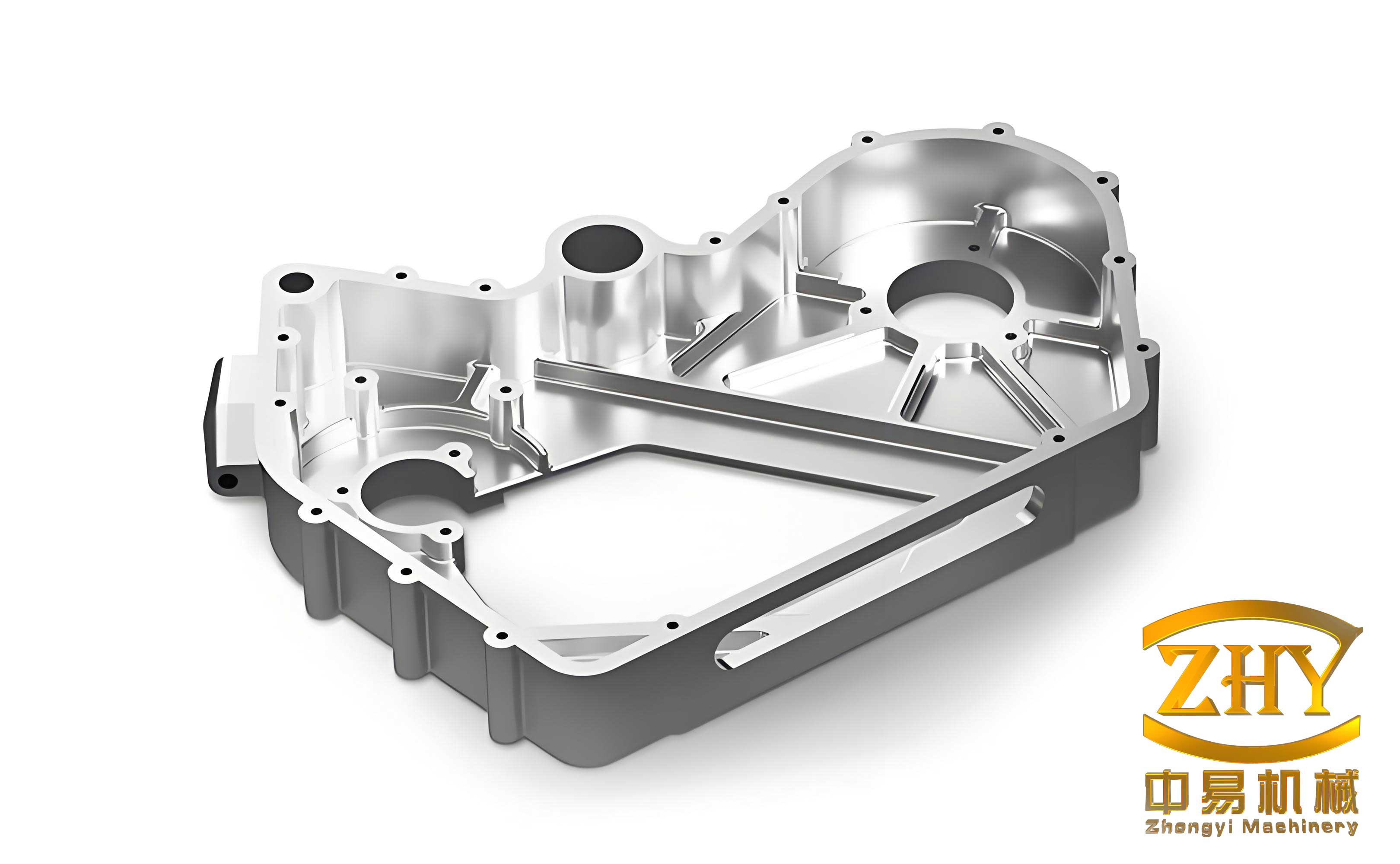
Batch identification and traceability are integral to our quality assurance for shell castings. Each 500 kg batch is treated as a separate unit, with the final pour used to cast single Keel blocks for mechanical and metallographic testing. This allows us to correlate the performance of shell castings with process variables. The tracking extends to cleaning operations, where any discrepancies in shell castings can be traced back to specific batches. We use digital logs and tags to maintain this system, ensuring that every large T-shaped shell casting meets stringent standards. The table below summarizes the mechanical properties achieved for shell castings after process improvements, compared to national standards:
| Property | Improved Shell Castings (Average) | National Standard Requirement | Remarks |
|---|---|---|---|
| Tensile Strength (MPa) | ≥450 | ≥400 for ductile iron | Exceeds standards for shell castings. |
| Elongation (%) | ≥15 | ≥12 for ferritic ductile iron | Superior ductility in shell castings. |
| Hardness (HB) | 150-180 | 140-210 | Within optimal range for shell castings. |
| Hydrostatic Test Performance | No leakage at specified pressure | Pass criteria | Critical for pressure-resistant shell castings. |
For the large T-shaped shell castings, we adopted vertical pouring instead of horizontal orientation. This decision was driven by the material’s shrinkage characteristics—HT250 gray iron has a high shrinkage rate, and the thin-walled, elongated geometry of these shell castings makes riser placement challenging in horizontal setups. Vertical pouring allows for strategic riser positioning along the height, improving feeding and reducing shrinkage porosity in shell castings. The feeding efficiency $F$ can be approximated as:
$$ F = \frac{V_{\text{riser}}}{V_{\text{casting}}} \cdot \beta $$
where $V$ denotes volumes and $\beta$ is a factor accounting for pouring orientation. For our shell castings, vertical pouring increased $F$ by approximately 30%, enhancing densification.
The core assembly was redesigned from a monolithic structure to a segmented system. As illustrated in the provided reference, the internal cavity of the shell castings is now formed by multiple cores (e.g., Core 1, Core 3) that are placed sequentially during molding. This allows us to close the middle mold section after setting Core 1, then place Core 3 before closing the top section. This sequence eliminates the need to handle large cores inside a closed mold, preventing sand collapse and contamination. As a result, the internal surfaces of shell castings are cleaner, with negligible sand inclusion. We calculate the reduction in defect rate $D$ for shell castings using:
$$ D = D_0 \cdot (1 – \gamma)^n $$
where $D_0$ is the initial defect rate, $\gamma$ is the improvement factor per core segment (estimated at 0.4 for our shell castings), and $n$ is the number of segments (2 in this case). This yielded a $D$ reduction of over 60%, significantly boosting the yield of acceptable shell castings.
Dimensional compensation was added in the form of machining allowances on the flange backs. Given the long span of these shell castings, shrinkage during solidification can lead to undersized dimensions after machining. By incorporating allowances of 2-3 mm on critical flanges, we ensure that final machined parts meet design specifications. This is particularly important for shell castings used in assembled systems, where fit and tolerance are crucial. The allowance $A$ can be derived from the linear shrinkage coefficient $S$ of HT250 (about 1.2% for shell castings) and the dimension $L$:
$$ A = L \cdot S + \delta $$
where $\delta$ is a safety margin (0.5 mm for our shell castings). For a 1000 mm flange, $A \approx 12.5 \, \text{mm}$, which we adjust based on historical data from previous shell castings productions.
Through these comprehensive controls, the mechanical properties and metallographic structure of our shell castings consistently meet or exceed national standards. The ferritic ductile iron shell castings exhibit tensile strengths above 450 MPa and elongation over 15%, with graphite nodule counts and matrix structures conforming to specifications. The hydrostatic testing of large T-shaped shell castings now shows no leakage, validating the process improvements. We attribute this success to the holistic approach targeting every stage—from molten metal treatment to mold design—specifically tailored for shell castings.
In conclusion, the enhancement of casting processes for large shell castings involves a multifaceted strategy. Key elements include strict pouring parameters, effective filtration, segmented core designs, and robust traceability systems. By leveraging formulas for process optimization and tabulating control points, we have achieved reproducible high-quality shell castings. Future work may focus on automating these parameters for shell castings using real-time monitoring and AI-driven adjustments, further reducing variability. The lessons learned here are applicable to other complex shell castings, underscoring the importance of adaptive foundry practices in modern manufacturing.