
The convergence of additive manufacturing (3D printing) and traditional foundry techniques represents a paradigm shift in the rapid prototyping and low-volume production of complex metal components. This synergy is particularly transformative for manufacturing intricate shell castings, such as transmission housings, engine blocks, and aerospace components, where geometric complexity, dimensional accuracy, and short lead times are critical. Traditional investment casting, while excellent for precision, relies on expensive and time-consuming tooling for wax pattern production, creating a bottleneck for design validation and pilot runs. This analysis delves into the integrated process chain of 3D-printed wax pattern investment casting, with a specific focus on its application for producing high-integrity aluminum alloy shell castings. We will explore the technical pathway, critical process parameters, a rigorous dimensional accuracy analysis, and the resultant economic and technical advantages.
The core methodology replaces the molded wax pattern with a digitally fabricated one. For shell castings with complex internal galleries and thin walls, Selective Laser Sintering (SLS) of polymer powders, subsequently infiltrated with wax, has proven highly effective. This SLS wax pattern serves as the direct sacrificial model for plaster mold investment casting. The plaster mold, renowned for its exceptional replication fidelity, is combined with vacuum-assisted pouring and pressure-assisted solidification to ensure complete mold filling and denser metallurgical structure in the final casting. The complete technical route for producing a prototype transmission case, a classic example of a demanding shell casting, is systematically outlined below.
| Parameter | Metal Die Casting | 3D-Printed Wax Pattern Investment Casting |
|---|---|---|
| Tooling Investment | High (Tens of thousands of USD) | Negligible (Cost of printed pattern) |
| Lead Time for First Article | Long (~3 months for die fabrication) | Short (~3-4 weeks) |
| Design Change Flexibility | Very Low (High cost and risk of die modification) | Very High (Digital model alteration only) |
| Economic Batch Size | Mass Production | Prototyping & Small Batches |
| Typical Dimensional Tolerance (CT) | CT4-CT7 | CT5-CT7 |
Process Design and Key Technical Stages
The successful application of this integrated technology for robust shell castings hinges on the meticulous design and control of each sequential stage.
1. Digital Pattern Fabrication via SLS
The process begins with the 3D CAD model of the desired shell casting, incorporating necessary machining allowances and casting shrinkage. The model is converted into an STL file and processed for SLS building. A fine polymer powder (e.g., polystyrene-based) is selectively fused by a CO2 laser beam layer by layer. The resulting “green” part possesses good handling strength but is porous. It is subsequently placed in a vacuum chamber and infiltrated with molten microcrystalline wax. This yields the final SLS wax pattern, which combines the geometric freedom of 3D printing with the thermal and physical properties suitable for investment casting.
The key parameters governing the quality of the SLS wax pattern are summarized below. The total error in the printed pattern, $\epsilon_{pattern}$, can be considered a root sum square of contributing factors:
$$ \epsilon_{pattern} = \sqrt{\epsilon_{data}^2 + \epsilon_{machine}^2 + \epsilon_{thermal}^2} $$
Where $\epsilon_{data}$ is the error from CAD-to-STL conversion and slicing, $\epsilon_{machine}$ is the machine-specific error from laser positioning and layer recoating, and $\epsilon_{thermal}$ is the distortion error due to cooling and wax infiltration.
| Process Parameter | Typical Value / Description | Influence on Pattern Quality |
|---|---|---|
| Laser Power | 30-40 W | Controls sintering depth and particle fusion. |
| Layer Thickness | 0.10 – 0.15 mm | Affects surface finish and Z-axis accuracy. |
| Build Chamber Temperature | Near powder melting point (e.g., 100-110°C) | Minimizes thermal curl and distortion. |
| Wax Infiltration Temperature & Time | 70-80°C, 1-2 hours | Determines final density, strength, and surface quality. |
2. Plaster Mold Manufacture and Dewaxing
The SLS wax pattern is assembled with a gating system and invested in a flask. A slurry composed of high-strength α-calcium sulfate hemihydrate plaster, refractory fillers (e.g., silica, alumina), and proprietary additives is mixed under vacuum to remove air and poured around the pattern assembly. The plaster sets rapidly, capturing every detail of the complex shell casting geometry. After setting, the mold undergoes controlled drying to remove free water.
The subsequent dewaxing and mold bake-out is a critical phase. The mold is placed in an autoclave or furnace where steam and heat melt out the wax. A carefully controlled thermal cycle is essential to prevent mold cracking from rapid gas generation or thermal shock. A typical cycle involves a slow ramp to ~200°C to remove residual moisture and wax, followed by a hold, and then a ramp to a final baking temperature between 600-750°C to develop mold strength and remove all combustibles. The mold permeability, $k_{mold}$, crucial for vacuum casting, is affected by the bake-out cycle and plaster composition:
$$ k_{mold} \propto \frac{\phi^3}{ (1-\phi)^2 \cdot S^2} $$
where $\phi$ is the porosity and $S$ is the specific surface area of the refractory matrix, both influenced by the burnout cycle.
3. Vacuum-Pressure Casting (VPC)
For aluminum alloy shell castings like transmission cases, Vacuum-Pressure Casting is employed to enhance quality. The baked, hot mold is placed in the casting chamber of a VPC unit. The chamber is evacuated to a low pressure (e.g., $P_{vac}$ < 5 kPa). Molten aluminum (e.g., ZL101A or A356) is poured into the mold sprue. The vacuum minimizes air entrapment, aiding the filling of thin sections. Immediately after pouring, the chamber is pressurized with an inert gas (e.g., nitrogen or argon) to a pressure $P_{applied}$ (typically 0.4-0.8 MPa). This pressure is maintained until solidification is complete.
The applied pressure increases the effective feeding pressure, reducing shrinkage porosity. The improved density can be related to the pressure via equations governing interdendritic feeding. The critical pressure gradient for feeding, $\nabla P_{crit}$, must be overcome by the sum of metallostatic and applied pressure:
$$ \nabla P_{available} = \rho g h + \frac{P_{applied}}{L} > \nabla P_{crit} $$
where $\rho$ is the melt density, $g$ is gravity, $h$ is the metal head height, and $L$ is the characteristic feeding distance. This results in superior mechanical properties in the final shell castings compared to conventional gravity pouring.
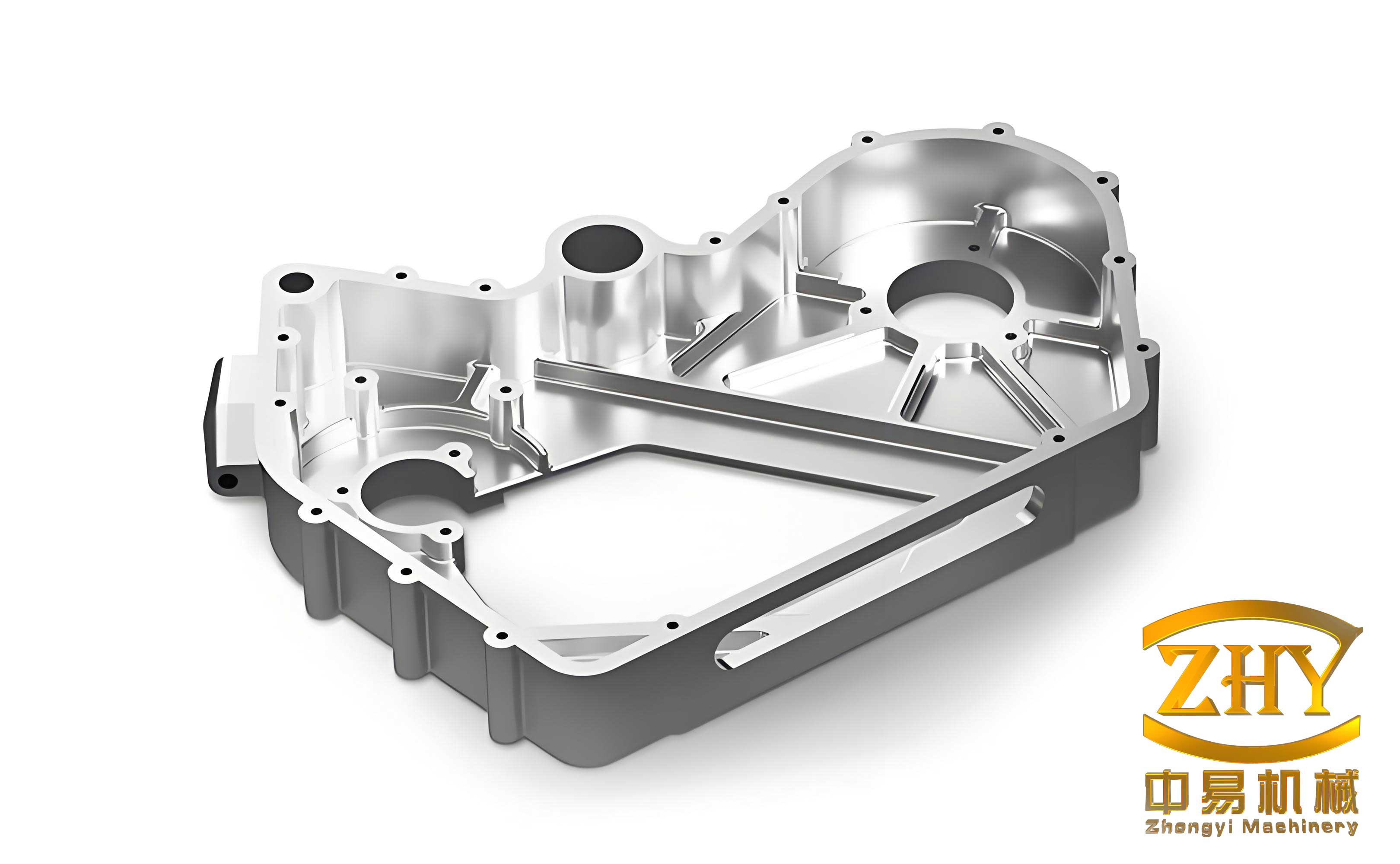
Dimensional Accuracy Analysis for Shell Castings
A primary advantage of this integrated process is the attainment of high dimensional accuracy in the final metal shell castings. The total deviation, $\Delta_{total}$, of the casting from the original CAD nominal dimensions is cumulative across the process chain:
$$ \Delta_{total} = f(\Delta_{pattern}, \Delta_{mold}, \Delta_{metal}) $$
where:
$\Delta_{pattern}$: Deviation of the 3D-printed wax pattern.
$\Delta_{mold}$: Deviation introduced during mold making and baking (shrinkage/expansion).
$\Delta_{metal}$: Deviation due to alloy solidification shrinkage and mold-metal interaction.
To quantify $\Delta_{pattern}$, a 3D optical scanner (e.g., structured light or laser line scanner) is used to digitize the SLS wax pattern. The resulting point cloud is aligned and compared to the nominal CAD model (which already includes casting shrinkage) in a software platform like Geomagic Control. The analysis yields a color-coded deviation map and statistical data. For a transmission case pattern, a standard deviation ($\sigma_{pattern}$) of approximately 0.55 mm is typical, with over 98% of points falling within ±3$\sigma_{pattern}$. This confirms the high fidelity of the additive pattern-making process for complex geometries.
The ultimate validation lies in the accuracy of the finished aluminum shell castings. The same metrology procedure applied to the final cast component yields a standard deviation ($\sigma_{casting}$) often lower than that of the pattern, typically around 0.48-0.50 mm for mid-sized aluminum parts, with a similar percentage of points within the ±3$\sigma$ range. This apparent improvement can be attributed to the averaging effect of the mold replication and a possible slight “smoothing” during metal solidification. Critical functional dimensions, such as bore center distances and critical wall thicknesses, are measured with coordinate measuring machines (CMM). Results consistently show that the process is capable of achieving casting tolerance grades of CT5 to CT6 as per ISO 8062, fully acceptable for prototype and functional testing of shell castings.
| Feature Measured | Nominal Dimension (mm) | Measured Dimension (mm) | Deviation (mm) | Tolerance Grade (CT) |
|---|---|---|---|---|
| Center Distance (Bore A – Bore B) | 78.00 | 78.40 | +0.40 | CT5 |
| Center Distance (Bore A – Bore C) | 85.00 | 84.50 | CT6 | |
| Overall Length (Flange G – Flange H) | 141.00 | 141.80 | +0.80 | CT6 |
| Wall Thickness at Critical Section | 4.50 | 4.65 | +0.15 | CT5 |
Performance, Application Efficacy, and Discussion
The metallurgical performance of shell castings produced via this route is exemplary. Aluminum alloys such as ZL101A (A356 equivalent) are commonly used. When subjected to a standard T6 heat treatment (solution heat treatment, quenching, and artificial aging), these castings develop mechanical properties that meet or exceed those of typical high-pressure die-cast components. For instance, a T6-treated ZL101A casting can achieve a tensile strength ($\sigma_{UTS}$) > 270 MPa and elongation > 2%, which is favorable for structural shell castings requiring good strength and some ductility.
The application effectiveness is profound in the context of rapid product development. For a batch of 10 prototype transmission shell castings, the total lead time from CAD data to machinable castings can be under 25 days. This represents a reduction of over 60% compared to the die design, fabrication, and sampling cycle of conventional die casting. The economic model for low-volume production is compelling. The total cost for N prototypes, $C_{total}(N)$, using the 3D printing investment casting method is largely linear:
$$ C_{total}(N) = C_{setup} + N \cdot (C_{material} + C_{machine-time} + C_{labor}) $$
where $C_{setup}$ is negligible relative to die costs. In contrast, die casting has a massive fixed cost offset: $C_{total-die}(N) = C_{die} + N \cdot C_{part}$, making it economically viable only for large N.
Furthermore, the digital thread inherent in this process allows for seamless design iteration. If a design flaw is discovered during testing, the CAD model can be modified, and a new wax pattern can be printed within hours, completely bypassing the weeks-long lead time and cost associated with modifying a hardened steel die. This agility is invaluable for accelerating innovation cycles in automotive, aerospace, and defense industries, where complex shell castings are prevalent.
The process also demonstrates excellent stability and repeatability for small batches. The plaster mold system, while for single use, provides consistent replication from one pattern to the next. The integration of VPC ensures high and repeatable metallurgical quality, minimizing scrap rates associated with misruns or excessive porosity in complex geometries. This makes the technology suitable not only for prototypes but also for the production of validated, low-volume specialty shell castings where conventional tooling is unjustifiable.
Conclusion
The integration of 3D-printed wax patterns with plaster mold investment casting, augmented by vacuum-pressure casting, establishes a robust and agile manufacturing framework for high-quality, complex shell castings. This analysis has detailed the synergistic process chain, from digital fabrication of high-fidelity sacrificial patterns to precision mold making and controlled solidification. The dimensional analysis confirms the capability to achieve CT5-level accuracy, meeting the stringent requirements of functional prototype testing. The significant reduction in lead time and upfront cost, coupled with unparalleled design flexibility, positions this integrated technology as a critical enabler for rapid product development and small-lot manufacturing. As additive manufacturing materials and processes continue to advance, further improvements in pattern surface finish, thermal stability, and production throughput are anticipated, solidifying the role of this hybrid approach in the future landscape of precision casting for intricate shell castings.