
In my extensive experience with the production of complex aluminum alloy components, a persistent and critical issue has been the appearance of surface cracks following the solution heat treatment and aging process. This problem was particularly acute for a specific series of ZL208 aluminum alloy shell castings. These components were manufactured using manual template molding with green sand and gravity pouring. The specified heat treatment involved solution treatment followed by aging, carried out in pit-type furnaces. The mechanical property requirements were stringent: ultimate tensile strength (σb) ≥ 216 MPa and yield strength (σ0.2) ≥ 190 MPa. Furthermore, the surface was required to be free of any crack defects. Despite a seemingly controlled process, the rejection rate exceeded 90% due to crack formation at specific locations after heat treatment, severely impacting delivery schedules.
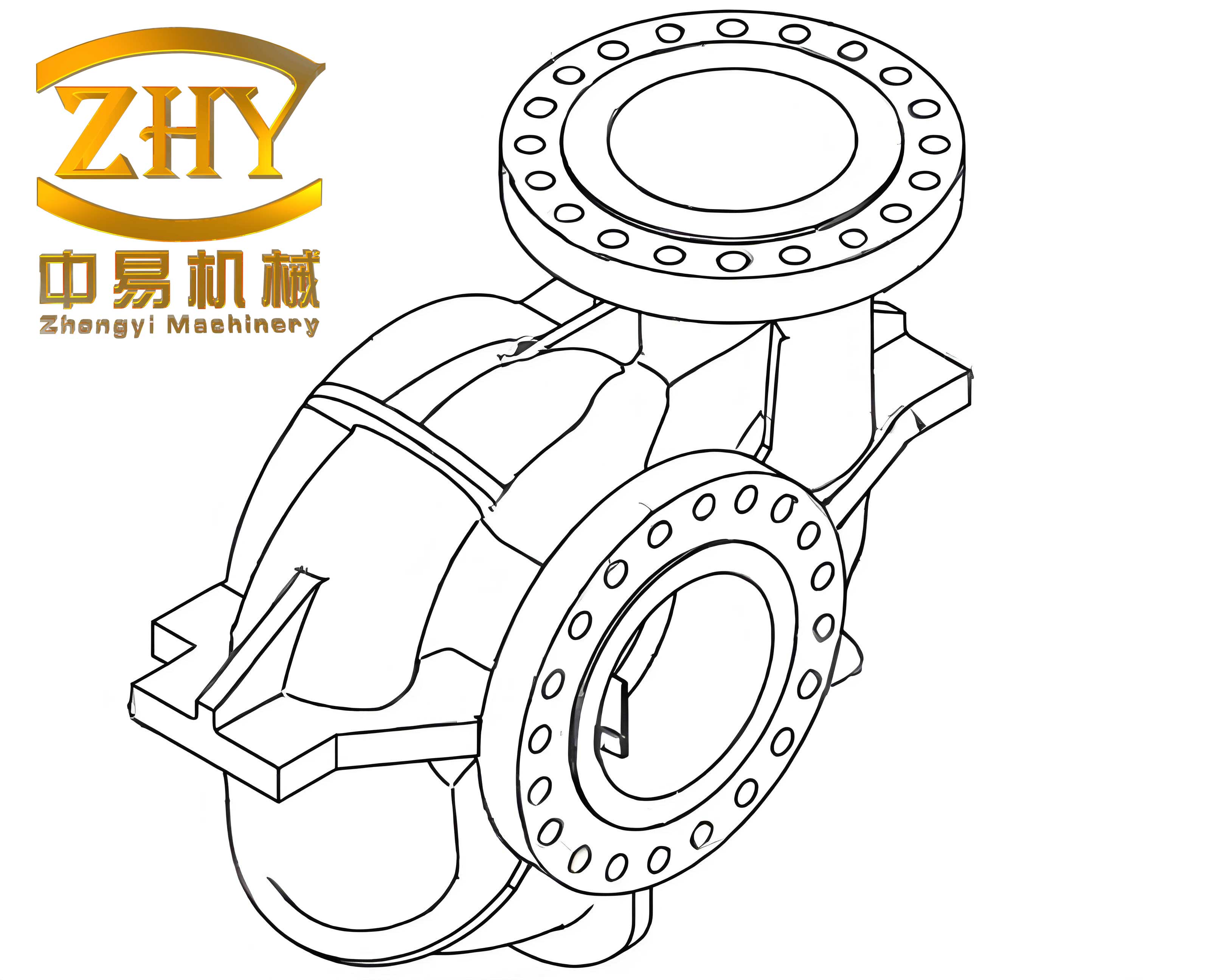
The cracks consistently manifested in areas characterized by changes in geometry, such as sharp corners, thin-to-thick transitions, or regions adjacent to heavier sections like mounting bosses or flanges. These areas are classic stress concentrators. For such shell castings, the wall thickness is generally uniform and relatively thin (often between 3-10 mm), but local features like reinforcing ribs or connection points can create significant variations in mass. This inhomogeneity in geometry, and therefore in thermal mass, becomes a critical factor during rapid cooling.
Root Cause Investigation and Comparative Experiment
My initial hypothesis centered on the quenching operation, which is the most severe step in the heat treatment cycle for aluminum alloys. To isolate the variable, I designed a controlled experiment. A batch of 24 castings, all from the same melt and pour, underwent fluorescent penetrant inspection (FPI) before any heat treatment. All were found to be sound, eliminating pre-existing casting defects as the primary cause. These 24 shell castings were then randomly divided into two groups of 12.
Both groups underwent an identical solution treatment cycle. The only deliberate variable introduced was the transfer time—the interval between the furnace door opening and the complete immersion of the casting into the quench bath. The quench water temperature was maintained above 90°C (194°F) as per specification.
| Group | Number of Shell Castings | Quench Water Temperature (°C) | Transfer Time (seconds) | Cracked Castings Post-Quench | Yield (%) |
|---|---|---|---|---|---|
| A | 12 | 95 | 5 | 10 | 16.7 |
| B | 12 | 93 | 20 | 0 | 100 |
The results were unequivocal. Group A, with a rapid 5-second transfer, suffered a catastrophic failure rate of over 83%. In contrast, Group B, with a 20-second transfer, showed a 100% success rate with no cracks detected. This clear correlation pointed directly to the transfer time, and consequently the casting temperature at immersion, as the dominant factor causing cracks in these aluminum shell castings.
Mechanistic Analysis: Thermal Stress as the Primary Driver
In heat treatment, two primary internal stresses can lead to distortion or cracking: transformation stress and thermal stress. For aluminum alloys like ZL208, the solution treatment involves heating to a temperature where soluble phases dissolve into the aluminum matrix. Upon quenching, the objective is to retain these elements in a supersaturated solid solution; no diffusion-dependent phase transformation with associated volume change occurs during the quench. Therefore, transformation stress is negligible.
This leaves thermal stress as the sole significant contributor. Thermal stresses arise from temperature gradients within a component during heating or cooling. When a hot casting is plunged into a cooler medium, the surface layers contract immediately upon contact. The hotter, more massive interior resists this contraction, placing the surface in tension and the core in compression. If the tensile stress at the surface exceeds the material’s ultimate tensile strength at that temperature, a crack initiates.
The magnitude of these thermal stresses is fundamentally governed by the temperature difference (ΔT) between the casting surface and the quenchant at the moment of immersion, and the subsequent heat extraction rate. The initial ΔT is the most critical parameter for crack initiation. It can be expressed as:
$$ \Delta T = T_{casting} – T_{quenchant} $$
Where \( T_{casting} \) is the surface temperature of the shell casting upon entry into the quench tank. For a given furnace setpoint (\( T_{furnace} \)) and quenchant temperature (\( T_{quench} \)), \( T_{casting} \) is a function of the transfer time (\( \tau \)).
Modeling Temperature Decay During Transfer
The cooling of the casting during transfer can be approximated using Newton’s Law of Cooling, which states that the rate of heat loss is proportional to the difference in temperature between the object and its surroundings. The temperature as a function of time is given by:
$$ T(t) = T_{ambient} + (T_{initial} – T_{ambient}) \cdot e^{-kt} $$
For engineering analysis of a shell casting during transfer, a more specific form incorporating geometry is useful:
$$ \frac{T(\tau) – T_{ambient}}{T_{furnace} – T_{ambient}} = \exp\left(-\frac{h \, A}{V \rho C_p} \tau \right) $$
Rearranging to solve for the casting temperature at immersion (\( T_{cast} \)):
$$ T_{cast} = T_{ambient} + (T_{furnace} – T_{ambient}) \cdot \exp\left(-\frac{h \, A}{\rho C_p V} \tau \right) $$
Where:
\( T_{cast} \): Casting temperature at immersion (°C)
\( T_{ambient} \): Ambient/workshop temperature (°C)
\( T_{furnace} \): Solution heat treatment temperature (~542°C for ZL208)
\( \tau \): Transfer time (s)
\( h \): Effective heat transfer coefficient during air cooling (W/m²·K)
\( A \): Surface area of the casting (m²)
\( V \): Volume of the casting (m³)
\( \rho \): Density of the alloy (~2700 kg/m³ for Al)
\( C_p \): Specific heat capacity (~900 J/kg·K for Al)
The term \( \frac{h A}{\rho C_p V} \) is a cooling rate constant influenced by the geometry. The ratio \( A/V \) is the surface-area-to-volume ratio, a key parameter. For thin-walled shell castings with a high \( A/V \) ratio, cooling in air is relatively efficient.
| Ambient Temp, Tambient (°C) | Transfer Time, τ (s) | Calculated Tcast (°C) | ΔT for 95°C Quench (°C) | Thermal Stress Severity |
|---|---|---|---|---|
| 20 | 5 | 473.2 | 378.2 | Very High |
| 15 | 384.5 | 289.5 | High | |
| 25 | 313.1 | 218.1 | Moderate | |
| 30 | 5 | 474.8 | 379.8 | Very High |
| 15 | 388.9 | 293.9 | High | |
| 25 | 319.8 | 224.8 | Moderate |
The table and model reveal a critical insight: transfer time has a dramatic, non-linear effect on the immersion temperature. Extending the time from 5 to 20 seconds can reduce the initial ΔT by over 100°C. This reduction directly translates to lower initial thermal stress. While ambient temperature has a minor effect, the dominant controlled variable is clearly \( \tau \).
This explains why cracks localize in specific areas of the shell castings. Features like thick bosses or intersecting ribs have a lower local \( A/V \) ratio compared to the thin main wall. During the fixed transfer time, these massive sections cool more slowly, retaining a higher local temperature (\( T_{local} \)) than the calculated average \( T_{cast} \). When quenched, the ΔT at these locations is even greater, and the stress concentration factor of the geometry multiplies the already elevated thermal stress, making them the preferred sites for crack initiation.
Optimization of the Quenching Process for Shell Castings
The core challenge is balancing two competing objectives: minimizing thermal stress to prevent cracking, and maximizing cooling rate to achieve the desired supersaturated solid solution for subsequent age hardening. The classical guideline for aluminum heat treatment is “quench as rapidly as possible.” However, for complex, thin-walled shell castings, this dogma requires refinement.
My approach involves treating the transfer time not as a fixed, minimized parameter, but as a controllable first stage of the quench—an “air quench” or “delay quench” stage. The goal is to allow the casting to cool uniformly in air just enough to reduce the initial ΔT below a critical threshold for cracking, while ensuring the temperature of all sections remains high enough to prevent significant solute precipitation.
The critical temperature range to avoid for most aluminum alloys is between approximately 400°C and 290°C, where precipitation kinetics can be high. Therefore, the optimized transfer time should allow the casting to cool from the solution temperature to just above this range before water immersion.
| Parameter | Traditional Approach | Optimized Approach | Rationale for Optimization |
|---|---|---|---|
| Transfer Time Goal | Minimize (< 10 s) | Controlled Delay (15-25 s) | Reduces initial ΔT, mitigating peak thermal stress and cracking risk. |
| Quench Water Temp | 90-100°C (Hot Water) | 90-100°C (Hot Water) | Maintained to reduce quench severity further after initial delay. |
| Cooling Stage 1 | N/A | Controlled Air Cooling | Allows thermal equalization and stress relaxation in thicker sections. |
| Cooling Stage 2 | Water Quench | Water Quench | Completes the rapid cooling necessary for solution retention. |
Based on the model and experimental validation, I established a protocol where the transfer time for these specific ZL208 shell castings was deliberately controlled between 18 and 25 seconds. This window was determined to be the optimal compromise.
Validation and Results
Implementing the optimized transfer time of 20-25 seconds across multiple production batches yielded transformative results. The crack occurrence rate dropped from over 90% to near zero. To confirm that the mechanical properties were not compromised, tensile testing was performed on samples from the optimized batches.
The mechanical properties are derived from the supersaturated solid solution achieved after quenching and the strengthening precipitates formed during aging. The effectiveness of the quench can be indirectly assessed by the resulting yield strength. The relationship between quench rate, solute retention, and final strength can be conceptualized. While an instantaneous quench maximizes solute trapping, a slightly slowed quench (via a controlled delay) can still retain sufficient solute if the casting remains above the critical precipitation temperature range for most of the delay period.
The results confirmed this hypothesis. All tested specimens from batches with extended transfer times met and exceeded the minimum requirements. The data demonstrated no statistically significant degradation in properties compared to historical data from sound castings produced with the faster, crack-inducing transfer time.
| Batch | Transfer Time (s) | Avg. Ultimate Tensile Strength, σb (MPa) | Avg. Yield Strength, σ0.2 (MPa) | Crack Incidence Rate (%) |
|---|---|---|---|---|
| 1 | 18-22 | 298 ± 8 | 245 ± 6 | ~5 |
| 2 | 20-25 | 301 ± 7 | 248 ± 5 | 0 |
| 3 | 20-25 | 295 ± 9 | 242 ± 7 | 0 |
| Specification | N/A | ≥ 216 | ≥ 190 | 0 |
The success of this optimization highlights an important principle for heat treating aluminum shell castings: The “quench” is a sequence, not a single event. For geometries with high surface-area-to-volume ratios and stress concentrators, introducing a brief, controlled air-cooling stage before liquid quenching is an effective strategy to manage thermal stress. The governing equation for the process becomes a two-stage model:
$$ T_{final} = f(T_{furnace}, \tau_{delay}, h_{air}, T_{quench}, h_{water}) $$
Where the objective is to find the \( \tau_{delay} \) that minimizes the function \( Stress(T_{final}) \) while keeping \( Strength(T_{final}) \ge Spec \).
Conclusion and Broader Implications
The investigation into the heat treatment cracking of ZL208 shell castings conclusively identified excessively short transfer time as the root cause. The rapid transfer resulted in a large temperature differential between the casting and the quenchant, generating thermal stresses that exceeded the material’s strength at stress concentration points, leading to crack initiation.
The solution involved re-conceptualizing the quenching operation. By intentionally extending the transfer time to a controlled window of 20-25 seconds, the initial air-cooling stage reduces the casting’s temperature in a more uniform manner, thereby lowering the critical ΔT upon water entry. This simple, low-cost process modification effectively eliminated the cracking defect without compromising the required mechanical properties. The key engineering insight is that for thin-walled, geometrically complex aluminum shell castings, the fastest possible quench is not always the optimal one. Managing thermal gradients through process timing is as important as the final cooling rate.
This methodology has broad applicability. It can be adapted to other aluminum casting alloys prone to quenching stresses (e.g., 2xx, 7xx series) and to other quenching media like polymer solutions or forced air. The core approach—using a deliberate delay to pre-cool the part—is a powerful tool in the thermal processing engineer’s arsenal for improving the manufacturability and reliability of high-performance aluminum alloy components.