
In the rapidly evolving automotive industry, the shift towards new energy vehicles has necessitated advancements in component design and manufacturing processes. As a casting engineer specializing in shell castings, I have been involved in optimizing the casting process for a differential housing used in a new energy vehicle. This shell casting presents unique challenges due to its compact design, stringent internal defect requirements, and high material specifications. Through the application of MAGMA simulation software, we achieved significant improvements in casting quality, productivity, and cost-effectiveness. This article details our journey from initial trial molds to final production, highlighting how simulation-driven optimizations enabled us to overcome defects such as shrinkage porosity, subsurface blowholes, and micro-slag inclusions. The insights gained have elevated our company’s expertise in producing high-integrity shell castings for automotive applications.
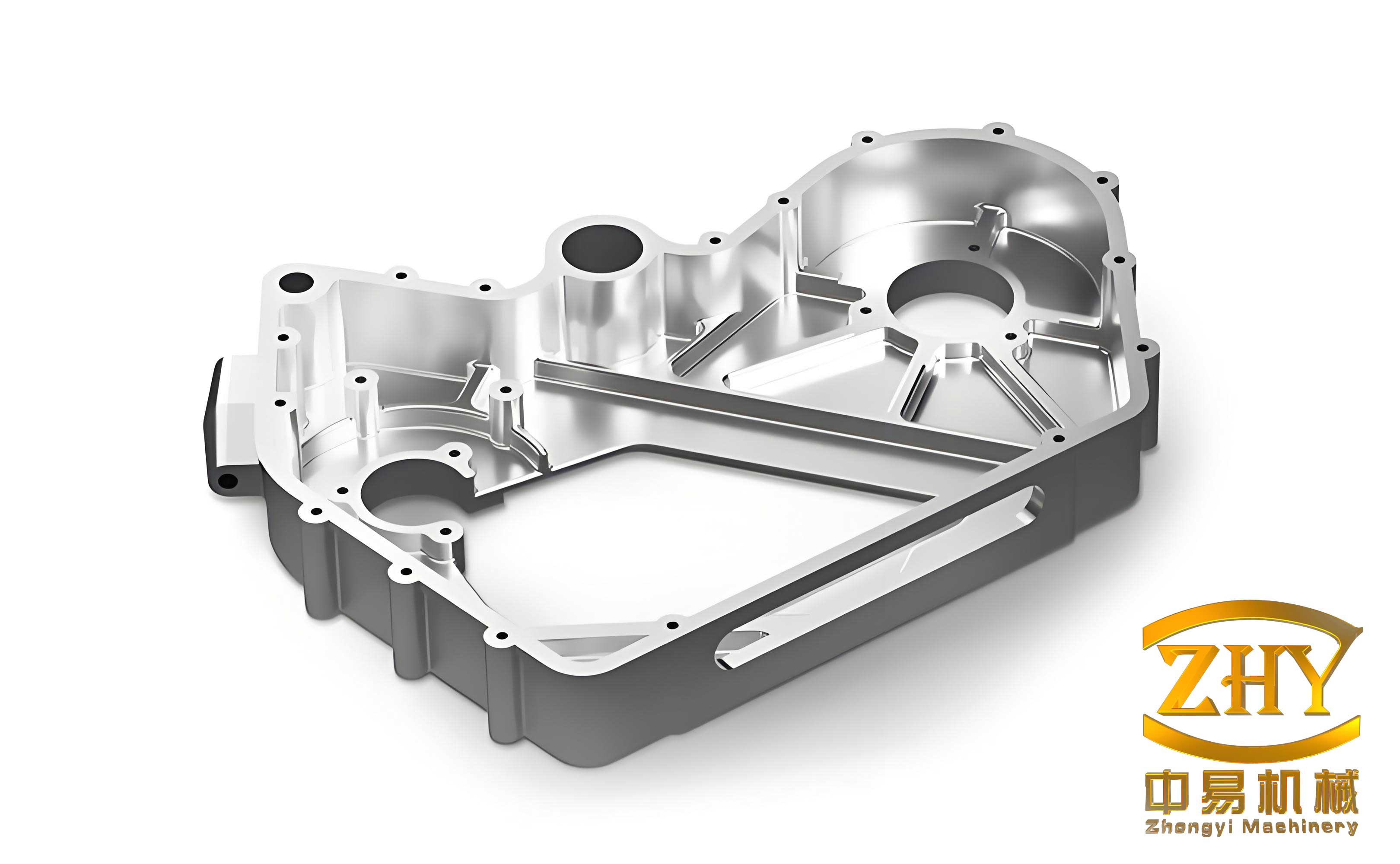
The differential housing shell casting for new energy vehicles is characterized by its lightweight and compact structure compared to traditional internal combustion engine counterparts. Key technical requirements were established to ensure performance and durability. The modulus, a critical parameter in casting design, is defined as the ratio of volume to surface area, calculated using the formula:
$$M = \frac{V}{A}$$
For this shell casting, the modulus was specified as 5.1 mm, with a single weight of 2.42 kg. Material requirements demanded GJS 600-10 ductile iron, with stringent internal defect limits: no肉眼可见缩孔 defects allowed in解剖 sections, and micro-shrinkage defects limited to a maximum area of 10 mm × 5 mm under 25x magnification. Additionally, magnetic particle inspection criteria were applied to both machined and as-cast surfaces. To summarize these requirements, we utilized a table for clarity:
| Parameter | Specification |
|---|---|
| Weight | 2.42 kg |
| Modulus (M) | 5.1 mm |
| Material | GJS 600-10 |
| Tensile Strength | ≥ 590 MPa |
| Yield Strength | ≥ 450 MPa |
| Elongation | ≥ 10% |
| Hardness | 190–230 HBW |
| Internal Defects | No visible shrinkage; micro-shrinkage ≤ 10 mm × 5 mm at 25x |
| Surface Defects | Depth ≤ 0.4 mm on as-cast surfaces; within half machining allowance on machined surfaces |
These requirements posed significant challenges for shell castings, as the differential housing’s complex geometry with varying wall thicknesses increased the risk of shrinkage defects. The use of high-silicon content in the ductile iron further exacerbated shrinkage tendencies, necessitating a robust casting process design.
In the trial mold phase, we employed MAGMA simulation software to develop an initial casting process. The goal was to achieve a layout of 16 shell castings per mold with external chills to meet internal defect standards. The simulation focused on predicting shrinkage porosity volume, with a target of keeping defects below 10 mm³. The initial gating system design included twin hot risers, but simulations revealed defect volumes up to 14.6 mm³, exceeding the limit. We attempted to optimize by increasing riser height from 105 mm to 125 mm, but this only reduced defect volume to 14.1 mm³, indicating that traditional经验-based adjustments were insufficient. The defect volume (V_d) can be expressed as a function of riser parameters and cooling conditions:
$$V_d = f(H_r, A_n, T_c)$$
where H_r is riser height, A_n is neck cross-sectional area, and T_c is cooling time. To address this, we introduced external chills at thermal hot spots, which significantly improved results. The simulation with chills showed defect volumes as low as 1.5 mm³, well within the required limit. This validated the need for chills in the trial phase, but we aimed to eliminate them in production to reduce costs and enhance operability for shell castings.
During the formal mold phase, the client increased the outer diameter of the differential housing shell casting from 110 mm to 114 mm. Using the previous layout, this would limit us to 12 shell castings per mold, still requiring external chills. To improve productivity and eliminate chills, we leveraged MAGMA simulation for continuous optimization. We redesigned the gating system to implement an innovative approach: one riser shared by four shell castings, allowing for a higher packing density. Through iterative simulations, we optimized riser neck dimensions—reducing neck distance and maximizing cross-sectional area—while incorporating cold risers strategically. After multiple iterations, we achieved an 18-shell-casting layout without external chills. The final simulation predicted a maximum defect volume of 3.6 mm³, meeting the client’s standards. The optimization process can be summarized in the following table comparing key parameters:
| Phase | Layout (Shell Castings per Mold) | External Chills | Simulated Defect Volume (max, mm³) | Key Changes |
|---|---|---|---|---|
| Trial Mold | 16 | Yes | 14.6 → 1.5 (with chills) | Initial design with twin hot risers; added chills |
| Formal Mold (Initial) | 12 | Yes | 1.5 (estimated) | Diameter increase forced layout reduction |
| Formal Mold (Optimized) | 18 | No | 3.6 | Shared riser design; optimized neck area; cold risers |
Production validation confirmed the simulation results: penetrant testing and X-ray inspection revealed no shrinkage defects in the shell castings, aligning with the predicted outcomes. This success demonstrated how simulation-driven design can enhance the manufacturability of complex shell castings while reducing reliance on辅助 processes like chilling.
During production of the third batch of shell castings, we encountered a new issue: subsurface blowholes appeared after machining, particularly in thin-wall areas of the flange. The defect rate reached 30% after rough machining, dropping to 10% after finish machining, but remaining unacceptable due to insufficient machining allowance. Initial hypotheses pointed to cold risers or inadequate machining allowances, but statistical analysis showed均匀 distribution of defects across all directions, not just near cold risers. Further investigation revealed a critical change: the pouring temperature had been lowered from 1,370–1,420°C to 1,360–1,400°C in the third batch to enhance tensile strength and graphite morphology. We restored the higher pouring temperature for a validation batch, and the subsurface blowholes were eliminated entirely. This incident highlighted the sensitivity of thin-wall shell castings to pouring temperature, which can be modeled using the relationship:
$$P_b = k \cdot e^{-\alpha T_p}$$
where P_b is the probability of blowhole formation, T_p is pouring temperature, and k and α are material-dependent constants. For shell castings, maintaining an optimal pouring temperature is crucial to prevent gas entrapment during solidification. We documented this finding to inform future processes for similar shell castings.
Another challenge arose during client-side material testing of OTS samples: micro-slag inclusions were detected on metallographic surfaces, with the largest inclusion measuring 3 mm in length and 0.015 mm in width. These defects, though small, posed a risk to the integrity of the shell castings. Concurrently, internal machining showed a 3–5% scrap rate due to sand and slag inclusions. To address this, we developed and tested two optimization schemes for the gating system. Scheme 1 involved adding a choke in the runner, reducing its cross-sectional area from 1,250 mm² to 800 mm², and relocating the ingate from the cope to the drag side with a搭接 design. Scheme 2 incorporated secondary filtration by adding a foam filter (10 PPI) at the ingate alongside the existing runner filter. We implemented both schemes on opposite halves of the mold for direct comparison. After casting, we sampled shell castings from each scheme and conducted metallographic analysis on three surfaces per sample. The results are summarized below:
| Scheme | Number of Samples | Slag Inclusions Detected | Location of Inclusions | Max Inclusion Size | Machinability |
|---|---|---|---|---|---|
| Original | 2 × 3 blocks | 5 (all in core areas) | Core | 3 mm length | Not machinable |
| Scheme 1 | 4 × 3 blocks | 1 (near edge) | Edge (0–0.3 mm from surface) | 0.3 mm length | Machinable |
| Scheme 2 | 4 × 3 blocks | 3 (2 edges, 1 core) | Edges and core | 0.5 mm × 0.3 mm (edge); 0.23 mm length (core) | Edge inclusions machinable; core inclusion not machinable |
Scheme 1 proved superior, with only one minor inclusion located in a machinable area, effectively resolving the micro-slag issue for shell castings. Additionally, we investigated the machining scrap rate and traced it to the use of in-mold inoculant (granularity 0.2–0.7 mm) intended to improve microstructure. By discontinuing this inoculant, we reduced machining defects to below 3%, as incomplete melting of the inoculant had contributed to slag formation. The improvement in slag inclusion control can be quantified using a cleanliness index (C_i) for shell castings:
$$C_i = 1 – \frac{N_i}{A_t}$$
where N_i is the number of inclusions per unit area, and A_t is the total inspection area. For Scheme 1, C_i approached 1, indicating high cleanliness. These optimizations ensured that the shell castings met client PPAP approvals, underscoring the importance of gating design and process control in achieving high-quality shell castings.
In conclusion, the optimization of differential housing shell castings for new energy vehicles through MAGMA simulation has yielded substantial benefits. Key takeaways include: first, riser design must focus on neck cross-sectional area and distance rather than merely height to eliminate shrinkage defects in shell castings; second, external chills can be avoided through simulation-driven gating system redesign, enhancing layout efficiency; third, pouring temperature critically influences subsurface blowhole formation in thin-wall shell castings, requiring tight control; fourth, gating system modifications—such as runner choking and ingate relocation—are more effective than dual filtration for reducing micro-slag inclusions; and fifth, eliminating in-mold inoculant can significantly decrease machining defects. These insights have advanced our company’s capabilities in producing reliable shell castings, providing a foundation for future projects in the automotive sector. The integration of simulation software like MAGMA remains indispensable for tackling the complexities of modern shell castings, ensuring quality, efficiency, and sustainability in manufacturing.