
In my research, I focus on addressing the critical issue of defect repair in aluminum alloy shell castings used for deep-sea pressure hulls. These shell castings are essential components in underwater vehicles and structures, where integrity under high hydrostatic pressure is paramount. However, aluminum alloy castings often suffer from unavoidable defects such as slag inclusions, gas pores, pinholes, and shrinkage porosity during the casting process. These defects significantly reduce the yield rate, leading to increased material waste, extended production cycles, and higher costs. Therefore, developing effective repair techniques for these shell castings is crucial to enhance sustainability and efficiency in marine engineering. This study investigates the weld repair of defects in two specific cast aluminum alloys, employing tungsten inert gas (TIG) welding with optimized filler materials. The goal is to achieve repaired zones with mechanical, anti-cracking, and corrosion-resistant properties that meet or exceed those of the base alloy, ultimately enabling successful field repair of actual deep-sea pressure hull shell castings.
The challenges in repairing aluminum alloy shell castings are multifaceted. Cast aluminum alloys, particularly multi-component ones, contain low-melting eutectic structures that increase susceptibility to solidification cracks and liquation cracks in the weld and heat-affected zone (HAZ) during fusion welding. Additionally, these shell castings often have high gas content, primarily hydrogen, which can dissolve in the solid solution or remain trapped interdendritically. During welding, this hydrogen can accumulate in the molten pool, leading to porosity in the weld, and may also cause intergranular gas pores in the HAZ. Moreover, the complex geometries and high structural stresses inherent in shell castings, combined with variable repair positions, irregular weld paths, and difficulties in cleaning contaminants and oxide films, exacerbate the risk of defects like cracks, pores, and inclusions. These technical hurdles have limited the widespread application of weld repair for aluminum alloy shell castings in industry. My research aims to overcome these obstacles through systematic experimentation and analysis.
To begin, I selected two cast aluminum alloys commonly used for deep-sea pressure hull shell castings: designated here as Alloy A and Alloy B for confidentiality. The chemical compositions and mechanical properties of these base alloys are summarized in Table 1. These properties were measured after heat treatment according to the specifications for deep-sea pressure hull segments. The heat treatment regimes are as follows: For Alloy A, solution treatment at 535°C for 6 hours followed by water quenching, and artificial aging at 175°C for 8 hours with air cooling. For Alloy B, solution treatment at 525°C for 8 hours with water quenching, and aging at 165°C for 12 hours with air cooling. These treatments ensure optimal strength and corrosion resistance for the shell castings in service.
| Alloy Designation | Chemical Composition (wt.%) | Mechanical Properties (After Heat Treatment) |
|---|---|---|
| Alloy A | Si: 6.5-7.5, Mg: 0.25-0.45, Cu: ≤0.10, Fe: ≤0.20, Mn: ≤0.10, Zn: ≤0.10, Ti: ≤0.20, Al: Balance | Tensile Strength (σ_b): ≥220 MPa, Yield Strength (σ_{0.2}): ≥180 MPa, Elongation (δ): ≥2% |
| Alloy B | Si: 6.0-8.0, Mg: 0.30-0.50, Cu: ≤0.15, Fe: ≤0.25, Mn: ≤0.10, Zn: ≤0.10, Ti: ≤0.20, Al: Balance | Tensile Strength (σ_b): ≥240 MPa, Yield Strength (σ_{0.2}): ≥190 MPa, Elongation (δ): ≥3% |
For filler materials, I used two types: cast-state welding rods with the same composition as the base alloy, and specially designed welding wires. Since Alloy A was a backup material for the hull segments, I primarily used matching cast rods for repair trials. For Alloy B, which is the actual material for the shell castings, I developed a welding wire coded as Wire X. This wire was designed to have good crack resistance when welded to the base alloy, while maintaining similar chemical composition to ensure color matching after anodizing—a critical aesthetic and protective requirement for shell castings. The composition of Wire X, both designed and analyzed, is shown in Table 2. It was produced through melting, casting, extrusion, and drawing into 3.0 mm diameter wire.
| Element | Design Composition (wt.%) | Analyzed Composition (wt.%) |
|---|---|---|
| Si | 7.0-8.0 | 7.5 |
| Mg | 0.35-0.55 | 0.45 |
| Cu | ≤0.05 | 0.03 |
| Fe | ≤0.15 | 0.10 |
| Mn | ≤0.05 | 0.02 |
| Zn | ≤0.05 | 0.01 |
| Ti | 0.10-0.20 | 0.15 |
| Al | Balance | Balance |
The test plates were machined from base alloy castings into closed-groove configurations, as illustrated in the following diagram, to simulate defect repair in shell castings. Prior to welding, the plates and filler materials were cleaned in a phosphoric acid solution at 60-70°C to remove oil contaminants, followed by rinsing with water and drying. Manual TIG welding was performed using an AC TIG welding machine. Each test plate was filled with three weld passes to complete the groove. For each trial, multiple plates were welded simultaneously, and each pass was inspected for surface cracks using magnification. The welding parameters were optimized as follows: welding current of 120-140 A, welding speed of 80-100 mm/min, and argon flow rate of 10-12 L/min. These parameters were chosen to minimize heat input and reduce the risk of defects in the shell castings repair.
To understand the thermal effects during repair, I considered the heat input formula: $$ Q = \frac{I \times V}{v} $$ where \( Q \) is the heat input (J/mm), \( I \) is the welding current (A), \( V \) is the arc voltage (V), and \( v \) is the welding speed (mm/s). For our parameters, with \( V \approx 12-14 \) V, the heat input ranged from 90 to 150 J/mm, which helps control microstructural changes in the shell castings. Additionally, the crack susceptibility of aluminum alloys can be estimated using empirical indices. For example, the solidification cracking sensitivity index (SCS) for Al-Si-Mg alloys is given by: $$ SCS = \frac{\text{Si} \% + 2 \times \text{Mg} \%}{100} $$ For Alloy A, with Si~7% and Mg~0.35%, SCS ≈ 0.077, indicating moderate crack risk that requires careful filler selection.
After welding, all test plates were subjected to X-ray inspection to detect internal defects such as porosity. The results showed that welds made with cast-state rods had more gas pores, while those with Wire X exhibited fewer pores, but both met the Grade 1 weld quality standard per military specifications for shell castings. This demonstrates the effectiveness of our welding process in minimizing defects. Chemical analysis of the weld metal was performed, and the compositions are listed in Table 3. The data confirm that the weld metal compositions, whether using cast rods or Wire X, fall within the allowable ranges of the base alloys, ensuring compatibility for shell castings repair.
| Base Alloy | Filler Material and State | Weld Metal Composition (wt.%) – Key Elements |
|---|---|---|
| Alloy A | Cast rod | Si: 7.2, Mg: 0.38, Al: Balance |
| Alloy A | Wire X | Si: 7.4, Mg: 0.42, Al: Balance |
| Alloy B | Cast rod | Si: 7.0, Mg: 0.48, Al: Balance |
| Alloy B | Wire X | Si: 7.5, Mg: 0.45, Al: Balance |
The mechanical properties of the weld metal and welded joints were evaluated through tensile testing. Specimens were machined from the repaired zones and tested after post-weld heat treatment identical to the base alloy. The results are summarized in Table 4. Notably, for both alloys, the tensile strength of the weld metal exceeded the base alloy specifications, and in joint tests, fractures occurred in the base metal away from the weld, indicating that the weld zone had higher strength. This is a promising outcome for the structural integrity of repaired shell castings. The yield strength and elongation also met or surpassed base alloy levels, confirming the efficacy of our repair approach.
| Base Alloy | Filler Material | Post-Weld Heat Treatment | Weld Metal Tensile Strength (MPa) | Joint Tensile Strength (MPa) | Fracture Location |
|---|---|---|---|---|---|
| Alloy A | Cast rod | As per base alloy | 235 | 225 | Base metal |
| Alloy A | Wire X | As per base alloy | 245 | 230 | Base metal |
| Alloy B | Cast rod | As per base alloy | 255 | 240 | Base metal |
| Alloy B | Wire X | As per base alloy | 260 | 245 | Base metal |
To assess crack resistance, I performed anti-cracking tests using the closed-groove plates. After welding, no cracks were observed in the weld or HAZ under magnification, even in multi-pass welds. This indicates that our TIG process with optimized parameters effectively mitigates solidification and liquation cracking in these aluminum alloy shell castings. The hydrogen-induced porosity was further analyzed by considering hydrogen solubility in aluminum, which follows Sieverts’ law: $$ C_H = k_H \sqrt{P_{H_2}} $$ where \( C_H \) is the hydrogen concentration, \( k_H \) is the solubility constant, and \( P_{H_2} \) is the hydrogen partial pressure. During welding, rapid cooling reduces solubility, leading to pore formation. By using high-purity argon and pre-cleaning, we minimized hydrogen sources, reducing porosity in the shell castings repair.
Corrosion resistance is critical for deep-sea shell castings due to exposure to seawater. I conducted stress corrosion cracking tests using fork-shaped specimens immersed in a 3.5% NaCl solution under sustained load. The results showed no failure after 30 days for both base alloys and repaired zones, indicating excellent resistance. The corrosion potential can be modeled using the Nernst equation: $$ E = E^0 – \frac{RT}{nF} \ln Q $$ where \( E \) is the electrode potential, \( E^0 \) is the standard potential, and \( Q \) is the reaction quotient. The similar compositions between weld and base metal ensure galvanic compatibility, preventing accelerated corrosion in repaired shell castings.
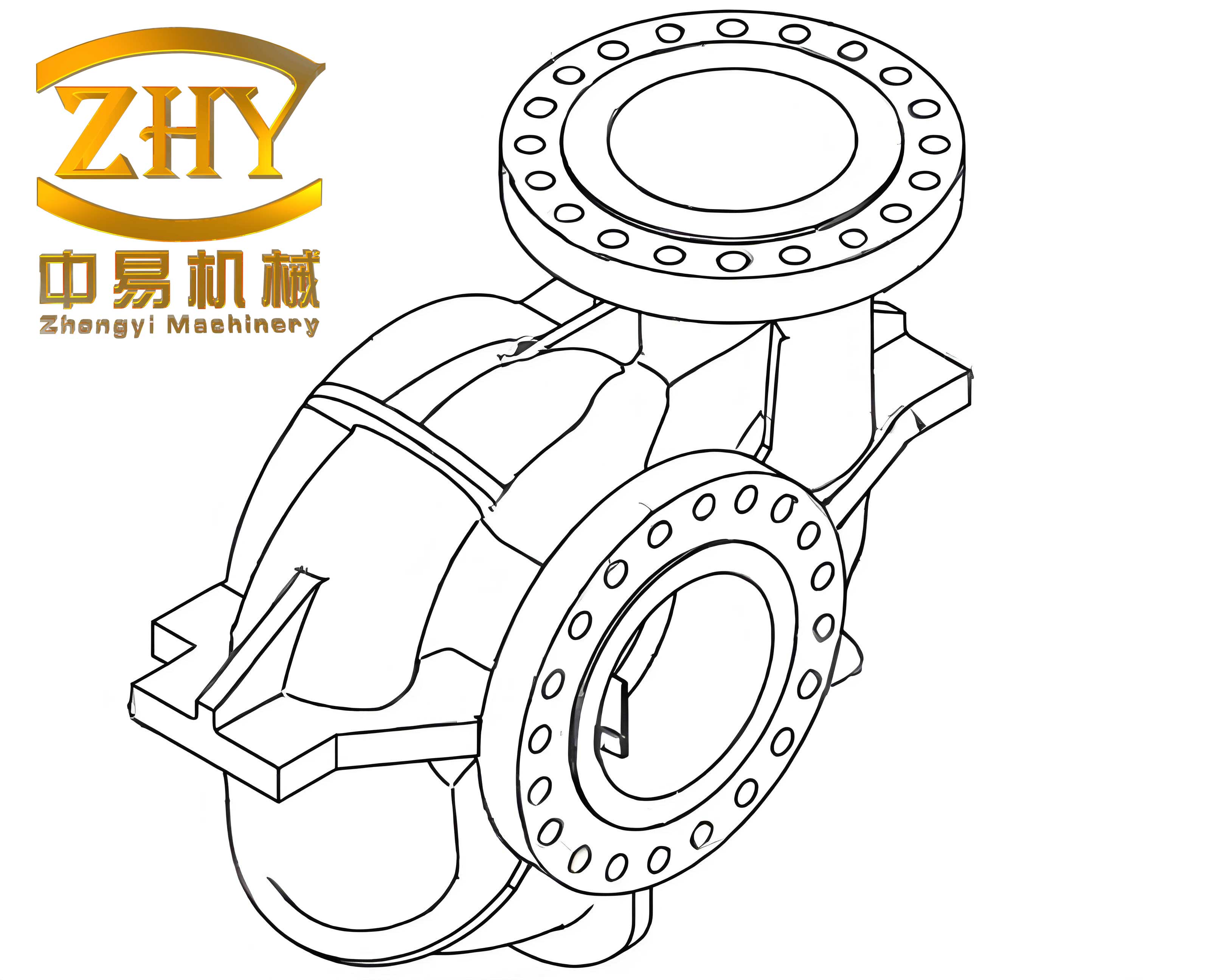
The successful laboratory trials led to the application of our repair technique to actual deep-sea pressure hull shell castings. These shell castings, which are large segmented components, had identified defects from casting processes. Using the TIG process with Wire X filler, we performed on-site repairs under controlled conditions. The repaired areas were inspected via non-destructive testing (NDT), including ultrasonic and X-ray methods, and all met the stringent quality standards for hull integrity. This real-world validation confirms that our research can effectively salvage defective shell castings, reducing waste and costs in production.
In conclusion, my research demonstrates a robust method for defect repair in aluminum alloy shell castings for deep-sea pressure hulls. By optimizing TIG welding parameters and selecting appropriate filler materials, we achieved repaired zones with superior mechanical properties, excellent crack resistance, and adequate corrosion resistance. The weld metal compositions align with base alloys, ensuring homogeneity in shell castings. The successful field application underscores the practicality of this approach. Future work could explore automated welding systems for consistency in repairing complex shell castings. This study contributes to advancing sustainable manufacturing and maintenance of critical marine components, ensuring the reliability of deep-sea shell castings in harsh environments.