
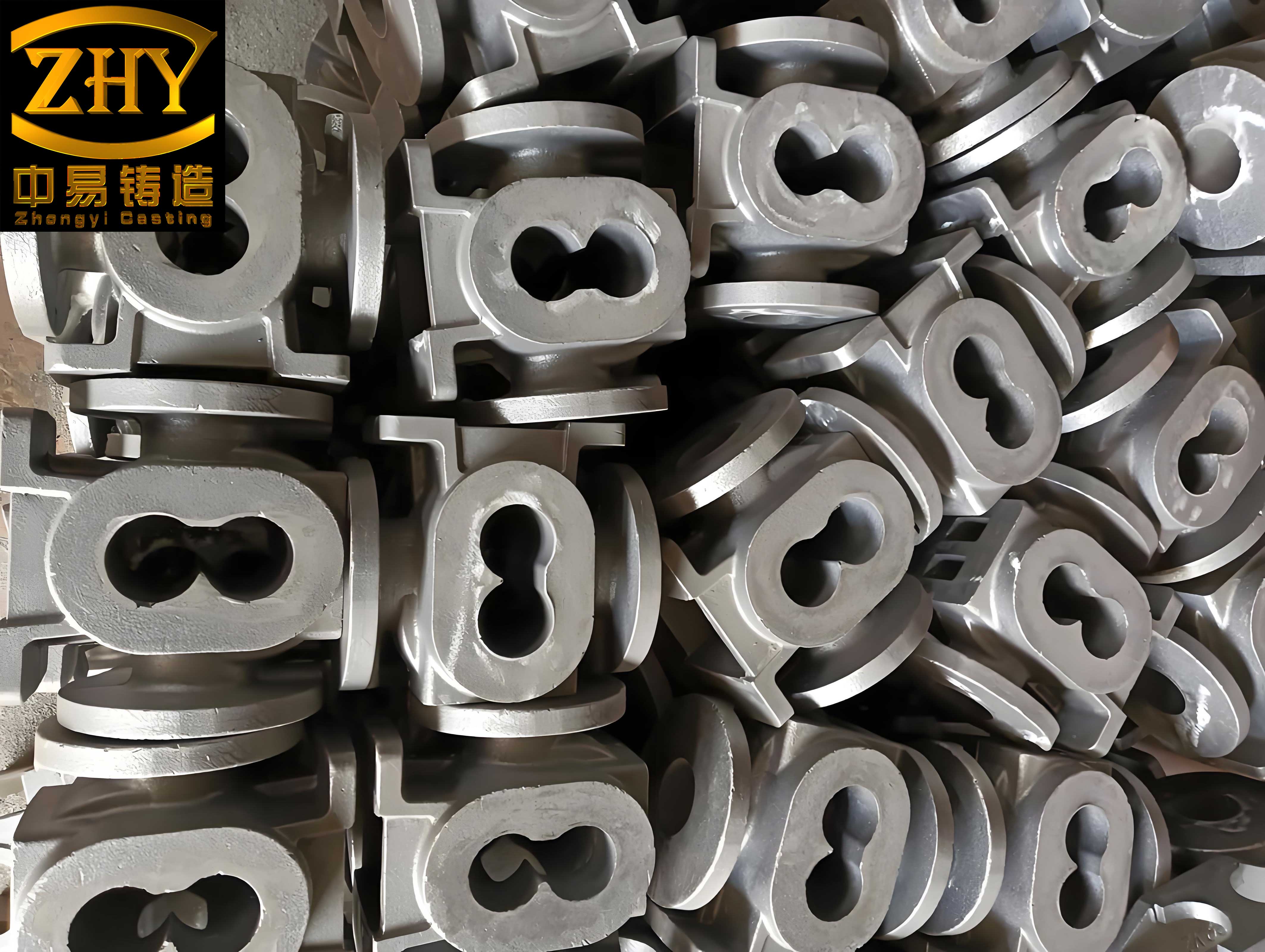
The discovery and development of nodular cast iron, often referred to as ductile iron, marked a pivotal advancement in ferrous metallurgy. The breakthrough in 1948, involving the addition of magnesium to molten iron, facilitated the formation of spherical graphite nodules, thereby overcoming the brittleness inherent in flake-graphite cast iron. This innovation bestowed upon nodular cast iron an exceptional combination of high strength, good ductility, excellent wear resistance, effective damping capacity, and low notch sensitivity. These properties have led to its widespread adoption across diverse industries such as automotive, rail, mining, and heavy machinery, where it frequently serves as a viable and economical substitute for traditional cast and forged steels.
However, the continuous evolution of engineering demands necessitates materials with ever-improving performance envelopes. Conventional ferritic or pearlitic grades of nodular cast iron, while versatile, often reach a limit in their strength-ductility synergy. To bridge this gap, austempered ductile iron (ADI) has emerged as a superior alternative. The austempering process, an isothermal heat treatment, transforms the matrix microstructure of nodular cast iron into a unique amalgamation of bainitic ferrite and carbon-enriched, thermally stable retained austenite. This microstructure is the cornerstone of ADI’s remarkable properties, which typically include tensile strengths exceeding 1000 MPa coupled with significant elongation, alongside superior fatigue strength and wear resistance compared to its conventionally-treated counterparts.
The pursuit of optimal ADI properties is fundamentally a quest to control its microstructure through precise heat treatment parameters. The process involves two critical stages: austenitization and isothermal quenching. The austenitization temperature and time determine the carbon content and homogeneity of the parent austenite phase prior to transformation. Subsequently, the isothermal quenching temperature and time dictate the kinetics and morphology of the bainitic transformation, as well as the final volume fraction and carbon concentration of the retained austenite. This study systematically investigates the influence of these key parameters on the microstructure and mechanical properties of a specific grade of nodular cast iron, aiming to identify the process window that yields an optimal balance of high strength and good ductility.
1. Material and Experimental Methodology
1.1 Base Material Characterization
The material under investigation was a commercially produced nodular cast iron. Chemical composition analysis was performed using Inductively Coupled Plasma (ICP) spectroscopy, with the results summarized in Table 1. The composition is characteristic of a pearlite-promoting grade, with silicon and manganese contents tailored for section sensitivity and hardenability.
| C | Si | Mn | P | S | Mg | RE | Fe |
|---|---|---|---|---|---|---|---|
| 3.63 | 2.60 | 0.45 | 0.035 | 0.012 | 0.04 | 0.012 | Bal. |
1.2 Heat Treatment Design and Procedure
The austempering heat treatment cycle is schematically represented in Figure 1. The process begins with austenitization, where specimens are heated to a temperature above the upper critical temperature (Ac3) and held to achieve a uniform, carbon-saturated austenitic microstructure. This is followed by rapid quenching into a molten salt bath held at a constant temperature within the bainitic transformation range. The material is held at this isothermal temperature for a predetermined time to allow the bainitic reaction to proceed, before finally being air-cooled to room temperature.
The experimental design employed a one-variable-at-a-time approach to isolate the effect of each parameter. The chosen ranges for the variables are detailed in Table 2. These ranges were selected based on metallurgical principles: austenitization temperatures were chosen to avoid excessive grain growth at high temperatures or incomplete austenitization at low temperatures; isothermal temperatures were set above the martensite start temperature (Ms ~230°C for this alloy) and below the upper limit where coarse upper bainite or carbides form.
| Heat Treatment Stage | Parameter | Selected Values |
|---|---|---|
| Austenitization | Temperature (°C) | 860, 880, 900 |
| Time (min) | 60, 90, 120 | |
| Isothermal Quenching | Temperature (°C) | 250, 280, 310, 340, 370, 400 |
| Time (min) | 30, 60, 120 |
1.3 Characterization Techniques
Heat-treated samples were subjected to comprehensive characterization. Microstructural analysis was conducted using optical microscopy on polished and nital-etched specimens. The volume fraction of retained austenite was quantitatively determined using X-ray diffraction (XRD) with Cu-Kα radiation. The integrated intensities of the (200)γ, (220)γ, (311)γ austenite peaks and the (200)α, (211)α ferrite peaks were used in the direct comparison method, calculated via the formula:
$$V_{\gamma} = \frac{1}{1 + G \left( \frac{I_{\alpha}}{I_{\gamma}} \right)}$$
where \(V_{\gamma}\) is the volume fraction of retained austenite, \(I_{\alpha}\) and \(I_{\gamma}\) are the integrated intensities of selected ferrite and austenite peaks, respectively, and \(G\) is a material constant dependent on the selected diffraction peaks and their crystal structure factors. Bulk hardness was measured using the Rockwell C scale (HRC). Tensile tests were performed on standard round specimens (6 mm gauge diameter) according to ASTM E8/ISO 6892-1 standards to determine ultimate tensile strength (UTS) and elongation to failure.
2. Results, Analysis, and Discussion
2.1 Optimization of Austenitization Parameters
The initial phase of the study focused on establishing the optimal austenitization conditions. For these trials, isothermal parameters were held constant at 340°C for 60 minutes.
2.1.1 Influence of Austenitization Temperature
Microstructural analysis revealed a significant dependence on austenitizing temperature. At 860°C, the resulting ADI microstructure consisted of a fine, acicular lower bainitic ferrite with a significant amount of retained austenite uniformly distributed between the bainitic sheaves. As the temperature increased to 880°C and further to 900°C, a gradual coarsening of the bainitic microstructure was observed. While the higher temperatures promoted greater carbon dissolution and homogenization in austenite, leading to slightly higher retained austenite content post-transformation, they also promoted austenite grain growth, which in turn facilitated the formation of coarser bainite plates upon transformation. Coarser microstructures, while potentially beneficial for toughness in some contexts, often lead to a reduction in tensile strength.
The XRD data quantitatively confirmed the microstructural observations. The volume fraction of retained austenite increased monotonically with austenitizing temperature, as shown in Table 3. This is attributed to the higher initial carbon content in the austenite at higher solution temperatures, which stabilizes a greater fraction of it against transformation during isothermal holding and subsequent cooling.
| Austenitization Temp. (°C) | Retained Austenite, \(V_{\gamma}\) (%) | Hardness (HRC) |
|---|---|---|
| 860 | 18.2 | 32.0 |
| 880 | 20.5 | 31.5 |
| 900 | 22.8 | 32.5 |
The hardness values showed a non-linear trend, dipping slightly at 880°C before rising again at 900°C. The initial decrease may be related to a peak in retained austenite content relative to bainite fineness, while the subsequent increase at 900°C likely reflects the contribution of increased matrix strength from slightly higher carbon in solution, despite the coarser structure. Considering the primary goal of achieving a fine, strong microstructure while minimizing energy consumption and distortion risks associated with high temperatures, an austenitization temperature of 860°C was selected as optimal for this grade of nodular cast iron.
2.1.2 Influence of Austenitization Time
With the temperature fixed at 860°C, the effect of holding time was investigated. Microstructural evaluation indicated that a 60-minute hold was sufficient to achieve complete and homogeneous austenitization, yielding a fine bainitic structure. Extending the hold time to 90 and 120 minutes resulted in progressive microstructural coarsening, diminishing the benefits of a refined microstructure. Prolonged holding also led to less uniform distribution of the interlath retained austenite.
The XRD results, presented in Table 4, show a steady increase in retained austenite content with time. This is a kinetic effect, allowing for more complete carbon diffusion and homogenization within the austenite before quenching. Hardness exhibited a peak at 90 minutes before declining at 120 minutes. The peak may represent an optimal interim state of carbon saturation and microstructure, while the subsequent decline correlates with observable microstructural coarsening. For the purpose of achieving a fine, homogeneous structure with efficient process cycling, an austenitization time of 60 minutes was deemed adequate and optimal.
| Austenitization Time (min) | Retained Austenite, \(V_{\gamma}\) (%) | Hardness (HRC) |
|---|---|---|
| 60 | 18.2 | 32.0 |
| 90 | 20.1 | 32.5 |
| 120 | 21.5 | 31.8 |
2.2 Optimization of Isothermal Quenching Parameters
Following the establishment of optimal austenitization parameters (860°C for 60 min), the focus shifted to the isothermal transformation stage.
2.2.1 Influence of Isothermal Temperature
The isothermal transformation temperature is the most critical parameter governing the final microstructure and properties of ADI. It directly controls the driving force for the bainitic transformation and the diffusion rate of carbon. The microstructural evolution across the temperature range from 250°C to 400°C was distinct. At 250°C, just above the Ms, the transformation was predominantly to very fine, needle-like lower bainite, but the presence of some martensite (due to insufficient stabilization of untransformed austenite) was inferred. At 280°C and 310°C, a fully bainitic structure of fine to medium acicular ferrite was obtained with a moderate amount of retained austenite.
The most promising structure for a strength-ductility combination was observed at 340°C. The microstructure comprised coarse acicular bainite (a transitional form between lower and upper bainite) with a high and uniform distribution of blocky, carbon-enriched retained austenite films and pockets. At 370°C, the bainitic ferrite began to take on a feathery, plate-like morphology characteristic of upper bainite, with increased amounts of interlath retained austenite. By 400°C, the structure was clearly upper bainitic with coarse ferrite plates and often continuous films of austenite or carbide precipitation at ferrite boundaries.
The mechanical property data, summarized in Table 5, clearly reflect this microstructural progression. Tensile strength is highest at the lower transformation temperatures (280-310°C) due to the very fine bainitic ferrite and strong dislocation substructure, but ductility is limited. As the isothermal temperature increases, strength gradually decreases due to the coarsening of the bainitic ferrite plates and the increasing volume of softer retained austenite. Conversely, ductility increases significantly, primarily due to the transformation-induced plasticity (TRIP) effect afforded by the larger fraction of metastable retained austenite, which can transform to martensite under strain, absorbing energy and enhancing uniform elongation.
| Isothermal Temp. (°C) | Ultimate Tensile Strength (MPa) | Elongation (%) | Dominant Microstructure |
|---|---|---|---|
| 250 | 1150 | 4.5 | Very Fine Lower Bainite + (Martensite) |
| 280 | 1380 | 5.8 | Fine Lower Bainite |
| 310 | 1320 | 6.5 | Acicular Bainite |
| 340 | 1228 | 8.1 | Coarse Acicular Bainite + High Retained Austenite |
| 370 | 1050 | 9.5 | Upper Bainite |
| 400 | 980 | 10.5 | Coarse Upper Bainite |
The data indicates that 340°C provides the best compromise, offering high strength (over 1200 MPa) coupled with good ductility (over 8% elongation). Therefore, the optimal isothermal quenching temperature was selected as 340°C.
2.2.2 Influence of Isothermal Time
At the fixed optimal temperature of 340°C, the holding time determines the extent of the bainitic transformation and the carbon enrichment of the untransformed austenite. The bainitic transformation kinetics can be described in a simplified form by the Johnson-Mehl-Avrami-Kolmogorov (JMAK) equation:
$$ f = 1 – \exp(-k t^n) $$
where \(f\) is the transformed fraction, \(k\) is a temperature-dependent rate constant, \(t\) is the isothermal time, and \(n\) is the Avrami exponent. For the high-carbon austenite in nodular cast iron, the reaction often exhibits incomplete transformation, halting when the carbon content of the residual austenite becomes so high that its thermodynamic stability prevents further ferrite formation.
With a short hold time of 30 minutes, the transformation was incomplete. The untransformed, low-carbon austenite was unstable and transformed to martensite upon final cooling, resulting in a mixed, brittle microstructure with high strength but very low ductility. At 60 minutes, the bainitic transformation approached its “stasis” point, and the remaining austenite was sufficiently enriched with carbon to remain stable at room temperature, yielding the optimal microstructure described earlier. Extending the time to 120 minutes led to the beginning of the second stage of the austempering reaction: the decomposition of the high-carbon retained austenite into ferrite and carbides. This leads to embrittlement, reducing both strength and ductility, as seen in Table 6.
| Isothermal Time (min) | Ultimate Tensile Strength (MPa) | Elongation (%) | Microstructural State |
|---|---|---|---|
| 30 | 1350 | 3.2 | Incomplete Transformation, Unstable Austenite -> Martensite |
| 60 | 1228 | 8.1 | Optimal: Near-complete Bainite, Stable Retained Austenite |
| 120 | 1100 | 6.0 | Onset of Retained Austenite Decomposition |
Consequently, the optimal isothermal holding time was determined to be 60 minutes.
3. Conclusions
This systematic investigation into the austempering process of a specific nodular cast iron grade has successfully identified the heat treatment parameters that maximize its strength-ductility synergy. The key findings are summarized as follows:
- Austenitization: An austenitization treatment at 860°C for 60 minutes was found to be optimal. This condition produces a homogeneous, fully austenitized matrix with a fine prior austenite grain size, which is essential for subsequent transformation into a refined bainitic microstructure. Higher temperatures or longer times promoted grain and bainite plate coarsening, which is detrimental to strength.
- Isothermal Quenching: The isothermal transformation at 340°C for 60 minutes yielded the most favorable microstructure, identified as coarse acicular bainite with a substantial and uniform distribution of carbon-enriched, thermally stable retained austenite. This microstructure is the direct result of the bainitic transformation kinetics and carbon partitioning at this specific temperature and time.
- Mechanical Properties: The material processed under the optimized parameters (860°C/60 min + 340°C/60 min) exhibited an excellent combination of high strength and good ductility, with an ultimate tensile strength of 1228 MPa and an elongation of 8.1%. This represents a significant enhancement over conventional grades of nodular cast iron and demonstrates the high-performance potential of properly austempered nodular cast iron.
The study underscores the critical sensitivity of ADI’s final properties to its heat treatment cycle. The optimal window is a balance between achieving sufficient carbon saturation during austenitization and precisely controlling the diffusion-driven bainitic transformation to maximize the beneficial effects of stable retained austenite. The results provide a validated processing roadmap for producing high-performance austempered nodular cast iron components, contributing valuable data for industrial application and further scientific research in the field of advanced cast iron materials.