
The global pursuit of sustainable and clean energy solutions is fundamentally reshaping the industrial landscape. As nations transition from traditional fossil fuels towards a diversified mix including hydropower, wind, and nuclear energy, the demand for larger, more efficient, and more reliable power generation equipment is accelerating. This trend towards gigantism in energy machinery presents both a challenge and a significant opportunity for advanced material technologies. Among these, nodular cast iron, particularly in its heavy-section form, has emerged as a material of critical importance. Its unique combination of castability, mechanical properties resembling steel, and superior cost-effectiveness positions it as an indispensable solution for key structural components across the entire energy sector.
The inherent advantages of nodular cast iron are well-documented: the spheroidal graphite morphology interrupts the stress-concentrating effect of flake graphite, granting the material remarkable ductility and toughness alongside good strength. For heavy-section castings—typically defined by wall thicknesses exceeding 100 mm—the material science challenges intensify. The prolonged solidification time can lead to issues such as graphite degeneration (chunk, exploded graphite), element segregation, and porosity, which can degrade the final mechanical properties. Overcoming these challenges requires sophisticated metallurgical control, precise process engineering, and a deep understanding of solidification dynamics. The successful application of heavy-section nodular cast iron in demanding energy applications is a testament to the advancements in foundry technology.
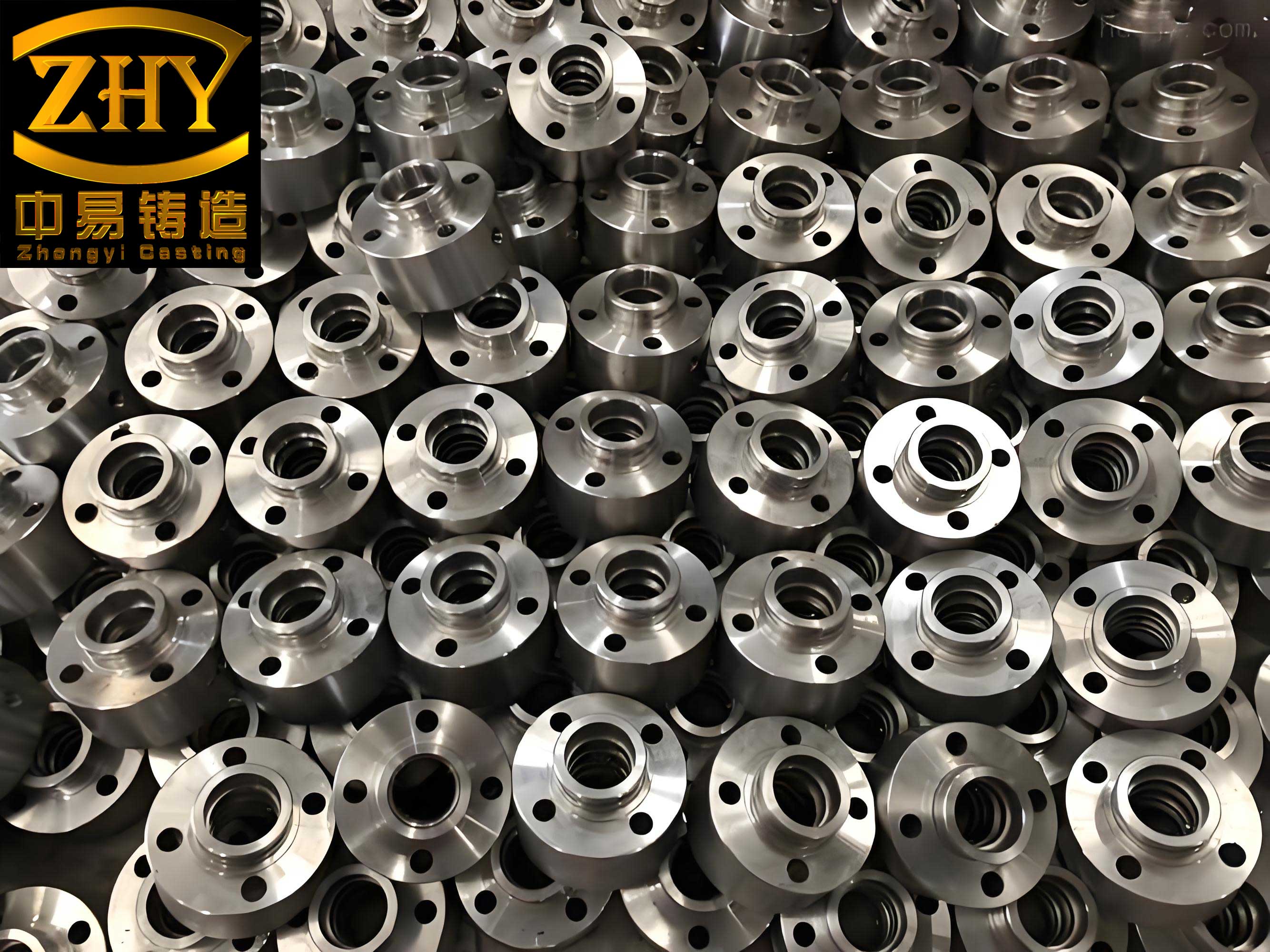
In thermal power generation, the drive for higher efficiency has led to the development of ultra-supercritical (USC) and double-reheat steam turbine technology. These systems operate at extreme temperatures and pressures (e.g., 625°C, 35 MPa), demanding materials that can withstand significant thermal and mechanical stresses. Heavy-section nodular cast iron components like medium-pressure outer casings are vital in these turbines. For a 1000 MW double-reheat unit, such castings can weigh between 68 to 84 tonnes, with complex geometries and wall thicknesses ranging from 60 to 320 mm. The technical specifications are stringent, requiring a predominantly ferritic matrix (e.g., ≤10% pearlite), high soundness verified by 100% ultrasonic testing with sound velocities over 5500 m/s in critical areas, and pressure tightness. Achieving this involves carefully balanced chemistry with additions like 0.55-0.65% Molybdenum for matrix stabilization, advanced inoculation strategies, and meticulous gating and risering design to ensure directional solidification and feed the thick sections. The use of heavy-section nodular cast iron here provides a cost-effective and reliable alternative to forged or fabricated steel, capable of meeting the rigorous demands of modern high-efficiency coal-fired plants.
The hydropower sector relies on massive valves and gates to control water flow. Components like butterfly valve bodies and discs, often crafted from grades such as QT450-10, exemplify the application of heavy-section nodular cast iron. These castings can exceed 5 meters in diameter, weigh over 20 tonnes, and feature substantial wall thicknesses. The primary requirements here are structural integrity, pressure tightness under hydrostatic load, and good machinability. Non-destructive testing (NDT) following standards like EN 12680-3 (Ultrasonic Testing) and EN 1369 (Magnetic Particle Testing) is mandatory to ensure a defect-free condition, often to high quality levels (2-3). The production process typically employs bottom-gating systems to ensure smooth filling, combined with effective inoculation techniques—often using wire-feeding for precise treatment—to achieve a uniform, fine graphite structure throughout the thick cross-sections, guaranteeing leak-proof performance after assembly.
Wind energy presents one of the most dynamic growth areas for heavy-section nodular cast iron. The relentless push for larger turbines (now commonly 6-8 MW and beyond, with prototypes exceeding 15 MW) directly translates into larger and more critical cast components. The main structural elements—hub, main frame, rotor, and bedplate—are almost exclusively produced from ferritic nodular cast iron, specifically grades with enhanced low-temperature impact toughness such as QT400-18AL (EN-GJS-400-18U-LT). These grades must maintain specified mechanical properties, particularly Charpy impact energy, at temperatures as low as -20°C or -40°C, which is crucial for turbines operating in harsh offshore or cold climate environments.
The metallurgy for these massive castings, which can weigh up to 90 tonnes with sections over 500 mm thick, is highly specialized. It requires ultra-pure charge materials with minimal trace elements (like Pb, Sb, Bi, Ti) that promote graphite degeneration. Additions of elements like Nickel (0.5-1.0%) are common to suppress pearlite formation and enhance low-temperature toughness throughout the slow-cooling sections. A multi-stage inoculation process is critical to counteract fading and ensure a high nodule count, which is directly linked to improved mechanical properties. The gating and feeding design must account for the enormous volume of liquid metal and the long solidification range. The relationship between cooling rate (Vc), nodule count (N), and the resulting yield strength (σy) can be conceptually modeled, emphasizing the need for controlled solidification:
$$N \propto \frac{1}{V_c^{\alpha}} \quad \text{and} \quad \sigma_y \propto \ln(N)$$
where α is a material-dependent constant. This highlights that slower cooling in heavy sections, if not managed, can reduce nodule count and weaken the material. Therefore, strategic use of chills and controlled cooling systems is often employed.
| Energy Sector | Typical Component | Common Material Grade | Key Property Requirements | Characteristic Challenge |
|---|---|---|---|---|
| Thermal Power | Turbine Casing, Bearing Housings | QT400-18, QT450-10 | High pressure tightness, Ultrasonic soundness (Vel. >5500 m/s), Elevated temp. stability | Complex geometry, thermal fatigue resistance, thick-thin transitions. |
| Hydropower | Valve Bodies, Butterfly Discs | QT450-10, QT400-18 | Pressure tightness, Good machinability, High NDT standards (UT, MT). | Very large diameters, ensuring leak-proof assembly. |
| Wind Power | Hubs, Main Frames, Rotors | QT400-18AL, QT350-22AL | Low-temperature impact toughness (e.g., ≥12 J at -40°C), High fatigue strength. | Extreme wall thickness (>500mm), consistent ferritic matrix, high nodule count. |
| Nuclear Power | Spent Fuel Casks | GGG40.3 (EN-GJS-400-18U-LT) | Exceptional fracture toughness, Low-temperature properties, Homogeneity, Defect-free integrity. | Ultra-heavy sections (~500mm), stringent nuclear safety codes, resistance to brittle fracture. |
Perhaps the most demanding application of heavy-section nodular cast iron lies in the nuclear sector, specifically for spent nuclear fuel storage and transportation casks. These containers are the final barrier between highly radioactive fuel and the environment, requiring unparalleled structural integrity, fracture toughness, and long-term stability. Ductile iron casks offer significant advantages over traditional forged steel or lead-shielded stainless steel designs: higher yield strength-to-weight ratio, superior fatigue resistance under low-energy, high-cycle impacts, the ability to be cast as a single complex piece for enhanced containment, and substantially lower manufacturing cost (estimated at 40-50% of steel alternatives).
The technical specifications are extraordinarily rigorous. Materials like GGG40.3 require guaranteed minimum tensile properties (e.g., Rp0.2 > 300 MPa, A > 12%) and especially high Charpy impact values at -40°C (e.g., > 12 J) even at the center of walls up to 500 mm thick. This necessitates an extreme level of process control. Key strategies employed by leading manufacturers include:
- Chemistry Precision: Use of high-purity pig iron, strict control of deleterious trace elements, and targeted use of Cerium to neutralize harmful residuals. Nitrogen content is controlled within a narrow window (80-120 ppm) to optimize strength without promoting porosity.
- Risering & Cooling Technology: Advanced riserless or minimal-riser designs leveraging the graphite expansion during eutectic solidification. This requires precise control of Carbon Equivalent (CE) and silicon content. Active cooling systems using embedded pipes or surface spraying are used to accelerate solidification in thermal centers, effectively reducing the local solidification time (tf) and improving microstructure.
- Molding Materials: Use of high-performance, high-thermal conductivity molds (e.g., zircon sand) to extract heat faster than conventional silica sand.
The goal is to transform the continuous cooling transformation (CCT) diagram, shifting the pearlite nose to the right to allow a fully ferritic matrix to form even at moderate cooling rates prevalent in heavy sections. The progression of ferrite transformation (Xα) from the graphite nodule surface can be related to time and diffusion:
$$X_\alpha(t) \approx 1 – \exp\left(-k(T) \cdot t^n\right)$$
where k(T) is a temperature-dependent rate constant and n is an exponent. Accelerating cooling increases k(T), promoting complete ferritization before temperatures drop into the pearlite formation zone.
| Process Stage | Key Control Parameters | Objective for Heavy Sections | Typical Measures |
|---|---|---|---|
| Charge & Melting | Trace element sum (Pb,Bi,Sb,Ti…), S content, P content. | Minimize graphite distortions, promote spheroidization. | Use of high-purity pig iron, low-sulfur steel scrap, pre-conditioning. |
| Chemistry Design | CE, Si, Mn, Cu, Ni, Mo, Sn. | Achieve target matrix (ferritic), ensure expansion for feeding, control segregation. | Balanced CE (~4.3-4.5%), low Mn (<0.2%), Ni/Mo for low-temp. toughness/pearlite control. |
| Treatment | Mg treatment yield, Inoculant type/amount/timing, Post-inoculation. | High, uniform nodule count; prevent fading. | Low-RE MgFeSi, late stream inoculation, mold inoculation, use of Bi/Sb-bearing inoculants. |
| Gating & Feeding | Gating ratio, Pouring time/temp., Riser design, Chill use. | Quiet filling, directional solidification, compensate liquid shrinkage. | Bottom gating, pressurized systems, exothermic/insulated risers, strategic chills. |
| Cooling Control | Shakeout temperature, Cooling media. | Control matrix formation, prevent stress. | Delayed shakeout (>300°C), forced air/water mist cooling on mold. |
The future trajectory for heavy-section nodular cast iron is inextricably linked to the evolution of energy technology. As wind turbine rotors scale beyond 10 MW, offshore foundations become more massive, and next-generation nuclear systems require advanced shielding and containment, the dimensions and performance requirements for castings will only increase. This pushes the boundaries of current metallurgical and production knowledge.
Future research and development must focus on several frontiers. First, a deeper fundamental understanding of solidification under extreme conditions is needed, leveraging advanced computational modeling coupling thermodynamics, fluid flow, stress, and microstructure evolution (e.g., CALPHAD-based phase field models). Second, the development of new alloying concepts to further enhance the intrinsic properties of heavy-section nodular cast iron, such as improved fracture toughness (KIC) and fatigue crack growth resistance (da/dN), is crucial. This could involve micro-alloying with elements like Vanadium or rare earths in novel combinations. The relationship between microstructure parameters (nodule count N, ferrite grain size d, pearlite fraction fp) and fracture toughness can be explored through models like:
$$K_{IC} \propto \sigma_y \sqrt{\pi d} \cdot f(N, f_p)$$
Third, the integration of Industry 4.0 technologies—real-time process monitoring, sensor data analytics, and AI-driven quality prediction—will be key to achieving the consistency and reliability required for these safety-critical applications. Finally, exploring the sustainability angle, such as maximizing the use of recycled steel scrap in charges while maintaining ultra-low impurity levels, will enhance the environmental profile of this already energy-efficient material.
In conclusion, heavy-section nodular cast iron has firmly established itself as a cornerstone material in the construction of modern, large-scale energy infrastructure. From the casings of the world’s most efficient steam turbines and the massive valves of hydropower dams, to the structural bones of multi-megawatt wind turbines and the robust containment of nuclear waste, its unique set of properties offers an unmatched balance of performance, manufacturability, and economy. The continued growth and technological advancement of clean energy systems worldwide will depend significantly on the parallel advancement in the science, engineering, and application of heavy-section nodular cast iron. Meeting this challenge requires a concerted, collaborative effort across academia, foundries, and energy equipment manufacturers to push the limits of what is possible with this versatile and vital material.