
In my research on advanced engine components, I have extensively investigated how different heat treatment methods influence the performance of nodular cast iron, specifically for cylinder liner applications. The demand for high-efficiency, low-emission diesel engines, driven by stringent environmental regulations, has necessitated the development of materials that can withstand extreme conditions. Nodular cast iron, with its unique graphite morphology, offers a promising base, but its properties can be significantly tailored through quenching processes. In this article, I will delve into the effects of subcritical quenching and conventional isothermal quenching on the microstructure and various properties of nodular cast iron cylinder liners, drawing from experimental data and analyses. I aim to provide a comprehensive understanding that can guide manufacturing practices for improved durability and performance.
The cylinder liner is a critical component in internal combustion engines, operating under severe thermal and mechanical stresses. Traditional materials like pearlitic gray cast iron, while common, often suffer from failures such as scuffing, cavitation, and premature wear. Nodular cast iron, characterized by its spheroidal graphite nodules, provides enhanced strength and toughness. However, to meet the demands of modern engines, further enhancement through heat treatment is essential. Austempered ductile iron (ADI) has emerged as a superior alternative, but challenges like poor machinability and high processing costs have limited its widespread adoption. My study focuses on optimizing the quenching process to balance performance with manufacturability, specifically by exploring lower-temperature subcritical quenching as an alternative to conventional isothermal quenching.
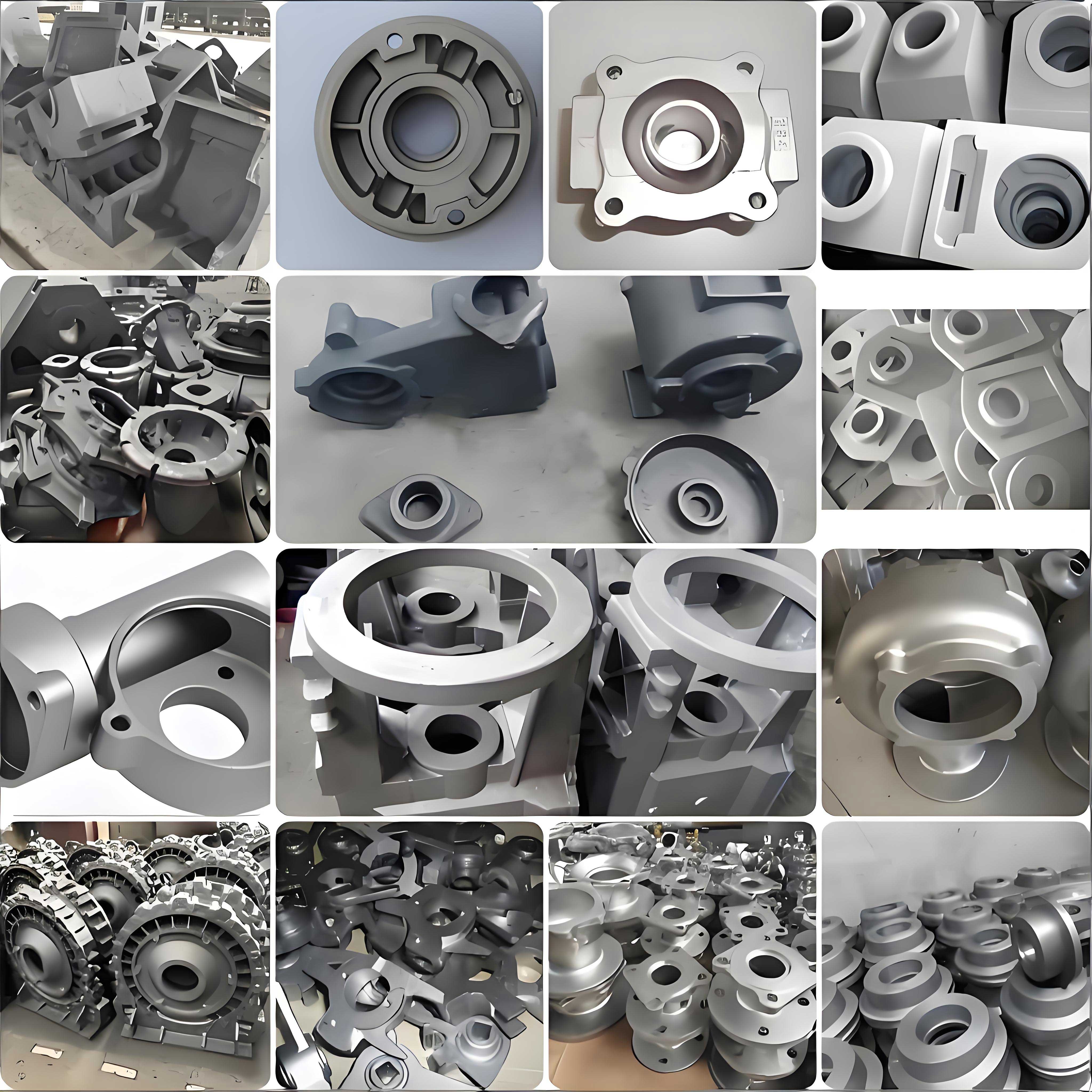
To begin, I prepared the nodular cast iron cylinder liners using a water-cooled metal mold centrifugal casting method. The chemical composition of the material is crucial for determining the final microstructure and properties. The table below summarizes the composition range used in my study, which includes alloying elements like copper (Cu) and niobium (Nb) to enhance specific characteristics.
| Element | Content Range (wt%) |
|---|---|
| C | 3.0–3.9 |
| Si | 2.4–3.0 |
| Cu | 2.0–2.5 |
| Nb | 0.06–0.10 |
| B | 0.01–0.03 |
| Mn | <0.4 |
| S | <0.02 |
| P | <0.1 |
| Mg | 0.03–0.06 |
| Ce | 0.02–0.04 |
| Fe | Balance |
The as-cast microstructure of the nodular cast iron was examined, revealing a matrix consisting of approximately 85% pearlite and 15% ferrite, along with minor amounts of carbides and copper-rich phases. The graphite nodules were of size grade 7, with a nodularity grade of 2 and a nodularization rate exceeding 90%. The hardness at this stage was measured to be at least 240 HB. This initial structure sets the foundation for subsequent heat treatments, which aim to transform the matrix to achieve desired properties.
Two distinct quenching processes were applied: subcritical quenching (referred to as Process 1) and conventional isothermal quenching (Process 2). The heat treatment parameters are detailed in the table below. In both cases, the cylinder liner semi-finished products were austenitized in a high-temperature salt bath and then rapidly quenched into a low-temperature salt bath for isothermal transformation.
| Parameter | Process 1 (Subcritical Quenching) | Process 2 (Conventional Isothermal Quenching) |
|---|---|---|
| Austenitization | 810°C × 25 min | 920°C × 25 min |
| Isothermal Quenching | 335°C × 80 min | 335°C × 80 min |
The selection of these temperatures is critical. In Process 1, the austenitization temperature of 810°C lies within the three-phase region of graphite (G), austenite (γ), and ferrite (F), which allows for the retention of some ferrite after quenching. In contrast, Process 2 uses a higher temperature of 920°C, within the two-phase region of G and γ, leading to a fully austenitized structure prior to isothermal transformation. This fundamental difference in thermal history profoundly impacts the final microstructure and, consequently, the properties of the nodular cast iron.
Following heat treatment, I conducted a series of analyses to evaluate the microstructural and performance characteristics. Metallographic examination was performed using optical microscopy with a 4% nitric acid alcohol etchant. The volume fractions of different phases were quantified using image analysis systems. Mechanical properties, including hardness, tensile strength, and elongation, were measured according to standard protocols. Additionally, I assessed physical properties such as elastic modulus, coefficient of linear expansion, and thermal conductivity. Friction and wear tests were carried out under lubricated conditions with varying speeds, and machining performance was evaluated based on tool life during cutting operations.
The microstructures after quenching revealed distinct differences. For Process 1 (subcritical quenching), the matrix consisted of lower bainite, copper-rich residual austenite, blocky ferrite, and a small amount of niobium-containing carbides. The hardness was measured to be not less than 300 HB. In contrast, Process 2 (conventional isothermal quenching) produced a matrix of lower bainite, copper-rich residual austenite, and minor niobium-containing carbides, with no retained ferrite. The hardness here was higher, at not less than 350 HB. These observations can be explained by the phase transformations during heat treatment. The presence of copper is significant because it has a solubility of about 3.5% in austenite and only 0.3% in ferrite at room temperature, leading to the formation of copper-enriched phases that influence properties.
The mechanical properties of the nodular cast iron cylinder liners are summarized in the table below. The data clearly show that subcritical quenching results in a reduction in tensile strength and hardness compared to conventional isothermal quenching, while the elastic modulus remains largely unchanged. However, the elongation to fracture increases with subcritical quenching, indicating improved ductility. This trade-off between strength and ductility is a key consideration for cylinder liner applications, where both wear resistance and toughness are important.
| Property | Process 1 (Subcritical Quenching) | Process 2 (Conventional Isothermal Quenching) |
|---|---|---|
| Tensile Strength, Rm (MPa) | 900 | 1050 |
| Elastic Modulus, E (GPa) | 170 | 175 |
| Elongation, A (%) | 8 | 6 |
| Hardness (HB) | ≥300 | ≥350 |
To understand these mechanical behaviors, we can refer to the Hall-Petch relationship, which describes the dependence of yield strength on grain size. For nodular cast iron, the microstructure refinement from bainitic transformation contributes to strength, but the presence of soft ferrite in subcritical quenching lowers overall hardness. The relationship can be expressed as:
$$ \sigma_y = \sigma_0 + k_y d^{-1/2} $$
where $\sigma_y$ is the yield strength, $\sigma_0$ is the friction stress, $k_y$ is a constant, and $d$ is the grain size. In the case of nodular cast iron, the “grain size” can be related to the interlamellar spacing in bainite or the ferrite block size. The retained ferrite in Process 1 likely has a larger effective grain size, reducing $\sigma_y$ and thus tensile strength, while the fully bainitic structure in Process 2 provides finer features for higher strength.
Moving to physical properties, the coefficient of linear expansion and thermal conductivity were evaluated across a temperature range. The results for linear expansion are plotted below, showing that both quenching processes yield similar values, which are higher than those of typical gray cast iron (around 12 μm/(m·°C)). This suggests that the linear expansion coefficient is primarily influenced by the graphite morphology in nodular cast iron rather than the matrix structure. However, above 400°C, a decrease in expansion coefficient is observed, possibly due to the precipitation of nanoscale copper-rich phases from the austenite, which alters the lattice parameters.
| Temperature (°C) | Process 1 (μm/(m·°C)) | Process 2 (μm/(m·°C)) |
|---|---|---|
| 50 | 12.5 | 12.6 |
| 100 | 13.0 | 13.1 |
| 150 | 13.5 | 13.6 |
| 200 | 14.0 | 14.1 |
| 250 | 14.5 | 14.6 |
| 300 | 15.0 | 15.1 |
| 350 | 15.5 | 15.6 |
| 400 | 15.0 | 15.1 |
| 450 | 14.0 | 14.1 |
The thermal conductivity data, presented in the next table, indicate that nodular cast iron has lower conductivity than gray cast iron (typically 41.5–52.5 W/(m·K)), again highlighting the role of graphite shape. The values for both processes are comparable, with slight variations possibly due to differences in phase distribution. The conductivity can be modeled using the rule of mixtures for composite materials, where the overall conductivity $k$ is given by:
$$ k = \sum f_i k_i $$
where $f_i$ and $k_i$ are the volume fraction and conductivity of each phase (e.g., ferrite, bainite, austenite, graphite). In nodular cast iron, the spherical graphite nodules act as insulators, reducing $k$. The similar conductivities between processes imply that the matrix composition has a secondary effect, consistent with the linear expansion results.
| Temperature (°C) | Process 1 | Process 2 |
|---|---|---|
| 50 | 17.27 | 16.49 |
| 100 | 18.31 | 17.43 |
| 150 | 18.11 | 17.34 |
| 200 | 19.06 | 18.60 |
| 250 | 19.74 | 19.02 |
| 300 | 20.36 | 20.27 |
| 350 | 21.26 | 21.22 |
| 400 | 22.89 | 22.95 |
Friction and wear performance is critical for cylinder liners, as it directly affects engine efficiency and lifespan. I conducted tests under lubricated conditions with a constant load of 100 N and varying speeds. The friction coefficients for both quenching processes are listed in the table below. As speed increases, the friction coefficient decreases for both, owing to improved hydrodynamic lubrication. However, the subcritical quenched nodular cast iron consistently shows lower friction coefficients compared to the conventional isothermal quenched material. This can be attributed to the presence of copper-rich phases in the matrix, which act as solid lubricants and reduce adhesive wear. The Stribeck curve concept applies here, where friction coefficient $\mu$ is a function of the Hersey number (a dimensionless parameter combining speed, viscosity, and load):
$$ \mu = f\left( \frac{\eta v}{P} \right) $$
where $\eta$ is the lubricant viscosity, $v$ is the speed, and $P$ is the load. For nodular cast iron with copper-rich phases, the boundary lubrication regime is enhanced, leading to lower $\mu$ values.
| Speed (rpm) | Process 1 (Subcritical Quenching) | Process 2 (Conventional Isothermal Quenching) |
|---|---|---|
| 25 | 0.1277 | 0.1332 |
| 50 | 0.1252 | 0.1292 |
| 75 | 0.1240 | 0.1262 |
| 100 | 0.1233 | 0.1241 |
| 150 | 0.1219 | 0.1224 |
| 250 | 0.1206 | 0.1212 |
| 375 | 0.1196 | 0.1204 |
Machinability is another vital aspect, as it impacts production costs and efficiency. I evaluated the machining performance by counting the number of cylinder liners processed under identical conditions with a CBN tool. The subcritical quenched nodular cast iron allowed for over five times more parts to be machined compared to the conventional isothermal quenched material. This dramatic improvement is due to the lower hardness and the presence of ferrite, which reduces tool wear. Additionally, the copper-rich phases may aid in chip breaking and lubrication during cutting. The tool life $T$ can be related to cutting parameters via Taylor’s tool life equation:
$$ VT^n = C $$
where $V$ is the cutting speed, $T$ is tool life, and $n$ and $C$ are constants dependent on material and tool. For softer nodular cast iron from subcritical quenching, $n$ may be higher, indicating less sensitivity to speed and longer tool life.
In summary, my investigation into quenching processes for nodular cast iron cylinder liners reveals that subcritical quenching offers a viable alternative to conventional isothermal quenching. While it results in slightly lower tensile strength and hardness, it provides better ductility, reduced friction coefficients, and significantly improved machinability. The physical properties like elastic modulus, linear expansion coefficient, and thermal conductivity remain largely unaffected, underscoring the dominant role of graphite morphology in nodular cast iron. These findings have important implications for the manufacturing of high-performance engine components, where balancing mechanical properties with production efficiency is key. Future work could explore the optimization of alloying elements like copper and niobium to further enhance the benefits of subcritical quenching for nodular cast iron applications.
Throughout this study, the importance of microstructure control in nodular cast iron cannot be overstated. By carefully selecting quenching parameters, we can tailor the phase distribution to meet specific engineering requirements. The use of advanced characterization techniques, coupled with empirical data, has allowed for a deep understanding of the structure-property relationships in this versatile material. As engine technologies continue to evolve, the insights gained from this research will contribute to the development of more durable and efficient nodular cast iron components, ultimately supporting the transition to cleaner and more powerful internal combustion engines.
To further elaborate, let’s consider the kinetics of phase transformations during quenching. The isothermal transformation diagram for nodular cast iron can be modeled using the Avrami equation for phase fraction $X$:
$$ X = 1 – \exp(-kt^n) $$
where $k$ is a rate constant, $t$ is time, and $n$ is an exponent related to transformation mechanism. For bainite formation in nodular cast iron, $n$ typically ranges from 1 to 2, depending on temperature and composition. In subcritical quenching, the initial presence of ferrite alters the nucleation sites, affecting $k$ and $n$, and leading to the observed microstructural differences. This mathematical framework helps in predicting the microstructure for given heat treatment conditions, enabling better process design.
Additionally, the role of residual stresses induced by quenching should be considered. Differential cooling rates can lead to thermal stresses that influence dimensional stability and fatigue resistance. For nodular cast iron, the stress distribution $\sigma(x)$ can be approximated using thermoelasticity equations:
$$ \sigma(x) = E \alpha \Delta T(x) $$
where $E$ is the elastic modulus, $\alpha$ is the coefficient of thermal expansion, and $\Delta T(x)$ is the temperature gradient. Subcritical quenching, with its lower austenitization temperature, may reduce $\Delta T(x)$ and thus residual stresses, contributing to improved machining performance and part accuracy.
In conclusion, the choice between subcritical and conventional isothermal quenching for nodular cast iron cylinder liners depends on the specific application priorities. For high-wear resistance and strength, conventional quenching is superior, but for applications requiring good machinability, lower friction, and adequate toughness, subcritical quenching is highly advantageous. My research demonstrates that through careful process optimization, nodular cast iron can be engineered to meet diverse performance criteria, making it an indispensable material in advanced engine manufacturing.