
In our pursuit of advanced compressor technology for cryogenic applications, we embarked on a comprehensive study to develop compressor cylinders capable of operating at extremely low temperatures, specifically at -162°C for BOG (Boil-Off Gas) compression systems. Traditionally, our compressor cylinders were fabricated from gray cast iron or conventional nodular cast iron, which are suitable for temperatures ranging from 0°C to 300°C but fail under cryogenic conditions due to thermal expansion mismatches and embrittlement. To address this, we selected a specialized material: austenitic nodular cast iron with the designation QTANi35Cr3. This material offers excellent low-temperature toughness, low thermal expansion, and good corrosion resistance, making it ideal for cryogenic service. The manufacturing process involved meticulous material preparation, optimized casting techniques, and rigorous quality control. This article details our first-person exploration into the key aspects of producing these high-performance compressor cylinders, emphasizing the critical role of nodular cast iron in achieving desired properties. We will delve into material chemistry, melting practices, nodularization, inoculation, casting design, and simulation validation, all while underscoring the importance of process precision in austenitic nodular cast iron fabrication.
The core challenge lay in the material synthesis of QTANi35Cr3 austenitic nodular cast iron. This grade is characterized by high nickel and chromium content, which stabilizes the austenitic matrix and imparts low thermal expansion. However, achieving consistent microstructure and mechanical properties requires strict control over composition and processing. We began by defining the chemical composition based on GB/T 26648-2011, but tailored it for our specific casting requirements. The table below summarizes our targeted composition ranges, derived from iterative experiments and theoretical considerations to balance performance, castability, and cost.
| Element | Targeted Range (wt.%) | Rationale |
|---|---|---|
| Carbon (C) | 2.1 – 2.2 | Optimized for graphite nodule count and fluidity; calculated based on section thickness. |
| Silicon (Si) | 1.6 – 1.8 | Kept at lower limit to enhance thermal stability while avoiding excessive hardening. |
| Nickel (Ni) | 34.0 – 34.5 | Critical for austenite formation; controlled at lower limit for cost efficiency. |
| Chromium (Cr) | 2.0 – 2.1 | Improves oxidation resistance but minimized to reduce shrinkage tendency. |
| Manganese (Mn) | 1.5 – 1.7 | Maintained at lower limit to prevent segregation and brittle phase formation. |
| Phosphorus (P) | < 0.05 | Strictly limited to avoid grain boundary phosphides and embrittlement. |
| Sulfur (S) | < 0.03 | Minimized to facilitate effective nodularization and reduce inclusions. |
The carbon equivalent (CE) is a crucial parameter for predicting casting behavior. For this high-nickel nodular cast iron, we used a modified formula that accounts for nickel’s influence:
$$CE = w(C) + 0.3 \times w(Si) + 0.047 \times w(Ni) – [0.0055 \times w(Ni) \times w(Si)]$$
We aimed for a CE between 4.1% and 4.4% to ensure adequate fluidity and feeding characteristics. This formula highlights the interplay between silicon and nickel in austenitic nodular cast iron, which is distinct from conventional nodular cast iron systems.
Melting was conducted in a coreless medium-frequency induction furnace. Charge materials included low-sulfur pig iron, clean steel scrap, electrolytic nickel, high-carbon ferrochrome, ferrosilicon, high-carbon ferromanganese, and returns. Particular attention was paid to trace elements; for instance, lead (Pb) above 0.003% can promote vermicular graphite, while aluminum (Al) may cause pinhole defects. Thus, we insisted on high-purity inputs. Nickel, being highly prone to gas absorption, was added late in the melt and covered with a protective layer to minimize oxidation and hydrogen pickup. Alloying elements like chromium were introduced after spectral analysis of the base iron for precise adjustment. Due to the high liquidus temperature of austenitic nodular cast iron, superheating to around 1,530°C was necessary to ensure proper fluidity. The melt was held under a reducing atmosphere to prevent excessive oxidation, a common issue with high-nickel melts.
Nodularization is paramount for achieving the spherical graphite morphology that gives nodular cast iron its superior ductility and toughness. We experimented with different nickel-magnesium alloys, specifically Ni70Mg30 and Ni85Mg15. The former resulted in inferior nodularity and lower elongation, while the latter yielded satisfactory results. Consequently, we adopted Ni85Mg15 nodularizing agent at 1.0% of the iron weight, applied via the sandwich method in a preheated ladle. The process steps were: (1) placing the nodularizer in the ladle’s well, covering it with 1.0% inoculant; (2) pouring two-thirds of the iron at 1,530°C onto the opposite side to initiate reaction; (3) after reaction, adding the remaining iron; (4) slag removal and wedge test for nodularity check. The microstructures revealed a nodularity of 94% with Ni85Mg15, compared to 82% with Ni70Mg30, confirming the choice. The high magnesium content in Ni85Mg15 ensures effective graphite spheroidization in this nickel-rich nodular cast iron, though careful control is needed to avoid violent reactions.
Inoculation was performed twice to enhance graphite nucleation and counteract fading. Primary inoculation involved adding ferrosilicon-based inoculant with the nodularizer, while secondary (instant) inoculation was done just before pouring. This dual approach refined the graphite nodules and improved matrix uniformity, which is critical for low-temperature performance of austenitic nodular cast iron.
Pouring practices were adapted to the material’s characteristics. The pouring temperature was maintained between 1,450°C and 1,520°C to counteract high viscosity and prevent mistruns. Rapid mold filling was emphasized to minimize air entrainment and oxidation, as austenitic nodular cast iron is particularly susceptible to gas absorption. We used ceramic filters in the gating system to trap inclusions and ensure clean metal entry.
The resulting material underwent thorough testing. Room-temperature mechanical properties met the standards for QTANi35Cr3, as shown below:
| Property | Value Range |
|---|---|
| Tensile Strength | 370 – 450 MPa |
| Yield Strength | 220 – 240 MPa |
| Elongation | 7 – 10 % |
| Brinell Hardness | 150 – 180 HBW |
Low-temperature tests at 103 K (-170°C) were conducted to validate cryogenic suitability. The data confirmed adequate toughness and low thermal expansion, essential for compressor cylinders in BOG service:
| Temperature | Elongation (%) | Tensile Strength (MPa) | Elastic Modulus (GPa) |
|---|---|---|---|
| 103 K | 7.2 – 7.3 | 372 – 373 | 145 – 149 |
| Temperature Range | Length Change ΔL/L (303 K) (%) |
|---|---|
| 103 – 303 K | 0.0909 – 0.1150 |
The compressor cylinder design prioritized uniform wall thickness and smooth transitions to mitigate stress concentrations and shrinkage defects. The cylinder, with a finished weight of 1,930 kg, required robust feeding due to the high shrinkage tendency of chromium-containing austenitic nodular cast iron. We adopted a top-feeding system with sizable risers, accounting for approximately 30% of the casting weight (580 kg), bringing the total poured weight to 2,500 kg. This approach mirrors steel casting practices, as this nodular cast iron exhibits solidification characteristics closer to steel than to ordinary cast iron.
To validate the casting design, we employed ProCAST simulation software. The analysis covered mold filling, temperature gradients, and defect prediction. The filling sequence showed smooth metal flow without excessive turbulence, while thermal analysis confirmed directional solidification toward the risers. Defect prediction indicated minimal shrinkage porosity in critical areas, affirming the efficacy of our riser placement. This simulation step was invaluable for optimizing the process before costly trials, a best practice in producing complex nodular cast iron components.
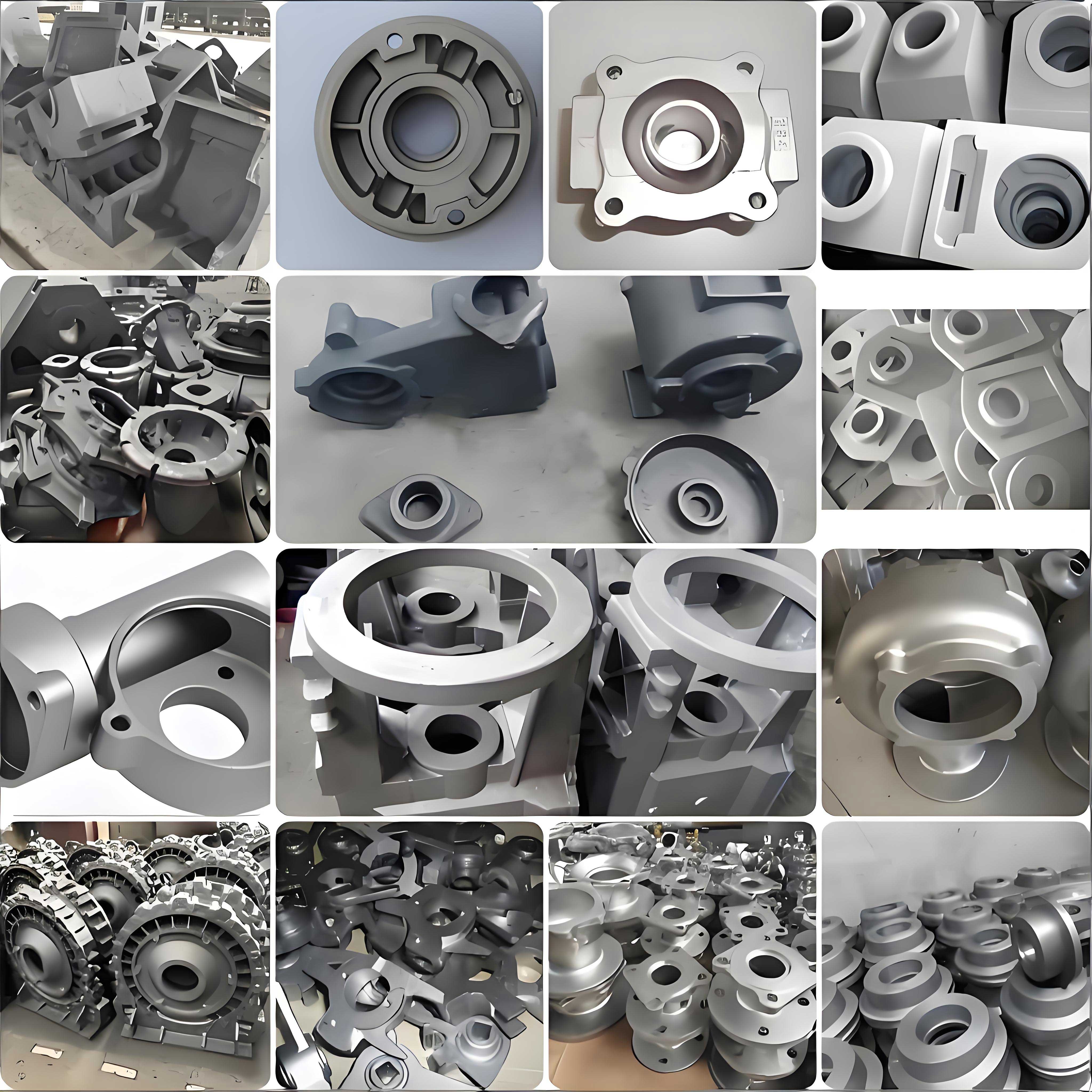
In summary, the successful manufacture of low-temperature compressor cylinders from QTANi35Cr3 austenitic nodular cast iron hinged on several key insights. First, melt chemistry must be tightly controlled, with nickel added late and harmful trace elements scrupulously avoided. Second, nodularization using Ni85Mg15 proved optimal for achieving high graphite nodularity in this high-nickel system; rare-earth agents were avoided due to detrimental effects from cerium. Third, the inherent gas absorption tendency of austenitic nodular cast iron necessitates protective melting and rapid pouring. Fourth, the substantial shrinkage of this material mandates steel-like casting practices with ample risering. Our experience underscores that austenitic nodular cast iron, while challenging, offers unparalleled properties for cryogenic applications when processed correctly. Future work may explore alternative inoculants or cooling rate modifications to further enhance performance. This project has solidified our expertise in advanced nodular cast iron technologies, paving the way for more efficient cryogenic compressors.
Throughout this endeavor, the term “nodular cast iron” has been central, reflecting its unique graphite morphology that imparts ductility and toughness. The austenitic variant of nodular cast iron, with its nickel and chromium additions, extends these benefits to extreme environments. By mastering the manufacturing nuances—from charge selection to simulation—we have demonstrated that nodular cast iron is not just a conventional material but a versatile alloy capable of meeting the demands of modern engineering. The integration of computational tools like ProCAST has further elevated our ability to produce defect-free nodular cast iron castings, ensuring reliability in critical applications. As we continue to push boundaries, the principles outlined here will guide future innovations in nodular cast iron processing for specialized sectors.