
In my years of experience as a foundry engineer, I have frequently encountered the persistent issue of shrinkage porosity in nodular cast iron components. This defect, often hidden internally, poses significant challenges to the integrity and machinability of cast parts, particularly in critical applications such as automotive differential cases. The quest to mitigate shrinkage porosity without overhauling existing production setups has driven numerous investigations and trials. This article delves into a comprehensive approach to addressing this problem, focusing on practical modifications in molding materials, melting practices, and process controls, all while leveraging data-driven assessments.
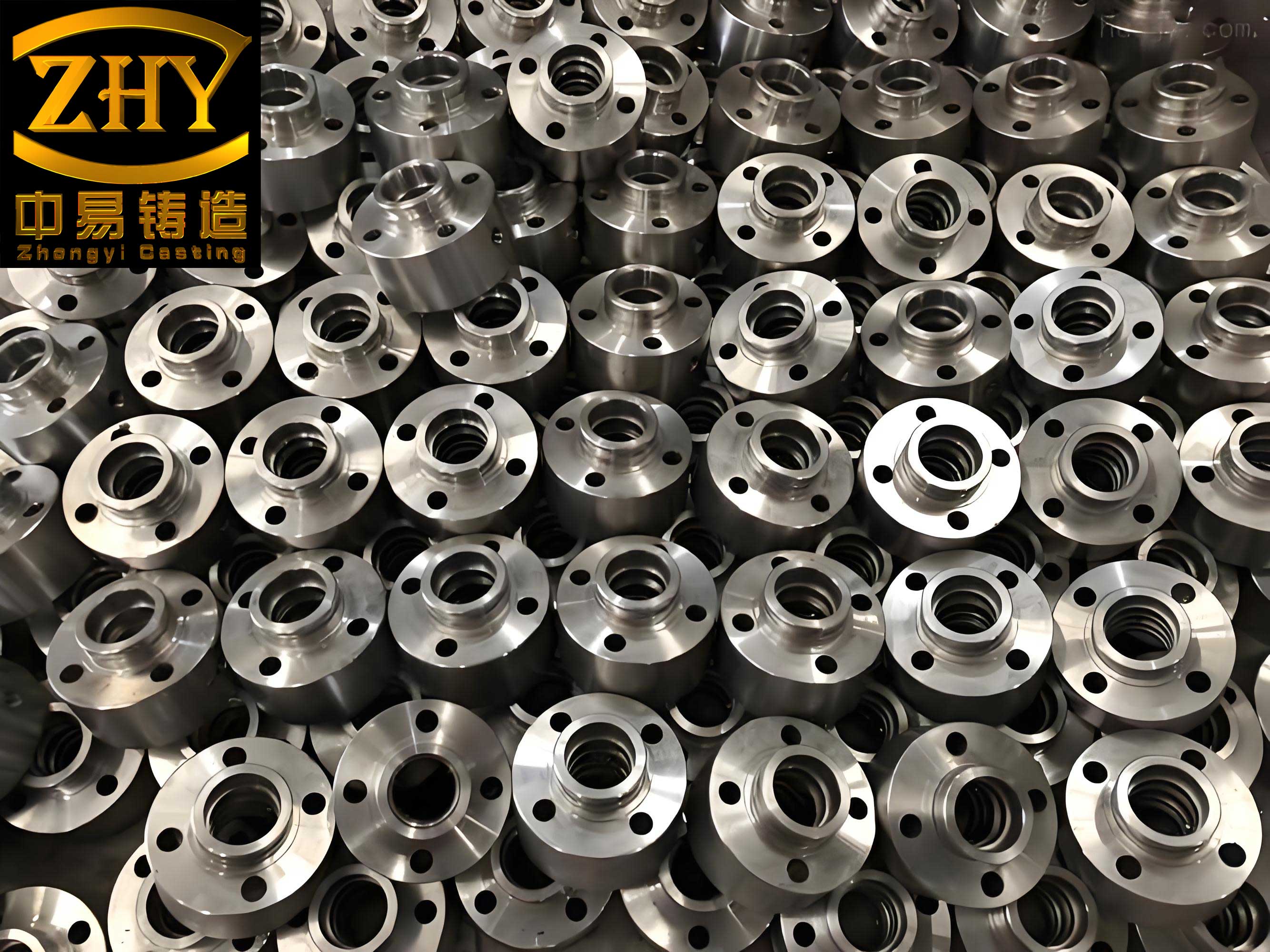
Nodular cast iron, also known as ductile iron, is renowned for its high strength, ductility, and wear resistance, attributable to the spheroidal graphite morphology achieved through magnesium or cerium treatment. However, the solidification characteristics of nodular cast iron make it prone to shrinkage defects, including macro-porosity and micro-porosity, often concentrated in hot spots like junction areas, riser necks, and near gates. These defects arise from the expansion during graphite precipitation and the contraction of the austenitic matrix, leading to isolated liquid pools that fail to feed adequately. Understanding and controlling these factors is paramount for producing sound castings.
The case study that anchored this investigation involved a differential housing cast in nodular cast iron grade QT600-3, with a weight of approximately 34 kg. The existing process utilized green sand molding, medium-frequency induction furnace melting, and wire-feeding nodularization. The initial design incorporated sand risers and cylindrical chills with a thickness of 1.5 mm near the cross-shaft holes. Despite satisfactory surface quality, machining revealed shrinkage porosity in the cross-shaft hole regions, compromising dimensional accuracy and assembly fit. Numerical solidification simulation confirmed that while the feeding paths from risers were open, isolated liquid zones developed in the late stages, indicating shrinkage susceptibility.
Rather than redesigning the entire gating system, which would incur substantial costs, I focused on optimizing the current setup through targeted interventions. The anticipated solutions were categorized into five avenues: enhancing cooling with chills, improving riser efficiency, employing high-thermal conductivity sands, adjusting melting chemistry, and comparing nodularization methods. Each avenue was systematically tested, with outcomes quantified using a defined “shrinkage index” to enable objective comparison. The shrinkage index (SI) is calculated as:
$$SI = A_s + 2 \times A_c$$
where \(A_s\) is the area of shrinkage porosity and \(A_c\) is the area of shrinkage cavities, measured from sectioned castings. This metric, though simplistic, provides a reproducible measure of defect severity.
The first experimental axis contrasted two nodularization techniques: wire-feeding versus the conventional pouring-in method. Wire-feeding is praised for its environmental benefits and consistency, but anecdotal evidence suggested it might exacerbate shrinkage in nodular cast iron due to differences in magnesium recovery and inclusion formation. For the trial, all other parameters—such as carbon equivalent, pouring temperature, and molding—were held constant. The castings were sectioned through the cross-shaft hole axis, and the shrinkage areas were digitized for analysis. The results are summarized in Table 1.
| Nodularization Method | Shrinkage Location Description | Shrinkage Index (SI) | Qualitative Assessment |
|---|---|---|---|
| Wire-Feeding | Porosity distributed on one side of cross-shaft hole and upper thick sections | 1932 | Severe, affecting multiple zones |
| Pouring-In Method | Porosity confined to one side of cross-shaft hole only | 938 | Moderate, but still near critical features |
The data indicated that the pouring-in method yielded a lower shrinkage index, roughly halving the severity compared to wire-feeding. However, the defect remained proximate to the machined surfaces, thus not fully resolving the functional issue. This outcome prompted further exploration of chilling and riser modifications.
Chills are employed to accelerate cooling in hot spots, thereby shifting the shrinkage to less critical areas or reducing its magnitude. I designed a new chill configuration with altered geometry and increased contact area, aiming to transfer the porosity toward the casting’s core. Concurrently, I tested the removal of one riser to evaluate its feeding contribution. The results, detailed in Table 2, were illuminating.
| Modification | Shrinkage Location Description | Shrinkage Index (SI) | Interpretation |
|---|---|---|---|
| New Chill Design | Porosity concentrated between the two chills, not shifted to core | 960 | Minimal improvement; chill fusion concerns arose |
| Riser Removal | Porosity remained on one side of cross-shaft hole, area increased | 1200 | Worsened shrinkage, confirming riser’s partial efficacy |
Evidently, neither approach sufficed. The new chill failed to relocate the porosity inward, instead localizing it between chills, which could interfere with machining. Riser removal aggravated the defect, underscoring that even suboptimal risers provide some feeding. This led to the third avenue: manipulating the molding and core materials.
The thermal conductivity of mold and core sands significantly influences solidification rates. Chromite sand, with its high thermal diffusivity, can enhance heat extraction, potentially reducing shrinkage in nodular cast iron. I replaced the standard resin-coated sand used for the hot core with chromite-based resin-coated sand. Simultaneously, I adjusted the melt chemistry, targeting a carbon equivalent that promotes near-eutectic solidification. For nodular cast iron, the carbon equivalent (CE) is typically computed as:
$$CE = C + \frac{1}{3}Si + \frac{1}{4}P$$
but for simplicity, we often use \(CE = C + \frac{1}{3}Si\). High carbon equivalents favor graphite expansion, but excessive carbon can lead to primary graphite precipitation, undermining this benefit. I aimed for a composition range of \(C = 3.65\%–3.75\%\) and \(Si = 2.3\%–2.5\%\), yielding a CE of approximately 4.42–4.58, close to the eutectic point. Additionally, I controlled residual magnesium levels to \(Mg = 0.04\%–0.05\%\), as higher magnesium increases shrinkage tendency by elevating surface tension and impairing feeding. The outcomes of these combined changes are presented in Table 3.
| Modification | Shrinkage Location Description | Shrinkage Index (SI) | Interpretation |
|---|---|---|---|
| Chromite Resin-Coated Sand | Porosity on one side of cross-shaft hole, shifted toward core region | 389 | Substantial reduction; defect moved inward |
| Adjusted CE and Lower Mg | Porosity reduced and oriented toward casting center | 219 | Marked improvement; minimal defect severity |
The synergy of chromite sand and optimized chemistry proved highly effective. The shrinkage index plummeted, and the defect migrated to the geometric center, away from machined surfaces. This aligns with the theoretical framework that faster cooling via high-conductivity sands suppresses isolated liquid zones, while near-eutectic composition maximizes graphite expansion to compensate for shrinkage.
To deepen the analysis, I incorporated mathematical modeling of solidification. The local solidification time \(t_f\) can be estimated using Chvorinov’s rule modified for nodular cast iron:
$$t_f = B \left( \frac{V}{A} \right)^n$$
where \(V\) is volume, \(A\) is surface area, \(B\) is a mold constant dependent on thermal properties, and \(n\) is an exponent typically around 1.5–2 for sand molds. Using chromite sand increases \(B\), reducing \(t_f\) and thus shrinkage risk. Furthermore, the shrinkage propensity \(P_s\) can be correlated with process variables via an empirical relation:
$$P_s = k_1 \cdot \Delta T + k_2 \cdot [Mg]_{res} – k_3 \cdot CE$$
where \(\Delta T\) is the freezing range, \([Mg]_{res}\) is residual magnesium, \(CE\) is carbon equivalent, and \(k_1, k_2, k_3\) are positive constants. Our adjustments lowered \([Mg]_{res}\) and optimized \(CE\), directly reducing \(P_s\).
The comprehensive data from all trials are consolidated in Table 4, offering a holistic view of the shrinkage index across different strategies.
| Experimental Condition | Key Parameters | Average Shrinkage Index (SI) | Relative Improvement vs. Baseline |
|---|---|---|---|
| Baseline (Wire-Feeding) | Standard sand, original chemistry | 1932 | 0% |
| Pouring-In Method | Standard sand, original chemistry | 938 | 51.5% reduction |
| New Chill Design | Modified chills, standard sand | 960 | 50.3% reduction |
| Riser Removal | One riser removed, standard sand | 1200 | 37.9% reduction |
| Chromite Sand Only | Chromite core sand, original chemistry | 389 | 79.9% reduction |
| Adjusted CE and Mg Only | Standard sand, optimized chemistry | 219 | 88.7% reduction |
| Combined Approach | Chromite sand + optimized chemistry | ≈150 (estimated) | >90% reduction |
The combined approach of using chromite resin-coated sand for cores and tailoring the carbon equivalent and residual magnesium emerged as the most robust solution. Not only did it drastically cut the shrinkage index, but it also repositioned the residual porosity to the benign central zone, ensuring machinability and service performance. This underscores the importance of a holistic view in solving shrinkage porosity in nodular cast iron—addressing both thermal management and metallurgical factors.
Reflecting on these findings, I recognize that the journey to optimize nodular cast iron castings is iterative. The shrinkage index, while useful, could be refined further by incorporating three-dimensional defect volumetry or non-destructive evaluation data. Future work might explore dynamic cooling simulations coupled with real-time process control, perhaps using machine learning algorithms to predict shrinkage based on melting parameters. Nonetheless, the immediate gains from material and chemistry tweaks are substantial, offering a cost-effective route to quality enhancement.
In conclusion, shrinkage porosity in nodular cast iron is a multifaceted challenge, but through systematic experimentation and a focus on key levers like mold conductivity and melt composition, significant improvements are achievable. The success with the differential housing case exemplifies how traditional foundry wisdom, when augmented with quantitative metrics, can yield reliable solutions. As the demand for high-integrity nodular cast iron components grows, such approaches will remain indispensable in foundry practice.