
In recent years, with the advancement of iron and steel production technologies, the manufacturing processes for nodular cast iron have significantly improved. Due to its excellent cost-performance ratio, nodular cast iron has found increasingly widespread applications across various industries, often serving as a substitute for cast steel and gray iron castings. However, nodular cast iron is not without its drawbacks, particularly in thick-section castings where quality issues frequently arise. As a researcher in this field, I have focused on investigating these problems, analyzing their causes and influencing factors. In this article, I will delve into the common defects observed in nodular cast iron, followed by an experimental study on marine large nodular cast iron castings produced by a company. The aim is to discuss the factors influencing defects in large nodular cast iron castings, providing insights and methods for improving production technology in the shipbuilding industry.
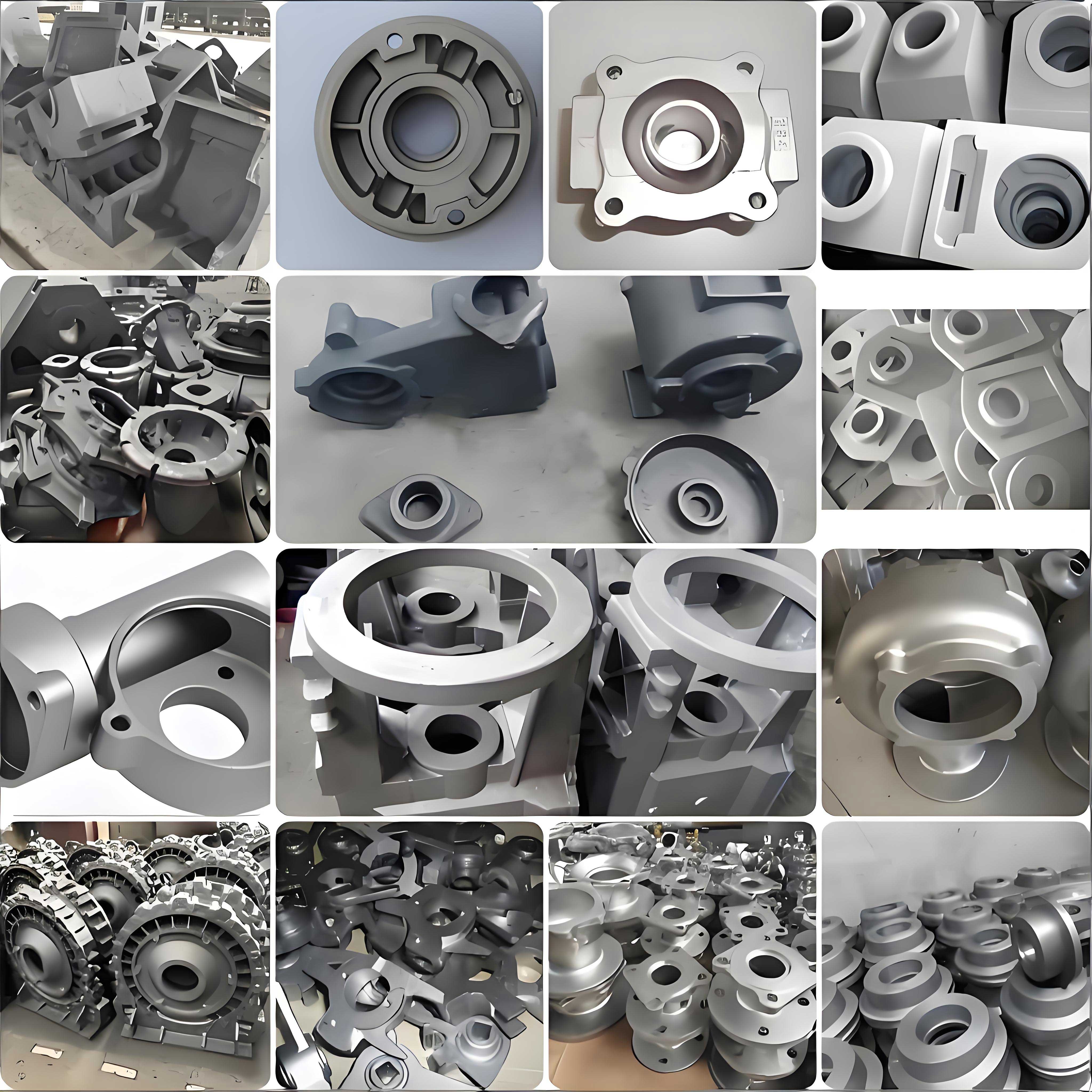
Nodular cast iron, also known as ductile iron, is characterized by its spherical graphite nodules, which impart superior mechanical properties such as high tensile strength and ductility. However, in marine applications where large and thick-section components are required, defects like poor nodularity, shrinkage porosity, gas holes, and cracks can compromise performance and safety. Through my analysis and experiments, I aim to shed light on how factors like carbon equivalent, graphite morphology, and trace elements affect these defects. This knowledge is crucial for optimizing the production of marine large nodular cast iron castings, ensuring reliability in demanding environments.
Analysis of Typical Defects
Defects in nodular cast iron castings can stem from various stages of the manufacturing process, including melting, treatment, pouring, and solidification. In this section, I will examine the most common defects, their characteristics, and underlying causes, drawing from both literature and my own observations. Understanding these defects is the first step toward mitigating them in marine large nodular cast iron castings.
Poor Nodularity
Poor nodularity is a critical defect that leads to a decline in mechanical properties, particularly a reduction in elongation. Typically, the fracture surface exhibits a silver-gray appearance with unevenly distributed black spots. Under an optical microscope, graphite appears as flakes in aggregated zones, with spheroidal graphite limited to size grade 5 and minimal content, resulting in an overall nodularity grade of 2–3. Based on thermal analysis theory, the primary cause of poor nodularity is the residual content of elements like magnesium and cerium in the iron melt. Excessive levels of sulfur and active oxygen, often due to impurities in raw materials or inadequate slag removal, react with magnesium and cerium, depleting them and hindering graphite nodulization. Additionally, during pouring, the residual magnesium and cerium can be further consumed, exacerbating the issue. For marine large nodular cast iron castings, ensuring proper treatment and controlled chemistry is vital to maintain nodularity.
The nodularity grade can be quantified using the formula for nodularity percentage, often expressed as:
$$N = \frac{A_s}{A_t} \times 100\%$$
where \(N\) is the nodularity percentage, \(A_s\) is the area of spheroidal graphite, and \(A_t\) is the total graphite area. In cases of poor nodularity, \(N\) falls below acceptable thresholds, impacting the performance of nodular cast iron components.
Shrinkage Porosity
Shrinkage porosity manifests as dark spots or grayish loose pores, often resembling fly footprints, and primarily occurs in hot spots or larger sections of castings. Micro-shrinkage forms during the final stages of secondary solidification, resulting from interdendritic liquid or eutectic clusters solidifying under negative pressure. This defect is unique to nodular cast iron due to its solidification behavior, where graphite expansion can create vacuum zones if not compensated. The causes include unstable chemical composition, particularly carbon equivalent, sulfur, and phosphorus, often due to oxidation from improper slag removal. When carbon equivalent decreases, graphite content drops, increasing shrinkage porosity. Similarly, higher sulfur and phosphorus consume magnesium and cerium, impairing feeding and nodularity. In marine large nodular cast iron castings, controlling these elements is essential to prevent shrinkage defects.
The relationship between carbon equivalent (CE) and shrinkage can be described using the carbon equivalent formula:
$$CE = C + \frac{1}{3}Si$$
where \(C\) is the carbon content and \(Si\) is the silicon content. Adjusting CE within optimal ranges helps balance graphite formation and shrinkage tendencies in nodular cast iron.
Gas Holes
Gas holes typically form 2–3 mm beneath the casting surface, appearing as elliptical spheres, honeycomb-like spherical distributions, or smooth-walled pinholes. This defect is more common in small nodular cast iron castings but can also affect large sections under certain conditions. The primary cause is the increased surface tension and formation of an oxide film during mushy solidification, trapping gases inside the melt. Additionally, during pouring, gases from vaporized EPS patterns may not escape, leading to gas holes. For marine applications, where integrity is paramount, minimizing gas entrapment through proper gating and venting is crucial for nodular cast iron castings.
The pressure of trapped gases can be modeled using the ideal gas law adapted for casting conditions:
$$P = \frac{nRT}{V}$$
where \(P\) is pressure, \(n\) is moles of gas, \(R\) is the gas constant, \(T\) is temperature, and \(V\) is volume. Controlling these parameters helps reduce gas hole formation in nodular cast iron.
Cracks
Cracks occur when internal stresses exceed the metal’s fracture strength during solidification. High-temperature fractures show dark brown断口, while those below 600°C exhibit light brown断口, known as cold cracks. Poor nodularity increases white iron tendency, leading to cold cracks, and rapid cooling generates high residual stresses, causing edge cracks. Phosphorus is a key contributor; levels above 0.25% can induce hot cracking in large nodular cast iron castings. Understanding thermal gradients and stress distributions is vital to prevent cracking in marine components.
The stress during solidification can be approximated by thermal stress formulas, such as:
$$\sigma = E \alpha \Delta T$$
where \(\sigma\) is stress, \(E\) is Young’s modulus, \(\alpha\) is the coefficient of thermal expansion, and \(\Delta T\) is the temperature difference. Managing cooling rates and composition minimizes cracking risks in nodular cast iron.
| Defect Type | Characteristics | Primary Causes | Impact on Marine Large Nodular Cast Iron |
|---|---|---|---|
| Poor Nodularity | Silver-gray fracture with black spots; flaky graphite | Low Mg/Ce residuals; high S/O content | Reduced ductility and strength |
| Shrinkage Porosity | Dark pores in hot spots; micro-shrinkage | Unstable CE; high S/P; oxidation | Compromised integrity in thick sections |
| Gas Holes | Subsurface spherical holes; pinholes | Trapped gases; oxide films; EPS vapor | Potential leakage paths |
| Cracks | Brown断口; edge or internal fissures | High P; rapid cooling; poor nodularity | Catastrophic failure risks |
Experimental Study and Results Analysis
To investigate the influencing factors on defects in marine large nodular cast iron castings, I designed and conducted a series of experiments. The focus was on varying casting parameters and analyzing their effects on defect formation. This section presents the experimental methodology, results, and detailed analysis, incorporating tables and formulas to summarize findings.
Experimental Methodology
The experiments involved producing nodular cast iron castings with different wall thicknesses to simulate marine large components. Wall thicknesses were set at 40 mm, 80 mm, 120 mm, 180 mm, and 220 mm, with each step length of 250 mm (except the last). Step-shaped samples were cast to assess defect tendencies across sections. Raw materials included 35% high-quality scrap steel, 65% high-purity pig iron, and carbon enhancers. Melting was carried out in a 1.5-ton medium-frequency induction furnace, with a maximum temperature of 1500°C. Treatment involved the sandwich method for nodulization and inoculation, using REMg alloy as the nodulizer and SiBa alloy as the inoculant, processing 1 ton of iron melt per batch. Four pouring temperatures were tested: 1310°C, 1330°C, 1350°C, and 1370°C. Chemical composition after treatment was analyzed using a thermal analyzer, and visual inspection was performed post-solidification.
The chemical compositions for different experimental schemes are summarized in Table 1. These schemes were designed to vary carbon equivalent and trace elements, allowing me to study their impact on defects in nodular cast iron castings.
| Scheme ID | Chemical Composition wB / % | S | P | Mn | CE |
|---|---|---|---|---|---|
| Scheme 1 | 0.010 | 0.015 | 0.22 | 4.01 | |
| Scheme 2 | 0.010 | 0.015 | 0.22 | 4.21 | |
| Scheme 3 | 0.012 | 0.015 | 0.23 | 4.42 | |
| Scheme 4 | 0.012 | 0.015 | 0.22 | 4.61 |
In these schemes, CE was calculated using the standard formula for nodular cast iron: \(CE = C + \frac{1}{3}Si\), with adjustments based on actual measurements. The goal was to correlate CE levels with defect occurrences, particularly shrinkage porosity and graphite morphology.
Influence of Carbon Equivalent on Shrinkage Porosity and Other Defects
Shrinkage porosity in nodular cast iron castings is closely tied to graphite expansion during solidification. When CE is constant, increasing wall thickness prolongs solidification time, raising shrinkage risk if feeding is inadequate. Conversely, for a fixed wall thickness, higher CE improves inoculation and graphite expansion, which can counteract shrinkage if the casting strength withstands the expansion force. However, excessive CE can lead to graphite flotation, especially in large castings with long solidification times. From my experiments, I observed that shrinkage defects varied significantly with CE and pouring temperature.
For instance, at a pouring temperature of 1370°C and wall thickness up to 120 mm, maintaining CE between 4.01% and 4.42% minimized shrinkage in nodular cast iron castings. Beyond this range, either low CE caused excessive shrinkage or high CE induced graphite flotation. The relationship can be expressed using a modified shrinkage tendency formula:
$$S_t = k_1 \left( \frac{1}{CE} \right) + k_2 (T_p – T_e)$$
where \(S_t\) is the shrinkage tendency, \(k_1\) and \(k_2\) are constants, \(T_p\) is the pouring temperature, and \(T_e\) is the eutectic temperature. This highlights the need to optimize CE for marine large nodular cast iron castings based on section size and pouring conditions.
Graphite flotation, characterized by buoyant graphite nodules聚集ing near the top surfaces, was prevalent at CE above 4.42% in thick sections (>120 mm). This defect undermines the homogeneity of nodular cast iron, leading to weakened zones. The flotation velocity can be approximated by Stokes’ law adapted for graphite nodules:
$$v = \frac{2r^2 g (\rho_m – \rho_g)}{9\eta}$$
where \(v\) is velocity, \(r\) is nodule radius, \(g\) is gravity, \(\rho_m\) and \(\rho_g\) are densities of melt and graphite, and \(\eta\) is viscosity. Controlling CE and solidification rates helps mitigate flotation in nodular cast iron.
Carbon Equivalent and Chunky Graphite Formation
Chunky graphite, a form of degenerate graphite appearing as碎块状 in microstructures, was observed in castings with CE exceeding 4.42% and wall thickness over 120 mm. This defect reduces mechanical properties and is common in heavy-section nodular cast iron castings. My analysis indicates that high CE promotes carbon diffusion, leading to irregular graphite growth during slow solidification. The chunky graphite formation rate can be modeled as:
$$G_c = \alpha (CE – CE_0) \cdot t_s$$
where \(G_c\) is the chunky graphite index, \(\alpha\) is a constant, \(CE_0\) is the threshold CE (around 4.42% in my tests), and \(t_s\) is the solidification time. For marine applications, avoiding chunky graphite is crucial, necessitating CE control in large nodular cast iron castings.
Effect of Trace Elements on Chunky Graphite
To combat chunky graphite, I experimented with adding trace elements like antimony (Sb) and bismuth (Bi) to the nodular cast iron melt. In subsequent trials, Scheme 2 and Scheme 4 were modified with planar chills of varying sizes, and Sb was introduced in controlled amounts. Post-solidification examination revealed that Sb addition effectively suppressed chunky graphite across all schemes, likely by hindering carbon atom diffusion in the iron melt. This inhibition mechanism can be described by the diffusion coefficient formula:
$$D = D_0 \exp\left(-\frac{Q}{RT}\right)$$
where \(D\) is the diffusion coefficient, \(D_0\) is a pre-exponential factor, \(Q\) is activation energy, \(R\) is the gas constant, and \(T\) is temperature. Sb increases \(Q\) for carbon, reducing \(D\) and limiting degenerate graphite growth in nodular cast iron.
Moreover, combining Sb with chills enhanced graphite nodule count and sphericity, upgrading graphite size to grade 6. However, excessive Sb (above 0.007%) promoted pearlite formation, adversely affecting the ductility of nodular cast iron castings. This trade-off underscores the importance of precise trace element management. Table 2 summarizes the effects of Sb addition on graphite characteristics in my experiments.
| Sb Content (%) | Chunky Graphite Presence | Graphite Nodule Count | Graphite Size Grade | Pearlite Content |
|---|---|---|---|---|
| 0.000 | Yes | Low | 5 | Low |
| 0.003 | No | Medium | 6 | Medium |
| 0.007 | No | High | 6 | High |
| 0.010 | No | High | 6 | Very High |
The optimal Sb content for marine large nodular cast iron castings appears to be below 0.007%, balancing chunky graphite suppression with microstructure control. Additionally, chills aid in directional solidification, reducing shrinkage risks. The heat extraction rate with chills can be expressed as:
$$q = h A (T_c – T_\infty)$$
where \(q\) is heat flux, \(h\) is heat transfer coefficient, \(A\) is area, \(T_c\) is casting temperature, and \(T_\infty\) is ambient temperature. Proper chill design is thus integral to defect minimization in nodular cast iron.
Comprehensive Defect Analysis via Thermal and Mechanical Models
To further elucidate defect formation, I applied thermal analysis and mechanical modeling to the experimental data. Cooling curves from the thermal analyzer were used to determine solidification parameters like eutectic undercooling and recalescence, which correlate with nodularity and shrinkage in nodular cast iron. The cooling curve derivative can be analyzed using:
$$\frac{dT}{dt} = f(CE, T_p, t)$$
where \(\frac{dT}{dt}\) is the cooling rate, and \(f\) is a function of carbon equivalent, pouring temperature, and time. Peaks in the derivative indicate phase transformations affecting defect formation.
For mechanical integrity, I estimated stress distributions using finite element method (FEM) simulations simplified to formulas. The von Mises stress during solidification is given by:
$$\sigma_v = \sqrt{\frac{(\sigma_1 – \sigma_2)^2 + (\sigma_2 – \sigma_3)^2 + (\sigma_3 – \sigma_1)^2}{2}}$$
where \(\sigma_1, \sigma_2, \sigma_3\) are principal stresses. High \(\sigma_v\) values correspond to crack-prone zones in large nodular cast iron castings, guiding design modifications.
These models reinforce that defects in nodular cast iron are multifactorial, requiring a holistic approach to production. By integrating chemical control, thermal management, and mechanical design, the quality of marine large nodular cast iron castings can be significantly enhanced.
Conclusions and Recommendations
Based on my analysis and experimental findings, I conclude that the defects in marine large nodular cast iron castings are primarily influenced by carbon equivalent, graphite morphology, and trace elements. The following points summarize the key insights and practical recommendations for improving production technology.
First, carbon equivalent plays a dual role in defect formation. Both excessively high and low CE levels adversely affect shrinkage porosity and graphite flotation in nodular cast iron castings. For instance, low CE reduces graphite content, increasing shrinkage, while high CE promotes graphite flotation and chunky graphite in thick sections. Therefore, in practice, CE must be tailored to the wall thickness and pouring temperature of marine large nodular cast iron castings. From my experiments, maintaining CE between 4.2% and 4.5% generally yields optimal results, minimizing defects like shrinkage and degenerate graphite. This range balances graphite expansion for feeding and prevents flotation, though exact values may vary with specific casting geometries and process conditions.
Second, trace elements, particularly antimony (Sb), offer effective means to suppress chunky graphite in nodular cast iron. Adding Sb up to 0.007% inhibits carbon diffusion, reducing碎块状 graphite formation without excessively increasing pearlite. However, exceeding this limit can degrade ductility, so precise control is essential. Complementary use of chills enhances solidification control, further mitigating shrinkage and improving graphite nodule characteristics. Implementing these measures in shipbuilding foundries can elevate the quality of large nodular cast iron components.
Third, a comprehensive defect prevention strategy should integrate multiple aspects: rigorous raw material selection to minimize impurities like sulfur and phosphorus; advanced melting and treatment techniques to ensure consistent magnesium and cerium residuals; optimized gating and risering designs to facilitate feeding and gas escape; and post-casting inspections using thermal analysis and microscopy. For marine applications, where reliability is critical, such holistic approaches are indispensable for producing defect-free nodular cast iron castings.
In future work, I plan to explore advanced simulation tools for predicting defect formation in real-time, as well as investigate alternative trace elements and inoculants for nodular cast iron. By continuing to refine these factors, the shipbuilding industry can leverage the full potential of nodular cast iron, achieving both economic and performance benefits.
To encapsulate the relationships discussed, I present a final formula summarizing the defect propensity \(D_p\) for nodular cast iron castings:
$$D_p = \beta_1 |CE – CE_{opt}| + \beta_2 [S] + \beta_3 [P] – \beta_4 [Sb] + \beta_5 \frac{V}{A}$$
where \(\beta_i\) are coefficients, \([S]\), \([P]\), and \([Sb]\) are concentrations of sulfur, phosphorus, and antimony, \(V\) is casting volume, \(A\) is surface area, and \(CE_{opt}\) is the optimal carbon equivalent (around 4.35%). Minimizing \(D_p\) through parameter optimization is key to producing high-quality marine large nodular cast iron castings.
In conclusion, through diligent study and experimentation, we can overcome the typical defects in nodular cast iron, paving the way for safer and more efficient marine vessels. The journey to perfecting nodular cast iron continues, driven by innovation and a deep understanding of material science.