
In the realm of cast iron metallurgy, the development of nodular cast iron, or ductile iron, represents a pivotal advancement. By inducing the graphite phase to precipitate in a spherical morphology, the severe stress-concentration and crack-initiation effects associated with the sharp edges of flake graphite are effectively mitigated. This transformation bestows upon the material a remarkable combination of high strength, good ductility, and excellent toughness, rivaling some grades of cast steel while retaining the superior castability, machinability, and damping capacity inherent to cast irons. The key to this transformation lies in the spheroidizing treatment—a process wherein specific elements are added to the molten iron prior to pouring to promote the formation of spheroidal graphite. Among various process parameters, the selection and application of the spheroidizing agent are paramount, directly dictating the graphite nodule count, morphology, size distribution, and consequently, the final matrix structure and mechanical properties of the nodular cast iron casting. This article delves into a comparative study of two distinct spheroidizing agents, examining their profound influence on the microstructure and performance of nodular cast iron, supported by experimental data, theoretical formulas, and mechanistic analysis.
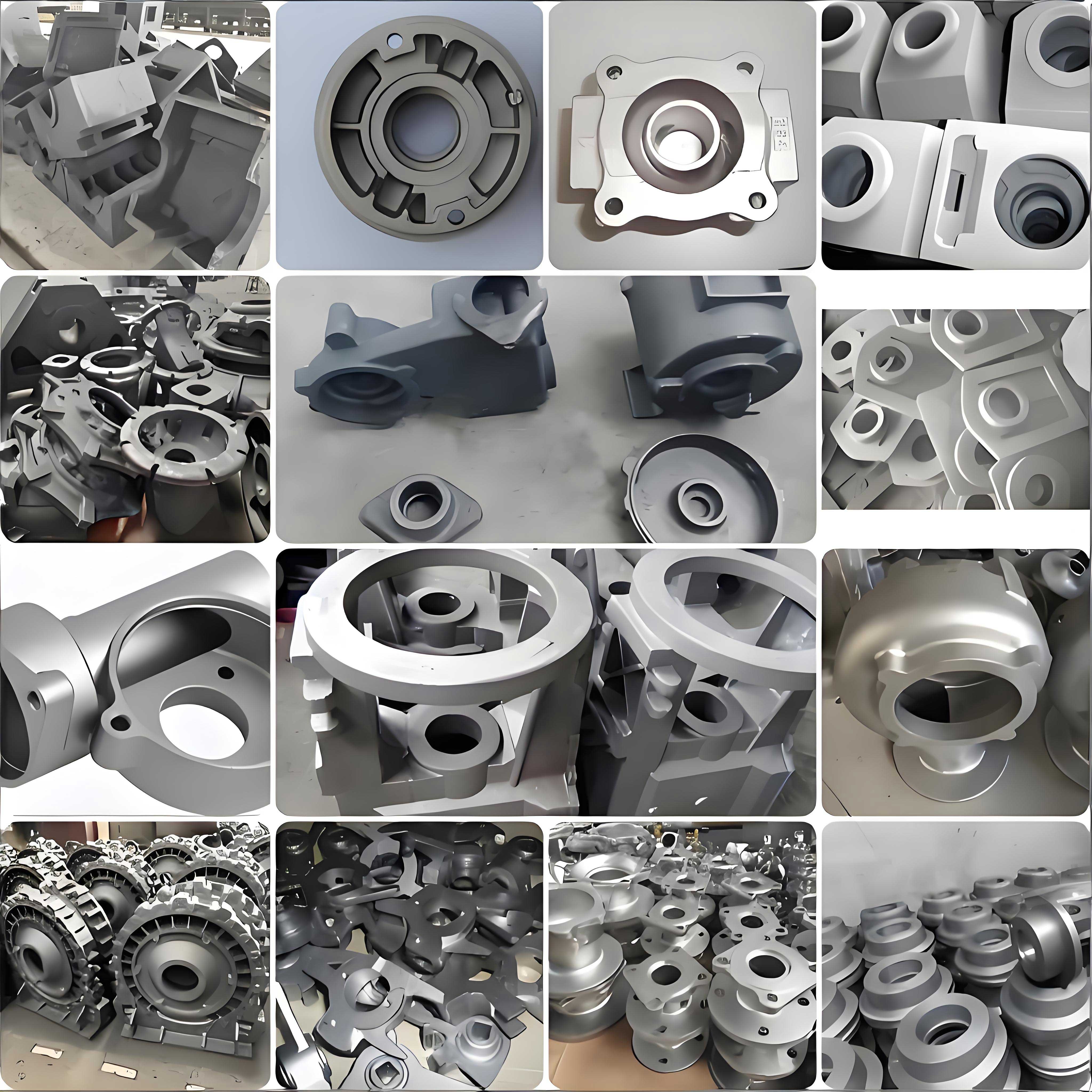
The production of high-quality nodular cast iron hinges on precise metallurgical control. The base iron composition typically falls within a specific range: Carbon (C) between 3.6–4.0%, Silicon (Si) between 2.0–3.0%, Manganese (Mn) below 1.0%, and strictly low levels of impurities like Sulfur (S) and Phosphorus (P). The spheroidizing treatment introduces elements with a strong affinity for sulfur and oxygen, primarily Magnesium (Mg) and often Cerium (Ce) or other rare earth (RE) elements. These elements modify the interfacial energy between the graphite and the molten iron, facilitating growth in a radially symmetric, spherical manner. The efficiency of this process is quantified by the nodularity or spheroidization rate, often defined as the percentage of graphite particles with an aspect ratio close to 1. The effectiveness of a spheroidizing agent is not merely a function of its active element content but also its kinetics, fade behavior, and interaction with the base iron chemistry.
In this investigation, two commercially significant spheroidizing agents were evaluated. Their nominal compositions and key characteristics are summarized in Table 1.
| Agent Designation | Nominal Composition | Key Active Elements | Form/Particle Size |
|---|---|---|---|
| Agent-H | 0.3% Ni-Mg + 1.2% RE-Mg | Mg, Rare Earths (Ce, La), Ni | Alloy blocks, 20-40 mm |
| Agent-T | 1.2% RE-Mg | Mg, Rare Earths (Ce, La) | Alloy blocks, 20-40 mm |
The fundamental mechanism of graphite spheroidization can be described by considering the interfacial energy (\(\gamma\)) and the growth anisotropy. In flake graphite, growth is preferential along the basal planes (a-axis), leading to a planar morphology. The role of Mg and RE is to adsorb onto the prismatic planes (c-axis) of the graphite crystal, poisoning their growth. This adsorption reduces the interfacial energy difference between the basal and prismatic planes, promoting isotropic growth. The effectiveness parameter \(\eta\) of a spheroidizer can be conceptually related to the residual active element concentration [X] in the melt after treatment and its potency factor \(\kappa_X\):
$$
\eta = \sum (\kappa_{Mg}[Mg] + \kappa_{RE}[RE] + …) – \beta[S]
$$
where \(\beta[S]\) represents the detrimental effect of sulfur, which consumes spheroidizing elements to form stable sulfides. A higher \(\eta\) generally correlates with better nodularity. Agent-T, with a higher nominal Mg+RE content focused on spheroidization, aims for a high \(\eta\). Agent-H introduces Nickel (Ni), which does not directly spheroidize but influences the matrix by stabilizing pearlite and refining the microstructure, potentially affecting the solidification undercooling and graphite nucleation.
The experimental procedure involved preparing melts of near-eutectic composition. The base iron was superheated to 1520°C in a medium-frequency induction furnace. The spheroidizing treatment was performed using the sandwich method in a preheated ladle: a calculated amount (1.5 wt.% of the base iron) of either Agent-H or Agent-T was placed at the bottom, covered with a proprietary inoculant (75% Ferrosilicon), and then topped with steel scrap. The molten iron was poured onto the alloy bed, initiating a vigorous reaction. After the reaction subsided, slag was removed, and the metal was poured into standard Y-block sand molds to produce test specimens for microstructural and mechanical characterization. The final chemical composition range of the produced nodular cast iron was tightly controlled, as shown in Table 2.
| Element | C | Si | Mn | P | S | Mg | RE |
|---|---|---|---|---|---|---|---|
| Min | 3.70 | 2.30 | 0.60 | < 0.05 | < 0.018 | 0.035 | 0.10 |
| Max | 3.90 | 2.70 | 0.80 | < 0.05 | < 0.018 | 0.055 | 0.20 |
Samples were sectioned from the keel blocks of the Y-casts for analysis. Metallographic specimens were prepared by standard grinding and polishing techniques, followed by etching with 4% nital. Microstructural examination was conducted using optical and scanning electron microscopy (SEM). The graphite morphology parameters—nodule count, nodularity, and size distribution—were evaluated using image analysis software. Mechanical testing included Brinell hardness (HBW 10/3000), room-temperature tensile testing on round proportional specimens, and Charpy V-notch impact testing.
The microstructural analysis revealed significant differences between the two materials. Both alloys exhibited a fully spheroidized graphite structure, confirming effective treatment. However, quantitative analysis showed that the nodular cast iron treated with Agent-T possessed a higher nodule count and a more uniform, finer size distribution of graphite spheres compared to that treated with Agent-H. The average graphite nodule diameter (\(d_G\)) for Agent-T was approximately 18-22 μm, whereas for Agent-H it was 25-30 μm. The nodularity, defined as the area fraction of graphite with a shape factor >0.6, was >90% for both, but Agent-T consistently scored 2-4% higher. This can be attributed to the more potent and direct spheroidizing effect of the higher Mg/RE concentration in Agent-T, leading to a greater number of effective nucleation sites and a higher growth restriction factor, described by:
$$
Q = m \cdot C_0 \cdot (k-1)
$$
where \(m\) is the liquidus slope, \(C_0\) is the solute concentration (Mg, RE), and \(k\) is the partition coefficient. A higher \(Q\) restricts dendritic growth and promotes a finer eutectic cell structure with more graphite nodules.
The most striking difference lay in the matrix microstructure. The nodular cast iron processed with Agent-H displayed a matrix consisting predominantly of pearlite (approximately 70-80%) with a small fraction of ferrite surrounding the graphite nodules. In contrast, the material processed with Agent-T exhibited a ferritic matrix (over 90%) with minimal pearlite, primarily located at the cell boundaries. This profound difference stems from the influence of the alloying elements. Nickel in Agent-H is a well-known pearlite promoter. It lowers the eutectoid transformation temperature and shifts the TTT (Time-Temperature-Transformation) diagram to the right, allowing pearlite to form more readily even at moderate cooling rates. The absence of Ni in Agent-T, combined with a potentially higher effective silicon content due to differences in fade or inoculation interaction, favored the formation of ferrite. The equilibrium volume fraction of ferrite (\(V_\alpha\)) can be estimated using the lever rule near the eutectoid, influenced by the Si content which expands the ferrite phase field:
$$
V_\alpha \approx \frac{C_{\gamma} – C_0}{C_{\gamma} – C_{\alpha}}
$$
where \(C_{\gamma}\) and \(C_{\alpha}\) are the carbon concentrations in austenite and ferrite at the eutectoid temperature, and \(C_0\) is the average carbon content in the austenite. Higher Si increases \(C_{\gamma}\), thereby increasing \(V_\alpha\).
The mechanical properties directly reflected these microstructural divergences. The results from hardness, tensile, and impact tests are consolidated in Table 3.
| Property | Unit | Agent-H (Pearlitic) | Agent-T (Ferritic) |
|---|---|---|---|
| Brinell Hardness (HBW) | – | 240 ± 15 | 170 ± 10 |
| 0.2% Yield Strength (YS) | MPa | 420 ± 20 | 320 ± 15 |
| Ultimate Tensile Strength (UTS) | MPa | 720 ± 25 | 480 ± 20 |
| Elongation at Break (A) | % | 5 ± 1 | 18 ± 2 |
| Charpy V-Notch Impact Energy (KV) | J | 12 ± 2 | 22 ± 3 |
The pearlitic nodular cast iron (Agent-H) demonstrated superior strength and hardness, as expected. The high strength of pearlite arises from its lamellar structure of ferrite and cementite, which provides effective barriers to dislocation motion. The tensile strength can be related to the interlamellar spacing (\(\lambda\)) of pearlite by the Hall-Petch type relationship:
$$
\sigma_{UTS} \approx \sigma_0 + \frac{k_\sigma}{\sqrt{\lambda}}
$$
where \(\sigma_0\) is the friction stress and \(k_\sigma\) is a strengthening coefficient. The finer the pearlite lamellae (smaller \(\lambda\)), the higher the strength. The ferritic nodular cast iron (Agent-T) exhibited significantly higher ductility and impact toughness. The soft, ductile ferrite matrix allows for extensive plastic deformation, absorbing substantial energy before fracture. The impact toughness is highly sensitive to the matrix; ferrite, with its body-centered cubic structure and fewer cementite particles to act as crack initiators, provides a much higher resistance to crack propagation than pearlite.
Fractographic analysis of the tensile specimens using SEM provided further insight. The fracture surface of the Agent-H (pearlitic) material showed a mixed-mode topography. Areas of quasi-cleavage, characterized by river patterns and fine cleavage facets associated with the pearlite colonies, were predominant. Micro-voids coalescence around graphite nodules was also observed, but the dimples were relatively shallow. In contrast, the fracture surface of the Agent-T (ferritic) material was dominated by deep, equiaxed dimples, each centered on a graphite nodule. This is classic ductile fracture morphology, where the graphite-matrix interface decoheres, forming voids that grow and link through plastic deformation of the intervening ferrite ligaments. This process absorbs a large amount of energy, explaining the high elongation and impact energy. The critical void growth parameter can be linked to the stress state and matrix flow properties.
The choice between these two types of nodular cast iron is fundamentally application-driven. The pearlitic grade (Agent-H) is ideally suited for components requiring high strength, wear resistance, and moderate fatigue strength, such as gears, crankshafts, and heavy-duty hydraulic components. Its formula for design often prioritizes strength and contact stress resistance. The ferritic grade (Agent-T) is the material of choice for applications demanding excellent toughness, ductility, and good low-temperature performance, such as wind turbine hubs, pipe fittings for pressurized systems, and automotive suspension components. Its design leverages its superior fracture resistance and ability to withstand deformation.
In conclusion, the spheroidizing agent acts as a powerful metallurgical tool to engineer the microstructure and properties of nodular cast iron. This study demonstrates that an agent rich in Mg and RE (Agent-T) promotes a fine, uniform distribution of graphite nodules within a ferritic matrix, yielding a material with excellent ductility and impact toughness. Conversely, an agent incorporating Ni (Agent-H) leads to a pearlitic matrix surrounding the graphite, resulting in high strength and hardness but reduced ductility. The underlying mechanisms involve the control of graphite nucleation/growth kinetics and the manipulation of the austenite-to-ferrite/pearlite transformation during cooling. The mathematical relationships for nodule count, phase fraction, and strength provide a framework for predicting and tailoring the properties of this versatile engineering material. Therefore, selecting the appropriate spheroidizing agent is not a mere procedural step but a critical design decision that defines the performance envelope of the final nodular cast iron component, enabling its use across a vast spectrum of demanding industrial applications.