
In the field of industrial machinery, particularly for counterbalanced internal combustion forklifts, the steering knuckle is a critical component that ensures load-bearing capacity and steering flexibility. Traditionally, steering knuckles have been manufactured from forged 45 steel due to its high strength and toughness. However, with advancements in material science, nodular cast iron has emerged as a viable alternative, offering comparable mechanical properties with potential cost and efficiency benefits in mass production. This article presents a comprehensive study on the application of nodular cast iron, specifically QT600-3 grade, for forklift steering knuckles, based on finite element simulation, tensile testing, drop testing, and fatigue reliability analysis. The goal is to demonstrate the feasibility of replacing forged 45 steel with nodular cast iron castings, leveraging its advantages in complex shape fabrication and economic production.
Nodular cast iron, also known as ductile iron, was developed in the mid-20th century and has since become a widely used high-strength铸铁 material. Its properties closely resemble those of steel, achieved through球化 and inoculation treatments that promote the formation of spheroidal graphite within the iron matrix. This microstructure imparts excellent tensile strength, ductility, and wear resistance, making nodular cast iron suitable for demanding applications in automotive, railway, wind power, and nuclear industries. In this context, I explore its potential for forklift steering knuckles, which are subjected to variable impact loads during operation, requiring high durability and reliability. The use of nodular cast iron in such components can streamline manufacturing processes, as casting allows for the efficient production of intricate geometries compared to forging, which often involves higher costs and lower productivity for complex parts.
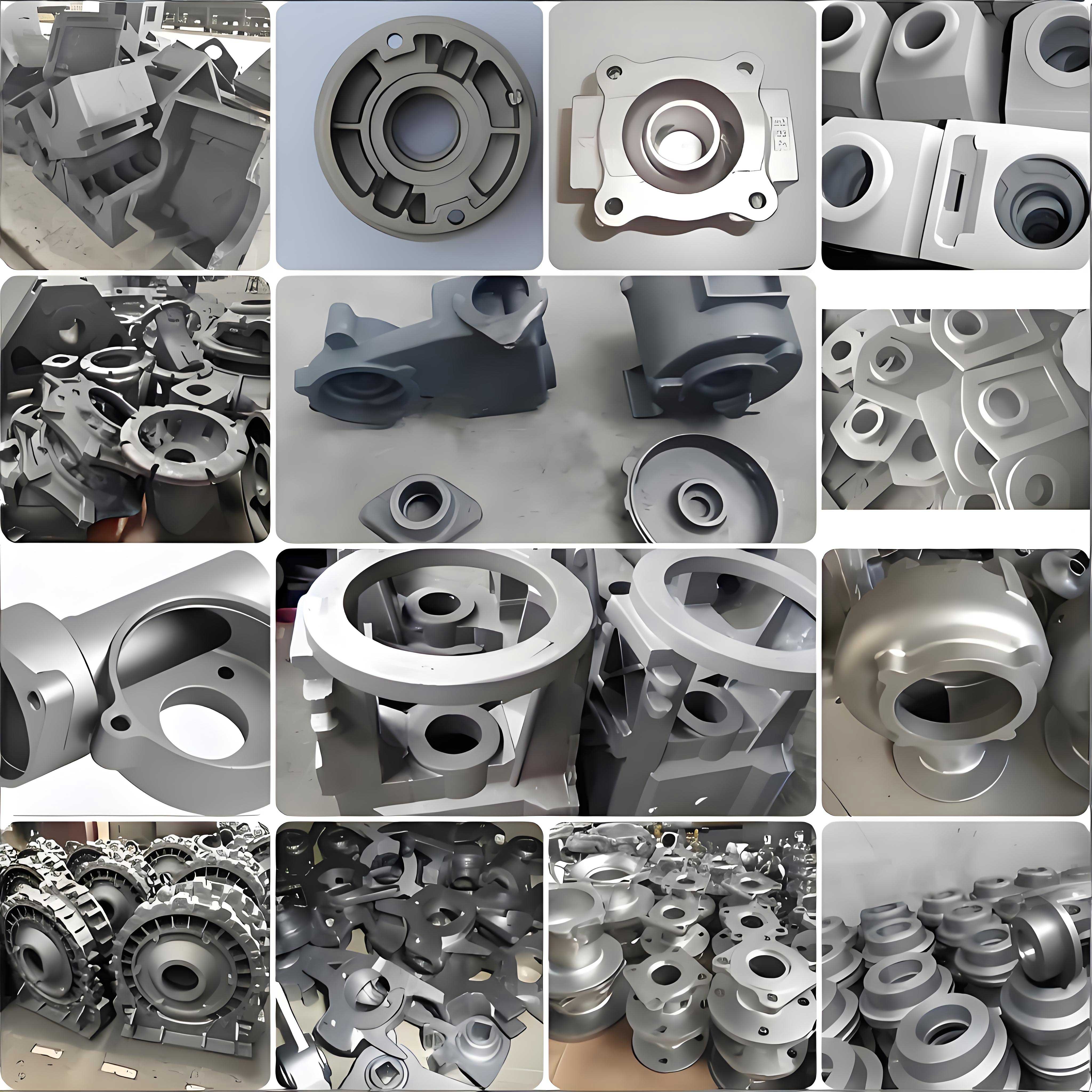
The steering knuckle in a forklift is part of the steering axle assembly, responsible for transmitting and承受 loads from the rear of the vehicle while supporting and rotating the wheels around the kingpin. Under operational conditions, it experiences dynamic stresses from maneuvers like sharp turns and rough terrain. To assess the suitability of nodular cast iron, I conducted a comparative analysis between forged 45 steel and QT600-3 nodular cast iron steering knuckles. Initially, a finite element simulation was performed using Ansys software to evaluate stress distributions under critical loading scenarios. For the forklift, the worst-case condition was considered—specifically, the unloaded state where the rear axle bears maximum load, augmented by a dynamic load factor of 2 to account for冲击. The boundary conditions were defined as follows: the upper bearing seat hole was fixed in both axial and radial directions, while the lower bearing seat hole was fixed only radially. Loads were applied to the contact surface between the steering knuckle and wheel hub. The mesh generation for the simulation is illustrated, and results indicated a local peak stress of 250 MPa for the original design, which is below the allowable stress for both materials.
To quantify material properties, tensile tests were conducted on samples of forged 45 steel and QT600-3 nodular cast iron. The results are summarized in Table 1, highlighting key mechanical parameters. The nodular cast iron exhibited a slightly higher tensile strength but lower elongation compared to forged steel, yet both materials met the minimum requirements for steering knuckle applications. The safety factor, calculated based on yield strength, was derived using the formula:
$$ \text{Safety Factor} = \frac{R_{p0.2}}{\sigma_{\text{max}}} $$
where \( R_{p0.2} \) is the yield strength and \( \sigma_{\text{max}} \) is the maximum stress from simulation. For forged 45 steel, the safety factor was 2.048, and for nodular cast iron, it was 2.04, both exceeding the threshold of 2, indicating adequate design margins. This initial analysis confirmed that nodular cast iron possesses sufficient static strength for the intended use.
| Material | Tensile Strength, \( R_m \) (MPa) | Yield Strength, \( R_{p0.2} \) (MPa) | Elongation, \( A \) (%) | Safety Factor |
|---|---|---|---|---|
| Forged 45 Steel | 766 | 512 | 19.5 | 2.048 |
| QT600-3 Nodular Cast Iron | 785 | 510 | 11.5 | 2.04 |
However, static strength alone is insufficient for real-world applications, as steering knuckles must withstand impact and fatigue loads. Therefore, I proceeded with dynamic testing, starting with drop tests to evaluate抗冲击性. In the first drop test, a forklift equipped with nodular cast iron steering knuckles was lifted and released from a height with the tires at extreme steering angles. The test resulted in failure of the right steering knuckle, which fractured at the shaft shoulder root. This failure indicated a stress concentration in that region, necessitating design modifications. To address this, I introduced a tool withdrawal groove at the shaft shoulder root, as shown in Figure 6a, to act as a stress relief feature. A subsequent finite element simulation of the modified design revealed a reduction in local peak stress from 250 MPa to 174 MPa, with the stress concentration factor decreasing from 8.1 to 5.8. The stress concentration factor is defined as:
$$ K_t = \frac{\sigma_{\text{max}}}{\sigma_{\text{nom}}} $$
where \( \sigma_{\text{max}} \) is the peak stress and \( \sigma_{\text{nom}} \) is the nominal stress. The improvement is summarized in Table 2, demonstrating the effectiveness of the groove in mitigating stress risers. This modification enhanced the抗冲击性 of the nodular cast iron steering knuckle, as confirmed by subsequent drop tests where no failures occurred, and all components remained within allowable deformation limits.
| Structure | Local Peak Stress (MPa) | Stress Concentration Factor, \( K_t \) |
|---|---|---|
| Original Design | 250 | 8.1 |
| Modified Design (with Groove) | 174 | 5.8 |
Following the drop tests, fatigue reliability was assessed through bending fatigue tests on the steering axle assembly incorporating nodular cast iron steering knuckles. Fatigue failure is a critical concern in cyclic loading environments, and the抗疲劳性 of nodular cast iron must be validated. I adapted the vertical bending fatigue test method from commercial vehicle axle standards, applying a pulsating load via a hydraulic fatigue testing machine. The test setup involved a three-point bending configuration with a support span of 970 mm and a loading span of 289 mm. The load amplitude was set to three times the unloaded rear wheel weight of the forklift, approximately 9,000 kg, to simulate severe operating conditions. The test frequency was 2 Hz, and the assembly was subjected to 300,000 cycles. The loading conditions can be expressed by the bending stress formula:
$$ \sigma_b = \frac{M \cdot y}{I} $$
where \( \sigma_b \) is the bending stress, \( M \) is the bending moment, \( y \) is the distance from the neutral axis, and \( I \) is the moment of inertia. After completing the cycles, no fractures or significant deformations were observed in the nodular cast iron steering knuckle or related components, indicating excellent抗疲劳性. This result underscores the durability of nodular cast iron under repetitive stresses, aligning with its known fatigue resistance properties.
To further elucidate the material behavior, I delve into the metallurgical aspects of nodular cast iron. The QT600-3 grade used in this study is alloyed with 0.4% copper, which enhances its strength and hardness. The microstructure, as examined through metallography, shows a matrix of ferrite and pearlite (approximately 35%) with well-dispersed spheroidal graphite. The球化等级 was rated as 2, and the graphite size as 6, according to standard评级 charts. The presence of球状石墨 contributes to the material’s toughness by inhibiting crack propagation, which is crucial for impact resistance. The relationship between microstructure and mechanical properties can be described using the rule of mixtures for composite materials, though nodular cast iron is more complex due to its heterogeneous nature. For practical purposes, the tensile strength of nodular cast iron can be estimated from its hardness using empirical formulas, such as:
$$ R_m \approx 3.4 \times \text{HB} $$
where HB is the Brinell hardness. For QT600-3, the typical hardness ranges from 200 to 250 HB, correlating with the measured tensile strength of 785 MPa. This consistency validates the material’s reliability for structural applications.
In terms of manufacturing economics, casting nodular cast iron offers significant advantages over forging. The process allows for near-net-shape production, reducing material waste and subsequent machining. For complex parts like steering knuckles, casting can achieve intricate geometries that might be challenging or costly with forging. The cost-effectiveness is amplified in mass production, where模具 costs are amortized over large volumes. Additionally, nodular cast iron castings can be heat-treated to optimize properties, such as through annealing or quenching and tempering, though QT600-3 is often used in the as-cast condition for平衡 of strength and ductility. To quantify these benefits, consider the production cost model:
$$ C_{\text{total}} = C_{\text{material}} + C_{\text{processing}} + C_{\text{machining}} $$
For nodular cast iron, \( C_{\text{processing}} \) is lower due to fewer forging steps, and \( C_{\text{machining}} \) may be reduced if the casting accuracy is high. Although additional粗加工 might be needed for the tool withdrawal groove, overall savings are achievable, making nodular cast iron an attractive alternative.
The simulation and experimental results collectively support the feasibility of using nodular cast iron for forklift steering knuckles. The finite element analysis provided insights into stress distributions, guiding design improvements like the stress-relief groove. The tensile tests confirmed that nodular cast iron meets strength requirements, while dynamic tests demonstrated its抗冲击性和抗疲劳性. It is worth noting that nodular cast iron’s performance can be further enhanced through advanced casting techniques, such as controlled solidification or additive manufacturing, though these were beyond the scope of this study. For future work, I recommend investigating the long-term wear characteristics and corrosion resistance of nodular cast iron in harsh environments, as forklifts often operate in warehouses or outdoor settings.
In conclusion, this comprehensive study validates the application of QT600-3 nodular cast iron as a substitute for forged 45 steel in forklift steering knuckles. Through rigorous simulation, tensile testing, drop testing, and fatigue testing, I have shown that nodular cast iron offers comparable mechanical properties with adequate safety margins. The design modification of adding a tool withdrawal groove effectively mitigated stress concentrations, ensuring抗冲击性. The fatigue tests confirmed the material’s durability under cyclic loading. Thus, nodular cast iron emerges as a viable, cost-effective material for mass-produced steering knuckles, contributing to the evolution of forklift component manufacturing. The success of this论证研究 paves the way for broader adoption of nodular cast iron in other heavy-duty machinery parts, leveraging its unique combination of strength, castability, and economic efficiency.