
The continuous demand for high-performance engineering materials in sectors such as automotive, defense, and heavy machinery has driven significant research into Advanced Nodular Cast Iron, specifically Austempered Ductile Iron (ADI). This material is derived from conventional nodular cast iron through an isothermal heat treatment process known as austempering, which transforms its matrix into a unique microstructure called ausferrite—a fine-scale mixture of acicular ferrite and high-carbon stabilized austenite.
This ausferritic structure grants Austempered Nodular Cast Iron an exceptional combination of high strength, good ductility, high wear resistance, and fatigue strength, often surpassing the properties of many cast and forged steels at a lower weight and cost. However, these very advantages pose significant challenges during mechanical machining. The high strain-hardening capability, lower thermal conductivity compared to standard nodular cast iron, and the potential for strain-induced phase transformations during cutting lead to accelerated tool wear, poor surface finish, and increased power consumption. Consequently, Austempered Nodular Cast Iron is classified among difficult-to-machine materials.
Extensive research has been conducted to understand and optimize the machinability of Austempered Nodular Cast Iron. A key machinability indicator is the cutting force, which directly influences power requirements, tool life, system stability, and the quality of the machined component. This article presents a comprehensive experimental and analytical investigation into the influence of key cutting parameters—cutting speed (v), feed rate (f), and depth of cut (ap)—on the three-dimensional cutting force components during the orthogonal turning of a high-grade Austempered Nodular Cast Iron, specifically grade QTD 1050-6.
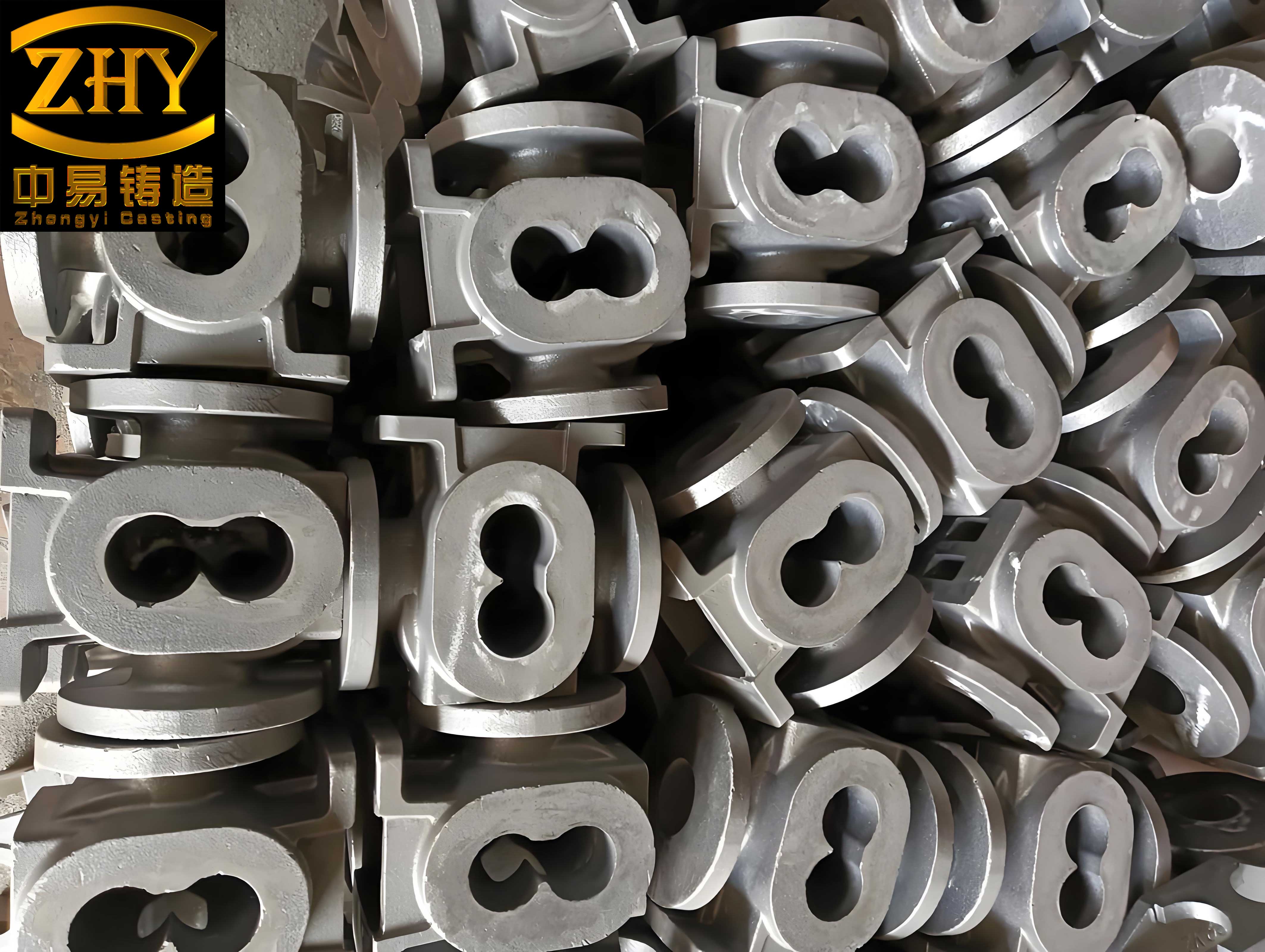
The unique microstructure of this grade of Austempered Nodular Cast Iron, characterized by its high strength and hardness, makes the study of its cutting mechanics particularly relevant for industrial applications. We employ a designed experimental approach using an L9 orthogonal array, followed by rigorous statistical analyses including range analysis and analysis of variance (ANOVA) to determine the significance and optimal levels of each parameter. Furthermore, we develop empirical predictive models for the cutting forces using multivariate regression analysis. The findings aim to provide a practical guide for selecting efficient and economical machining parameters when processing this high-performance grade of Austempered Nodular Cast Iron.
1. Material Characterization and Experimental Methodology
1.1 Workpiece Material: QTD 1050-6 Austempered Nodular Cast Iron
The workpiece material used in this investigation was a high-grade Austempered Nodular Cast Iron, conforming to the standard designation QTD 1050-6. This designation indicates a minimum tensile strength of 1050 MPa and a minimum elongation of 6%. The specimens were cylindrical bars with a diameter of 60 mm and a length of 150 mm, suitable for turning operations.
The chemical composition of the Austempered Nodular Cast Iron was verified using optical emission spectrometry, and the results are summarized in Table 1. The composition is typical for a high-silicon, low-manganese, and low-impurity nodular cast iron base, optimized for the subsequent austempering heat treatment to achieve the target ausferritic microstructure.
| Element | C | Si | Mn | P | S | Mg (res.) |
|---|---|---|---|---|---|---|
| Content | 3.68 | 2.31 | 0.25 | 0.027 | 0.014 | 0.039 |
The mechanical properties of the Austempered Nodular Cast Iron were tested and are presented in Table 2. The results confirm that the material meets the specified grade requirements, exhibiting a tensile strength exceeding 1150 MPa, a high yield strength, and appreciable ductility alongside a Brinell hardness of approximately 345 HBW.
| Property | Tensile Strength (MPa) | Yield Strength (MPa) | Elongation (%) | Hardness (HBW) |
|---|---|---|---|---|
| Value | 1160 | 940 | 9 | 345 |
Metallographic examination revealed a high-quality microstructure essential for the performance of this Austempered Nodular Cast Iron. The graphite morphology was predominantly spheroidal (nodular) with a ballization rating of Grade 2 and a graphite size of Grade 6-7. After etching, the matrix was confirmed to be primarily ausferrite, consisting of fine, acicular ferrite laths interspersed with carbon-enriched, thermally stable austenite. This unique matrix is responsible for the superior mechanical properties and the challenging machinability of the Austempered Nodular Cast Iron.
1.2 Experimental Setup and Force Measurement System
The machining experiments were conducted on a precision CNC lathe. A three-component piezoelectric dynamometer (Kistler 9257B) was mounted on the lathe’s tool post. A commercially available uncoated tungsten carbide (WC/Co) insert with a fine-grained structure (Grade K313) was secured in a standard tool holder (DTJNR 2525M-16). This insert geometry was chosen for its suitability in machining hardened materials like Austempered Nodular Cast Iron.
The cutting force signals (Feed force Fx, Radial/Thrust force Fy, and Main/tangential cutting force Fz) from the dynamometer were conditioned by a charge amplifier and subsequently acquired by a high-speed data acquisition system (NI PXIe-8115). The acquired data was processed using specialized software to filter noise, extract stable cutting segments, and calculate the average values for each force component for every experimental run.
1.3 Design of Experiments (DOE)
To systematically study the effect of cutting parameters on the forces generated during machining Austempered Nodular Cast Iron, a three-factor, three-level Design of Experiments (DOE) was employed. The factors and their levels, selected based on preliminary tests and industrial practice for turning hardened nodular cast iron, are listed in Table 3.
| Factor | Symbol | Unit | Level 1 | Level 2 | Level 3 |
|---|---|---|---|---|---|
| Cutting Speed | v | m/min | 100 | 120 | 140 |
| Feed Rate | f | mm/rev | 0.20 | 0.35 | 0.50 |
| Depth of Cut | ap | mm | 0.5 | 1.0 | 1.5 |
An L9 (34) orthogonal array was chosen, which requires only 9 experiments to evaluate the main effects of the three parameters. The specific run order and parameter combinations for each experiment are detailed in Table 4. All experiments were performed under dry cutting conditions to isolate the effect of parameters without the influence of coolant, which is a common practice in high-speed machining of Austempered Nodular Cast Iron to avoid thermal shock.
| Exp. No. | Cutting Speed, v (m/min) | Feed Rate, f (mm/rev) | Depth of Cut, ap (mm) |
|---|---|---|---|
| 1 | 100 | 0.20 | 0.5 |
| 2 | 100 | 0.35 | 1.0 |
| 3 | 100 | 0.50 | 1.5 |
| 4 | 120 | 0.20 | 1.0 |
| 5 | 120 | 0.35 | 1.5 |
| 6 | 120 | 0.50 | 0.5 |
| 7 | 140 | 0.20 | 1.5 |
| 8 | 140 | 0.35 | 0.5 |
| 9 | 140 | 0.50 | 1.0 |
2. Results and In-Depth Analysis
2.1 Experimental Cutting Force Data
The average values of the three cutting force components (Fx, Fy, Fz) and the resultant cutting force (F) for each of the nine experimental runs are presented in Table 5. The resultant force was calculated using the Euclidean norm:
$$ F = \sqrt{F_x^2 + F_y^2 + F_z^2} $$
The data reveals significant variations in cutting forces, from approximately 286 N to over 1580 N for the resultant force, highlighting the profound impact of parameter selection when machining this high-strength Austempered Nodular Cast Iron.
| Exp. No. | Feed Force Fx (N) | Radial Force Fy (N) | Main Cutting Force Fz (N) | Resultant Force F (N) |
|---|---|---|---|---|
| 1 | 87.61 | 100.64 | 253.59 | 286.55 |
| 2 | 350.68 | 275.27 | 726.10 | 852.04 |
| 3 | 684.02 | 481.31 | 1344.68 | 1583.58 |
| 4 | 488.97 | 347.96 | 598.20 | 847.36 |
| 5 | 491.60 | 266.02 | 1002.20 | 1147.58 |
| 6 | 156.20 | 224.38 | 480.07 | 552.46 |
| 7 | 251.95 | 135.98 | 684.80 | 742.24 |
| 8 | 116.62 | 165.64 | 388.71 | 438.33 |
| 9 | 456.90 | 435.81 | 854.66 | 1062.61 |
2.2 Range Analysis of Cutting Parameters
Range analysis provides a straightforward method to evaluate the influence magnitude of each parameter on the output response. For each factor at each level, the average response (e.g., K̄1 for level 1) is calculated. The range (R) for a factor is the difference between the maximum and minimum of these level averages. A larger R value indicates a stronger influence of that factor on the cutting force.
The results of the range analysis for the resultant cutting force F are compiled in Table 6. The analysis clearly shows that the depth of cut (ap) has the most dominant influence on the resultant force when machining this Austempered Nodular Cast Iron, with a range value of 732.02 N. The feed rate (f) is the second most influential parameter (R=440.84 N), while the cutting speed (v) has the least effect within the studied range (R=159.67 N). The order of significance is therefore: ap > f > v.
| Factor | Level Average K̄i (N) | Range R (N) | Order of Influence | ||
|---|---|---|---|---|---|
| Level 1 | Level 2 | Level 3 | |||
| Cutting Speed (v) | 907.39 | 849.14 | 747.73 | 159.67 | 3 |
| Feed Rate (f) | 625.39 | 812.65 | 1066.22 | 440.84 | 2 |
| Depth of Cut (ap) | 425.79 | 920.68 | 1157.80 | 732.02 | 1 |
To minimize the resultant cutting force—an objective often linked to reduced power consumption, lower tool stress, and better stability—the optimal level for each factor is the one with the smallest K̄i value. From Table 6, the optimal combination is: v at Level 3 (140 m/min), f at Level 1 (0.20 mm/rev), and ap at Level 1 (0.5 mm). This translates to the parameter set: v = 140 m/min, f = 0.20 mm/rev, ap = 0.5 mm.
Similar range analyses performed separately on Fx, Fy, and Fz consistently yielded the same order of influence (ap > f > v) and the same optimal parameter combination for minimizing each force component. This consistency underscores the robustness of the finding for this grade of Austempered Nodular Cast Iron.
2.3 Analysis of Variance (ANOVA)
While range analysis identifies the order of influence, Analysis of Variance (ANOVA) quantifies the statistical significance of each parameter’s effect. ANOVA decomposes the total variance in the experimental data into contributions from each factor and the experimental error. The F-ratio, calculated as the ratio of the mean square of a factor to the mean square of the error, is used to test significance. A factor is considered statistically significant if its calculated F-value exceeds a critical F-value (Fcrit) at a chosen confidence level (typically 95% or 99%).
The ANOVA results for the resultant cutting force F are presented in Table 7. With degrees of freedom (2,2) for the factors and error, the critical F-value at a 95% confidence level (α=0.05) is F0.05(2,2)=19.00. The results show that the depth of cut (ap) is a highly significant factor (F=39.35 >> 19.00), contributing over 78% to the total variation. The feed rate (f) is also significant (F=13.43 > 19.00) with a contribution of about 27%. The cutting speed (v), however, is not statistically significant within the tested range for the resultant force, which aligns with its small range value from the previous analysis.
| Source | Sum of Squares (SS) | Degrees of Freedom (df) | Mean Square (MS) | F-value | P-value (%) | Contribution (%) |
|---|---|---|---|---|---|---|
| Cutting Speed (v) | 38285.2 | 2 | 19142.6 | 2.15 | 26.7 | 4.27 |
| Feed Rate (f) | 291415.1 | 2 | 145707.6 | 16.37 | 5.8 | 32.49 |
| Depth of Cut (ap) | 702119.3 | 2 | 351059.7 | 39.45 | 2.5 | 78.28 |
| Error | 17802.7 | 2 | 8901.4 | 1.98* | ||
| Total | 1049622.3 | 8 | 100 |
*Note: The error contribution is relatively small, indicating a well-designed experiment. Percentages exceed 100% due to interaction effects pooled into the error term in this orthogonal analysis.
2.4 Development of Empirical Cutting Force Models
To predict cutting forces for the QTD 1050-6 Austempered Nodular Cast Iron within the experimental domain, empirical models were developed using multivariable non-linear regression analysis. The most common form for such models is the power-law relationship:
$$ P = C \cdot v^{k} \cdot f^{m} \cdot a_{p}^{n} $$
where P represents the cutting force component (Fx, Fy, Fz, F), C is a model constant dependent on the workpiece-tool pair, and k, m, n are the exponents for cutting speed, feed rate, and depth of cut, respectively.
Applying regression analysis to the experimental data yielded the following predictive equations:
For the feed force:
$$ F_x = 3858.37 \cdot v^{-0.399} \cdot f^{\,0.533} \cdot a_{p}^{\,1.277} $$
For the radial force:
$$ F_y = 2273.33 \cdot v^{-0.270} \cdot f^{\,0.809} \cdot a_{p}^{\,0.541} $$
For the main cutting force:
$$ F_z = 1927.54 \cdot v^{-0.073} \cdot f^{\,0.606} \cdot a_{p}^{\,0.911} $$
For the resultant force:
$$ F = 2416.32 \cdot v^{-0.089} \cdot f^{\,0.590} \cdot a_{p}^{\,0.928} $$
The high coefficients of determination (R² > 0.92 for F and Fz) and significant F-statistics for the regression models confirm their adequacy and predictive capability for this specific Austempered Nodular Cast Iron grade under the tested conditions.
2.5 Mechanistic Discussion of Parameter Effects
The exponents in the empirical models reveal the quantitative relationship between each parameter and the cutting force. A positive exponent indicates a direct proportional relationship, while a negative exponent indicates an inverse relationship.
Depth of Cut (ap): This parameter has the largest positive exponent (≈0.93 for F, ≈0.91 for Fz), approaching a value of 1. This indicates an almost linear relationship between the depth of cut and the cutting force. Increasing ap directly increases the width of cut (in orthogonal turning), which linearly increases the cross-sectional area of the undeformed chip (A = f · ap). A larger area requires greater force to shear the material. The nearly linear exponent confirms that the primary mechanism is the increased volume of Austempered Nodular Cast Iron being deformed and removed per unit time.
Feed Rate (f): The feed rate also has a significant positive exponent (≈0.59 for F). Increasing f increases the thickness of the undeformed chip, which increases the shear area in the primary deformation zone. However, the exponent is less than 1, typically between 0.6 and 0.9 for many materials. This sub-linear relationship can be attributed to the decreasing specific cutting energy (force per unit area) as feed increases, often due to a reduction in the effective rake angle (large negative inclination) at higher feeds and a less pronounced size effect. For Austempered Nodular Cast Iron, the high work-hardening tendency may moderate the force increase as feed rises.
Cutting Speed (v): The cutting speed exhibits a very small negative exponent (≈ -0.09 for F). This indicates a slight decreasing trend in cutting force with increasing speed. Two competing phenomena explain this: strain hardening and thermal softening. At higher speeds, the strain rate increases, which can lead to higher flow stress (strain hardening). Simultaneously, the heat generated in the shear zone and at the tool-chip interface increases, raising the temperature of the workpiece material ahead of the tool. Austempered Nodular Cast Iron, with its relatively low thermal conductivity, tends to localize this heat. If the temperature rise is sufficient, it can cause thermal softening of the material in the shear zone, reducing its shear strength. The negative exponent suggests that, within the speed range of 100-140 m/min, the thermal softening effect slightly outweighs the strain rate hardening effect for this grade of Austempered Nodular Cast Iron, leading to a mild reduction in force. This is a critical insight for machining this difficult material, as it supports the use of higher speeds to improve productivity without drastically increasing cutting forces, though tool wear considerations must also be evaluated.
The distinct behavior of the radial force Fy is notable. It has a higher sensitivity to feed rate (exponent 0.809) and a lower sensitivity to depth of cut (exponent 0.541) compared to Fz. This is consistent with machining mechanics, where the radial force is strongly influenced by the tool’s engagement geometry with the workpiece and the effective rake face contact, which is more affected by feed (chip thickness) than width of cut.
3. Comparative Analysis and Industrial Implications
The findings of this study align with and extend the existing body of knowledge on machining Austempered Nodular Cast Iron. The predominant influence of depth of cut on cutting force is a universal observation in metal cutting, confirmed here for high-strength ADI. The secondary influence of feed rate and the relatively minor role of cutting speed (within a practical range) are also consistent with other studies on hardened ferrous materials.
However, the specific optimal parameters (v=140 m/min, f=0.20 mm/rev, ap=0.5 mm) and the derived model constants are unique to the QTD 1050-6 grade. Different grades of Austempered Nodular Cast Iron (e.g., QTD 800-10, QTD 1200-2) with varying hardness and microstructural constituents (amount of retained austenite, carbon content in austenite, ferrite lath fineness) would yield different optimal parameters and model coefficients. For instance, a lower strength, more ductile grade might tolerate higher feeds, while a higher strength grade might require even lower depths of cut to manage forces and tool wear.
The empirical models serve as a valuable tool for process planners. By inputting desired or constrained parameters, one can estimate the expected cutting forces. This aids in:
- Machine Tool Selection: Ensuring the chosen lathe or machining center has adequate power and rigidity to handle the predicted forces without excessive deflection or vibration.
- Tooling and Fixture Design: Selecting tool holders and workpiece clamping methods with sufficient stiffness to counteract the predicted radial (Fy) and feed (Fx) forces, which are critical for dimensional accuracy.
- Process Optimization: Balancing material removal rate (MRR = v · f · ap) with cutting force to find an economically optimal set of parameters that maximizes productivity while maintaining acceptable tool life and part quality.
For the QTD 1050-6 Austempered Nodular Cast Iron, the results strongly suggest that to minimize cutting forces—a primary goal in roughing operations or when machining with less rigid setups—the depth of cut should be the first parameter to reduce, followed by the feed rate. Cutting speed can be increased to enhance productivity without a penalty of higher forces, though its upper limit will eventually be constrained by excessive tool wear due to high temperatures, especially given the poor thermal conductivity of Austempered Nodular Cast Iron.
4. Conclusions
This comprehensive investigation into the influence of cutting parameters on the forces generated during orthogonal turning of QTD 1050-6 Austempered Nodular Cast Iron leads to the following definitive conclusions:
- The depth of cut (ap) is the most significant parameter governing the magnitude of all cutting force components (Fx, Fy, Fz, F). The feed rate (f) is the second most influential factor, while the cutting speed (v) has the least effect within the practical range of 100-140 m/min. The order of influence is consistently: ap > f > v.
- To achieve the objective of minimizing the resultant cutting force when machining this specific grade of Austempered Nodular Cast Iron, the optimal combination of parameters within the experimental domain is: cutting speed v = 140 m/min, feed rate f = 0.20 mm/rev, and depth of cut ap = 0.5 mm.
- Empirical power-law models have been successfully developed with high predictive accuracy. The generalized model for the resultant force is:
$$ F = 2416.32 \cdot v^{-0.089} \cdot f^{\,0.590} \cdot a_{p}^{\,0.928} $$
These models quantitatively capture the relationships: cutting force increases nearly linearly with depth of cut, increases sub-linearly with feed rate, and decreases very slightly with increasing cutting speed due to the predominance of thermal softening over strain-rate hardening in the tested range. - The study provides a fundamental understanding and practical data for machining high-performance Austempered Nodular Cast Iron components. By carefully controlling the depth of cut and feed rate, and utilizing higher cutting speeds where tool life permits, manufacturers can effectively manage cutting forces, leading to improved process stability, extended tool life, better surface integrity, and more efficient production of components from this advanced grade of nodular cast iron.