
In my extensive experience with casting processes, particularly for high-performance diesel engines, the occurrence of surface defects in nodular cast iron components has been a persistent challenge. One specific issue that has garnered significant attention is the appearance of black spots, often referred to as “pitting” or “black斑,” on machined surfaces of cylinder heads. These defects not only compromise aesthetic quality but can also lead to functional failures, such as leaks during hydraulic pressure testing, resulting in substantial economic losses due to batch scrapping. This article delves into a comprehensive investigation of these black spots in nodular cast iron cylinder heads, detailing the root causes, analytical methodologies, and effective corrective measures. Throughout this discussion, the term “nodular cast iron” will be emphasized to underscore the material’s significance in automotive and industrial applications.
The cylinder head in question is manufactured from nodular cast iron grade QT500-7, a material chosen for its excellent combination of strength, ductility, and thermal conductivity. With a rough weight of 240 kg and complex geometry featuring cooling water jackets, intake and exhaust ports, and various valve passages, the casting presents numerous thermal hotspots and wall thickness variations. These design intricacies make it prone to shrinkage porosity and other defects if the casting process is not meticulously controlled. Initially, the production process involved a one-cast-per-mold configuration with a two-layer gating system and specialized chilling inserts on the combustion face, supplemented by an insulating riser on the upper surface to mitigate shrinkage. Despite these precautions, after precision machining, black spots emerged predominantly on the upper machined surface, especially near the edges of the mold and sand cores. These spots ranged from 0.5 mm to 2 mm in diameter, with some areas showing signs of oxide inclusions, leading to a high rejection rate.
To unravel the mystery behind these defects, I conducted a series of metallographic and scanning electron microscope (SEM) analyses on samples extracted from the affected regions. The metallographic examination revealed a disturbing microstructure: the graphite morphology in the defect zones was predominantly “exploded” or “spiky” graphite, rather than the desired spherical nodules characteristic of high-quality nodular cast iron. This aberrant graphite structure is often linked to excessive carbon equivalent (CE) in the melt. The carbon equivalent is a critical parameter in cast iron metallurgy, as it influences fluidity, shrinkage behavior, and graphite formation. For nodular cast iron, the carbon equivalent can be calculated using the formula:
$$CE = C + \frac{Si + P}{3}$$
where C, Si, and P represent the weight percentages of carbon, silicon, and phosphorus, respectively. In the initial process, the CE was maintained around 4.7, which is relatively high for QT500-7 grade nodular cast iron, typically recommended to be below 4.5 to avoid graphite flotation and other anomalies. Further SEM-EDS (Energy-Dispersive X-ray Spectroscopy) analysis of the black spots indicated elevated levels of carbon, oxygen, and silicon, confirming the presence of oxidized carbon compounds and supporting the hypothesis of high carbon equivalence. Additionally, the practice of adding 0.1% carbon inoculant directly into the ladle during nodularization was scrutinized. While carbon inoculants can enhance graphite nucleation and improve spheroidization, their use in the ladle risks incomplete dissolution due to lower temperatures, potentially introducing inhomogeneities that manifest as surface defects. This combination of factors—high CE, excessive addition of nodularizing and inoculating agents, and suboptimal inoculant practices—was identified as the primary culprit behind the black spots.
The table below summarizes the chemical composition and treatment parameters before and after process optimization, highlighting the key changes implemented to address the defects in nodular cast iron cylinder heads:
| Parameter | Before Improvement (wt%) | After Improvement (wt%) |
|---|---|---|
| Carbon (C) | 3.75–3.85 | 3.7–3.8 |
| Silicon (Si) | 1.10–1.20 | 1.4–1.5 |
| Manganese (Mn) | 0.30–0.35 | 0.30–0.35 |
| Phosphorus (P) | ≤0.06 | ≤0.06 |
| Sulfur (S) | ≤0.03 | ≤0.025 |
| Nodularizing Agent | 1.50 | 1.40 |
| Inoculant (Ladle Addition) | 0.70 | 0.40 |
| Cover Inoculant | 0.70 | 0.40 |
| Carbon Inoculant | 0.10 | 0.00 |
| Calculated CE | ≈4.7 | ≈4.5 |
From this table, it is evident that the carbon equivalent was reduced by lowering the carbon content and adjusting silicon levels, while the amounts of nodularizing and inoculating agents were decreased to minimize over-treatment effects. The elimination of the carbon inoculant from the ladle was a strategic move to prevent undissolved particles from contributing to surface imperfections. Furthermore, the pouring temperature was increased from the previous range of 1,380–1,400°C to 1,420–1,440°C, enhancing fluidity and reducing the likelihood of oxide formation during mold filling. These adjustments were grounded in the fundamental principles of nodular cast iron metallurgy, where the balance between composition and processing dictates microstructural integrity.
To delve deeper into the metallurgical mechanisms, let’s consider the role of carbon equivalent in graphite formation. In nodular cast iron, the goal is to achieve a high density of spherical graphite nodules embedded in a ferritic or pearlitic matrix, depending on the grade. The graphite spheroidization process is governed by the addition of magnesium-based nodularizers, which modify the surface tension of graphite, promoting spherical growth. However, if the carbon equivalent is too high, the excess carbon can lead to graphite flotation, where graphite particles rise to the upper surfaces of the casting due to density differences, resulting in clustered or exploded graphite. This phenomenon is described by the following relationship for graphite stability:
$$G_s = k \cdot \left( \frac{CE – CE_0}{T} \right)$$
where \(G_s\) represents graphite spheroidization efficiency, \(k\) is a constant, \(CE_0\) is the optimal carbon equivalent for the alloy, and \(T\) is the pouring temperature. When \(CE\) exceeds \(CE_0\), \(G_s\) decreases, leading to degenerate graphite forms. In this case, the high CE of 4.7 pushed the system beyond the optimal range, exacerbating the formation of black spots. Additionally, excessive inoculation can introduce too many nucleation sites, causing graphite nodules to interfere with each other and adopt irregular shapes. The SEM-EDS data corroborated this, showing peaks for carbon and oxygen, indicative of carbon oxidation products that likely originated from incomplete dissolution of inoculants or reaction with atmospheric oxygen during pouring.
The implementation of these process modifications was systematically validated through production trials. Over 140 cylinder heads were cast using the revised parameters, and post-machining inspections revealed a complete absence of black spots on the upper surfaces. Hydraulic pressure tests, including 20 MPa for the combustion face and 1 MPa for the water jackets, were consistently passed, with no leaks or failures reported. Ultrasonic thickness measurements of the port walls also met specifications, confirming the overall quality improvement. This success underscores the importance of precise control in nodular cast iron production, where even minor deviations in chemistry or treatment can have magnified effects on final product integrity.
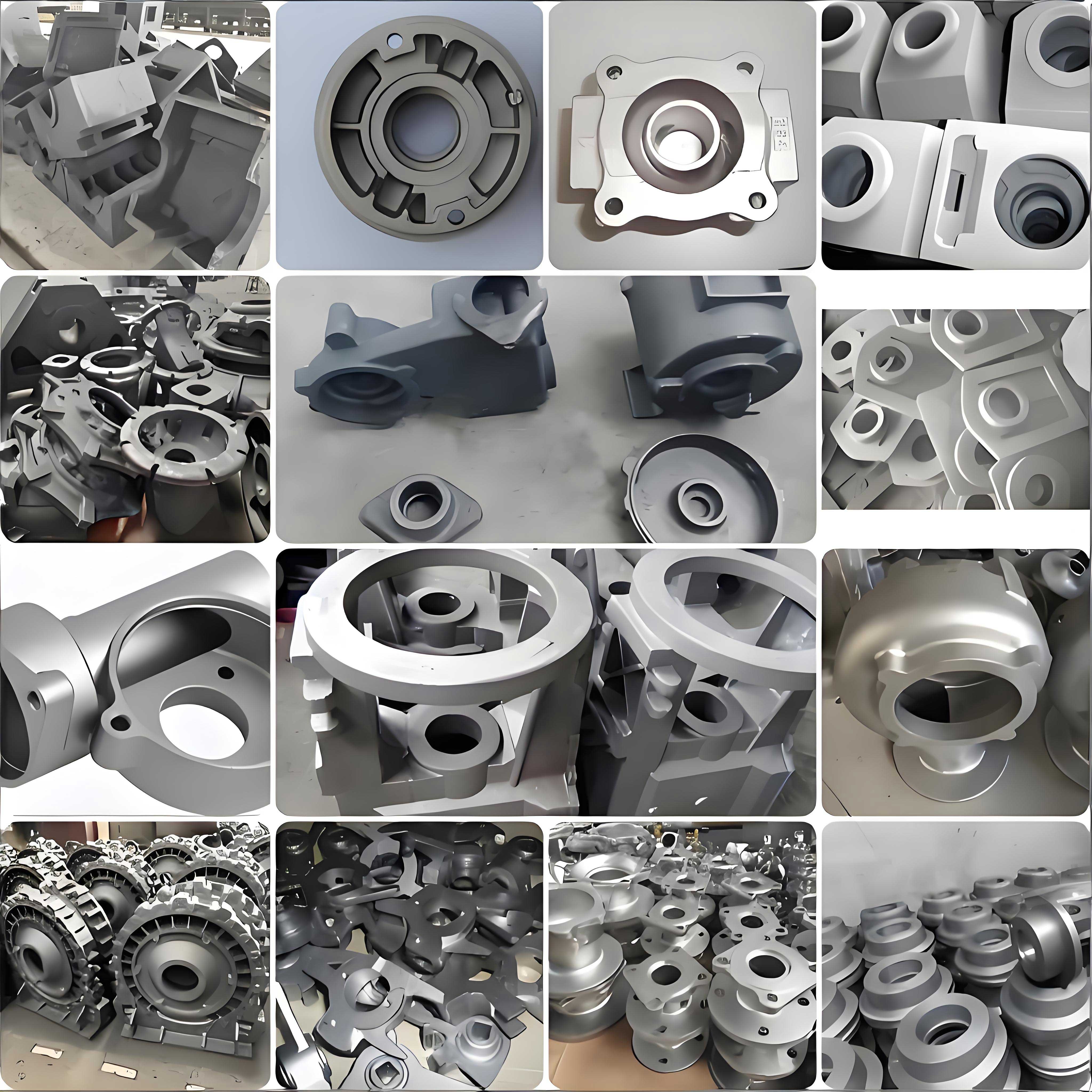
Beyond the specific case, these findings have broader implications for the casting industry. Nodular cast iron is widely used in automotive components like crankshafts, differential cases, and brake calipers, where surface quality and mechanical performance are paramount. The black spot defect, while initially observed in cylinder heads, can manifest in any thick-sectioned or complex nodular cast iron part if similar process imbalances exist. Therefore, the corrective strategies outlined here—such as optimizing carbon equivalent, moderating additive amounts, and ensuring adequate pouring temperatures—serve as a general framework for defect prevention in nodular cast iron applications. To facilitate this, I have developed a comprehensive model for predicting defect susceptibility based on process variables, expressed as:
$$D_{index} = \alpha \cdot (CE – CE_{target})^2 + \beta \cdot (A_{nod} – A_{opt})^2 + \gamma \cdot (T_{pour} – T_{min})^{-1}$$
where \(D_{index}\) is a dimensionless defect index (higher values indicate greater risk), \(\alpha\), \(\beta\), and \(\gamma\) are weighting factors derived from empirical data, \(CE_{target}\) is the ideal carbon equivalent (e.g., 4.5 for QT500-7), \(A_{nod}\) and \(A_{opt}\) are the actual and optimal nodularizer additions, and \(T_{pour}\) and \(T_{min}\) are the pouring and minimum recommended temperatures, respectively. This model emphasizes the nonlinear interactions between composition and processing, highlighting that small adjustments can yield significant quality enhancements in nodular cast iron production.
In conclusion, the investigation into black spots on nodular cast iron cylinder heads demonstrates that defect elimination requires a holistic approach combining rigorous analysis and process refinement. By controlling carbon equivalent through careful adjustment of carbon and silicon levels, reducing the amounts of nodularizing and inoculating agents, and elevating pouring temperatures, the surface pitting defects were successfully eradicated. The removal of carbon inoculant from the ladle further mitigated risks associated with incomplete dissolution. These measures not only resolved the immediate production issue but also contributed to a deeper understanding of nodular cast iron behavior under industrial conditions. As the demand for high-integrity cast components grows, continued emphasis on metallurgical precision and process optimization will be essential for advancing the reliability and performance of nodular cast iron in critical applications. Future work could explore advanced inoculation techniques or real-time monitoring systems to further enhance consistency in nodular cast iron manufacturing.