
In the modern manufacturing landscape, grey iron castings remain a cornerstone material due to their excellent castability, machinability, and damping capacity. Traditionally, grey iron castings have been predominantly used in applications such as agricultural machinery, textile equipment, and machine tools, where sections are often thick and robust. However, with the relentless advancement of industries like automotive and precision engineering, there is a growing demand for high-strength grey iron castings with thin-walled geometries. These components, such as automotive steering pumps, engine blocks, or structural parts, require not only superior mechanical properties but also consistent metallurgical quality in thin sections, often as slim as 10–15 mm. This shift presents significant challenges in foundry practice, particularly in controlling graphite morphology to avoid detrimental undercooled graphite forms (Type D and E), which can severely compromise tensile strength, hardness uniformity, and overall component performance. In this comprehensive discussion, I will delve into the intricacies of producing high-strength thin-wall grey iron castings, focusing on the critical factors that influence graphite formation, the implementation of optimized melting and inoculation practices, and the empirical adjustments necessary to achieve a predominance of Type A graphite—the ideal flake form for balancing strength and ductility in grey iron.
The production of high-strength thin-wall grey iron castings is a nuanced process that hinges on precise control over chemical composition, solidification kinetics, and nucleation mechanisms. In our foundry experience, we encountered a specific case involving a car steering pump casting designated as HT300 grade grey iron. The specification mandated that thin-wall sections of approximately 12 mm exhibit over 80% Type A graphite, with a hardness range of 190–230 HB. Initial production runs, based on conventional wisdom for thicker grey iron castings, yielded unsatisfactory results: while tensile strength on separately cast test bars met the requirement at around 330 MPa, metallographic examination of the thin-wall casting本体 revealed a microstructure dominated by undercooled graphite (Type D and E) with only about 30% Type A graphite, accompanied by a predominantly pearlitic matrix. This prompted a detailed investigation into the root causes and the development of a refined production methodology. The journey from suboptimal to exemplary microstructure in thin-wall grey iron castings underscores the importance of a holistic approach, blending theoretical understanding with practical adjustments in furnace operation, alloying, and inoculation.
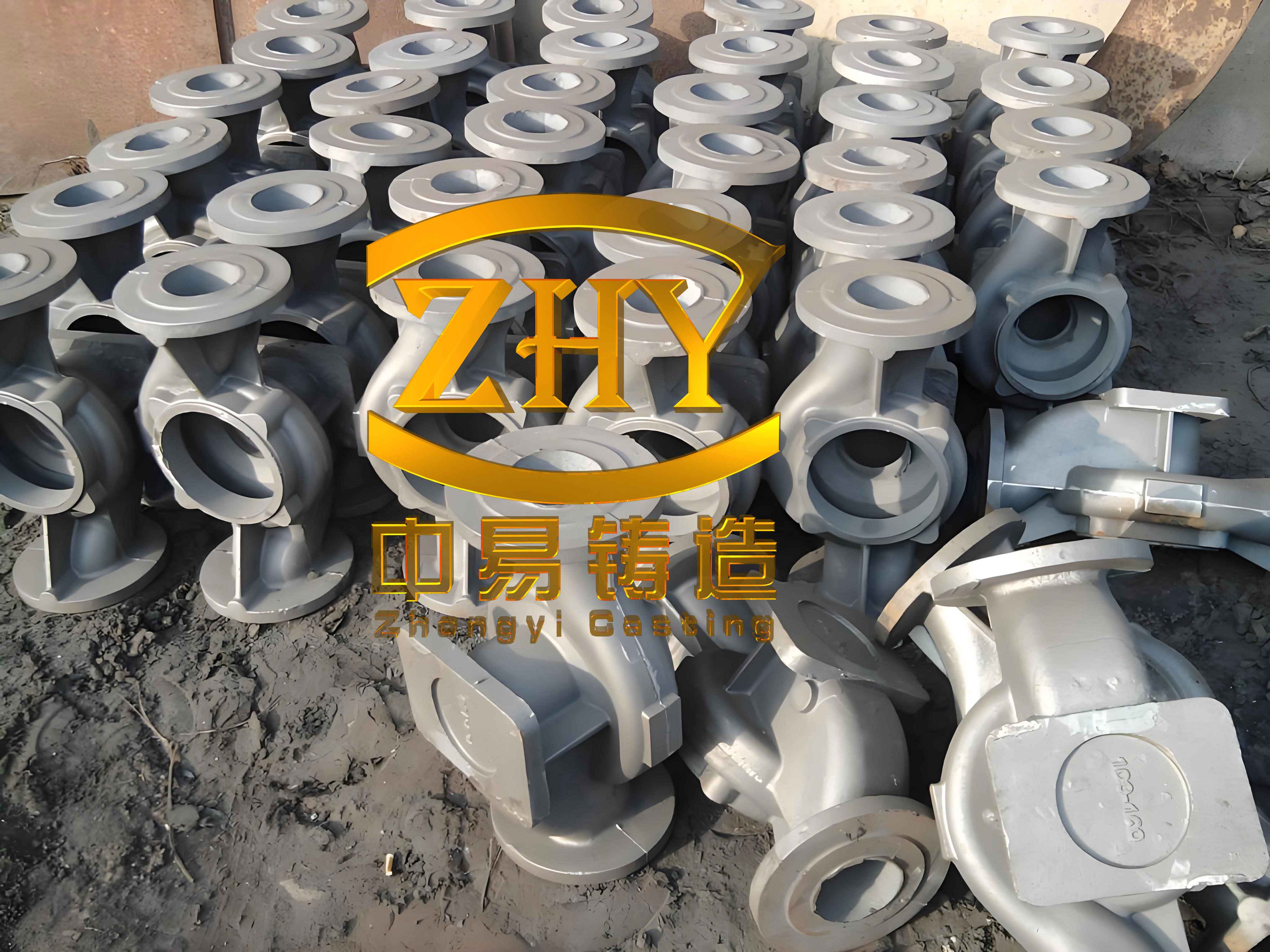
To appreciate the challenges, one must first understand the fundamental metallurgy of grey iron castings. Grey iron is essentially an iron-carbon-silicon alloy where carbon precipitates as graphite flakes during solidification. The graphite morphology is critical to the mechanical properties. Type A graphite—randomly oriented, uniformly distributed flakes of moderate size—is desirable as it provides good strength, thermal conductivity, and vibration damping. In contrast, undercooled graphite forms like Type D (interdendritic, superfine, random) and Type E (interdendritic, fine, oriented) arise under conditions of high undercooling, typically in sections that cool rapidly, such as thin walls, or in irons with low carbon equivalent (CE). The carbon equivalent is a pivotal parameter in grey iron castings, calculated to account for the combined effects of carbon and silicon on graphite formation. It is given by the formula:
$$ CE = \%C + \frac{1}{3}\%Si $$
For high-strength grades like HT300, the CE is often kept relatively low to promote pearlite formation and enhance strength. However, in thin-wall grey iron castings, this can backfire by increasing undercooling, leading to excessive Type D/E graphite. These undercooled graphite forms are problematic because they form in the interstices of austenite dendrites, creating localized stress concentrators and often being associated with ferrite halos, which reduce strength and elastic modulus. Moreover, the distribution inhomogeneity can lead to anisotropic properties and poor machinability. Thus, achieving Type A graphite in thin sections requires a delicate balance: sufficient CE to minimize undercooling, yet not so high as to reduce strength or promote coarse graphite; adequate inoculation to provide nucleation sites; and controlled alloying to stabilize pearlite without exacerbating chilling tendencies.
Our initial production setup for these grey iron castings involved a medium-frequency induction melting furnace (a one-drag-two system from Inductotherm for efficiency), with chemical composition analysis performed using a spectrometer and microstructure evaluation via metallographic microscopy. The tensile properties were assessed on separately cast test bars. The original chemical composition targets, derived from experience with thicker grey iron castings, are summarized in Table 1.
| Element | Ladle (Before Inoculation) | Final Casting |
|---|---|---|
| C | 3.05–3.15 | 2.95–3.10 |
| Si | 1.5–1.6 | 1.9–2.0 |
| Mn | 0.8–1.0 | 0.8–1.0 |
| P | <0.05 | <0.05 |
| S | 0.08–0.10 | 0.08–0.10 |
| Cu | 0.3–0.4 | 0.3–0.4 |
The pouring temperature was maintained between 1,420°C and 1,380°C to ensure fluidity while minimizing gas absorption. Despite these controls, the thin-wall sections exhibited a microstructure with only 30% Type A graphite, the remainder being Type D and E, as seen in the micrographs. The test bars showed adequate tensile strength (330 MPa) and hardness (192 HB), but the casting本体 failed the graphite morphology requirement. This discrepancy highlighted the difference in cooling rates between the test bar (which cools more slowly due to its geometry) and the thin-wall casting, underscoring the need for composition and process adjustments tailored specifically for thin-wall grey iron castings.
The core issue was identified as excessive undercooling driven by an overly low carbon equivalent for the thin-section geometry. In grey iron castings, undercooling (ΔT) can be conceptually related to the cooling rate (v) and the nucleation potential (N), often expressed empirically. A higher cooling rate, as in thin walls, increases undercooling if nucleation is insufficient. The relationship between graphite type and undercooling is well-established: Type A forms at moderate undercooling, while Type D/E form at high undercooling. The undercooling degree can be influenced by CE, as a lower CE reduces the graphitization potential, requiring greater undercooling for graphite precipitation. Moreover, the silicon-to-carbon ratio (Si/C) plays a role. Silicon is a strong graphitizer, and a higher Si/C ratio can promote the formation of primary austenite, which provides a template for graphite growth. The adjusted silicon content and Si/C ratio can be calculated as:
$$ Si/C = \frac{\%Si}{\%C} $$
For the initial composition, the Si/C ratio ranged from approximately 0.48 to 0.52 in the ladle and 0.61 to 0.65 in the final casting. While this is typical for high-strength grey iron castings, it proved insufficient for thin-wall applications. Additionally, manganese content was initially set high (0.8–1.0%) to counteract sulfur and promote pearlite. Manganese combines with sulfur to form MnS inclusions, which can act as heterogeneous nucleation sites for graphite. However, excess manganese can segregate at grain boundaries and increase hardenability, potentially contributing to undercooling. The optimal manganese level, especially in low-sulfur irons, can be estimated using an empirical formula:
$$ \%Mn_{opt} = \%S \times 1.73 + 0.3 $$
Given our sulfur content of 0.08–0.10%, the optimal manganese would be around 0.44–0.47%, significantly lower than our initial target. This indicated room for reduction.
Based on this analysis, we formulated an adjustment strategy aimed at increasing the carbon equivalent and silicon-carbon ratio to reduce undercooling, while fine-tuning manganese and employing potent inoculation to enhance nucleation. The goal was to shift the solidification conditions toward Type A graphite formation in thin-wall grey iron castings without sacrificing the required hardness and strength. Specifically, we decided to: (1) Increase both carbon and silicon contents to raise CE; (2) Increase the Si/C ratio to above 0.65; (3) Reduce manganese to near the calculated optimum; (4) Use a strontium-bearing inoculant for late-stream inoculation to maximize nucleation efficiency in thin sections; and (5) Add a small amount of tin (Sn) to ensure pearlite stability, as higher CE could favor ferrite formation. Tin is a potent pearlite promoter, typically added in traces (0.02–0.03%) to suppress ferrite without significantly affecting graphite morphology.
The revised chemical composition targets are presented in Table 2.
| Element | Ladle (Before Inoculation) | Final Casting |
|---|---|---|
| C | 3.20–3.30 | 3.10–3.25 |
| Si | 1.7–1.8 | 2.1–2.2 |
| Mn | 0.5–0.7 | 0.5–0.7 |
| P | <0.05 | <0.05 |
| S | 0.08–0.10 | 0.08–0.10 |
| Cu | 0.3–0.4 | 0.3–0.4 |
| Sn | — | 0.02–0.03 |
With these changes, the calculated CE ranges improved. For the ladle composition, CE = %C + (1/3)%Si gives approximately 3.20 + (1/3)*1.7 = 3.20 + 0.57 = 3.77 to 3.30 + (1/3)*1.8 = 3.30 + 0.60 = 3.90. For the final casting, CE = 3.10 + (1/3)*2.1 = 3.10 + 0.70 = 3.80 to 3.25 + (1/3)*2.2 = 3.25 + 0.73 = 3.98. This represents a significant increase from the initial CE of about 3.6–3.7, moving closer to the hypoeutectic range that favors Type A graphite. The Si/C ratio in the final casting now falls between 0.65 and 0.68, up from 0.61–0.65, which should enhance austenite formation and provide a more favorable matrix for graphite growth.
Inoculation practice was critically reviewed. For thin-wall grey iron castings, effective inoculation is paramount to counteract the high cooling rates. We switched to a specialized inoculant containing strontium (Sr), zirconium (Zr), and silicon, with a fine particle size of 0.2–0.7 mm for rapid dissolution and response. Strontium is known to be a powerful modifier that promotes Type A graphite by reducing the undercooling required for graphite nucleation. The mechanism involves Sr forming sulfides or oxides that act as potent substrates for graphite precipitation. The inoculant was added via late-stream inoculation during pouring at a rate of 0.1–0.2% of the metal weight, ensuring maximum nucleation sites are present just before solidification. The effectiveness of inoculation can be quantified by the inoculant efficiency factor (I_eff), often related to the fade time, but in practice, we monitored the microstructure directly.
The melting and pouring parameters were otherwise kept consistent: the medium-frequency induction furnace ensured rapid melting and good temperature homogeneity, with pouring temperatures maintained at 1,420–1,380°C. Thermal analysis was employed to monitor the solidification characteristics in real-time, but for brevity, we focus on the outcome. After implementing the adjusted composition and inoculation, we produced a new batch of grey iron castings. The results were markedly improved. Separately cast test bars exhibited a tensile strength of 337 MPa and a hardness of 202 HB, well within the specified range. More importantly, metallographic examination of the 12 mm thin-wall sections revealed a microstructure with over 85% Type A graphite, graphite lengths corresponding to ASTM size 4–5 (approximately 0.025–0.05 mm), and a pearlite content of 98%. The matrix was uniform, and the graphite flakes were well-distributed, indicating successful suppression of undercooled graphite.
To further elucidate the relationship between composition, undercooling, and graphite morphology in grey iron castings, we can consider a simplified model. The undercooling ΔT for graphite nucleation can be expressed as a function of CE and cooling rate v:
$$ \Delta T \approx k_1 \cdot \frac{1}{CE} + k_2 \cdot v $$
where \(k_1\) and \(k_2\) are material constants. By increasing CE, we reduce the first term, thereby lowering ΔT. Additionally, effective inoculation introduces nucleation sites, effectively reducing the kinetic barrier to graphite formation. The number of nucleation sites N from inoculation can be related to the inoculant addition rate A and potency factor P:
$$ N \propto P \cdot A $$
Strontium-based inoculants have a high P value for grey iron castings. The combined effect shifts the solidification curve toward lower undercooling, favoring Type A graphite. This principle is foundational in the production of high-quality grey iron castings, especially for thin-wall applications.
Beyond the specific case, the production of high-strength thin-wall grey iron castings demands attention to several ancillary factors. Charge makeup is crucial: using high-purity pig iron and steel scrap minimizes trace elements like titanium, chromium, or vanadium that can promote chilling. Pre-conditioning of the molten iron with graphitizing agents like ferrosilicon can also be beneficial. Moreover, mold design and cooling rates play a role; although we did not alter the molding process (likely green sand or resin-bonded sand), ensuring uniform cooling through proper gating and risering can mitigate local undercooling. In our foundry, we use simulation software to predict temperature gradients and solidification patterns, optimizing the layout for thin-wall grey iron castings.
The mechanical properties of grey iron castings are inherently linked to the graphite morphology and matrix structure. The tensile strength (σ_t) of grey iron can be approximated using the empirical relation:
$$ \sigma_t \approx a \cdot (\%Pearlite) – b \cdot (\%Ferrite) + c \cdot (Graphite\;Factor) $$
where the Graphite Factor accounts for the type, size, and distribution of graphite. For Type A graphite, the factor is positive, whereas for Type D/E, it is negative. Our adjusted composition not only improved graphite morphology but also maintained high pearlite content through tin addition, preserving strength. Hardness in grey iron castings is primarily a function of pearlite fraction and graphite form. The Brinell hardness HB can be correlated with tensile strength via:
$$ HB \approx k \cdot \sigma_t $$
with k typically around 0.35 for pearlitic grey iron. Our results of 202 HB and 337 MPa align well with this correlation (202/337 ≈ 0.60, but note that the relationship is not strictly linear and depends on microstructure).
To consolidate the learnings, Table 3 contrasts the key parameters before and after adjustment for thin-wall grey iron castings.
| Parameter | Initial Practice | Adjusted Practice | Impact |
|---|---|---|---|
| Carbon Equivalent (CE) | ~3.65 | ~3.89 | Reduced undercooling, promoted Type A graphite |
| Silicon-Carbon Ratio (Si/C) | 0.61–0.65 | 0.65–0.68 | Enhanced austenite formation, improved graphitization |
| Manganese Content (%) | 0.8–1.0 | 0.5–0.7 | Reduced segregation, optimized MnS nucleation |
| Inoculant Type | Conventional FeSi | Sr-bearing FeSi-Zr | Increased nucleation potency, better fade resistance |
| Tin Addition (%) | None | 0.02–0.03 | Stabilized pearlite, prevented ferrite formation |
| Type A Graphite in Thin Wall | 30% | >85% | Met specification, improved mechanical consistency |
| Tensile Strength (MPa) | 330 | 337 | Maintained high strength despite higher CE |
| Hardness (HB) | 192 | 202 | Within specified range, uniform across section |
The success of this adjustment underscores a broader principle in foundry metallurgy: the production of grey iron castings, particularly high-strength thin-wall variants, requires a tailored approach that considers the interplay between chemistry, cooling rate, and nucleation. While standard practices for thick-section grey iron castings often emphasize low CE and high manganese for strength, thin-wall geometries necessitate a shift toward higher CE and optimized inoculation to combat undercooling. This paradigm is essential for expanding the application of grey iron castings into weight-sensitive and performance-critical components in automotive, aerospace, and hydraulic industries.
Looking forward, continuous improvement in grey iron castings production involves leveraging advanced technologies. Spectroscopic analysis, thermal analysis, and real-time process control can fine-tune composition and pouring parameters. Additive manufacturing of molds and cores allows for complex thin-wall designs that were previously unattainable. Furthermore, research into novel inoculants containing barium, calcium, or rare earth elements may offer even greater control over graphite morphology in grey iron castings. The integration of artificial intelligence for predictive modeling of microstructure based on process variables is an exciting frontier. As foundrymen, we must stay abreast of these developments to produce grey iron castings that meet evolving demands.
In conclusion, the production of high-strength thin-wall grey iron castings is a meticulous endeavor that balances chemical composition, inoculation, and process parameters. By increasing the carbon equivalent and silicon-carbon ratio, reducing manganese to an optimal level, and employing a strontium-based secondary inoculant, we successfully achieved over 85% Type A graphite in 12 mm sections while maintaining tensile strength above 330 MPa and hardness within 190–230 HB. This approach mitigates the formation of detrimental undercooled graphite (Types D and E) and ensures consistent quality in thin-wall grey iron castings. The lessons learned are applicable across a range of applications where grey iron castings must perform in slender geometries without compromising on mechanical integrity. As the industry progresses, such refined control will be pivotal in unlocking new potentials for grey iron castings in advanced engineering contexts.
The journey from challenge to solution in grey iron castings production exemplifies the dynamic nature of foundry science. Each casting is a testament to the harmony of art and technology, where molten iron is transformed into precise, reliable components. Through diligent analysis and adaptation, we can master the complexities of thin-wall grey iron castings, ensuring they continue to serve as vital materials in the machinery of modern life. Whether for automotive pumps, hydraulic valves, or structural frames, the principles outlined here provide a roadmap for excellence in grey iron castings manufacturing. Let us continue to innovate and refine, pushing the boundaries of what grey iron castings can achieve.