
In the field of metal casting, grey iron castings have long been valued for their excellent castability, machinability, and damping capacity. However, traditional grey iron castings often exhibit limitations in mechanical strength, thermal fatigue resistance, and oxidation resistance, particularly under demanding service conditions. To address these challenges, I embarked on a research initiative focused on enhancing the properties of grey iron castings through the incorporation of trace amounts of rare earth elements. This article details my experimental investigation into the development of trace rare earth grey iron castings, comparing their performance with conventional grey iron castings, and exploring their practical applications. The core objective was to leverage the unique effects of rare earths—such as deoxidation, desulfurization, and grain refinement—to produce superior grey iron castings suitable for high-stress environments, including steel ingot molds and engine components.
The foundation of this study lies in the profound impact rare earth elements have on the microstructure and properties of iron alloys. Rare earths, typically added as mischmetal or rare earth ferrosilicon alloys, possess strong affinities for oxygen and sulfur. When introduced into molten iron, they form high-melting-point compounds like oxides and sulfides, which act as heterogeneous nucleation sites. This process significantly refines the as-cast structure, increasing the eutectic cell count and reducing the tendency for chill formation. Moreover, rare earths contribute to solid solution strengthening and purification of the matrix, thereby enhancing the overall integrity of grey iron castings. My research specifically targeted low-carbon equivalent, low-sulfur, high-temperature iron melts, where the effects are most pronounced, aiming to optimize the balance between mechanical properties and castability for thin-section grey iron castings.
The experimental work was conducted using a cupola furnace with a melting capacity suitable for industrial-scale trials. The base iron had a relatively high phosphorus and sulfur content, representative of typical foundry practices. The key modification involved the addition of a rare earth silicon iron alloy (RE-Si-Fe) to the molten metal. The chemical composition designed for the trace rare earth grey iron castings was as follows: Carbon (C) between 3.2% and 3.6%, Silicon (Si) between 1.4% and 1.8%, Manganese (Mn) between 0.6% and 0.9%, Phosphorus (P) less than 0.15%, and Sulfur (S) less than 0.12%. The rare earth addition level was carefully controlled at 0.1% to 0.3% of the total iron weight, ensuring a “trace” modification that minimizes cost while maximizing benefits.
The production process was streamlined for efficiency. For each heat, approximately 500 kg of molten iron was tapped from the cupola at a temperature exceeding 1420°C. The RE-Si-Fe alloy, with a particle size of 5–20 mm and preheated to about 200°C, was introduced into the metal stream during tapping. After the ladle was filled, slag was removed, and the surface was covered with expanded perlite to prevent re-oxidation. The entire process from treatment to pouring was completed within 10 minutes to prevent fading of the rare earth effects. An alternative method involved placing the alloy at the ladle bottom prior to tapping, followed by stirring and slagging. This method is particularly suitable for smaller batch sizes. The treated iron was then used to cast standard test bars (for mechanical property evaluation) and actual components, such as steel ingot molds, enabling a direct comparison with conventional grey iron castings produced under identical conditions.
The performance evaluation encompassed mechanical properties, thermal growth resistance, oxidation behavior, and microstructural characteristics. A primary focus was on how trace rare earth additions transform the inherent properties of grey iron castings. The mechanical strength and ductility showed marked improvement. For instance, the tensile strength (σ_b) and flexural strength of the rare earth-treated grey iron castings were significantly higher than those of conventional ones. This enhancement can be partially described by the Hall-Petch relationship, where refined grain size contributes to increased strength:
$$ \sigma_y = \sigma_0 + k_y \cdot d^{-1/2} $$
Here, \( \sigma_y \) is the yield strength, \( \sigma_0 \) is the friction stress, \( k_y \) is the strengthening coefficient, and \( d \) is the average grain size. The rare earth-induced refinement of both the graphite morphology and the metallic matrix effectively reduces \( d \), leading to higher \( \sigma_y \). The following table summarizes the comparative mechanical properties obtained from test bars, highlighting the superior performance of trace rare earth grey iron castings.
| Type of Cast Iron | Tensile Strength, σ_b (MPa) | Flexural Strength (MPa) | Elongation, δ (%) | Hardness (HB) |
|---|---|---|---|---|
| Conventional Grey Iron Castings | 200 | 400 | 0.5 | 190 |
| Trace Rare Earth Grey Iron Castings | 250 | 480 | 1.2 | 185 |
| Improvement (%) | 25 | 20 | 140 | -2.6 |
The data clearly indicates that trace rare earth grey iron castings exhibit a 25% increase in tensile strength and a remarkable 140% improvement in elongation, while hardness remains nearly unchanged or slightly decreased. This combination of high strength and good ductility is highly desirable for engineering components subject to dynamic loads. Furthermore, the chill tendency was assessed using wedge-shaped test pieces. The results, tabulated below, demonstrate a significant reduction in white iron formation for the rare earth-treated grey iron castings, confirming their improved castability and reduced sensitivity to section thickness variations.
| Sample Group | Chill Condition Description (Number of white/mottled zones) |
|---|---|
| Conventional Grey Iron Castings | Prominent white iron zones; frequent mottled structures. |
| Trace Rare Earth Grey Iron Castings | Minimal white iron; predominantly mottled or fully grey structures. |
Thermal fatigue and growth resistance are critical for grey iron castings used in high-temperature cyclic applications, such as ingot molds. To evaluate this, anti-growth tests were performed on beam samples subjected to repeated heating and cooling cycles between 200°C and 900°C. After 20 cycles, the trace rare earth grey iron castings showed minimal surface cracking and oxidation, whereas conventional grey iron castings exhibited severe axial cracking and spalling. The growth resistance can be quantified by the average growth rate per cycle, which was substantially lower for the rare earth-modified material. The underlying mechanism involves the stabilization of the matrix and graphite against thermal cycling, a benefit directly attributable to the refining action of rare earth compounds in grey iron castings.
| Type of Cast Iron | Surface Condition After Cycling | Average Growth Rate (%) |
|---|---|---|
| Trace Rare Earth Grey Iron Castings | Smooth surfaces; no significant cracks or oxidation. | 0.05 |
| Conventional Grey Iron Castings | Severe cracking,龟裂, and oxidation剥落. | 0.15 |
Oxidation resistance is another vital property for grey iron castings exposed to elevated temperatures. Tests were conducted by exposing polished samples (surface roughness Ra = 6.3 μm) to 900°C in a muffle furnace, with weight measurements taken periodically. The oxidation kinetics often follow a parabolic rate law, expressed as:
$$ (\Delta W/A)^2 = k_p \cdot t $$
where \( \Delta W/A \) is the weight gain per unit area, \( k_p \) is the parabolic rate constant, and \( t \) is time. The rare earth treatment markedly reduced \( k_p \), as shown in the table below. Silicon content plays a significant role, but under identical silicon levels, the trace rare earth grey iron castings demonstrated oxidation weight gain only 50-60% of that observed in conventional grey iron castings. This improvement stems from the formation of a more adherent and protective oxide scale, facilitated by the refined microstructure and reduced oxide inclusion size in these advanced grey iron castings.
| Type of Cast Iron | Silicon Content (Si%) | Oxidation Weight Gain Rate (g/m²·h) | Relative Rate (%) |
|---|---|---|---|
| Conventional Grey Iron Castings | 1.6 | 2.5 | 100 |
| Trace Rare Earth Grey Iron Castings (Group 1) | 1.6 | 1.5 | 60 |
| Trace Rare Earth Grey Iron Castings (Group 2) | 1.8 | 1.2 | 48 |
Microstructurally, the transformation is profound. The eutectic cell count in trace rare earth grey iron castings increased by 50-100 cells/cm² compared to conventional ones. Graphite morphology shifted from coarse type A flakes to finer, more rounded type D graphite, and the matrix showed refined pearlite and increased ferrite content. Phosphide eutectics became smaller and more dispersed. These changes collectively enhance the mechanical and thermal properties of grey iron castings. The oxygen content in the molten iron, typically around 40-60 ppm, dropped to 20-30 ppm after rare earth addition, indicating effective deoxidation. The residual rare earth level remains minimal, primarily consumed in forming stable compounds, which prevents adverse effects like excessive carbide formation.
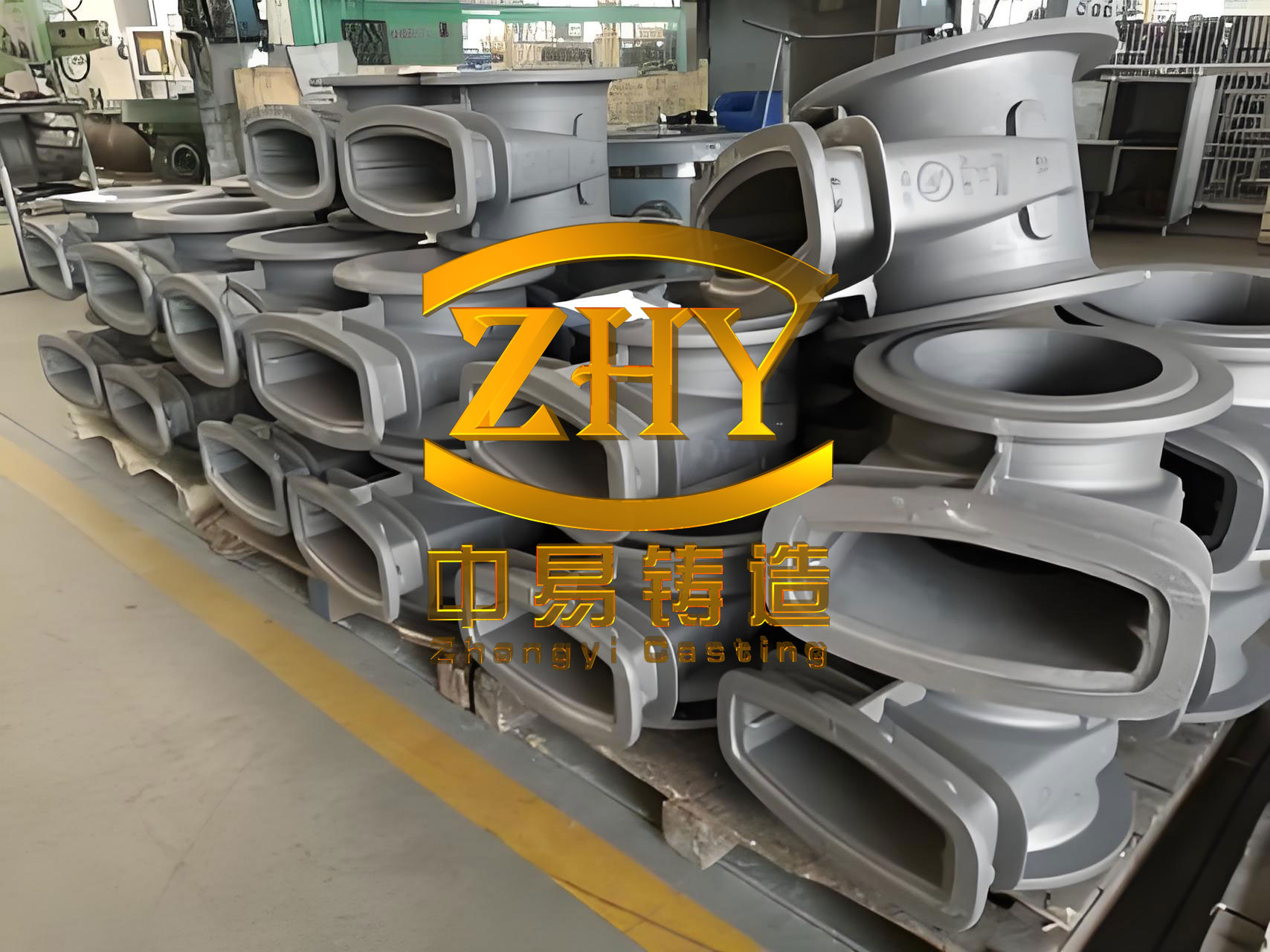
The practical application of trace rare earth grey iron castings has been demonstrated in several key areas, most notably in steel ingot molds. Ingot molds are high-consumption tools in steel plants, enduring extreme thermal cycling. My trials involved producing a batch of rare earth-treated ingot molds alongside conventional ones. Field performance data from various steelworks corroborate the benefits: trace rare earth grey iron castings for ingot molds exhibit a 10-20% increase in service life, leading to a corresponding reduction in mold consumption per ton of steel. For instance, in some documented cases, the mold consumption decreased by 0.5-1.0 kg/t-steel. The recommended chemical composition for such applications is: C 3.4-3.8%, Si 1.2-1.6%, Mn 0.6-1.0%, P ≤ 0.10%, S ≤ 0.08%, with trace rare earth addition. This composition optimizes the balance between strength and thermal shock resistance for these critical grey iron castings.
Beyond ingot molds, trace rare earth grey iron castings find utility in a wide range of components requiring enhanced durability. These include cylinder blocks and heads for internal combustion engines, machine tool beds, engineering machinery parts, and heating equipment like radiator sections. The improved machinability, stemming from reduced hard spots and consistent microstructure, makes these grey iron castings attractive for complex geometries. In my work, various metallurgical machinery parts weighing around 50 kg were successfully cast using trace rare earth grey iron, showing better wear resistance and thermal stability compared to their conventional counterparts. The cost increment due to the rare earth addition is minimal—often less than 5% of the total material cost—making the upgrade economically viable for high-value grey iron castings.
To further illustrate the compositional effects, data from a separate trial using blast furnace hot metal for ingot mold production is presented below. It highlights how carbon-silicon ratio and rare earth residual levels can influence outcomes, underscoring the importance of precise control in producing optimal trace rare earth grey iron castings.
| Type of Cast Iron | C (%) | Si (%) | Mn (%) | P (%) | S (%) | RE Residual (ppm) |
|---|---|---|---|---|---|---|
| Conventional Grey Iron Castings | 3.8 | 1.4 | 0.7 | 0.08 | 0.04 | 0 |
| Trace Rare Earth Grey Iron Castings | 3.6 | 1.6 | 0.8 | 0.07 | 0.03 | 50 |
In conclusion, the development of trace rare earth grey iron castings represents a significant advancement in ferrous foundry technology. Through systematic experimentation, I have shown that the addition of 0.1-0.3% rare earth alloy to molten iron dramatically improves the comprehensive properties of grey iron castings. The key benefits include enhanced tensile and flexural strength, increased elongation, superior thermal fatigue and growth resistance, and better oxidation resistance—all achieved with minimal impact on hardness and castability. These improvements are rooted in microstructural refinement, eutectic cell multiplication, and purification of the iron matrix. For applications such as steel ingot molds, engine components, and heat-resistant parts, trace rare earth grey iron castings offer a cost-effective solution to extend service life and reduce maintenance costs. Future work could focus on optimizing rare earth addition methods for different base iron chemistries and exploring synergistic effects with other inoculants to further push the boundaries of performance for grey iron castings in demanding industrial environments.