
As a practitioner deeply involved in the development and production of critical automotive components, I have dedicated significant effort to understanding and improving the material science behind gray iron castings. The cylinder head stands as one of the most demanding applications for gray iron, a material whose performance is fundamentally governed by its unique microstructure. In high-performance engines, these castings are subjected to complex thermomechanical stresses, requiring an exceptional balance of strength, stiffness, thermal conductivity, and castability. The pursuit of this balance, particularly in achieving specified mechanical properties in the casting body (body properties) of intricate components like cylinder heads, presents a continuous engineering challenge. This article synthesizes my experience and experimental findings on influencing the matrix structure of gray iron, focusing primarily on strategic adjustments to charge composition and inoculation practices to enhance the tensile strength of本体取样 (body samples).
The preeminence of gray iron castings in internal combustion engines is no accident. Their excellent damping capacity, thermal conductivity, machinability, and cost-effectiveness are unmatched by many alternative materials. The performance of gray iron castings is intrinsically linked to the morphology of the graphite flakes and the nature of the metallic matrix surrounding them. Flake graphite acts as natural stress risers and crack initiation sites; therefore, controlling its size, distribution, and type (A, B, D, E) is paramount. Simultaneously, the matrix, ideally comprising a fine, fully pearlitic structure, provides the necessary strength and hardness. The interaction between charge materials, melting practice, inoculation, and the casting’s cooling rate dictates this final microstructure.
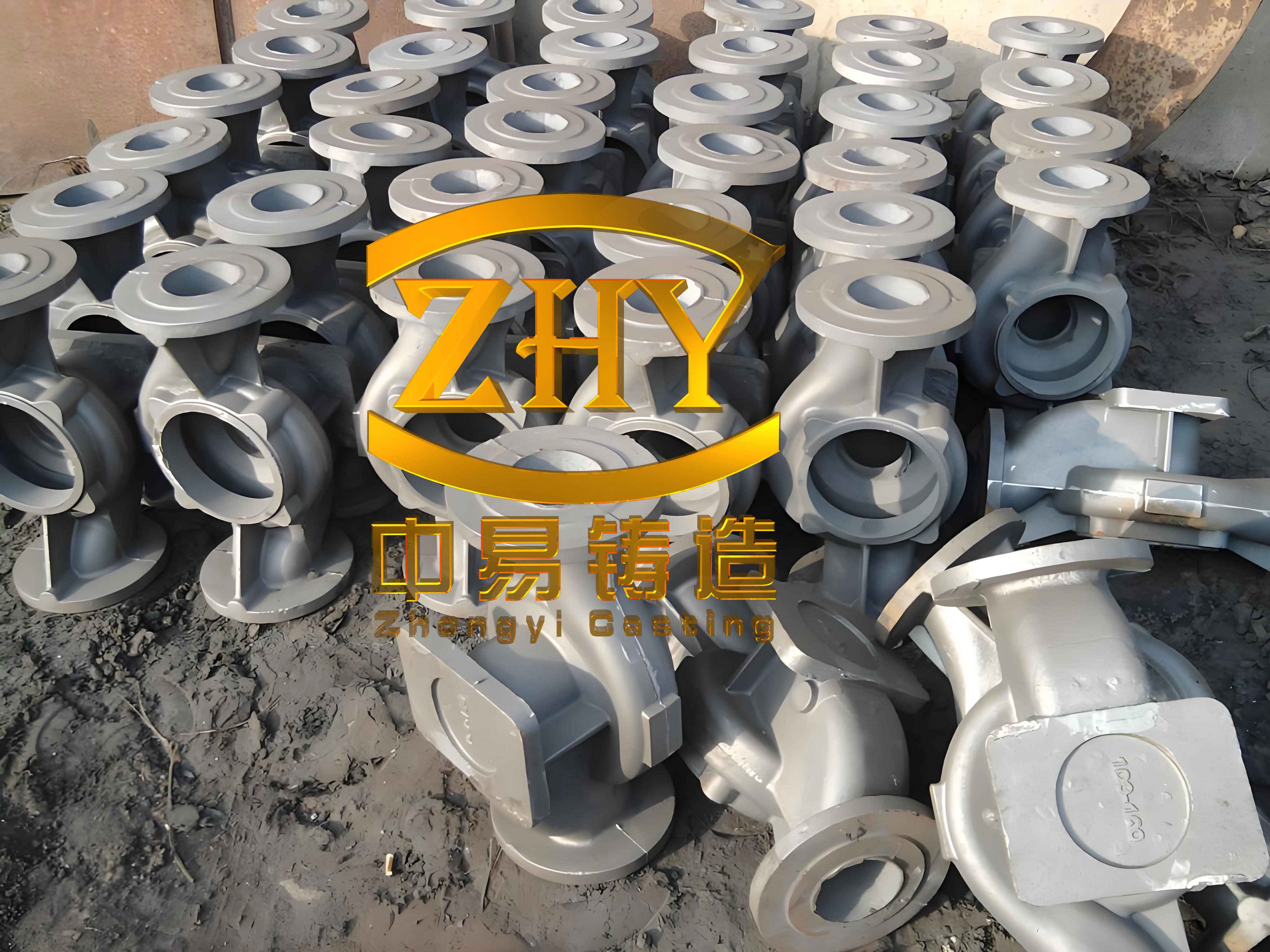
Cylinder heads for premium engines exemplify this complexity. Their geometry features extreme variations in wall thickness—from bulky sections surrounding valve ports and injector bosses to thin walls forming water jackets and flame decks. This non-uniformity leads to drastic differences in local solidification and cooling rates. To ensure sound castings free from shrinkage porosity and to meet stringent pressure tightness requirements, a relatively high carbon equivalent (CE) is often employed, which enhances fluidity and feedability. However, this very strategy can compromise strength, as a higher CE promotes the formation of coarser graphite. To counteract this, alloying elements like Chromium (Cr), Copper (Cu), Molybdenum (Mo), and Nickel (Ni) are added to promote pearlite formation, refine the pearlite, and enhance hardenability in thicker sections. The core challenge, therefore, is to manage a high CE for castability while suppressing undercooled graphite and ferrite formation to achieve high body strength in all sections of the casting.
The initial manufacturing process for the cylinder head in question was designed to meet a material specification of HT300 (minimum tensile strength of 300 MPa on body samples). The base chemical composition was tightly controlled, as summarized in Table 1.
| Element | Control Range (wt.%) |
|---|---|
| Carbon (C) | 3.35 – 3.45 |
| Silicon (Si) | 1.80 – 1.90 |
| Manganese (Mn) | 0.80 – 0.90 |
| Sulfur (S) | 0.08 – 0.12 |
| Copper (Cu) | 0.80 – 1.00 |
| Chromium (Cr) | 0.30 – 0.40 |
| Molybdenum (Mo) | 0.25 – 0.35 |
| Nickel (Ni) | 0.45 – 0.55 |
The melting was conducted in a medium-frequency induction furnace with an initial charge makeup and inoculation practice detailed in Table 2 (Baseline). Despite adhering to the chemical specification, mechanical testing on body samples taken from different locations revealed inconsistent performance. A location with a nominal wall thickness similar to the specification point (A) met the strength target (311 MPa, 100% pearlite, Type A graphite). However, another location (B) exhibited sub-standard tensile strength (287 MPa), accompanied by a mixed microstructure of 60% undercooled graphite (Types D and E) and only 90% pearlite, with the remainder being ferrite. This inconsistency highlighted that chemistry alone was insufficient to guarantee uniform properties in complex gray iron castings.
| Scheme | Charge Composition | Primary Inoculation | Secondary (Stream) Inoculation |
|---|---|---|---|
| Baseline | 60% Steel Scrap, 30% Returns, 10% Pig Iron | 0.50% Si-Ba | None |
| Scheme 1 | 60% Steel Scrap, 30% Returns, 10% Pig Iron | 0.50% Si-Ba | 0.10% Si-Ba |
| Scheme 2 | 70% Steel Scrap, 25% Returns, 5% Pig Iron | 0.50% Si-Ba | 0.10% Si-Ba |
| Scheme 3 | 70% Steel Scrap, 25% Returns, 5% Pig Iron | 0.40% Rare Earth-Si | 0.10% Si-Ba |
The formation of undesired undercooled graphite (Type D/E) and associated ferrite in certain sections of gray iron castings can be explained by the interplay of nucleation, growth, and local cooling conditions. Type D graphite forms under conditions of high undercooling, typically due to a lack of sufficient heterogeneous nuclei during the eutectic reaction, coupled with a relatively fast cooling rate through the eutectic temperature range (~1150°C). The graphite forms in a fine, interdendritic pattern, reflecting the shape of the primary austenite. While fine graphite can be beneficial, its association with ferrite is detrimental to strength.
The propensity for ferrite formation in these areas is tied to the subsequent eutectoid transformation (~750°C). Fine, branched undercooled graphite provides a vast surface area, which acts as a preferred site for carbon diffusion during the eutectoid reaction, promoting the formation of ferrite envelopes around the graphite. This can be exacerbated if the cooling rate through the eutectoid range is slow, allowing more time for carbon diffusion. The local thermal history of a casting section can thus create a “double jeopardy”: fast cooling at the eutectic stage promotes undercooled graphite, and slower cooling at the eutectoid stage promotes ferrite formation on that very graphite.
To model the influence of cooling rate $v_c$ on graphite morphology and matrix structure, we can consider a simplified relationship for the critical undercooling $\Delta T_{crit}$ needed for Type D formation:
$$\Delta T_{crit} \propto \frac{1}{N^{1/3}}$$
where $N$ is the number of active nucleation sites per unit volume. A low $N$, often resulting from insufficient inoculation or charge-related issues, requires only a small increase in undercooling to trigger the undercooled eutectic. The local tensile strength $\sigma_t$ can be empirically related to microstructural parameters:
$$\sigma_t \approx \sigma_0 – k_1 \cdot \bar{l}_g – k_2 \cdot V_f$$
where $\sigma_0$ is a base strength, $\bar{l}_g$ is the mean graphite flake length, $V_f$ is the volume fraction of ferrite, and $k_1$, $k_2$ are positive constants. For the problematic location B, both $\bar{l}_g$ (from fine D/E graphite) and $V_f$ were unfavorable.
Three targeted improvement schemes were designed and implemented, as shown in Table 2. The results from body samples taken from the previously problematic location (B) are compiled in Table 3.
| Scheme | Tensile Strength (MPa) | Hardness (HB) | Graphite Morphology | Pearlite Content |
|---|---|---|---|---|
| Scheme 1 | 274 | 195 | 60% D+E, 40% A | ~90% |
| Scheme 2 | 309 | 204 | 98% A, 2% D | ~100% |
| Scheme 3 | 322 | 216 | 100% A (finer) | ~100% |
Scheme 1 (Addition of Secondary Inoculation): Adding 0.10% Si-Ba as a stream inoculant was intended to increase the number of active nuclei just before solidification, countering inoculation fade and reducing undercooling. The mechanism can be described as an increase in $N$ in our nucleation model. While standard practice, in this specific case, it proved insufficient to fully overcome the underlying issues, as D/E graphite and sub-par strength persisted.
Scheme 2 (Charge Optimization): This scheme addressed a fundamental material inheritance issue. Reducing the pig iron content from 10% to 5% and increasing steel scrap to 70% served two key purposes. First, it lowered the baseline carbon content, inherently increasing strength potential. More critically, it minimized the “genetic” influence of pig iron. Pig iron, especially high-carbon grades, contains coarse, primary graphite flakes. During remelting in an induction furnace, these graphite particles, with a melting point exceeding 2000°C, may not fully dissolve. They can survive and act as potent but coarse nucleation sites in the subsequent melt, leading to irregular graphite growth and potentially promoting undercooling in their vicinity. The results were markedly better, with near-complete Type A graphite and achieved strength. The residual 2% undercooled graphite suggested the nucleation conditions could be further optimized.
Scheme 3 (Advanced Inoculation with Rare Earth): Building on the improved charge of Scheme 2, this trial replaced the primary Si-Ba inoculant with a 0.40% Rare Earth (RE)-Silicon alloy. Rare earth elements, primarily Cerium (Ce) and Lanthanum (La), exert a multifaceted influence on gray iron castings. Their powerful deoxidizing and desulfurizing reactions are foundational:
$$2Ce + 3[O] \rightarrow Ce_2O_3_{(s)}$$
$$Ce + [S] \rightarrow CeS_{(s)}$$
The products, $Ce_2O_3$ and $CeS$, are high-melting-point, stable compounds with densities similar to liquid iron. They remain finely dispersed in the melt, providing a multitude of heterogeneous nucleation sites for graphite. This significantly increases $N$, drastically reducing the undercooling required for eutectic solidification and promoting the desired Type A graphite even in sections prone to undercooling. Furthermore, rare earths modify the surface tension of the melt and the graphite/austenite interface, leading to a refinement of both the graphite flakes and the pearlite lamellar spacing. This dual refinement is reflected in the superior tensile strength (322 MPa) and hardness (216 HB) observed, representing the optimal outcome for these high-performance gray iron castings.
The efficacy of rare earth inoculation can be further conceptualized by considering its impact on the eutectic and eutectoid transformations. By providing abundant nucleation sites, it shifts the solidification path away from the metastable undercooled regime. The resulting larger number of smaller, well-distributed Type A graphite flakes presents less of a stress-concentration effect and, crucially, a different interfacial condition during the eutectoid reaction. This condition is less favorable for massive carbon diffusion and ferrite formation, thereby stabilizing a fully pearlitic matrix even with varying cooling rates. The improvement factor $\eta$ for strength due to RE inoculation over standard Si-Ba, given similar base chemistry and charge, can be significant:
$$\eta = \frac{\sigma_{t,RE} – \sigma_{t,SiBa}}{\sigma_{t,SiBa}} \times 100\%$$
For our trials, comparing Scheme 3 to Scheme 2 at location B, $\eta \approx 4.2\%$.
In conclusion, the journey to produce consistently high-integrity gray iron castings for demanding applications like cylinder heads requires a systems approach that goes beyond simple chemical compliance. The experimental work underscores several critical principles. First, the genetic inheritance from charge materials, particularly pig iron, must be carefully managed; a high steel scrap ratio is beneficial for both refining microstructure and enhancing the strength potential of gray iron castings. Second, inoculation is not a mere additive step but a central microstructural control mechanism. While secondary (stream) inoculation is essential to combat fade, the choice of primary inoculant is decisive. Third, rare earth-based inoculants offer a distinct advantage in challenging casting scenarios. They fundamentally improve the nucleation environment, effectively suppressing the formation of detrimental undercooled graphite and associated ferrite, leading to a refined, fully pearlitic matrix that delivers superior and more uniform mechanical properties throughout the casting body. For foundries aiming to push the performance envelope of gray iron castings, strategic charge design coupled with advanced inoculation technology represents a proven pathway to achieving reliable quality and meeting the stringent specifications of modern high-performance engines.