
In the automotive industry, the demand for lightweight and high-performance components has driven extensive research into advanced materials. Among these, gray iron castings play a pivotal role, particularly in engine blocks and cylinder heads, due to their excellent castability, damping capacity, and thermal conductivity. However, traditional gray iron castings often face limitations in mechanical strength and wear resistance, which hinder their application in modern high-stress environments. As a researcher focused on material science, I have investigated the effects of molybdenum (Mo) and vanadium (V) alloying on the microstructure and properties of gray iron castings, aiming to enhance their performance for critical automotive applications. This study explores how these alloying elements can refine graphite morphology, strengthen the matrix, and balance thermal properties, ultimately contributing to the development of superior gray iron castings.
The significance of gray iron castings cannot be overstated; they form the backbone of many industrial systems, especially in internal combustion engines where they must withstand high thermal and mechanical loads. Historically, gray iron castings have relied on their inherent graphite flake structure for thermal conductivity, but this same structure often compromises tensile strength and fatigue resistance. To address this, alloying has emerged as a key strategy. Elements like molybdenum and vanadium are known to influence solidification behavior and phase transformations, potentially improving both mechanical and physical properties. In this work, I delve into the synergistic effects of Mo and V addition, utilizing experimental techniques such as optical microscopy (OM), scanning electron microscopy (SEM), electron probe microanalysis (EPMA), and thermal diffusivity measurements. The goal is to provide a comprehensive understanding that can guide the production of next-generation gray iron castings.
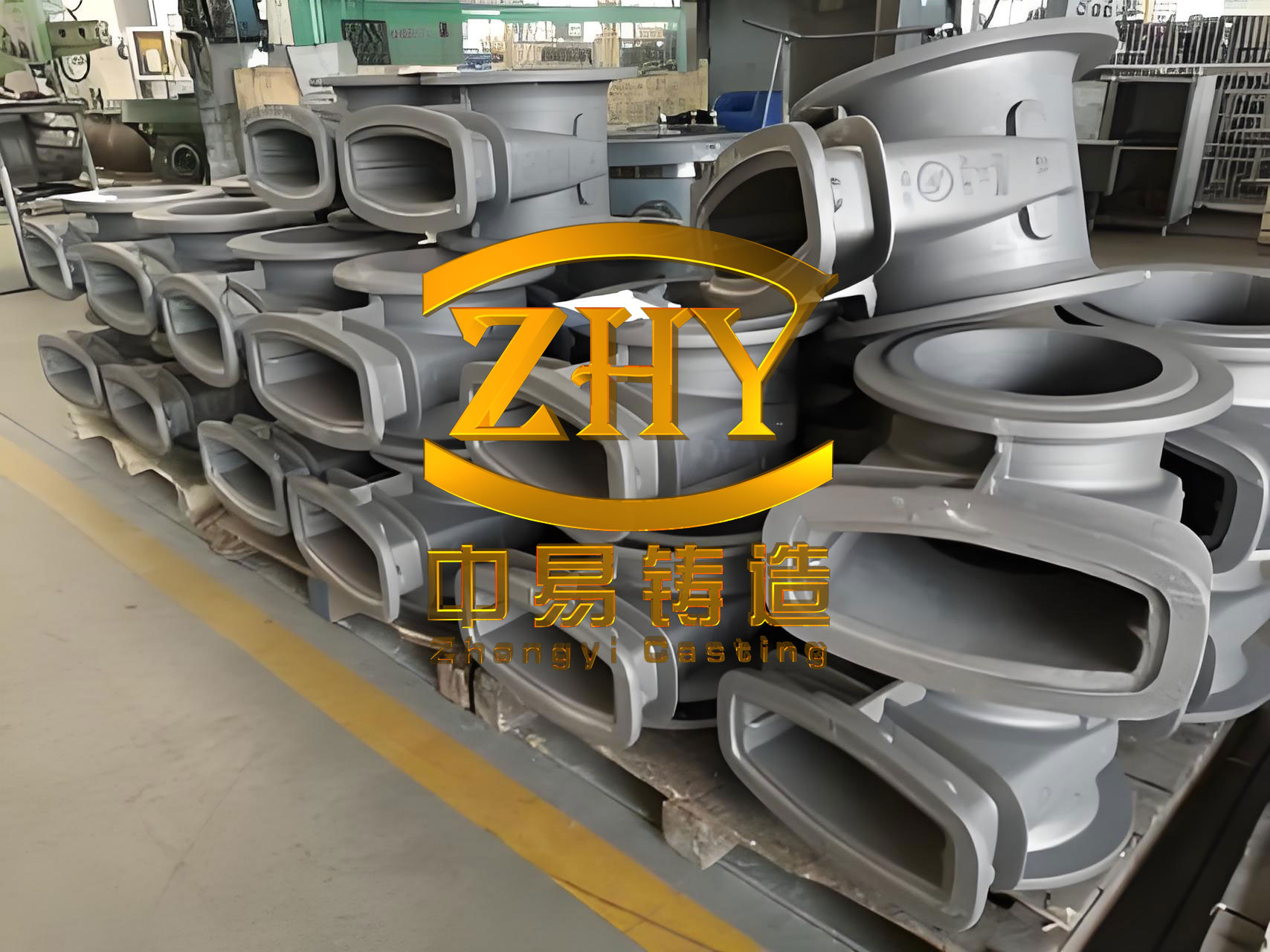
Gray iron castings are characterized by their graphite flakes embedded in a ferrous matrix, typically pearlitic or ferritic. The graphite acts as a stress concentrator, leading to brittle fracture under tension. Thus, enhancing gray iron castings involves modifying graphite morphology and strengthening the matrix. Alloying with molybdenum has been reported to refine graphite and pearlite, while vanadium forms hard carbides that improve wear resistance. However, the combined impact of Mo and V on properties like thermal conductivity remains less explored. My research fills this gap by systematically varying Mo and V contents and evaluating their effects on microstructure, tensile strength, hardness, and thermal conductivity. The findings are relevant for manufacturers seeking to produce gray iron castings with superior performance for automotive and other high-demand sectors.
To quantify the influence of alloying, I employed thermodynamic calculations using JMatPro software to model phase transformations during solidification. The results indicate that Mo and V lower the eutectic reaction temperature, increasing undercooling and refining microstructure. This is critical for gray iron castings, as finer graphite and pearlite can enhance mechanical properties without compromising thermal conductivity. In the following sections, I detail the experimental methods, present results through tables and formulas, and discuss the mechanisms behind the observed improvements. The overarching aim is to demonstrate that Mo-V composite strengthening offers a viable pathway for advancing gray iron castings in engineering applications.
Literature Review on Alloying Effects in Gray Iron Castings
Gray iron castings have been extensively studied for decades, with alloying being a primary method to tailor their properties. Elements such as chromium, nickel, copper, and molybdenum are commonly added to improve strength, hardness, and thermal stability. For instance, molybdenum is known to be a moderate graphitizer that can refine pearlite and increase hardenability. In gray iron castings, Mo additions up to 1.0 wt.% have been shown to enhance tensile strength by reducing graphite size and promoting pearlite formation. Vanadium, on the other hand, is a strong carbide former; it tends to form V4C3 or V8C7 carbides that disperse in the matrix, contributing to precipitation hardening. However, excessive vanadium can lead to carbide networks that embrittle gray iron castings, so optimizing its content is crucial.
Previous studies have highlighted the importance of balancing alloying elements to avoid detrimental effects like chilling or reduced machinability. For example, in gray iron castings used for engine blocks, a combination of Mo and Cr has been employed to achieve high strength while maintaining thermal conductivity. My research builds on this by exploring Mo-V synergies, as both elements are less likely to cause severe chilling compared to chromium. The literature suggests that Mo and V can jointly influence eutectic solidification, potentially refining graphite and increasing eutectic cell count. This review underscores the need for systematic investigations into composite alloying for gray iron castings, particularly focusing on property trade-offs.
Experimental Methodology for Producing and Testing Gray Iron Castings
In this study, I prepared three types of gray iron castings with varying Mo and V contents. The base composition was designed to mimic typical engine block grades, with carbon around 2.8-2.9 wt.% and silicon around 2.0 wt.%. The alloys were melted in a 30 kg medium-frequency induction furnace using raw materials like Q235 scrap steel, pig iron, and ferroalloys. The chemical compositions are summarized in Table 1, which illustrates the targeted variations for Mo and V addition. After melting, the molten metal was poured into investment casting molds to produce cylindrical specimens of 30 mm diameter and 300 mm height, simulating the geometry of actual gray iron castings components.
| Sample Designation | C | Si | Mn | P | S | Mo | V | Fe |
|---|---|---|---|---|---|---|---|---|
| 0Mo0V (Base) | 2.85 | 2.08 | 0.69 | 0.03 | 0.02 | 0.00 | 0.00 | Bal. |
| 0.5Mo0.3V | 2.83 | 1.95 | 0.70 | 0.04 | 0.02 | 0.50 | 0.30 | Bal. |
| 0.5Mo0.6V | 2.87 | 1.90 | 0.66 | 0.04 | 0.02 | 0.50 | 0.60 | Bal. |
The specimens were subjected to a series of tests to evaluate their microstructure and properties. For microstructural analysis, samples were ground, polished, and etched with 4% nital to reveal graphite and matrix features. Graphite morphology was assessed according to ASTM A247 standards, while pearlite spacing was measured from SEM images using image analysis software. Mechanical testing included tensile tests on three replicates per condition, following GB/T 9439-2010, and hardness measurements using Brinell and Vickers methods. Thermal conductivity was derived from thermal diffusivity data obtained via laser flash analysis (LFA) at 50°C and 100°C, applying the formula:
$$ \lambda = \rho \cdot C_p \cdot \alpha $$
where \(\lambda\) is thermal conductivity, \(\rho\) is density, \(C_p\) is specific heat capacity, and \(\alpha\) is thermal diffusivity. This comprehensive approach ensures a robust evaluation of how Mo and V affect gray iron castings, providing insights for industrial applications.
Microstructural Evolution in Alloyed Gray Iron Castings
The microstructure of gray iron castings is paramount to their performance. In the base sample (0Mo0V), graphite appeared as typical Type A flakes with an average length of 154.1 μm and width of 2.8 μm, covering about 7% of the area. The matrix consisted predominantly of pearlite with some ferrite. Upon adding 0.5 wt.% Mo and 0.3 wt.% V, graphite became finer and more curved, with an average length of 145.6 μm and width of 2.3 μm, and the area fraction decreased to 4%. Additionally, about 8% Type D graphite was observed, indicating increased undercooling. With higher vanadium (0.6 wt.%), graphite further refined to 136.1 μm length, and Type D graphite increased to 10%. These changes are summarized in Table 2, highlighting how alloying refines graphite in gray iron castings.
| Sample | Graphite Type | Avg. Length (μm) | Avg. Width (μm) | Area Fraction (%) | Pearlite Fraction (%) | Pearlite Spacing (nm) |
|---|---|---|---|---|---|---|
| 0Mo0V | A | 154.1 ± 20.1 | 2.8 | 7 | 97.4 | 298 |
| 0.5Mo0.3V | A + D | 145.6 ± 18.9 | 2.3 | 4 | 98.2 | 195 |
| 0.5Mo0.6V | A + D | 136.1 ± 13.0 | 2.3 | 3 | 98.5 | 176 |
The matrix structure also evolved significantly. Pearlite content increased from 97.4% in the base to 98.5% in the 0.5Mo0.6V sample, and its lamellar spacing decreased markedly. As shown in Table 2, average pearlite spacing reduced from 298 nm to 195 nm with Mo-V addition, and further to 176 nm with higher V. This refinement can be attributed to the effect of alloying elements on eutectoid transformation kinetics. Using JMatPro calculations, I determined that Mo and V lower the eutectoid temperature, increasing undercooling and driving finer pearlite formation. The relationship between alloy content and pearlite spacing can be approximated by the formula:
$$ \log S_0 = -2.212 + 0.0514[\text{Mn}] – 0.0396[\text{Cr}] + 0.0967[\text{Ni}] – 0.002[\text{Si}] – 0.4812[\text{Mo}] – \log \Delta T $$
where \(S_0\) is spacing in μm, bracketed terms are weight percentages, and \(\Delta T\) is undercooling. For gray iron castings, Mo addition notably reduces \(S_0\), aligning with my experimental observations. Furthermore, eutectic cell count rose from 110 cells/mm² in the base to 180 cells/mm² in the 0.5Mo0.6V sample, indicating enhanced nucleation due to alloying-induced undercooling.
Mechanical and Thermal Properties of Enhanced Gray Iron Castings
The mechanical properties of gray iron castings are critically improved by Mo-V alloying. Tensile strength increased from an average of 288 MPa for the base sample to 380 MPa for 0.5Mo0.3V, and further to 395 MPa for 0.5Mo0.6V, with a peak value of 402 MPa. This represents a 24-27% enhancement, making these gray iron castings suitable for high-stress applications like engine blocks. Hardness followed a similar trend: Brinell hardness rose from 216 HBW to 254 HBW and 265 HBW, respectively, while Vickers microhardness increased from 307 HV to 372 HV. The improvements stem from refined graphite, which reduces stress concentration, and strengthened matrix due to finer pearlite and carbide dispersion. Fracture surfaces exhibited brittle cleavage patterns, but with smaller cleavage facets in alloyed samples, consistent with higher strength.
Thermal conductivity, a key attribute for gray iron castings in thermal management, was evaluated at 50°C and 100°C. The results, compiled in Table 3, show that Mo-V alloyed gray iron castings maintain high thermal conductivity despite increased strength. For instance, at 50°C, conductivity values were 44.1, 44.2, and 45.8 W/(m·K) for the base, 0.5Mo0.3V, and 0.5Mo0.6V samples, respectively. At 100°C, they ranged from 41.1 to 42.9 W/(m·K). These values exceed 40 W/(m·K), indicating that the alloyed gray iron castings retain good heat dissipation capability, essential for engine components. The slight variations can be linked to graphite morphology and carbide content; finer graphite may reduce conductivity slightly, but the overall balance remains favorable.
| Sample | Tensile Strength (MPa) | Brinell Hardness (HBW) | Vickers Hardness (HV) | Thermal Conductivity at 50°C (W/(m·K)) | Thermal Conductivity at 100°C (W/(m·K)) |
|---|---|---|---|---|---|
| 0Mo0V | 288 | 216 | 307 | 44.1 | 41.3 |
| 0.5Mo0.3V | 380 | 254 | 371 | 44.2 | 41.1 |
| 0.5Mo0.6V | 395 | 265 | 372 | 45.8 | 42.9 |
The enhancement in properties can be rationalized through fracture mechanics. For gray iron castings, graphite flakes act as inherent cracks, and their size directly affects fracture stress according to the Griffith criterion:
$$ \sigma_c = \sqrt{\frac{2E\gamma_s}{\pi a}} $$
where \(\sigma_c\) is fracture stress, \(E\) is Young’s modulus, \(\gamma_s\) is surface energy, and \(a\) is half the crack length (graphite flake size). Reducing graphite dimensions increases \(\sigma_c\), thereby improving tensile strength. My measurements confirm that Mo-V addition reduces \(a\), contributing to higher strength in gray iron castings. Additionally, the presence of Mo and V carbides, detected via EPMA as blocky or elongated particles, provides dispersion strengthening, further boosting hardness and wear resistance.
Discussion on Alloying Mechanisms in Gray Iron Castings
The role of molybdenum and vanadium in gray iron castings is multifaceted. Thermodynamically, both elements are carbide formers that moderate graphite growth during solidification. JMatPro simulations revealed that Mo and V lower the eutectic reaction start temperature from 1157°C in the base to 1143°C in the 0.5Mo0.6V sample, and the end temperature from 1130°C to 1120°C. This increased undercooling accelerates nucleation, leading to finer eutectic cells and graphite. The effect on pearlite is similar; eutectoid temperature decreases, refining lamellar spacing. These microstructural changes collectively enhance mechanical properties without severely impacting thermal conductivity, as graphite remains flake-like and interconnected.
In gray iron castings, thermal conductivity primarily depends on graphite continuity and matrix composition. While carbides from vanadium could impede heat flow, the refined graphite network in my samples appears to compensate, maintaining high conductivity. This balance is crucial for applications like engine blocks, where both strength and heat dissipation are vital. Comparing my results with literature, the Mo-V combination outperforms single-element additions for gray iron castings, offering a synergistic effect. For instance, vanadium alone might form coarse carbides, but with molybdenum, carbides are finer and more dispersed, minimizing brittleness.
From an industrial perspective, producing such high-performance gray iron castings requires careful control of melting and casting parameters. The investment casting method used here ensures sound specimens, but scalability to mass production must consider cost and process stability. Nonetheless, the property improvements justify further development, especially for automotive sectors pushing for lightweight and efficient designs. Future work could explore additional elements like niobium or copper to further optimize gray iron castings for specific applications.
Conclusions and Implications for Gray Iron Castings Industry
This study demonstrates that molybdenum and vanadium composite strengthening significantly enhances the microstructure and properties of gray iron castings. Key findings include refined graphite morphology with increased Type D content, reduced pearlite spacing, higher eutectic cell count, and improved mechanical strength up to 402 MPa tensile strength, while maintaining thermal conductivity above 40 W/(m·K). These advancements address the dual challenges of strengthening and thermal management in gray iron castings for demanding applications like engine components.
The implications are substantial for the foundry industry. By adopting Mo-V alloying, manufacturers can produce gray iron castings with superior performance, potentially reducing component weight or extending service life. The research also provides a framework for designing alloy compositions using thermodynamic modeling, facilitating targeted development of gray iron castings. As automotive technology evolves, such high-performance gray iron castings will play a critical role in achieving efficiency and durability goals. Continued exploration of alloy synergies and processing techniques will further propel the capabilities of gray iron castings in modern engineering.