
In the rapidly expanding market for gray iron castings, manufacturers face intense competition in terms of production capacity, pricing, and raw material sourcing. To secure a competitive edge, it is crucial to address key quality issues that affect product performance. Among these, unstable reaction performance and high gray iron content—often linked to impurities like ash and ferrous elements—are predominant challenges that can compromise the integrity and functionality of cast components. This article, from my perspective as an industry practitioner, summarizes these common problems, analyzes the various influencing factors, and proposes corresponding control measures. The focus is on ensuring consistency and quality in gray iron castings production, with an emphasis on optimizing processes to enhance reaction performance and manage gray iron content effectively.
Reaction performance in gray iron castings refers to the behavior of the iron during melting, solidification, and cooling, which directly impacts the microstructure, mechanical properties, and suitability for end-use applications. Poor reaction performance can lead to issues such as uneven carbide formation, reduced machinability, and compromised tensile strength. Meanwhile, high gray iron content—often manifested as excessive graphite flakes or undesirable inclusions—can affect durability and corrosion resistance. To tackle these problems, many manufacturers resort to post-processing treatments or additives, but these are temporary fixes that increase costs and may introduce variability. A more sustainable approach involves analyzing production parameters, selecting appropriate raw materials, and stabilizing process conditions. Below, I delve into the factors affecting reaction performance and gray iron content, and outline control strategies based on practical experience.
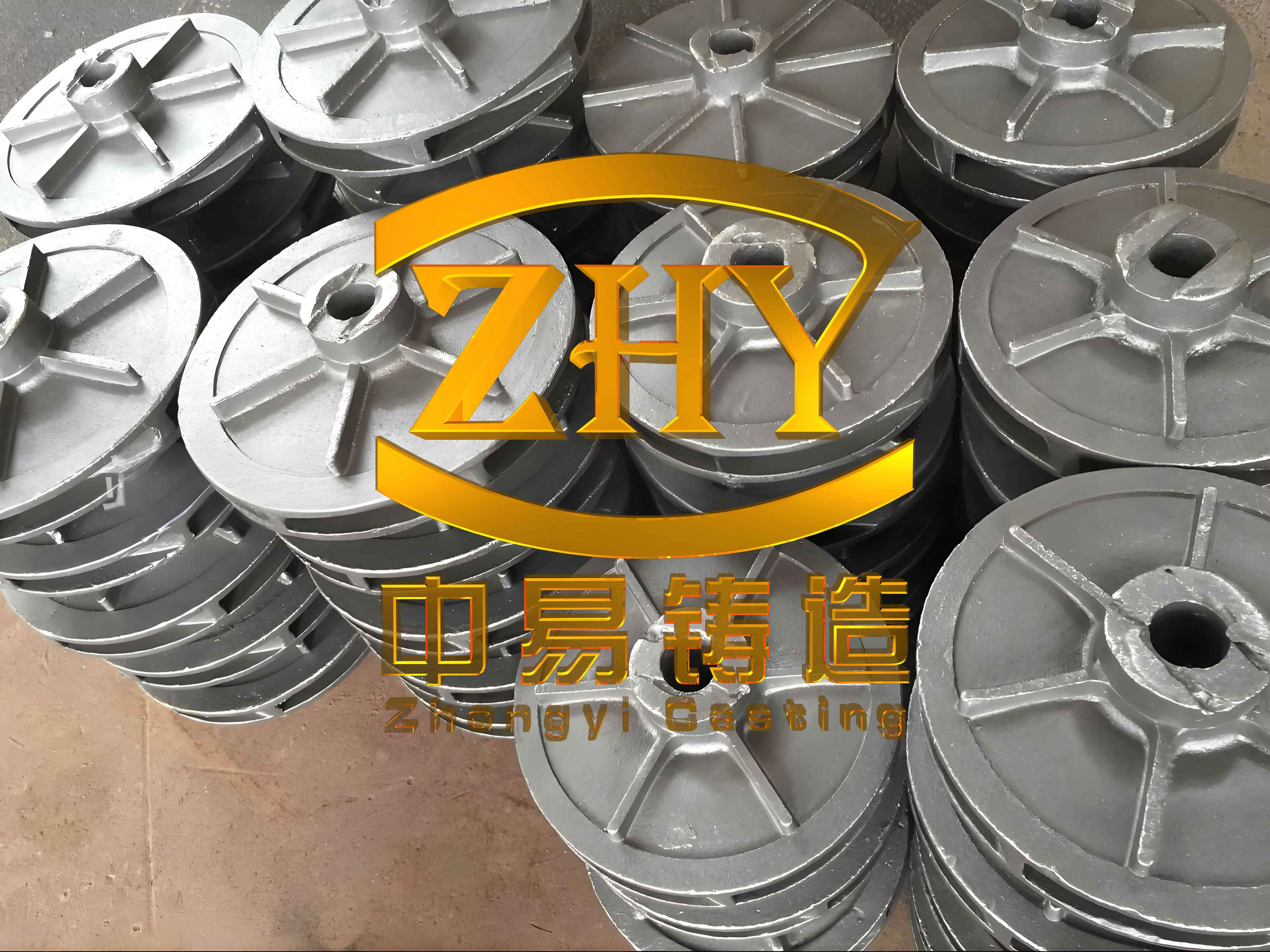
The reaction performance of gray iron castings is influenced by multiple factors, which I categorize into four main areas: (1) homogeneity of raw materials, (2) morphological structure of the iron matrix, particularly the distribution and size of graphite flakes, (3) separation of non-metallic inclusions or minor phases, which relates to purity levels, and (4) uniformity of microstructure development, often controlled by cooling rates and alloy composition. In gray iron castings, achieving a consistent reaction performance ensures predictable properties like hardness and wear resistance. For instance, the carbon equivalent (CE) plays a critical role, and it can be calculated using the following formula:
$$ CE = C + \frac{Si + P}{3} $$
where C is carbon content, Si is silicon content, and P is phosphorus content, all in weight percent. This formula helps in predicting the solidification behavior, with higher CE values promoting graphite formation and improving machinability. However, if the CE is not uniform across batches, reaction performance suffers. Another key aspect is the cooling rate, which affects graphite morphology. The relationship between cooling rate (T) and graphite size can be expressed as:
$$ G = k \cdot e^{-\frac{Q}{RT}} $$
where G is the average graphite flake size, k is a constant, Q is the activation energy for graphite growth, R is the gas constant, and T is the absolute temperature. Slower cooling rates typically lead to coarser graphite, which can enhance damping capacity but reduce strength. Therefore, controlling these parameters is essential for consistent reaction performance in gray iron castings.
To improve reaction performance in production, I recommend several measures centered on enhancing homogeneity. First, raw materials must be standardized: use scrap iron or pig iron with consistent chemical compositions, avoid frequent supplier changes, and segregate materials by type (e.g., high-silicon vs. low-silicon scraps). This reduces variability in melt chemistry. Second, during charging and melting, ensure uniform loading of the furnace to promote even heat distribution and minimize oxidation. Preheating scrap can help remove moisture and contaminants, as shown in Table 1, which compares the effects of different preheating methods on impurity levels in gray iron castings.
| Preheating Method | Temperature (°C) | Ash Reduction (%) | Ferrous Content (mg/kg) | Graphite Uniformity Index |
|---|---|---|---|---|
| No Preheating | 25 | 0 | 150 | 0.65 |
| Gas Fired | 200 | 15 | 120 | 0.72 |
| Induction Heating | 300 | 25 | 90 | 0.80 |
| Rotary Kiln | 400 | 35 | 70 | 0.85 |
Third, the melting process should be controlled using thermal analysis techniques. The “F-factor” (similar to the H-factor in pulping) can be adopted to quantify the thermal history, defined as:
$$ F = \int_{0}^{t} e^{-\frac{E_a}{RT}} \, dt $$
where t is time, E_a is the activation energy for reactions in molten iron (approximately 120 kJ/mol for carbon dissolution), R is the gas constant, and T is the temperature in Kelvin. By maintaining a target F-factor, we can ensure consistent melt conditions. For example, holding the melt at 1450°C for 30 minutes with an F-factor of 500-600 promotes uniform carbon saturation, crucial for gray iron castings. Fourth, during pouring and solidification, use controlled cooling systems like sand molds with chill inserts to manage cooling rates. The modulus of casting (M) influences solidification time and can be calculated as:
$$ M = \frac{V}{A} $$
where V is volume and A is surface area. Larger M values lead to slower cooling, favoring graphite formation. By optimizing mold design, we can achieve desired microstructures. Post-solidification treatments, such as annealing or stress relieving, also help refine reaction performance by reducing internal stresses and homogenizing the matrix.
High gray iron content, often associated with excessive ash and ferrous impurities, is another critical issue. In gray iron castings, this refers not only to graphite content but also to non-metallic inclusions like oxides and sulfides that degrade mechanical properties. The primary influencing factors include raw material quality, process equipment, water quality (in cooling systems), and cleaning efficiency. I have observed that raw materials contribute significantly to final impurity levels. For instance, using contaminated scrap iron can introduce silica and alumina, increasing ash content. Table 2 illustrates the ash and ferrous content in different scrap types used for gray iron castings.
| Scrap Type | Ash Content (%) | Ferrous Content (mg/kg) | Carbon Equivalent (CE) |
|---|---|---|---|
| Heavy Melting Scrap | 0.8 | 200 | 3.9 |
| Turnings and Borings | 1.5 | 350 | 4.2 |
| Cast Iron Scrap | 0.5 | 150 | 4.5 |
| Steel Scrap | 0.3 | 50 | 2.5 |
To control gray iron content, I propose several measures. First, enhance raw material management: implement strict sorting and cleaning procedures, use magnetic separators to remove ferrous contaminants, and wash scrap with water to reduce surface impurities. As shown in Table 3, washing with deionized water can lower ash and ferrous content substantially.
| Scrap Type | Washing Method | Ash Reduction (%) | Ferrous Reduction (%) | Final Ash Content (%) |
|---|---|---|---|---|
| Turnings | No Washing | 0 | 0 | 1.5 |
| Turnings | Tap Water | 10 | 15 | 1.35 |
| Turnings | Deionized Water | 25 | 40 | 1.13 |
| Cast Iron Scrap | Deionized Water | 20 | 35 | 0.4 |
Second, upgrade process equipment: use corrosion-resistant materials like stainless steel for furnaces and ladles to minimize iron contamination from equipment wear. Install efficient filtration systems, such as ceramic foam filters, in the gating system to trap inclusions. The efficiency of inclusion removal can be modeled using the following equation:
$$ \eta = 1 – e^{-k \cdot L \cdot \frac{d_p^2}{\mu \cdot v}} $$
where η is removal efficiency, k is a constant, L is filter thickness, d_p is particle diameter, μ is dynamic viscosity, and v is flow velocity. By optimizing these parameters, we can achieve over 90% inclusion removal in gray iron castings. Third, improve water quality in cooling circuits: use deionized or softened water to prevent scale buildup and reduce iron oxide formation. Regular monitoring of cooling water chemistry is essential; for example, maintain pH between 7.5 and 8.5 to minimize corrosion. Fourth, enhance cleaning and finishing operations: employ shot blasting or grinding to remove surface impurities, and implement quality checks like spectrographic analysis to verify gray iron content. The relationship between cleaning time and impurity level can be expressed as:
$$ C_t = C_0 \cdot e^{-\lambda t} $$
where C_t is impurity concentration at time t, C_0 is initial concentration, and λ is a decay constant specific to the cleaning method. Longer cleaning times generally reduce impurities but must be balanced with productivity.
In addition to these measures, process control through statistical methods is vital. For gray iron castings, I recommend using design of experiments (DOE) to optimize parameters like pouring temperature, mold hardness, and inoculant addition. Inoculation, often with ferro-silicon, enhances graphite nucleation and improves reaction performance. The inoculant effect can be quantified by the chill reduction test, where chill depth (D) is measured and correlated with inoculant amount (I):
$$ D = D_0 – \alpha \cdot I $$
where D_0 is chill depth without inoculation, and α is a constant. By controlling inoculation, we can achieve consistent graphite structures in gray iron castings. Furthermore, real-time monitoring with thermal cameras and sensors allows for adjustments during production. For instance, cooling curve analysis provides insights into solidification kinetics; the derivative of temperature with respect to time (dT/dt) reveals critical points like eutectic undercooling, which affects gray iron formation. The formula for undercooling (ΔT) is:
$$ \Delta T = T_{eutectic} – T_{min} $$
where T_{eutectic} is the equilibrium eutectic temperature (around 1150°C for gray iron) and T_{min} is the minimum temperature during solidification. Lower undercooling promotes coarse graphite, while higher undercooling leads to finer structures. By targeting a ΔT of 5-10°C, we can optimize gray iron content for specific applications.
Another aspect to consider is the recycling of internal waste, such as returns and slag. In gray iron castings production, slag formation during melting can entrap impurities. The slag basicity index (B) is a key parameter, calculated as:
$$ B = \frac{CaO + MgO}{SiO_2 + Al_2O_3} $$
where oxides are in weight percent. A basicity index of 1.0-1.5 helps in absorbing sulfur and phosphorus, reducing their negative impact on gray iron castings. However, excessive slag can increase ash content, so controlled slag removal is necessary. Table 4 summarizes the effects of slag management on impurity levels in gray iron castings.
| Slag Basicity (B) | Slag Removal Frequency | Sulfur Reduction (%) | Phosphorus Reduction (%) | Ash Content in Casting (%) |
|---|---|---|---|---|
| 0.8 | Once per heat | 30 | 20 | 0.25 |
| 1.2 | Twice per heat | 50 | 40 | 0.18 |
| 1.5 | Continuous | 70 | 60 | 0.12 |
Moreover, the role of alloying elements cannot be overlooked. Elements like chromium, molybdenum, and copper influence the matrix structure and graphite formation in gray iron castings. For example, chromium promotes carbide stability but can increase hardness, affecting machinability. The combined effect of multiple alloys can be evaluated using the carbon equivalent adjustment formula:
$$ CE_{adj} = CE + \sum (k_i \cdot X_i) $$
where CE_{adj} is adjusted carbon equivalent, k_i is a coefficient for element i, and X_i is its concentration. By fine-tuning alloy additions, we can tailor reaction performance for applications like engine blocks or pipe fittings. Additionally, heat treatment processes such as normalizing or austempering can modify gray iron content by transforming austenite to ferrite or pearlite. The kinetics of phase transformation follow the Avrami equation:
$$ f = 1 – e^{-k t^n} $$
where f is fraction transformed, k is a rate constant, t is time, and n is the Avrami exponent. Understanding this helps in designing heat treatment cycles for consistent properties in gray iron castings.
From a broader perspective, sustainability considerations are increasingly important. Reducing energy consumption and minimizing waste in gray iron castings production not only cuts costs but also improves reaction performance by lowering thermal gradients. For instance, using regenerative burners in melting furnaces can enhance temperature uniformity. The energy efficiency (η_e) can be expressed as:
$$ \eta_e = \frac{Q_{useful}}{Q_{input}} \times 100\% $$
where Q_{useful} is heat transferred to the iron, and Q_{input} is fuel energy. Higher efficiency reduces oxidation and slag formation, thereby controlling gray iron content. Furthermore, adopting lean manufacturing principles, such as just-in-time production, reduces inventory of raw materials, minimizing contamination risks. In my experience, implementing a total quality management (TQM) system that includes regular audits and employee training significantly boosts consistency in gray iron castings.
In conclusion, achieving stable reaction performance and controlled gray iron content in castings requires a holistic approach. Key takeaways include: (1) Standardizing raw materials is foundational for homogeneity, directly impacting the microstructure and properties of gray iron castings. (2) Process optimization, through controlled melting and solidification, is essential to enhance reaction performance; techniques like thermal analysis and inoculation play pivotal roles. (3) Effective cleaning and filtration systems are crucial for reducing impurities, thereby managing gray iron content. (4) Raw material quality dictates final impurity levels, but process equipment, water quality, and cleaning efficiency also significantly influence outcomes. By integrating these measures, manufacturers can produce high-quality gray iron castings with predictable performance, meeting the demands of competitive markets. Future advancements may involve digital twins and AI-based process control, but the principles outlined here remain core to quality assurance in gray iron castings production.
To further elaborate, let’s consider some advanced modeling techniques. Computational fluid dynamics (CFD) simulations can predict melt flow and solidification patterns in gray iron castings, helping to optimize gating and riser design. The governing Navier-Stokes equations for fluid flow are:
$$ \rho \left( \frac{\partial \mathbf{v}}{\partial t} + \mathbf{v} \cdot \nabla \mathbf{v} \right) = -\nabla p + \mu \nabla^2 \mathbf{v} + \mathbf{f} $$
where ρ is density, v is velocity vector, p is pressure, μ is viscosity, and f is body force. Coupled with heat transfer equations, these simulations reduce trial-and-error in foundries, improving reaction performance. Additionally, microstructural modeling using phase-field methods can predict graphite growth in gray iron castings. The phase-field variable φ evolves according to:
$$ \frac{\partial \phi}{\partial t} = -M \frac{\delta F}{\delta \phi} $$
where M is mobility, and F is free energy functional. Such models aid in designing alloys with desired gray iron content. On the practical side, regular maintenance of equipment—like relining furnaces and calibrating sensors—prevents deviations that affect quality. For example, thermocouple drift can lead to inaccurate temperature readings, altering reaction kinetics. Calibration ensures measurements align with standards, critical for gray iron castings.
Finally, collaboration across the supply chain enhances quality. Working with scrap suppliers to certify material compositions, or with customers to define precise specifications, ensures that gray iron castings meet application needs. In summary, by focusing on raw material control, process stability, and continuous improvement, manufacturers can overcome challenges related to reaction performance and gray iron content, securing a strong position in the global market for gray iron castings.