
In modern manufacturing, the application of gray iron castings remains pivotal across numerous industries. While traditional uses often centered on heavier-section components for agricultural machinery, textile equipment, and machine tools, a significant evolution is underway. The industry is increasingly demanding and utilizing high-strength gray iron castings with thin-walled geometries. This shift presents unique metallurgical and production challenges, primarily concerning the control of graphite morphology and the assurance of mechanical properties in sections that cool rapidly. This article details a first-person account of the challenges encountered and the methodologies developed to successfully produce such demanding gray iron castings, specifically focusing on a component requiring high strength in thin sections.
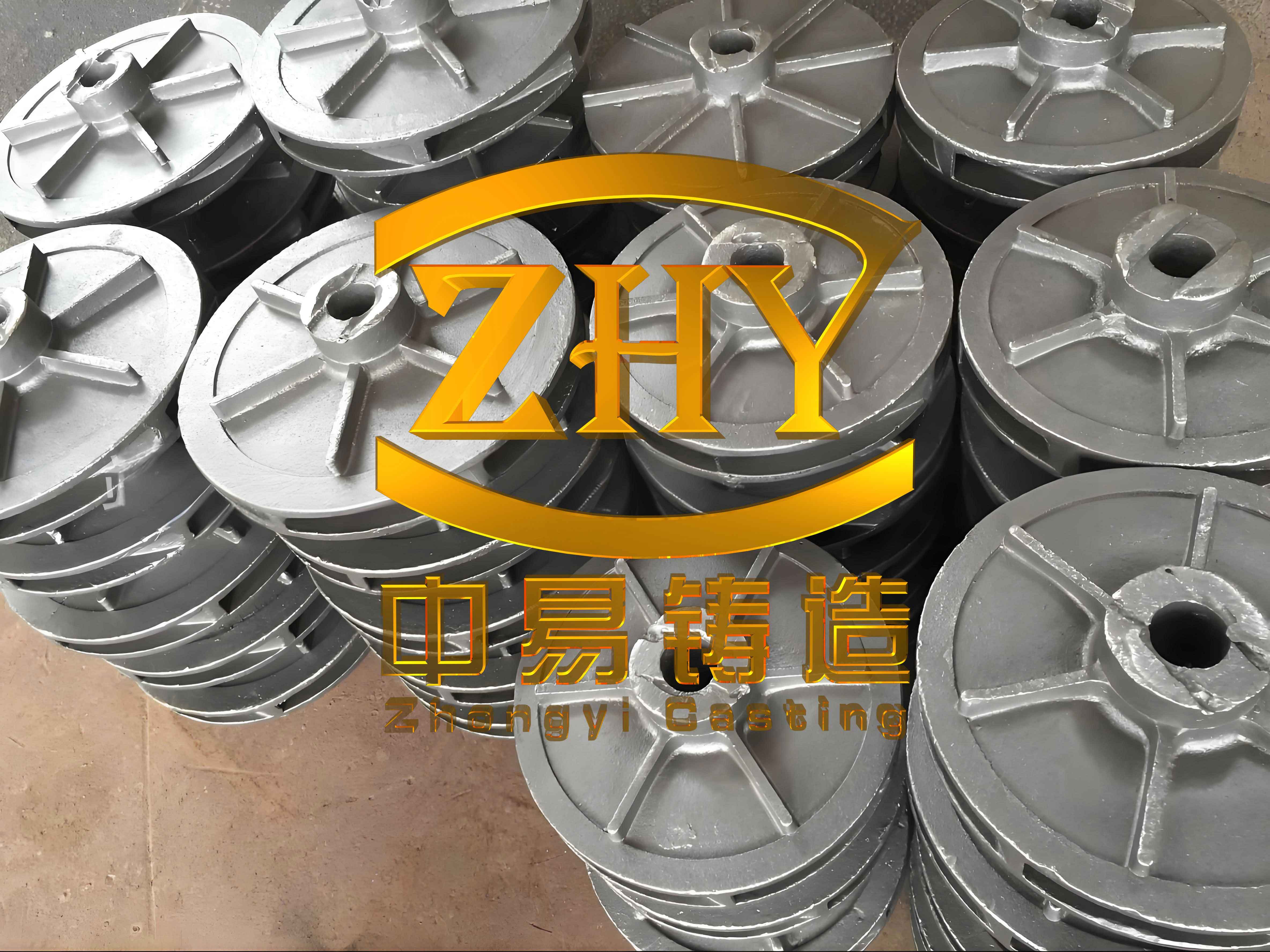
The component in question was an automotive steering pump, designated with a material grade of HT300 (equivalent to a minimum tensile strength of 300 MPa). The critical specification was not merely achieving this strength in a separately cast test bar, but ensuring a dominant proportion of Type A graphite (exceeding 80%) in the actual thin-wall sections of the casting, which were approximately 12 mm thick. Furthermore, the hardness was required to fall within the range of 190 to 230 HB. The initial production attempt, based on standard practices for high-strength gray iron castings, yielded unsatisfactory microstructural results in the thin sections.
Initial Production Status and Identified Problem
The foundry employed modern equipment: a dual-station medium-frequency induction furnace for melting, an imported spark spectrometer for chemical analysis, a metallurgical microscope for microstructure examination, and a universal testing machine for mechanical property verification. The initial chemical composition was controlled based on historical experience for achieving high strength, as summarized in Table 1.
| Element | Target at Furnace | Final Target in Casting |
|---|---|---|
| C | 3.05 – 3.15 | 2.95 – 3.10 |
| Si | 1.5 – 1.6 | 1.9 – 2.0 |
| Mn | 0.8 – 1.0 | 0.8 – 1.0 |
| P | < 0.05 | < 0.05 |
| S | 0.08 – 0.10 | 0.08 – 0.10 |
| Cu | 0.3 – 0.4 | 0.3 – 0.4 |
Pouring temperature was maintained between 1420°C and 1380°C. The results from this initial batch were mixed. The separately cast test bar exhibited excellent mechanical properties: a tensile strength of 330 MPa and a hardness of 192 HB, comfortably meeting the grade requirement. However, metallographic analysis of the thin-wall section of the actual casting revealed a problematic microstructure. The graphite was primarily undercooled types (a mix of D and E type), with only about 30% Type A graphite present. The graphite was notably short, and the matrix was nearly fully pearlitic (~98%). This microstructure, while providing strength, is suboptimal for thin-wall gray iron castings as it can lead to reduced machinability, impaired thermal conductivity, and potentially lower dynamic properties compared to a structure dominated by uniformly distributed Type A graphite.
Mechanistic Analysis of Undercooled Graphite Formation
The formation of undercooled graphite (Types D and E) is a direct consequence of a high degree of undercooling during solidification. In thin-walled gray iron castings, the high surface-area-to-volume ratio leads to rapid heat extraction, inherently promoting undercooling. Under these conditions, graphite nucleation is forced to occur at a lower temperature, leading to a profusion of fine, branched graphite particles that grow within the interdendritic spaces of the primary austenite. The non-uniform distribution of this graphite, often accompanied by ferrite halos, detrimentally impacts mechanical properties.
The key differentiating factor between D and E type graphite is the degree of constraint and the carbon equivalent (CE). E type graphite typically forms under even greater undercooling and lower carbon equivalents than D type. The growth of graphite is highly constrained by the closely spaced austenite dendrites, resulting in a more directional alignment of the graphite particles. E type graphite is generally longer than D type and has a more pronounced negative effect on mechanical strength and integrity. For high-strength, thin-wall gray iron castings, the primary microstructural goal is to shift the solidification conditions away from those favoring undercooled graphite and towards those promoting the formation of Type A graphite.
Analysis of our initial failure pointed to an insufficient Carbon Equivalent (CE) as the root cause for the high propensity to form undercooled graphite. The CE is a calculated value that summarizes the combined graphitizing effect of carbon and silicon. The most common formula is:
$$ CE = \%C + \frac{1}{3}\%Si $$
Our initial target final composition had a CE range calculated as:
$$ CE_{min} = 2.95 + \frac{1}{3}(1.9) \approx 3.58 $$
$$ CE_{max} = 3.10 + \frac{1}{3}(2.0) \approx 3.77 $$
For a 12 mm section, this CE was too low, pushing the solidification into the undercooled graphite region of the solidification diagram. Furthermore, the silicon-to-carbon ratio (Si/C) was also relatively low. Increasing the Si/C ratio promotes the formation of more primary austenite dendrites during the initial stage of solidification. This has several benefits: it strengthens the metallic matrix, increases the elastic modulus, reduces casting stresses, and improves machinability. Perhaps most importantly for this application, a larger volume of well-distributed austenite dendrites can provide a favorable substrate for the subsequent eutectic solidification, guiding the growth of more organized, Type A graphite rather than the chaotic undercooled forms.
The manganese content was also reviewed. Manganese interacts with sulfur to form manganese sulfide (MnS) inclusions. The formation reaction can be considered as:
$$ [Mn] + [S] \rightarrow (MnS) $$
Since MnS has a high melting point (above 1600°C), it can act as a heterogeneous nucleation site for graphite, indirectly promoting graphitization. An empirical relationship often used to determine the necessary manganese level to neutralize sulfur and provide a slight excess is:
$$ \%Mn_{required} = 1.73 \times \%S + 0.3\% $$
Given our sulfur levels of 0.08-0.10%, the calculated required manganese is:
$$ \%Mn_{required} = 1.73 \times 0.09 + 0.3 \approx 0.46\% $$
Our initial target of 0.8-1.0% Mn was significantly higher than this calculated value. Excess manganese tends to segregate at austenite grain boundaries and is a potent pearlite stabilizer. While pearlite is desired for strength, excessive Mn can increase hardness beyond specification and may not be necessary if other pearlite promoters are used. Lowering the Mn content closer to the stoichiometric requirement would reduce this segregation risk and its associated brittleness.
Development and Implementation of the Corrective Strategy
Based on the analysis, a multi-faceted corrective strategy was formulated to improve the graphite morphology in the thin-wall sections of our high-strength gray iron castings without compromising tensile strength.
1. Adjustment of Base Chemistry: The chemical composition targets were revised with two primary objectives: increase the Carbon Equivalent to move the solidification away from the undercooled region, and increase the Silicon-to-Carbon ratio. Concurrently, manganese was reduced. To compensate for the potential loss of pearlite stability due to higher CE and lower Mn, a small addition of Tin (Sn) was introduced. Tin is an extremely potent pearlite promoter, effective at very low levels. The revised composition strategy is detailed in Table 2.
| Element | Target at Furnace | Final Target in Casting |
|---|---|---|
| C | 3.20 – 3.30 | 3.10 – 3.25 |
| Si | 1.7 – 1.8 | 2.1 – 2.2 |
| Mn | 0.5 – 0.7 | 0.5 – 0.7 |
| P | < 0.05 | < 0.05 |
| S | 0.08 – 0.10 | 0.08 – 0.10 |
| Cu | 0.3 – 0.4 | 0.3 – 0.4 |
| Sn | 0.02 – 0.03 | 0.02 – 0.03 |
The revised CE range was significantly higher:
$$ CE_{min,new} = 3.10 + \frac{1}{3}(2.1) \approx 3.80 $$
$$ CE_{max,new} = 3.25 + \frac{1}{3}(2.2) \approx 3.98 $$
The Si/C ratio also increased substantially, from approximately 0.61-0.65 to 0.68-0.71. The Mn content was brought closer to the calculated equilibrium value.
2. Enhancement of Inoculation Practice: Inoculation is critical for achieving a uniform distribution of fine Type A graphite, especially in thin sections prone to undercooling. The standard inoculation practice was enhanced by switching to a more powerful, specialized inoculant for thin-section gray iron castings. A strontium (Sr)-bearing inoculant, with additions of zirconium (Zr), was selected. Strontium is particularly effective in suppressing the formation of undercooled graphite and promoting a uniform, Type A graphite structure, even under high cooling rate conditions. The inoculant was applied as a late stream addition during pouring, using a fine granularity (0.2 mm – 0.7 mm) to ensure rapid dissolution and maximum efficiency. The inoculation effect can be conceptualized as providing a high density of nucleation sites ($N$) for graphite, effectively reducing the undercooling ($\Delta T$) required for eutectic solidification, as suggested by the relationship:
$$ \Delta T \propto \frac{1}{\sqrt{N}} $$
By dramatically increasing $N$ through effective inoculation, $\Delta T$ is minimized, favoring the stable eutectic (Type A graphite) over the metastable undercooled eutectic.
3. Process Consistency: The pouring temperature range was kept identical (1420°C – 1380°C) to isolate the effects of chemistry and inoculation changes.
Results and Verification of the Improved Process
Implementing the revised chemical composition and enhanced inoculation practice yielded immediate and significant improvements in the quality of the thin-walled gray iron castings.
Mechanical Properties: The tensile strength of the separately cast test bars remained excellent, actually showing a slight increase to an average of 337 MPa. The hardness averaged 202 HB, well within the specified 190-230 HB range. This confirmed that the increased CE and adjusted alloying did not erode the strength or hardness requirements for the HT300 grade.
Microstructural Analysis: The critical improvement was observed in the microstructure of the 12 mm thin-wall section of the actual casting. Metallographic examination revealed a dramatic transformation. The proportion of Type A graphite now exceeded 85%, successfully meeting the specification. The graphite was well-formed, uniformly distributed, and of a satisfactory length (approximately ASTM size 4-5). The matrix remained predominantly pearlitic (~98%), thanks to the balancing effect of the tin addition. This optimal microstructure—combining high-strength pearlite with a robust network of Type A graphite—provides the ideal combination of mechanical strength, good damping capacity, thermal conductivity, and machinability required for demanding applications like the automotive steering pump.
| Parameter | Initial Process | Optimized Process |
|---|---|---|
| Target CE (Final) | ~3.58 – 3.77 | ~3.80 – 3.98 |
| Target Si/C Ratio (Final) | ~0.61 – 0.65 | ~0.68 – 0.71 |
| Key Inoculant | Conventional | Sr-bearing |
| Tensile Strength (Test Bar) | 330 MPa | 337 MPa |
| Hardness (Test Bar) | 192 HB | 202 HB |
| % Type A Graphite (12mm section) | ~30% | > 85% |
| Primary Graphite Type | D + E (Undercooled) | A |
| Matrix (Pearlite %) | ~98% | ~98% |
Broader Implications and Foundry Practice Guidelines
The successful resolution of this production challenge provides generalizable guidelines for the manufacture of high-strength, thin-wall gray iron castings. The interaction between chemistry, cooling rate, and inoculation is complex but can be managed through a systematic approach.
1. The Role of Carbon Equivalent and Section Sensitivity: There is an optimal CE window for every casting section size and strength grade. For thin-wall gray iron castings, the CE must be raised compared to heavier sections of the same grade to counteract the inherent undercooling. A simplified guide for minimum CE based on critical section thickness ($t$ in mm) for high-strength irons (250+ MPa) can be approximated by:
$$ CE_{min} \approx 3.5 + 0.025 \times (t_{ref} – t) $$
where $t_{ref}$ is a reference thickness (e.g., 25mm). This emphasizes the inverse relationship between required CE and section size.
2. Optimizing the Silicon-Carbon Balance: Beyond absolute CE, the Si/C ratio is a powerful lever. For thin-wall, high-strength irons, a higher Si/C ratio (typically >0.65) is beneficial. This promotes a stronger, more interconnected austenite dendrite network early in solidification. The subsequent eutectic graphite grows in the interstices of this network, leading to a more uniform and finer Type A distribution. The relationship can be viewed as optimizing the volume fraction of primary austenite ($V_\gamma$):
$$ V_\gamma \propto (Si/C) \times f(CE) $$
where $f(CE)$ is a function that decreases as CE increases. The foundry must balance a high enough Si/C for structure with a high enough CE for graphite type.
3. Strategic Use of Alloying Elements: Alloying must be precise. Manganese should be controlled based on sulfur content, using the formula $ \%Mn \approx 1.73\%S + \Delta $, where $\Delta$ is a small excess (0.1-0.3%) for solid-solution strengthening. For pearlite stability in high-CE irons, potent but low-addition elements like Tin (Sn, 0.02-0.1%) or Antimony (Sb, 0.02-0.06%) are preferred over excessive amounts of copper or manganese, which can be costly or detrimental to ductility.
4. The Criticality of Powerful Inoculation: Inoculation is not a standard procedure but a critical control parameter for thin-wall castings. Late stream addition of a specialized inoculant (containing Sr, Zr, Ca, Al, etc.) is essential. The efficiency of inoculation ($\eta_I$) can be considered as its ability to provide active nuclei that survive in the molten iron until the eutectic temperature. This is a function of composition, particle size, addition method, and holding time. The goal is to maximize $\eta_I$ to ensure:
$$ N_{effective} = \eta_I \times M_{inoculant} $$
where $N_{effective}$ is the number of active nuclei per unit volume and $M_{inoculant}$ is the amount added. For thin sections, high $\eta_I$ is mandatory.
Advanced Process Control and Future Directions
To consistently produce high-quality thin-wall gray iron castings, foundries should move beyond static recipes and adopt more dynamic process control methods. Thermal analysis, using devices that cool a small sample of iron at a rate similar to the critical casting section, can provide real-time data on the actual CE, undercooling temperature, and predicted microstructure. Key parameters from a cooling curve, such as the temperature of the eutectic plateau ($T_{EU}$) and the recalescence undercooling ($\Delta T_{R}$), are direct indicators of the melt’s graphitization potential and inoculation effectiveness.
Statistical Process Control (SPC) should be applied to all critical parameters: charge makeup, furnace analysis, pouring temperature, and inoculation amount. Correlating these inputs with outputs like tensile strength, hardness, and microstructure rating (e.g., using automated image analysis to quantify % Type A graphite) allows for the development of robust predictive models.
Future developments may involve the use of even more sophisticated inoculants or nucleation engineering, as well as advanced molding materials and processes (e.g., controlled permeability molds) that can moderate the cooling rate in thin sections, providing a larger processing window for achieving the desired graphite structure in high-strength gray iron castings.
Conclusion
The production of high-strength, thin-wall gray iron castings presents a distinct metallurgical challenge centered on controlling graphite morphology under high cooling rate conditions. The experience detailed here demonstrates that failure, characterized by a predominance of undercooled D and E type graphite, is typically rooted in an insufficient Carbon Equivalent for the given section size. The successful strategy involved a holistic adjustment of the metallurgical approach: intentionally raising the CE and the Silicon-to-Carbon ratio in the base chemistry, rationalizing alloying element additions like manganese, and employing a potent, strontium-based inoculant applied via an effective late-addition method. Crucially, these changes were made while carefully maintaining pearlite stability through controlled micro-alloying (e.g., with tin) to ensure the final casting met both the microstructural specification (>85% Type A graphite in thin sections) and the mechanical property requirements (HT300 grade, 190-230 HB hardness). This case underscores that mastering the delicate interplay between composition, solidification kinetics, and nucleation control is key to reliably expanding the application envelope of high-performance gray iron castings into demanding thin-wall geometries.