
The production of high-integrity stainless steel castings for critical applications, such as turbine housings and valve bodies, presents a significant engineering challenge. These components must operate under demanding conditions of high temperature and pressure, necessitating exceptional surface finish and internal soundness, verified by stringent non-destructive testing standards. A primary obstacle to achieving this quality is the occurrence of various casting defects. This article details a systematic engineering approach, from root cause analysis to practical solution implementation, for eliminating casting defects in a complex 06Cr13Ni4Mo stainless steel casing. The methodology centers on leveraging numerical simulation to scientifically optimize the entire casting process, moving beyond trial-and-error methods.
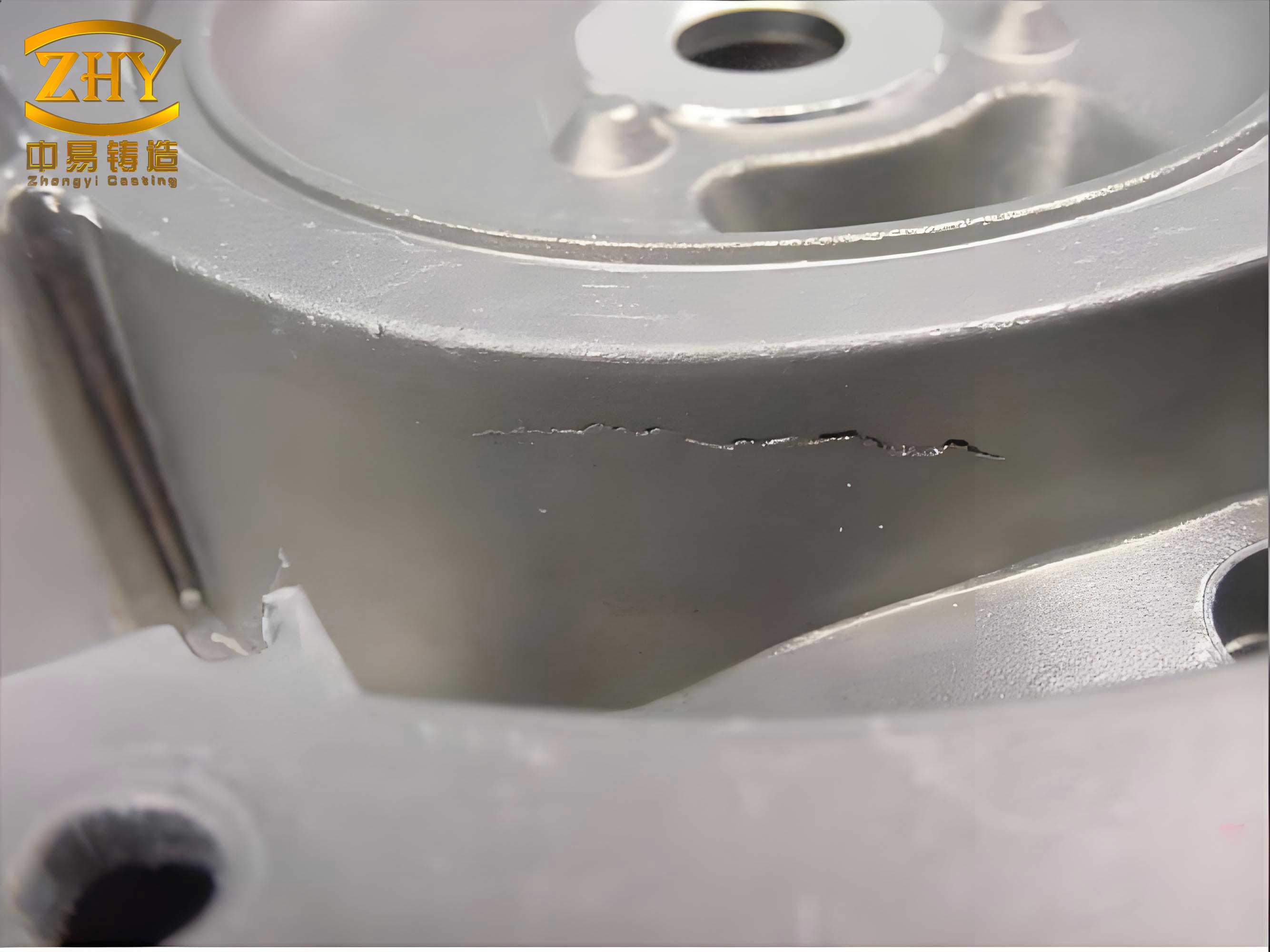
The specific casing under discussion featured a intricate geometry with a large central cavity and four smaller chambers, with a nominal wall thickness of 32 mm. This complexity inherently creates difficulties in achieving uniform filling, directional solidification, and proper core support. The material, 06Cr13Ni4Mo martensitic stainless steel, has inherently poor casting characteristics compared to low-alloy steels, primarily due to its high chromium content, which affects fluidity, solidification shrinkage, and gas solubility. Initial production runs resulted in an unacceptable scrap rate due to three predominant casting defects: surface cold shuts, subsurface shrinkage porosity, and extensive subcutaneous pinholes. A foundational step in addressing any casting defects is a thorough classification and understanding of their mechanisms, as summarized below.
| Defect Category | Specific Defect | Visual/Microscopic Characteristics | Primary Contributing Factors |
|---|---|---|---|
| Filling-Related | Cold Shut / Misrun | Incomplete fusion of metal streams, visible seam on surface. | Low metal fluidity, inadequate pouring temperature, poor gating design leading to premature cooling. |
| Surface Lap | Wrinkled, oxidized layer on surface. | Low fluidity, slow filling, oxide film formation. | |
| Solidification-Related | Macroscopic Shrinkage Cavity | Large, open or internal voids, often in thermal centers. | Inadequate feeding, lack of directional solidification. |
| Micro-shrinkage (Porosity) | Dispersed interdendritic micro-voids, detectable by NDT. | Long freezing range, insufficient temperature gradient for feeding. | |
| Hot Tear | Crack, often in high-stress areas during solidification. | High thermal stress, restrained contraction. | |
| Gas-Related | Subsurface Blowholes / Pinholes | Spherical or elongated cavities just below the casting skin. | Gas evolution from mold/core, low permeability, high gas solubility in metal. |
| Surface Pinholes | Small holes breaking the surface. | Reaction at metal-mold interface, moist aggregates. |
Root Cause Analysis of the Observed Casting Defects
The initial process utilized a gating system that distributed metal unevenly and employed predominantly open top risers. Analysis revealed this configuration was fundamentally unsuited to the material and geometry, leading directly to the observed casting defects.
1. Cold Shuts and Poor Surface Finish: The low fluidity of 06Cr13Ni4Mo steel, quantified by its viscosity and solidification front dynamics, is a primary cause. Fluid flow in a mold can be approximated by the Bernoulli principle with corrections for viscous losses:
$$ P_1 + \frac{1}{2} \rho v_1^2 + \rho g h_1 = P_2 + \frac{1}{2} \rho v_2^2 + \rho g h_2 + \Delta P_{loss} $$
where $\Delta P_{loss}$ is heavily influenced by metal viscosity and channel geometry. The original gating led to excessive $\Delta P_{loss}$ in some sections, causing metal streams to lose superheat and coalesce imperfectly, forming cold shuts. Furthermore, the open risers acted as premature heat sinks, further chilling the metal.
2. Shrinkage Porosity and Cavities: Stainless steels have a higher volumetric shrinkage ($\beta$) compared to carbon steels. The total volume deficit needing compensation by feeders (risers) is:
$$ V_{feed} = \beta \cdot V_{casting} $$
The original risers were insufficient in volume and inefficiently placed. More critically, their feeding distance was inadequate. The effective feeding distance ($L_f$) for a plate-like section can be estimated as:
$$ L_f = K \sqrt{T} $$
where $T$ is the section thickness and $K$ is a material constant (lower for long-freezing-range alloys like our stainless steel). The initial layout placed some hot spots beyond this critical distance, leading to isolated pools of liquid metal that formed shrinkage casting defects upon solidification.
3. Subcutaneous Gas Defects: The high solubility of gases like hydrogen and nitrogen in molten stainless steel, followed by a sharp decrease in solubility upon solidification, is a key factor. The gas pore formation pressure ($P_g$) must overcome the sum of atmospheric pressure ($P_a$), metallostatic pressure ($\rho g h$), and the pressure due to liquid surface tension ($2\gamma/r$):
$$ P_g \geq P_a + \rho g h + \frac{2\gamma}{r} $$
The original mold and core system lacked sufficient venting paths. Trapped gas from binder decomposition or air entrapment could not escape easily. Consequently, gas pressure built up at the solidifying interface, forming pinhole casting defects just beneath the surface, where the sum of opposing pressures was lowest.
Systematic Solution Framework via Numerical Simulation
The cornerstone of the corrective strategy was the adoption of casting process simulation software. This technology allows for the virtual modeling of filling and solidification, enabling predictive analysis of defect formation. The core equations solved are the Navier-Stokes equations for fluid flow and the Fourier equation for heat transfer:
$$ \rho \left( \frac{\partial \vec{v}}{\partial t} + \vec{v} \cdot \nabla \vec{v} \right) = -\nabla p + \mu \nabla^2 \vec{v} + \rho \vec{g} $$
$$ \rho c_p \frac{\partial T}{\partial t} = \nabla \cdot (k \nabla T) + \dot{Q}_{latent} $$
where $\dot{Q}_{latent}$ accounts for the release of latent heat during phase change. By solving these equations numerically, temperature fields, liquid fraction maps, and solidification sequences are visualized, pinpointing potential locations for casting defects before any metal is poured.
| Process Element | Initial Design | Optimized Design (Simulation-Guided) | Rationale for Change |
|---|---|---|---|
| Gating System | Uneven distribution, few in-gates. | Balanced, multi-ingate system with increased total cross-sectional area. Added a dedicated runner to a top riser. | Promotes uniform, rapid filling to prevent cold shuts. Top runner aids in heat distribution and venting. |
| Riser Type & Placement | Primarily open side risers (elliptical). | Combination of open elliptical and blind top risers (elliptical). Key riser size increased. | Blind risers retain heat longer, improving feeding efficiency. Strategic placement ensures all sections are within effective feeding distance. |
| Chills (External) | Minimal or no use. | Strategic placement of steel chills in thick sections adjacent to risers. | Creates a controlled temperature gradient, promoting directional solidification towards the riser and eliminating isolated hot spots. |
| Mold/Core Venting | Standard venting. | Aggressive venting: venting ropes, drilled vent holes in core, use of permeable core pastes. Top riser connected to pouring basin for gas escape. | Provides low-resistance escape paths for gases evolved from sand binders and air displacement, preventing gas-related casting defects. |
Detailed Implementation of Corrective Measures
Based on the simulation results, the following specific modifications were implemented to attack the root causes of the casting defects.
1. Enhanced Filling and Thermal Management: The gating system was redesigned to be symmetrical and faster, reducing fill time to minimize heat loss. A key modification was adding a flow path from the main runner directly into a top blind riser. This served a dual purpose: it provided a hot metal channel to keep the riser active longer, and it acted as a major vent for escaping gases during pouring. The simulation’s velocity and temperature plots were used to iteratively adjust ingate sizes and positions until a uniform fill pattern was achieved.
2. Optimized Feeding System Design: The riser design was transformed. A critical side riser (Riser 1) was significantly enlarged based on the modulus method and simulation feedback. Its modulus ($M_{riser} = V/A_{surface}$) was calculated to be greater than that of the casting section it fed. One open riser (Riser 4) was converted to a blind top riser to improve thermal efficiency. Another was changed from cylindrical to elliptical to better match the casting contour and improve feeding geometry. The feeding effectiveness was validated in simulation by analyzing the Niyama criterion ($G/\sqrt{\dot{T}}$) maps, where $G$ is the temperature gradient and $\dot{T}$ is the cooling rate. Areas with values below a critical threshold, indicative of potential shrinkage casting defects, were eliminated.
3. Strategic Use of Chills: Steel chills were placed in thick sections that were distant from risers. The chill’s rapid heat extraction capability creates a strong local temperature gradient, effectively extending the feeding range of the nearest riser. The required chill size and contact area were estimated using methods that balance the heat capacity of the chill with the heat content of the casting section. The simulation confirmed that these chills successfully redirected the solidification front, eliminating the isolated liquid pools that previously caused shrinkage.
4. Comprehensive Venting Strategy: To combat gas casting defects, venting was treated as a critical system. Venting ropes were embedded in the core at high points. Multiple vent holes were drilled from the core prints to the outside of the mold. The permeability of the core facing was increased. Crucially, the newly added channel to the top blind riser provided a direct, high-capacity exhaust path for gases to escape into the pouring basin/atmosphere, drastically reducing the gas pressure ($P_g$) at the metal-front interface.
Quantification of Results and Final Verification
The efficacy of the simulation-optimized process was unequivocally demonstrated. Post-optimization simulations showed a clean, progressive solidification front moving from the extremities towards the strategically placed risers, with no areas of isolated liquid. The liquid fraction maps confirmed the absence of potential shrinkage zones. The modified process was implemented in production.
| Metric | Initial Process | Optimized Process | Improvement / Outcome |
|---|---|---|---|
| Casting Yield | Low (excessive riser weight) | Optimized | Improved material efficiency while ensuring soundness. |
| Surface Quality | Cold shuts, laps present. | Clean, smooth surface. | Cold shuts eliminated due to improved filling. |
| Subsurface Defects | Extensive pinholes. | No gas-related defects. | Aggressive venting eliminated subcutaneous gas. |
| Internal Soundness (X-ray/UT) | Shrinkage porosity in thick sections. | No shrinkage defects detected. | Directional solidification ensured complete feeding. |
| Production Success Rate | 0% (1 scrapped, 0 accepted) | 100% (1 produced, 1 accepted) | Complete elimination of scrappage due to casting defects. |
The single casting produced using the optimized methodology underwent full machining and non-destructive examination. It met all dimensional, surface finish, and radiographic/ultrasonic testing specifications required for this high-pressure turbine component. The success rate moved from 0% to 100% for the validated geometry.
Conclusion and Engineering Principles
The systematic elimination of casting defects in complex stainless steel castings requires a shift from empirical correction to scientific process design. This case study underscores that casting defects like cold shuts, shrinkage porosity, and gas holes are not independent failures but symptoms of a suboptimal process system interacting with a challenging material. Numerical simulation serves as a powerful virtual foundry, enabling engineers to visualize and quantify the interrelated phenomena of fluid flow, heat transfer, and solidification shrinkage. By iteratively optimizing gating for fill, risering and chilling for directional solidification, and venting for gas escape—all guided by simulation data—a robust process capable of producing defect-free castings was developed. This methodology not only saves significant cost and time associated with physical trials and scrap but also provides a fundamental engineering framework for tackling casting defects in any complex alloy casting, ensuring reliability and performance in the most critical applications.