
In the manufacturing of critical components for nuclear power plants, such as circulating pump impellers, the occurrence of casting defects is a common challenge that necessitates reliable repair methods. As an engineer involved in this field, I have extensively studied the repair welding process for casting defects in duplex stainless steel impellers made of Z6CNDU20-08M. This material, a super duplex stainless steel with a balanced ferrite (α) and austenite (γ) phase structure, offers excellent corrosion resistance and mechanical properties. However, casting defects like porosity, inclusions, or cracks can compromise the integrity of these impellers, making repair welding essential. In this article, I will detail the comprehensive approach we developed to address casting defects through welding, ensuring compliance with nuclear standards such as RCC-M S. The focus is on controlling the dual-phase microstructure to maintain performance, and I will emphasize the importance of managing casting defects throughout the process.
Casting defects in duplex stainless steel impellers arise from static casting processes, where factors like solidification shrinkage or gas entrapment can lead to imperfections. These casting defects must be detected through non-destructive testing (NDT) methods like penetrant testing (PT) and radiography (RT), and any超标 defects require repair welding. Our goal was to establish a welding procedure that restores the material’s properties without introducing new issues. The key lies in understanding the welding metallurgy of duplex stainless steels, where the balance between ferrite and austenite phases is critical. Excessive ferrite can reduce toughness and corrosion resistance, while too much austenite might affect strength. Therefore, we conducted welding procedure qualifications to optimize parameters for repairing casting defects.
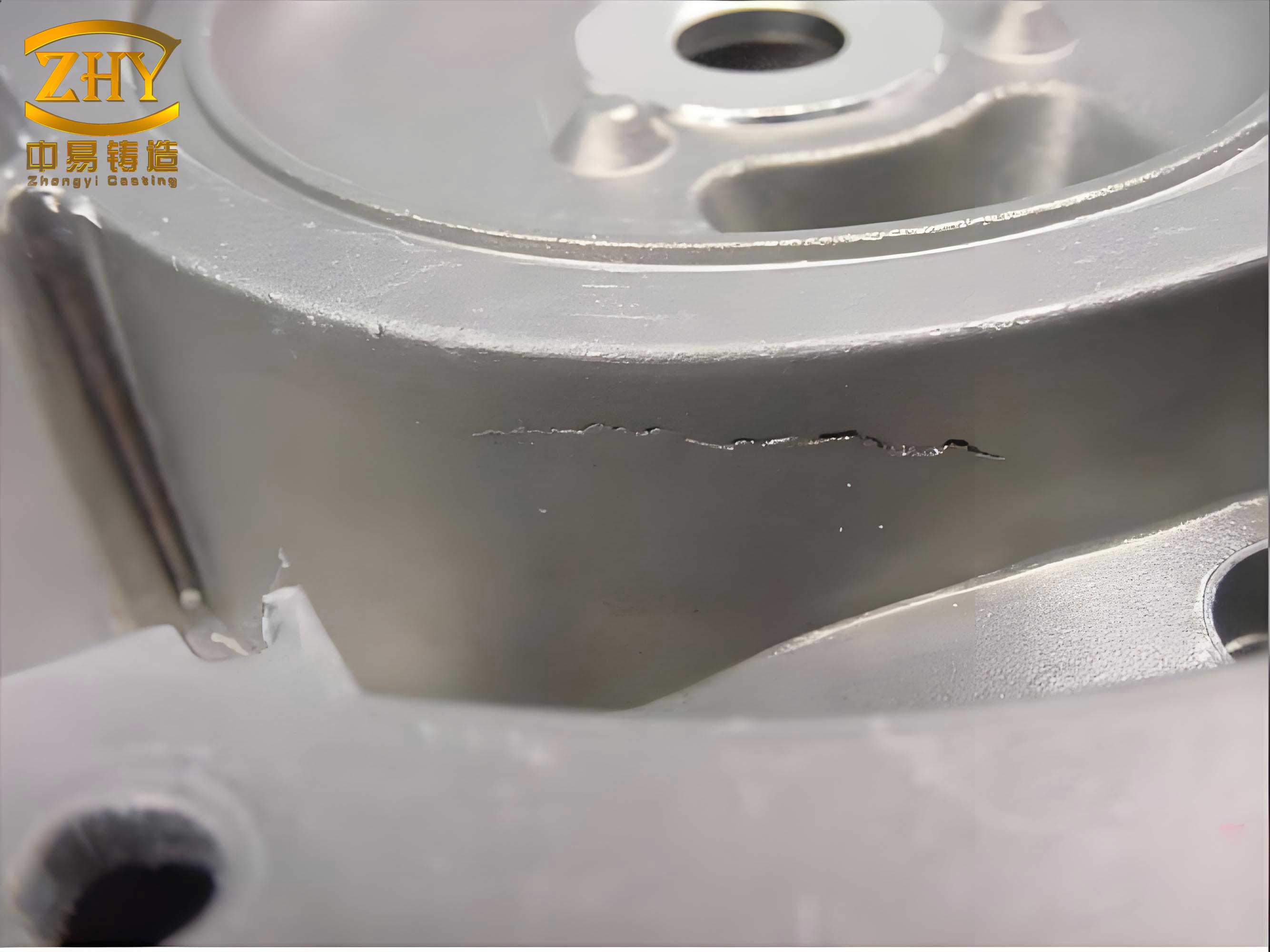
The welding technical requirements for repairing casting defects in Z6CNDU20-08M impellers are stringent, as per RCC-M M3407. The impeller is a nuclear level 3 component, and any repair must ensure no degradation in service performance. We started by analyzing the material’s weldability. Duplex stainless steels are sensitive to thermal cycles, and improper welding can lead to precipitation of harmful phases like sigma (σ) or chromium nitrides, which exacerbate casting defects-related issues. To prevent this, we selected shielded metal arc welding (SMAW) with low-hydrogen electrodes, specifically E2594-16, which has a higher nickel content than the base metal to promote austenite formation. The chemical composition of the base metal and filler metal is crucial for corrosion resistance, as summarized in Table 1.
| Material | C | Si | Mn | P | S | Cr | Ni | Mo | Cu | N | Fe |
|---|---|---|---|---|---|---|---|---|---|---|---|
| Z6CNDU20-08M Base Metal | 0.026 | 1.2 | 1.2 | 0.026 | 0.010 | 21.5 | 7.5 | 2.7 | 1.5 | 0.1 | Bal. |
| E2594-16 Electrode | 0.035 | 0.4 | 1.1 | 0.019 | 0.004 | 25.4 | 9.2 | 4.0 | 0.05 | 0.22 | Bal. |
The pitting resistance equivalent number (PREN) is a key indicator for corrosion resistance, especially when addressing casting defects in corrosive environments. It is calculated using the formula: $$ PRE(N) = \%Cr + 3.3 \times \%Mo + 16 \times \%N $$ For the base metal, $$ PRE(N)_{base} = 21.5 + 3.3 \times 2.7 + 16 \times 0.1 = 32.01 $$ and for the weld metal, $$ PRE(N)_{weld} = 25.4 + 3.3 \times 4.0 + 16 \times 0.22 = 42.12 $$ Both values exceed the required minimum of 30.85, ensuring that the repair welding for casting defects maintains high pitting corrosion resistance.
Welding procedure qualification was conducted on a simulated casting defect in a test plate of Z6CNDU20-08M, with dimensions 1000 mm × 400 mm × 100 mm. A groove was machined to a depth of 60 mm with a 30° angle, mimicking typical casting defects that require repair. The welding position was horizontal (2G), and we controlled parameters to manage heat input and interpass temperature. Heat input (E) is critical for duplex stainless steels, as it affects phase balance. The formula for heat input is: $$ E = \frac{I \times V}{v} $$ where I is current (A), V is voltage (V), and v is welding speed (mm/min). We maintained E between 0.5 and 1.5 kJ/mm, with interpass temperature below 150°C to avoid detrimental phase precipitation. Table 2 summarizes the welding parameters used.
| Weld Layer (Pass) | Electrode Diameter (mm) | Current (A) | Speed (mm/min) | Heat Input (kJ/mm) |
|---|---|---|---|---|
| 1-2 (1-10) | 3.2 | 100-115 | 180-200 | 0.72-1.37 |
| 3-23 (11-110) | 4.0 | 150-155 | 200-250 | 0.75-1.26 |
After welding, the test plate underwent NDT, including visual inspection, PT, and RT, to ensure no welding defects were introduced. This step is vital because new defects could compound the original casting defects, leading to failure. The results met RCC-M standards, confirming that our welding procedure effectively repairs casting defects without creating additional issues.
Destructive testing was then performed to evaluate the welded joint’s properties. Macro-examination showed a sound weld with no voids or cracks, indicating that the casting defects were fully repaired. Microstructural analysis revealed a dual-phase structure of ferrite and austenite, with austenite slightly predominant. This balance is essential for corrosion resistance and mechanical strength. We measured ferrite content using ASTM E562, and the results are in Table 3. The ferrite content in the weld metal, heat-affected zone (HAZ), and base metal ranged from 30% to 40%, achieving the desired phase equilibrium.
| Location | Measurement 1 | Measurement 2 | Measurement 3 | Measurement 4 | Measurement 5 | Average |
|---|---|---|---|---|---|---|
| Base Metal | 32.5 | 33.9 | 32.8 | 33.5 | 33.4 | 33.22 |
| Weld Metal | 41.9 | 40.8 | 40.2 | 41.5 | 42.0 | 41.28 |
| HAZ | 35.6 | 34.9 | 36.5 | 36.2 | 35.2 | 35.68 |
Mechanical testing included transverse tensile tests, bend tests, impact tests, and hardness measurements. The results, shown in Table 4, demonstrate that the welded joint meets or exceeds the requirements of RCC-M and customer specifications. The tensile strength and yield strength are adequate, with good elongation, indicating ductility. Impact toughness at 0°C is excellent, ensuring resistance to brittle fracture. Hardness values are within limits, preventing issues like hydrogen-induced cracking.
| Property | Standard Requirement | Test Result | Remarks |
|---|---|---|---|
| Tensile Strength (MPa) | ≥600 | 718, 693 | Average 705.5 |
| Yield Strength (MPa) | ≥320 | 669, 668 | Average 668.5 |
| Elongation (%) | ≥20 | 25.5, 26.5 | Average 26.0 |
| Hardness (HV10) | ≤280 | Base: 219-228; Weld: 232-254; HAZ: 236-247 | All within limit |
| Bend Test (4d, 180°) | No defects | Pass | Satisfactory |
| Impact Energy at 0°C (J) | ≥50 | Weld: 89-100; HAZ: 124-265; Base: 133-298 | All above minimum |
Corrosion resistance is paramount for impellers in nuclear service, as casting defects can be sites for corrosion initiation. We conducted pitting and crevice corrosion tests per ASTM G48 A, using a 6% FeCl3 solution at 22°C for 24 hours. The weight loss was 0.04 mg/cm², well below the allowable 0.5 mg/cm², confirming that the repair welding for casting defects does not compromise corrosion resistance. Intergranular corrosion tests according to RCC-M MC1000 A involved sensitization at 675°C for 10 minutes, followed by bending. No cracks were observed, indicating immunity to intergranular attack. These results validate that our welding process effectively mitigates risks associated with casting defects in corrosive environments.
To further analyze the phase transformations during welding, we can consider the Schaeffler diagram modified for duplex stainless steels. The chromium equivalent (Creq) and nickel equivalent (Nieq) help predict microstructure. For Z6CNDU20-08M, the equivalents can be calculated as: $$ Creq = \%Cr + \%Mo + 1.5 \times \%Si $$ and $$ Nieq = \%Ni + 30 \times \%C + 0.5 \times \%Mn $$ For the base metal, $$ Creq = 21.5 + 2.7 + 1.5 \times 1.2 = 25.9 $$ and $$ Nieq = 7.5 + 30 \times 0.026 + 0.5 \times 1.2 = 8.58 $$ For the weld metal, $$ Creq = 25.4 + 4.0 + 1.5 \times 0.4 = 30.0 $$ and $$ Nieq = 9.2 + 30 \times 0.035 + 0.5 \times 1.1 = 10.45 $$ Plotting these on a diagram confirms the dual-phase region, ensuring that casting defects repair maintains the desired microstructure.
In practical application, the welding procedure was used to repair actual impellers with casting defects. Before welding, the defect areas were cleaned with acetone to remove contaminants, and preheating was applied if ambient temperature was below 0°C. During welding, we monitored interpass temperature with contact thermometers and used multi-pass techniques to minimize heat input. A final cosmetic weld bead was added and ground off to refine the surface. Post-weld, 100% PT and RT were performed to verify the repair integrity. This approach has been successfully applied to over 30 impellers, with no reported failures, demonstrating that casting defects can be reliably repaired without affecting service life.
The control of welding parameters is essential to avoid issues like excessive ferrite or sigma phase formation. The cooling rate (T) after welding influences phase balance, and it can be estimated using the formula: $$ T = \frac{E}{\pi \times k \times t} $$ where k is thermal conductivity and t is thickness. For duplex stainless steels, a moderate cooling rate promotes austenite formation. By optimizing E and interpass temperature, we ensured that casting defects repair results in a microstructure with 40-60% austenite, which is ideal for corrosion resistance and toughness.
Another aspect is the effect of nitrogen in duplex stainless steels. Nitrogen enhances austenite stability and pitting resistance. The base metal contains 0.1% N, and the weld metal has 0.22% N, which helps maintain phase balance after repair welding for casting defects. The diffusion of nitrogen during welding can be modeled using Fick’s law: $$ \frac{\partial C}{\partial t} = D \frac{\partial^2 C}{\partial x^2} $$ where C is concentration, t is time, D is diffusion coefficient, and x is distance. This ensures uniform distribution, preventing nitrogen depletion in the HAZ that could exacerbate casting defects-related corrosion.
In conclusion, the repair welding process for casting defects in Z6CNDU20-08M duplex stainless steel impellers is a meticulous procedure that requires careful control of welding parameters, filler metal selection, and phase balance. Through comprehensive qualification testing, we have shown that the welded joint meets all mechanical and corrosion resistance standards. The key to success lies in managing heat input and interpass temperature to preserve the dual-phase microstructure. This process has been validated in real-world applications, where impellers with casting defects have been repaired and put into service without issues. By emphasizing the importance of addressing casting defects proactively, we ensure the reliability and safety of nuclear components. Future work could explore automated welding techniques to further improve consistency in repairing casting defects.
To summarize the critical factors for repairing casting defects, Table 5 provides a checklist based on our experience. This table highlights the steps and considerations to ensure effective repair of casting defects in duplex stainless steel impellers.
| Step | Action | Key Parameter | Target Value | Purpose |
|---|---|---|---|---|
| 1. Defect Detection | Perform NDT (PT/RT) | Defect size | Per standard | Identify casting defects |
| 2. Preparation | Clean and groove | Groove angle | 30° ± 5° | Access for repair |
| 3. Welding | SMAW with E2594-16 | Heat input | 0.5-1.5 kJ/mm | Control phase balance |
| 4. Temperature Control | Monitor interpass | Temperature | <150°C | Avoid harmful phases |
| 5. Post-Weld | NDT verification | Acceptance criteria | RCC-M standards | Ensure no new defects |
| 6. Corrosion Testing | Perform ASTM G48 | Weight loss | <0.5 mg/cm² | Verify corrosion resistance |
Throughout this article, I have discussed the intricacies of repairing casting defects in duplex stainless steel impellers. The process involves a holistic approach from defect detection to final validation, with emphasis on maintaining material properties. By repeatedly addressing casting defects in each stage, we underscore their significance in manufacturing. The welding procedure we developed not only fixes casting defects but also enhances the overall durability of the components. As technology advances, continuous improvement in welding techniques will further optimize the repair of casting defects, ensuring long-term performance in demanding nuclear environments.