
The world of sand castings is ancient, rooted in the very dawn of metallurgy. For centuries, the process has relied on patterns—traditionally carved from wood or machined from metal—to form the cavity in sand molds into which molten metal is poured. In my work, I have frequently encountered the limitations of these traditional methods, particularly when dealing with complex geometries like a blower impeller. The challenges are manifold: intricate wooden patterns are labor-intensive, costly, and prone to damage from moisture and physical stress. Machining metal patterns is prohibitively expensive for prototypes or small batches. This has long been a bottleneck in the agile production of complex sand castings.
The advent of additive manufacturing, or 3D printing, presented itself as a paradigm-shifting solution. Specifically, the Fused Deposition Modeling (FDM) technology, which builds objects layer by layer from thermoplastic filaments, offered a compelling alternative. My research focused on harnessing this technology to create robust, accurate, and cost-effective patterns directly for sand castings, thereby circumventing the traditional wood pattern altogether.
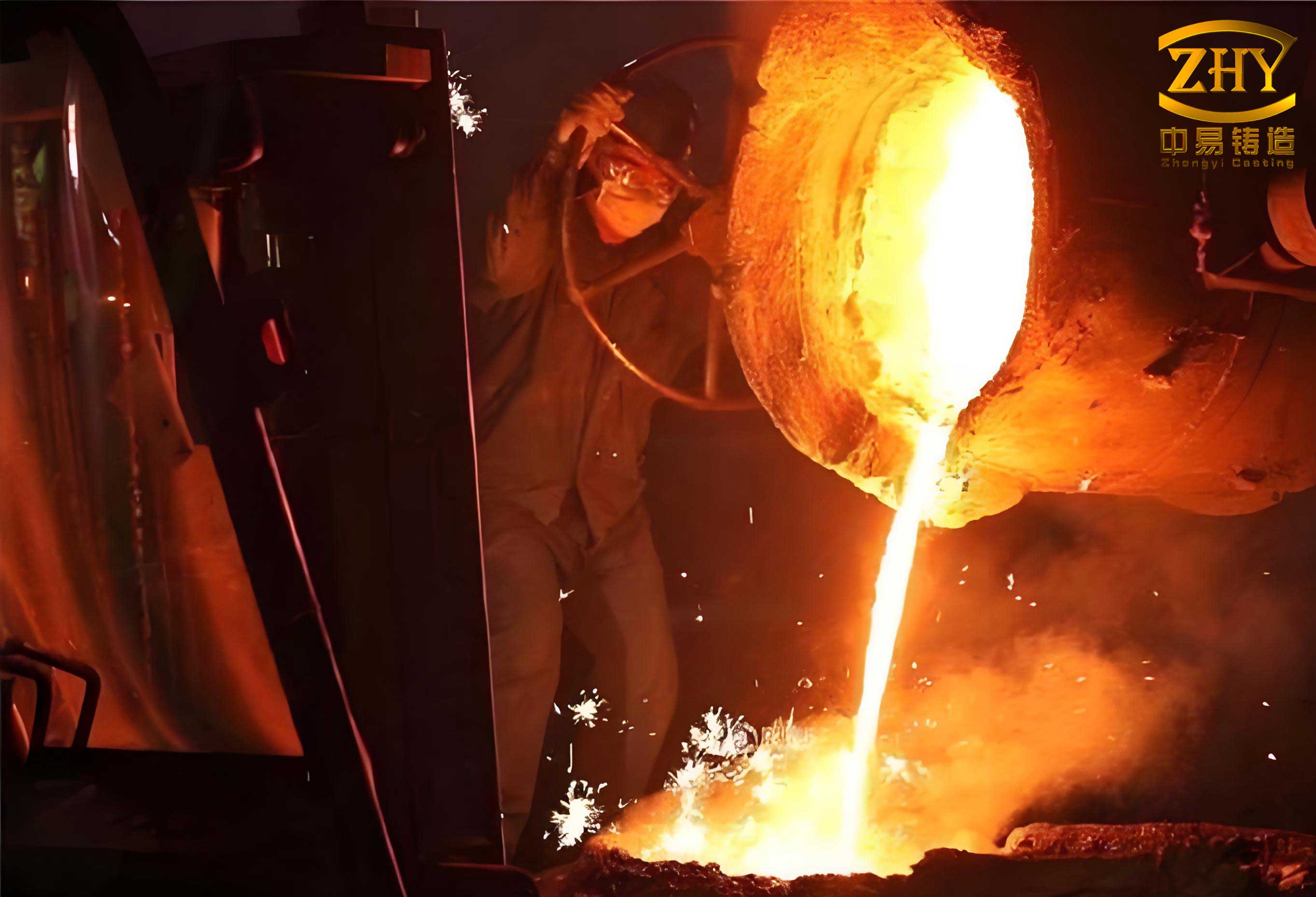
Understanding the FDM Process for Sand Castings
The FDM process is elegantly simple in principle, yet powerful in application for creating foundry patterns. It begins with a 3D digital model, typically created in CAD software like Siemens NX. This model is then mathematically “sliced” into hundreds or thousands of horizontal layers by specialized software. The FDM printer heats a thermoplastic filament (commonly PLA or ABS) to a semi-liquid state and extrudes it through a fine nozzle. The nozzle moves precisely along the X-Y plane, depositing material to form a solid cross-section of the first layer. The build platform then lowers, and the process repeats for the next layer, with each new layer fusing to the one below. This cycle continues until the complete physical object is fabricated.
The fundamental advantage for sand castings is that complexity is essentially free. Whether a part has undercuts, intricate internal channels, or complex curved surfaces, the FDM printer constructs it with the same ease as a simple block. This stands in stark contrast to subtractive methods. The relationship between build parameters and final pattern properties can be conceptualized. For instance, the theoretical minimum layer time, which affects cooling and bonding, can be considered as:
$$ t_{layer} = \frac{A_{layer}}{v \cdot w} $$
where \( t_{layer} \) is the layer deposition time, \( A_{layer} \) is the cross-sectional area of the layer, \( v \) is the print head speed, and \( w \) is the extrusion width.
Material Selection: The Foundation of a Durable Pattern
The choice of filament is critical for a pattern intended for sand castings. It must withstand the mechanical packing of sand, resist moisture absorption from damp molding sand, and maintain dimensional stability. My primary focus has been on PolyLactic Acid (PLA).
PLA offers an excellent balance of properties for this application. It is a stiff, strong polymer with a relatively high hardness compared to wood. Its glass transition temperature is around 60°C, which is sufficient for room-temperature sand molding processes. Crucially, it exhibits very low shrinkage upon cooling and minimal warping, ensuring the dimensional accuracy of the final sand castings. Compared to traditional pattern materials, the performance differences are significant, as summarized below:
| Property | Traditional Wood (Pine) | FDM-Printed PLA | Impact on Sand Castings |
|---|---|---|---|
| Tensile Strength | ~70 MPa (along grain) | ~50-60 MPa | PLA patterns are less prone to breakage during handling and ramming. |
| Moisture Absorption | High (swells/warps) | Very Low (<1%) | PLA maintains precise dimensions in humid foundry environments, crucial for accurate sand castings. |
| Surface Hardness | Low (easily dented) | High (Rockwell R scale ~70) | PLA resists wear from repeated sand molding, extending pattern life. |
| Machinability/Fabrication | Subtractive, high waste | Additive, near-net-shape | FDM creates complex shapes directly, eliminating complex machining setups for patterns. |
Case Study: The Blower Impeller – From Digital Model to Physical Casting
The blower impeller, with its complex, thin, curved blades radiating from a central hub, is a classic example of a part that is challenging and expensive to produce via traditional pattern-making. My process for creating its sand castings via FDM patterns follows a streamlined digital workflow.
Step 1: Digital Modeling and Casting Design
The process starts with a precise 3D model. Based on the component drawing, a solid model is created. For sand castings, this digital model must be modified to become the pattern model. This involves:
- Applying Shrinkage Allowance: The model is uniformly scaled up to compensate for the contraction of the metal as it cools. For aluminum alloys like ZL301, this is typically between 1.3% and 1.35%. The scaling factor \( S_f \) is applied: $$ V_{pattern} = V_{part} \cdot (1 + S_f)^3 $$ where \( V \) represents volume.
- Adding Draft Angles: To allow the pattern to be easily withdrawn from the sand without tearing the mold cavity, draft angles are added to vertical faces. For the impeller blades, a 2° draft was sufficient.
- Defining the Parting Line: The division between the cope (top) and drag (bottom) mold halves is established digitally, often at the largest cross-section of the part.
Step 2: FDM Printing and Parameter Optimization
The modified pattern model is exported as an STL file and imported into slicing software. Here, critical parameters that affect print time, material usage, and surface finish are defined. For functional patterns in sand castings, surface finish on vertical faces (like blade surfaces) is less critical than dimensional accuracy and strength. I conducted a comparative analysis of two key parameter sets:
| Parameter | Scheme A (Optimized for Speed) | Scheme B (Optimized for Finish) | Analysis for Sand Castings |
|---|---|---|---|
| Layer Height | 0.2 mm | 0.1 mm | Scheme A’s coarser layers are acceptable as sand texture will dominate casting surface. |
| Print Speed | 50 mm/s | 40 mm/s | Higher speed reduces time with negligible impact on pattern strength for molding. |
| Infill Density/Pattern | 25% (Grid) | 35% (Tri-hexagon) | A lower infill (20-30%) is often sufficient for a strong, lightweight pattern core. |
| Shell/Wall Thickness | 3 layers (0.8mm) | 4 layers (1.2mm) | Thicker walls ensure the pattern can withstand sand ramming forces without flexing. |
| Support Structure | Everywhere (Tree) | Touch Buildplate Only | Supports are essential for overhangs but increase post-processing time. |
| Estimated Print Time | ~4 hours | ~7 hours | Scheme A is clearly superior for production efficiency of patterns for sand castings. |
| Material Usage | ~36 grams | ~32 grams | Difference is marginal; cost driver is time, not material. |
The conclusion was clear: for functional patterns used in sand castings, optimizing for print speed and adequate strength (Scheme A) yields the best return on investment without compromising the quality of the final metal part.
The Molding and Casting Process with 3D Printed Patterns
Using the FDM-printed PLA impeller pattern, the traditional sand molding process proceeds with remarkable simplicity. The pattern is placed on a molding board in the drag flask. Facing sand is applied, followed by backing sand, and the whole mass is rammed to achieve uniform hardness. The drag is rolled over, the parting surface is smoothed and covered with parting sand, and the cope flask is positioned. The sprue and riser pins are placed, and the cope is filled and rammed. After removing the pins, the flasks are separated, the printed pattern is carefully drawn from the mold, and the runner and gate system are cut. The molds are then closed, ready for pouring.
The performance of the PLA pattern in this environment is exemplary. Its smooth, non-porous surface allows for easy draw from the compacted sand. Its rigidity prevents deflection during ramming, ensuring a consistent mold cavity. Its resistance to moisture means it can be used repeatedly without dimensional change or degradation, even in a foundry setting. After pouring aluminum alloy ZL301 and allowing it to solidify, the resulting casting was cleaned. The inspection confirmed that all dimensions were within specification, the thin blades were completely formed without cold shuts, and the surface quality was entirely acceptable for the application, validating the efficacy of 3D printed patterns for producing precision sand castings.
Quantitative Advantage: A Comparative Economic Analysis
The true impact of adopting FDM for pattern-making is best understood through a direct, quantifiable comparison with the conventional method for a part like the impeller. The benefits span time, cost, and material efficiency, fundamentally altering the economics of low-volume and prototype sand castings.
| Metric | Traditional Wooden Pattern | FDM-Printed PLA Pattern | Advantage Ratio (FDM vs. Wood) |
|---|---|---|---|
| 1. Lead Time (Total) |
|
|
~2.7x Faster (Lead time reduced by ~63%) |
| 2. Total Cost |
|
|
~13x Lower Cost (Cost reduced by ~92%) |
| 3. Material Utilization | Subtractive process. For a complex shape like an impeller, often over 60% of the starting material block becomes waste. | Additive process. Only material for the part and necessary supports is used. Support material can sometimes be recycled. Utilization > 95%. | ~1.6x More Efficient (Waste reduced by ~35% of starting mass) |
| 4. Geometric Flexibility | Limited by tool access, need for multi-axis machining, and fixture complexity. Internal geometries extremely difficult. | Virtually unlimited. Complexity (undercuts, internal channels, organic shapes) has minimal impact on cost or time. | Fundamental enabling advantage for complex sand castings. |
| 5. Pattern Life & Storage | Prone to moisture damage, warping, and physical wear/denting. Requires careful storage conditions. | High durability, moisture resistant, dimensionally stable. Can be stored easily or even reprinted on-demand from digital file. | Significantly lower long-term maintenance and inventory cost. |
The economic advantage can be modeled with a simple break-even analysis. The total cost \( C \) for producing a pattern is a function of fixed and variable costs. For traditional methods, fixed costs (machine programming, fixture design) are high, while for FDM, they are low. The variable cost per pattern for FDM is primarily material, which is very low. We can express a condition where FDM becomes advantageous:
$$ C_{traditional} = F_{trad} + V_{trad} \cdot n $$
$$ C_{FDM} = F_{FDM} + V_{FDM} \cdot n $$
Where \( F \) is fixed cost, \( V \) is variable cost per pattern, and \( n \) is quantity. Given \( F_{FDM} \ll F_{trad} \) and \( V_{FDM} \ll V_{trad} \), FDM offers overwhelming cost savings for low \( n \), often crossing the breakeven point at \( n=1 \).
Beyond Patterns: The Future of Additive Manufacturing in Sand Castings
While using FDM to print expendable patterns represents a major leap forward, the frontier of additive manufacturing in foundry technology extends even further. The direct 3D printing of sand molds and cores—bypassing the physical pattern entirely—is a rapidly maturing technology. Binder Jetting machines selectively deposit a liquid binding agent onto layers of foundry sand, building the complete mold cavity directly from a digital file. This allows for previously impossible geometries in sand castings, such as integrated conformal cooling channels or consolidated core assemblies.
The potential for topology optimization is transformative. Components can be digitally redesigned to be lightweight yet strong, with material distributed only where needed, and then directly realized through printed sand molds for sand castings. This synergy between digital design and additive manufacturing is paving the way for a new generation of high-performance, efficient cast components.
Conclusion
My experience integrating FDM 3D printing into the workflow for creating sand castings has been unequivocally positive. It has dismantled the longstanding barriers of cost, time, and complexity associated with traditional pattern making. For prototypes, custom parts, and low-to-medium volume production, the ability to go from a digital concept to a ready-to-pour sand mold in a matter of hours, at a fraction of the historical cost, is revolutionary. The PLA patterns prove to be not just adequate but superior to wood in terms of durability, dimensional stability, and handling.
This technology democratizes the production of complex sand castings, making it accessible for research, development, and small-scale manufacturing. It fosters innovation by allowing engineers and designers to experiment with geometries that were once considered impractical or too expensive to cast. As FDM and other additive manufacturing technologies continue to advance in terms of material variety, print speed, and build volume, their role in foundries will only expand, solidifying their position as a cornerstone of modern, agile, and digitally-driven casting production.