
In my extensive experience within the foundry industry, I have consistently observed that sand castings, particularly those involving aluminum alloys, are prone to specific defects that can compromise structural integrity and dimensional accuracy. One of the most persistent issues arises during mold assembly, where core shifting, squeezing, or sand erosion leads to inclusions known as sand cuts or sand burns, ultimately resulting in scrapped components. This narrative details my firsthand journey in addressing these challenges through the strategic implementation of pressure relief rings, a technique that has revolutionized the reliability of complex sand castings. The fundamental principle revolves around managing interfacial stresses between cores and molds to prevent mechanical sand displacement.
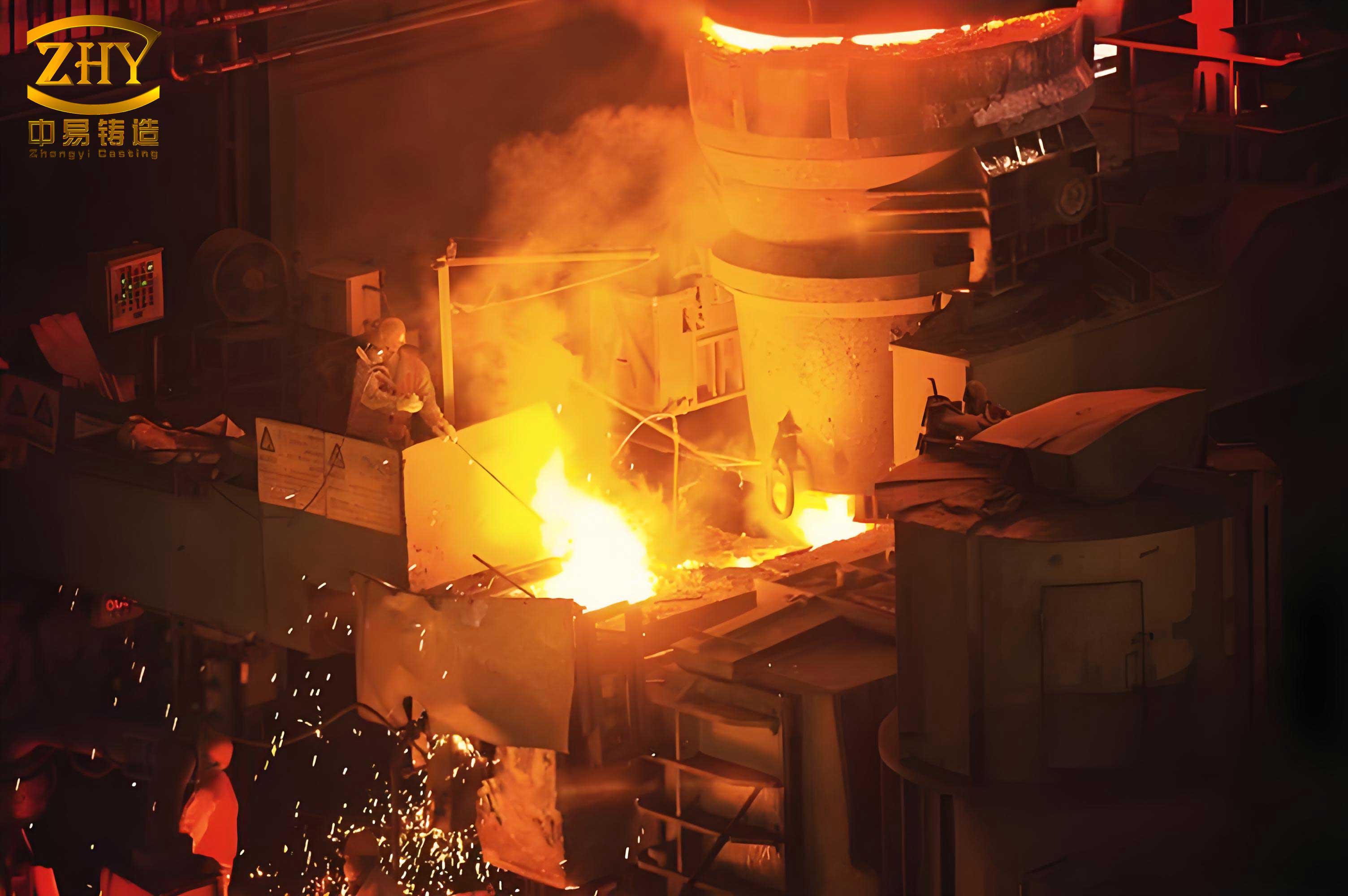
The production of high-integrity sand castings demands meticulous attention to every stage of the mold-making and pouring process. Sand castings, by their nature, involve compacted silica sand bonded with various resins or clays to form molds and cores. When these cores, especially large ones, are placed into the mold cavity (the core assembly process), the fit between the core print (core head) and the corresponding seat in the mold (core seat) is critical. Even minor misalignment or inherent friction can cause grains of sand to be scraped off—a phenomenon termed “scraping sand” or “squeezing sand.” These loose sand particles then become entrapped within the molten metal during pouring, solidifying as hard, non-metallic inclusions. For critical surfaces, such as sealing faces on engine blocks or aerospace components, such defects are unacceptable. My work has focused on eliminating this root cause not by perfecting an impossibly precise fit, but by ingeniously redirecting the problematic sand away from the casting itself.
The concept of a pressure relief ring, sometimes called a crush rib or escape channel, is elegantly simple. It is a deliberately designed, small protrusion or groove on either the pattern (for the mold) or the core box (for the core) that creates a controlled, sacrificial volume at the interface between the core print and the core seat. Its primary function is to provide a space for any dislodged sand to accumulate, preventing it from being forced into the critical mold cavity. The geometry of this ring—its width, depth, and cross-sectional shape—directly influences its efficacy. In standard practice, it is often machined onto the wooden or metal pattern around the core print. However, as my case study will show, conventional wisdom must sometimes be adapted to the unique constraints of specific sand castings.
I recall a pivotal project involving the manufacture of a large, intricate aluminum alloy casting weighing approximately 42 kilograms. The component had complex internal geometries requiring an assembly of six separate sand cores. The largest core, denoted as Core #1, was exceptionally massive, weighing around 120 kilograms. Its installation necessitated crane handling, and the clearance between its core print and the mold’s core seat was minimal to ensure positional accuracy for the demanding dimensional tolerances of the final sand castings. Initial production runs resulted in a 100% rejection rate. Every single casting exhibited sand inclusion defects on a critical machined seal surface (Surface A). Inspection revealed that during the lowering of the heavy core, unavoidable slight tilting and friction caused sand from the core print to be scraped off. This debris settled on the mold cavity face corresponding to Surface A, leading to disastrous inclusions after pouring.
Our initial corrective action followed textbook guidelines. We introduced a traditional pressure relief ring on the pattern, located on the core print itself (Position B in the original schematic). The dimensions were set at 2 mm in height (radial projection) and 10 mm in width (axial length). The intent was to create a small gap that would collect any displaced sand. However, this modification introduced an unexpected secondary problem for these particular sand castings. By reducing the effective bearing area of the core print, the pressure relief ring compromised the core’s stability within the mold. The core became prone to slight movement or tilting under the hydrostatic pressure of the molten aluminum, risking other forms of defect like core shift or dimensional inaccuracy. Extending the core print length to regain stability was not an option due to strict sandbox size limitations—a common constraint in foundry layout design for sand castings.
This impasse led to a fundamental re-evaluation. We questioned the axiomatic placement of the pressure relief ring on the core print. What if the ring was repositioned? After thorough finite element analysis of mold assembly stresses and fluid flow simulations, we devised a novel solution. We transferred the pressure relief ring from the core print to the casting pattern itself, positioning it directly on the cavity wall adjacent to and flush with the critical sealing Surface A (Position C). Furthermore, we optimized its dimensions to 4 mm x 10 mm. This repositioning served two brilliant functions for these sand castings: First, it still provided a dedicated collection channel for any sand debris generated during core installation. Second, and more importantly, it completely decoupled the sand-trapping function from the core-support function. The core print retained its full contact area for stability, while the ring, now part of the mold cavity wall, acted as a perfect “gutter” to catch falling sand before it could contaminate Surface A.
The results were immediately transformative. A trial batch of five sand castings produced with this modified design yielded zero sand inclusion defects on the critical surface. Subsequently, full-scale production maintained a 100% yield rate, completely eliminating the scrappage previously caused by this issue. This experience cemented my belief in the power of adaptive design thinking for sand castings.
To generalize this principle for broader application across various sand castings, we can formalize the design considerations into analytical models. The primary mechanical interaction during core setting can be modeled as a friction and interference problem. The force required to insert a core can be related to the interference fit and the friction coefficient. The pressure relief ring effectively reduces the apparent interference by providing an escape path. The volume of the ring \( V_r \) must be sufficient to accommodate the expected volume of dislodged sand \( V_s \). This can be expressed as:
$$ V_r \geq V_s = k \cdot A_c \cdot \delta $$
where \( A_c \) is the contact area between the core print and seat, \( \delta \) is the average depth of sand sheared off (a function of clearance and roughness), and \( k \) is a safety factor (typically 1.5 to 3.0) to account for variability. For a rectangular ring cross-section, \( V_r = w \cdot h \cdot l \), where \( w \) is width, \( h \) is depth/height, and \( l \) is the perimeter length of the core print.
The stress on the sand at the interface must be kept below the crushing strength of the mold sand \( \sigma_c \). The contact pressure \( P \) without a relief ring is approximately:
$$ P = \frac{F}{A_c} $$
where \( F \) is the insertion force. With a relief ring that reduces the effective contact area to \( A_c’ \), the pressure increases, potentially crushing the sand. Therefore, stability requires:
$$ \frac{F}{A_c’} < \sigma_c $$
This explains why our initial ring on the core print caused instability—it reduced \( A_c \) to \( A_c’ \), increasing \( P \) detrimentally. Repositioning the ring to the cavity wall preserves \( A_c \) for core support, avoiding this inequality.
The optimal dimensions of the pressure relief ring can be derived from a balance between sand collection efficiency and minimal impact on casting soundness. The ring creates a small recess in the final casting, which is usually machined away. Therefore, its volume should be minimized but sufficient. Table 1 summarizes recommended dimensional relationships based on core print size for aluminum alloy sand castings, derived from empirical data and theoretical modeling.
| Core Print Perimeter (l) [mm] | Core Print Area (A_c) [mm²] | Suggested Ring Width (w) [mm] | Suggested Ring Depth (h) [mm] | Recommended Location | Typical Sand Displacement Factor (k) |
|---|---|---|---|---|---|
| 200 – 500 | 1000 – 5000 | 2 – 3 | 8 – 12 | Core Print (for small/light cores) | 1.5 – 2.0 |
| 500 – 1500 | 5000 – 20000 | 3 – 5 | 10 – 15 | Cavity Wall Adjacent to Critical Face | 2.0 – 2.5 |
| > 1500 | > 20000 | 4 – 6 | 12 – 18 | Cavity Wall Adjacent to Critical Face | 2.5 – 3.0 |
Furthermore, the hydrodynamic behavior of molten metal during pouring must be considered. A poorly designed ring could become a turbulence point or a hot spot leading to shrinkage porosity. The flow front velocity \( v \) should be managed to avoid erosion of the ring’s sand walls. A simple criterion is to ensure the dynamic pressure \( \frac{1}{2} \rho v^2 \) is below the sand’s erosion resistance threshold. For aluminum alloys (density \( \rho \approx 2500 \, \text{kg/m}^3 \)), this often translates to maintaining a filling velocity below a critical value, which can be ensured through proper gating design for sand castings.
The application of pressure relief rings is not limited to rectilinear joints. For cylindrical or curved core prints in sand castings, the ring becomes a continuous groove. Its cross-sectional area \( A_{cross} \) should satisfy the same volume criterion, now integrated along the path. For a circular core print of radius \( R \), the perimeter \( l = 2\pi R \), and the required cross-sectional area of the ring is:
$$ A_{cross} \geq \frac{k \cdot A_c \cdot \delta}{2\pi R} $$
Common cross-sections include rectangular, trapezoidal, or semi-circular. Trapezoidal sections with angled sides (e.g., 15-degree draft) are excellent for pattern withdrawal and provide good structural integrity to the mold wall in sand castings.
Beyond aluminum, the principle applies to other non-ferrous and ferrous sand castings, but material properties influence the design. For instance, the higher pouring temperatures of iron or steel sand castings increase the risk of burn-in defects from sand inclusions, making pressure relief rings even more crucial. However, the thermal expansion differences necessitate wider clearances and potentially larger ring volumes. Table 2 contrasts key parameters for different alloy families in sand castings.
| Alloy Type | Typical Pouring Temperature [°C] | Recommended Clearance (Core Print/Seat) [mm/mm] | Ring Depth Multiplier (Relative to Al) | Critical Considerations |
|---|---|---|---|---|
| Aluminum Alloys | 700 – 750 | 0.1 – 0.3% of print dimension | 1.0 (Baseline) | Low density, good fluidity; rings effective at small sizes. |
| Copper Alloys (Bronze, Brass) | 1000 – 1150 | 0.15 – 0.4% | 1.2 – 1.4 | Higher thermal expansion; requires more generous ring volume. |
| Cast Irons (Gray, Ductile) | 1350 – 1450 | 0.2 – 0.5% | 1.5 – 1.8 | High risk of sand burn-on; rings often combined with mold coatings. |
| Cast Steels | 1550 – 1650 | 0.25 – 0.6% | 1.8 – 2.2 | Greatest thermal shock; ring design must prevent premature mold failure. |
In modern foundry practice for sand castings, computational tools have become indispensable. I regularly employ simulation software to model the core-setting process. These tools can calculate the interference forces and predict sand shear zones. By integrating this with computational fluid dynamics (CFD) pouring simulations, one can perform virtual DOE (Design of Experiments) to optimize the ring’s location and dimensions before cutting any tooling. The objective function in such optimization is to minimize the probability of sand inclusion \( P_{inclusion} \), which can be modeled as a function of ring volume \( V_r \), core-setting force \( F \), and metal flow parameters:
$$ P_{inclusion} = f(V_r, F, v, \theta) \approx \alpha \cdot \exp(-\beta V_r) + \gamma \cdot \frac{F}{A_c} + \delta \cdot v^2 $$
where \( \alpha, \beta, \gamma, \delta \) are material and process-dependent constants, and \( \theta \) represents other factors like sand binder type. The goal is to find the \( V_r \) that minimizes \( P_{inclusion} \) while respecting geometric constraints.
The economic impact of properly implementing pressure relief rings in sand castings is substantial. Scrap due to sand inclusions represents not just lost metal but wasted energy, labor, and machining time. For high-value aluminum aerospace sand castings, a single rejection can cost thousands of dollars. The implementation cost of adding a ring to a pattern is marginal—often just a few hours of CNC machining or patternmaker’s time. The return on investment is overwhelmingly positive, as demonstrated by the case where yield jumped from 0% to 100%. This makes the technique a cornerstone of robust design for manufacturability (DFM) in sand foundries.
Looking forward, the integration of additive manufacturing (3D printing) for sand molds and cores opens new frontiers. With binder jetting or similar processes, we can fabricate molds with integrated, complex relief channels that were impossible to produce with traditional patternmaking. These channels can be optimally shaped based on topology optimization algorithms, further enhancing the reliability of sand castings. The concept of the pressure relief ring evolves into a “smart sand management system” within the mold, actively directing potential debris to harmless overflow chambers.
In conclusion, my journey with pressure relief rings underscores a critical lesson in manufacturing engineering: sometimes the most elegant solution involves not fighting a physical phenomenon, but accommodating it intelligently. For sand castings, the inevitable minor sand displacement during core assembly need not be a death sentence for product quality. By designing controlled, sacrificial features—whether on the core print or, more innovatively, on the casting cavity wall—we can effectively sequester debris and produce flawless castings. The mathematical frameworks and empirical guidelines presented here provide a foundation for systematic application. As we continue to push the boundaries of complexity and performance in aluminum alloy sand castings and beyond, such nuanced understanding and adaptation of foundational foundry principles will remain paramount to achieving zero-defect manufacturing. The humble pressure relief ring, therefore, stands as a testament to the power of thoughtful design in the ancient yet perpetually evolving art and science of sand castings.