
In my research and practical experience, white cast iron has emerged as a critical material in applications requiring high resistance to abrasive wear. Its inherent properties, such as elevated hardness and excellent wear resistance, make it suitable for components like mill liners, pump impellers, and grinding balls. However, the as-cast state of white cast iron presents significant challenges, primarily due to its ledeburitic microstructure, which includes defects like shrinkage pores, microcracks, and coarse carbides. These flaws result in low impact toughness, often leading to premature failure under impact loads, thereby limiting its widespread adoption. This article delves into my exploration of forging as a transformative process to overcome these limitations, enhancing the toughness and wear resistance of white cast iron through microstructural refinement.
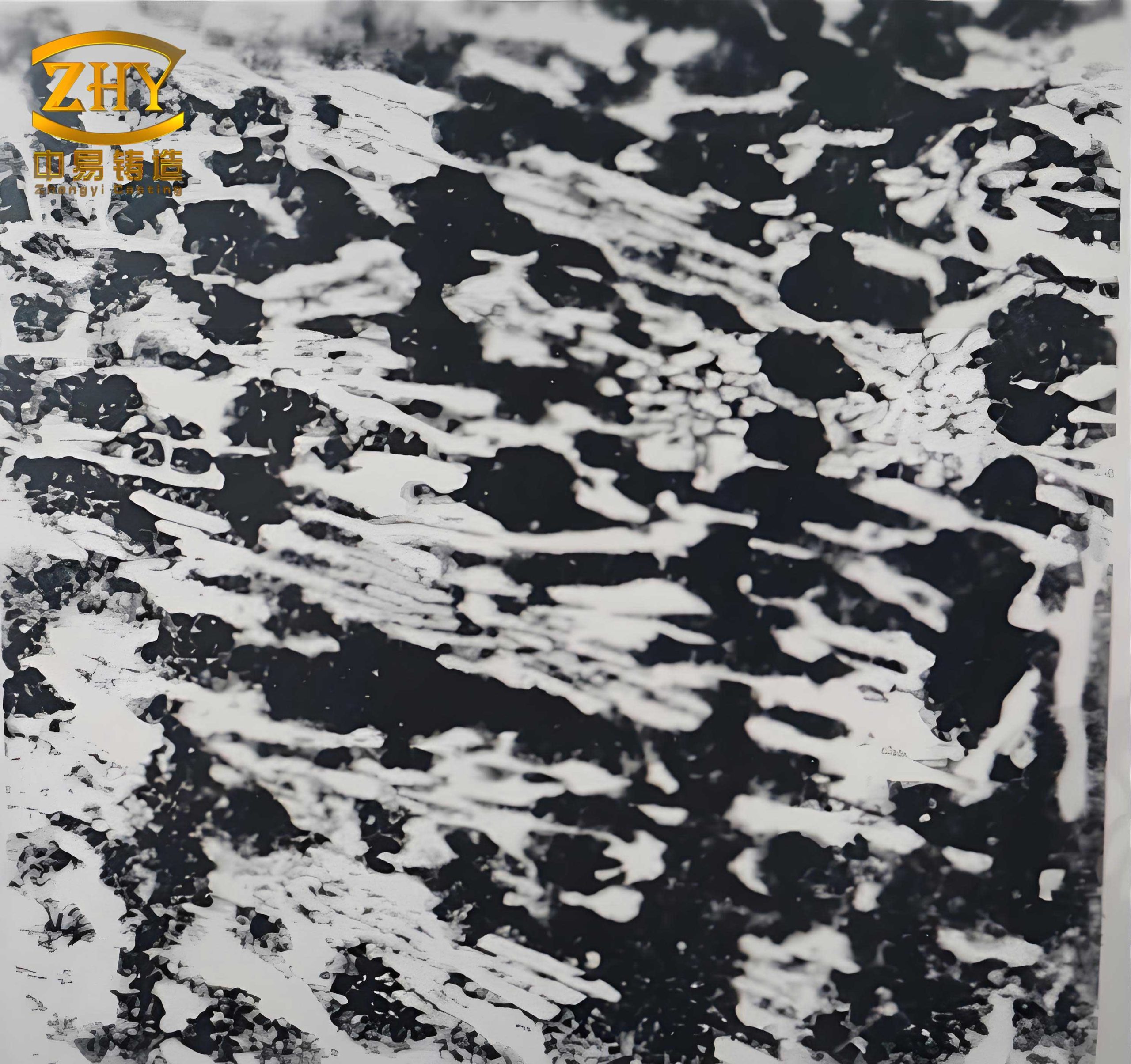
Traditionally, efforts to improve the impact toughness of white cast iron have focused on alloying with elements like chromium, molybdenum, and tungsten, or through heat treatments such as bainitic processing. While these methods yield some improvements, they often involve costly rare elements and offer limited gains in toughness. For instance, alloyed white cast iron variants can achieve higher hardness, but the incremental increase in impact energy may not justify the economic burden, especially in resource-constrained settings. In my work, I have prioritized forging as a more economical and effective alternative, leveraging thermomechanical deformation to fundamentally alter the microstructure of white cast iron. This process involves hot plastic deformation, which refines grains, closes voids, fragments carbide networks, and reduces compositional segregation, thereby significantly boosting both strength and ductility.
The forgeability of white cast iron is highly dependent on temperature, as revealed through experiments like cylindrical free upsetting tests. I conducted studies to plot temperature-ductility curves, using white cast iron samples with controlled compositions. The results indicate that below 800°C, white cast iron exhibits minimal plasticity, making forging impractical. Between 800°C and 950°C, phase transformations occur, with pearlite converting to austenite, leading to improved ductility. Notably, in the range of 950°C to 1150°C, cementite undergoes spheroidization and aggregation, facilitating intergranular deformation. At these elevated temperatures, the hardness difference between the matrix and cementite diminishes, as shown by hardness measurements that can be modeled with a simple linear relation:
$$ H_m(T) = H_0 – k_m T $$
where \( H_m(T) \) is the matrix hardness at temperature \( T \), \( H_0 \) is the base hardness, and \( k_m \) is a temperature coefficient. Similarly, for cementite:
$$ H_c(T) = H_{c0} – k_c T $$
This convergence in hardness allows carbides to be fragmented and deformed alongside the matrix during forging. However, exceeding 1150°C risks overheating or burning due to grain growth and low-melting phases, causing a drastic drop in plasticity. Thus, the optimal forging temperature range for white cast iron is 1050°C to 1150°C. To quantify plasticity, I define a ductility index \( D \) based on reduction in height during upsetting:
$$ D = \frac{h_0 – h_f}{h_0} \times 100\% $$
where \( h_0 \) is the initial height and \( h_f \) is the final height after deformation. Experimental data shows that \( D \) peaks within the recommended temperature window, confirming the suitability of white cast iron for hot working.
Chemical composition plays a pivotal role in determining the forgeability of white cast iron. In my investigations, I analyzed how elements like carbon, silicon, sulfur, and phosphorus influence plasticity. Carbon content directly affects the volume fraction and morphology of carbides; higher carbon levels (above 3.0%) lead to coarse carbides that severely impair ductility. Silicon, a graphitizing element, can promote graphite formation if exceeding 1.5%, resulting in reduced hardness and increased risk of burning. Sulfur and phosphorus, when present above 0.05%, form low-melting compounds at grain boundaries, causing hot shortness. Therefore, for forgeable white cast iron, I recommend limiting carbon to 2.0–3.0%, silicon below 1.0%, and sulfur/phosphorus under 0.05%. Conversely, small additions of chromium, molybdenum, or copper (typically 0.5–2.0%) can enhance hardenability and refine carbides, slightly improving hot plasticity without significantly raising costs. The interplay of these elements can be summarized using a forgeability parameter \( F \):
$$ F = k_1 \cdot [C]^{-1} + k_2 \cdot [Si]^{-1} + k_3 \cdot ([Cr] + [Mo]) $$
where \( [X] \) denotes the weight percentage of element X, and \( k_1, k_2, k_3 \) are constants derived from empirical data. This equation highlights that lower carbon and silicon levels, coupled with moderate alloying, favor better forgeability in white cast iron.
During forging, white cast iron is prone to cracking, similar to high-speed steels, due to its brittle carbide network. In operations like flat-die stretching, tensile stresses can induce corner or cross cracks. To mitigate this, I employ shaped-die forging or closed-die processes that impose triaxial compressive stresses, suppressing crack initiation and propagation. The stress state during forging can be described by the hydrostatic stress component \( \sigma_m \):
$$ \sigma_m = \frac{1}{3} (\sigma_1 + \sigma_2 + \sigma_3) $$
where \( \sigma_1, \sigma_2, \sigma_3 \) are principal stresses. A positive \( \sigma_m \) promotes cracking, while a negative value (compressive) enhances ductility. In practice, I adhere to a “light-heavy-light” forging sequence: initial light blows break the as-cast coarse structure, followed by heavy deformation to fragment carbides, and final light blows at lower temperatures to prevent fracture. This approach ensures uniform deformation and minimizes defects in white cast iron components.
Heating and cooling protocols are critical for successful forging of white cast iron. Given its low thermal conductivity at room temperature, I use a gradual heating curve: start below 500°C with a soak to avoid thermal shock, then ramp up at 100°C per hour to the forging temperature, holding briefly (10–30 minutes) to prevent overheating. Post-forging, white cast iron can undergo deformation heat treatments to tailor properties. For example, air cooling, oil quenching with tempering, or isothermal holding in salt baths yield different microstructures and performance combinations. The cooling rate \( \dot{T} \) influences the final hardness and toughness, as described by:
$$ H = H_{\text{max}} – \alpha \cdot \dot{T} $$
where \( H \) is the achieved hardness, \( H_{\text{max}} \) is the maximum potential hardness, and \( \alpha \) is a material constant. By optimizing these parameters, I can produce white cast iron with desired characteristics for specific applications.
The impact of forging on the microstructure of white cast iron is profound. In the as-cast state, the material exhibits a network of ledeburite, needle-like secondary cementite, and a matrix fragmented by carbides. Scanning electron microscopy reveals coarse dendritic grains, intergranular pores, and cleavage patterns indicative of brittle fracture. After forging, even at moderate forging ratios (e.g., 2–4), the carbide network is disrupted, with carbides fragmented into blocky or spherical particles dispersed uniformly in the matrix. This refinement is quantified by the carbide size distribution, which shifts from a bimodal as-cast distribution to a monomodal forged state. The grain size \( d \) after forging can be estimated using the Zener-Hollomon parameter \( Z \):
$$ Z = \dot{\epsilon} \exp\left(\frac{Q}{RT}\right) $$
where \( \dot{\epsilon} \) is the strain rate, \( Q \) is the activation energy for deformation, \( R \) is the gas constant, and \( T \) is the absolute temperature. A higher \( Z \) leads to finer grains. For white cast iron, forging reduces the average grain size from 100–200 μm in the as-cast condition to 10–50 μm, significantly enhancing toughness.
To summarize the microstructural and property changes, I have compiled data from various white cast iron grades in the following tables. Table 1 outlines the chemical composition and properties of common as-cast white cast iron types, while Table 2 details the experimental compositions used in my forging studies. Table 3 presents the hardness and impact energy after forging under different conditions, and Table 4 shows wear resistance data from low-stress abrasive tests.
| Material Name | Main Composition (wt%) | Impact Energy (J) | Hardness (HRC) |
|---|---|---|---|
| Non-alloyed White Cast Iron | C: 2.8–3.2, Si: 0.5–1.0, Mn: 0.3–0.6 | 2–4 | 50–55 |
| Low-Chromium Alloyed White Cast Iron | C: 2.5–3.0, Cr: 1.5–3.0, Mo: 0.5–1.0 | 4–6 | 55–60 |
| High-Chromium Alloyed White Cast Iron | C: 2.0–2.8, Cr: 12–18, Mo: 1.0–2.0 | 6–10 | 60–65 |
| Bainitic Treated White Cast Iron | C: 2.5–3.0, Si: 1.0–1.5, Ni: 1.0–2.0 | 8–12 | 58–62 |
| High-Temperature Spheroidized White Cast Iron | C: 2.2–2.8, Cr: 2.0–4.0, V: 0.1–0.3 | 10–15 | 56–60 |
The data in Table 1 underscores the trade-offs between alloy content and performance; however, forging offers a pathway to achieve similar or better properties at lower cost. In my experiments, I used white cast iron with compositions tailored for forgeability, as shown in Table 2.
| Group | C | Si | Mn | Cr | Mo | P | S |
|---|---|---|---|---|---|---|---|
| A | 2.5 | 0.8 | 0.5 | 1.0 | 0.3 | 0.03 | 0.02 |
| B | 2.8 | 0.6 | 0.6 | 2.0 | 0.5 | 0.04 | 0.03 |
| C | 3.0 | 0.4 | 0.4 | 0.5 | 0.2 | 0.02 | 0.02 |
After forging these white cast iron samples, I observed significant improvements in mechanical properties. The forging ratio \( R \), defined as the ratio of initial to final cross-sectional area, plays a key role. For white cast iron, I recommend \( R = 2–4 \) for optimal results; below 2, carbide fragmentation is insufficient, and above 4, anisotropy increases without substantial gains. The relationship between forging ratio and impact energy \( E \) can be approximated by:
$$ E = E_0 + \beta \cdot \ln(R) $$
where \( E_0 \) is the as-cast impact energy and \( \beta \) is a constant. Table 3 summarizes hardness and impact energy values after forging and subsequent heat treatments.
| Group | Forging Ratio | Cooling Method | Hardness (HRC) | Impact Energy (J) |
|---|---|---|---|---|
| A | 2 | Air Cooled | 52–54 | 12–15 |
| A | 3 | Oil Quenched + Tempered | 58–60 | 10–13 |
| B | 2 | Air Cooled | 55–57 | 14–17 |
| B | 4 | Isothermal at 250°C | 60–62 | 12–15 |
| C | 3 | Air Cooled | 50–52 | 8–11 |
| C | 3 | Oil Quenched + Tempered | 56–58 | 9–12 |
The enhancement in impact energy, often doubling or tripling compared to as-cast values, demonstrates the efficacy of forging in toughening white cast iron. Moreover, wear resistance is crucial for applications like grinding balls. I conducted low-stress abrasive wear tests using silica sand, measuring weight loss to assess performance. The wear rate \( W \) is calculated as:
$$ W = \frac{\Delta m}{A \cdot t} $$
where \( \Delta m \) is the mass loss, \( A \) is the contact area, and \( t \) is the test duration. Results, shown in Table 4, indicate that forged white cast iron with hardness in the range of 50–60 HRC offers stable and superior wear resistance compared to as-cast materials.
| Material Type | Hardness (HRC) | Wear Rate (mg/cm²·h) | Relative Wear Resistance |
|---|---|---|---|
| As-Cast Non-alloyed White Cast Iron | 52 | 25–30 | 1.0 |
| Forged Low-Alloy White Cast Iron (Group A) | 54 | 18–22 | 1.4 |
| Forged Low-Alloy White Cast Iron (Group B) | 58 | 15–18 | 1.7 |
| High-Chromium As-Cast White Cast Iron | 62 | 12–15 | 2.0 |
| Forged and Heat-Treated White Cast Iron | 60 | 14–17 | 1.8 |
The wear resistance of forged white cast iron, particularly at moderate hardness levels, makes it competitive with high-alloy variants, but at a lower cost. This balance is vital for industrial applications, where both economy and performance are paramount.
In production, I have applied forging to manufacture grinding balls from white cast iron, targeting industries like cement, mining, and abrasive processing. Grinding balls endure high-stress impact and abrasive wear, requiring a combination of toughness and hardness. Using low-alloy white cast iron with compositions similar to Group B, I cast bars of diameters 40 mm, 60 mm, and 80 mm, then heated them in resistance furnaces following the prescribed curve. Forging was performed on a 150 kg air hammer with fixed dies, producing spherical balls that were subsequently air-cooled and tempered at 200°C to achieve surface hardness of 55–58 HRC. Field trials in a silicon carbide grinding mill demonstrated that forged white cast iron balls exhibited wear rates only 50% of those of cast steel balls, with no incidence of fracture over extended operation. The economic benefits are substantial: reduced consumption of grinding media, lower downtime for ball replacement, and improved product quality due to minimized iron contamination. The cost-effectiveness stems from using less expensive alloying elements and the efficiency of the forging process itself.
To further optimize the forging of white cast iron, I have developed guidelines based on my findings. First, control the carbon content to below 3.0% to ensure adequate plasticity. Second, maintain low levels of silicon, sulfur, and phosphorus to prevent graphitization and hot shortness. Third, employ forging temperatures between 1050°C and 1150°C, with rapid operations to avoid overheating. Fourth, use forging ratios of 2–4 to achieve sufficient carbide fragmentation without excessive anisotropy. Fifth, implement post-forging heat treatments tailored to the application—for instance, air cooling for general wear parts or quenching and tempering for components requiring higher toughness. These principles can be encapsulated in a performance index \( P \) for forged white cast iron:
$$ P = \frac{H \cdot E}{\rho \cdot C} $$
where \( H \) is hardness, \( E \) is impact energy, \( \rho \) is density, and \( C \) is material cost per unit weight. By maximizing \( P \), engineers can select the optimal forging parameters for white cast iron in diverse scenarios.
In conclusion, my research confirms that forging is a highly effective and economical method to enhance the properties of white cast iron. By transforming the as-cast microstructure through hot deformation, forging significantly improves impact toughness and wear resistance, overcoming the brittleness that traditionally limits this material. The process leverages thermomechanical effects to refine grains, fragment carbides, and heal defects, yielding a material that competes with high-alloy white cast iron at a fraction of the cost. From grinding balls to pump components, forged white cast iron offers a viable solution for demanding wear applications, aligning with resource efficiency and performance goals. Future work could explore advanced forging techniques, such as isothermal forging or integration with additive manufacturing, to further expand the horizons of white cast iron utilization. Through continuous innovation, white cast iron will undoubtedly secure a broader role in industrial sectors, driven by the transformative power of forging.