
In my extensive experience within the foundry industry, the production of high-performance grinding media presents a unique set of challenges. Among the various materials used, white cast iron stands out for its exceptional wear resistance, which is derived from its hard, carbide-rich microstructure. However, achieving the optimal balance of hardness and toughness often requires precise control over chemistry, particularly carbon content. The production of low-carbon white cast iron is a specialized process where traditional cupola melting falls short due to its limitations in precise compositional control and decarburization capability. This has led to the adoption of the alkaline electric arc furnace (EAF) as the primary melting unit. Over the course of melting several thousand tons of low-carbon white cast iron grinding balls, I have developed and refined a robust production methodology. This article details that methodology, focusing on the chemical, thermal, and operational nuances specific to arc furnace melting of this distinctive grade of white cast iron.
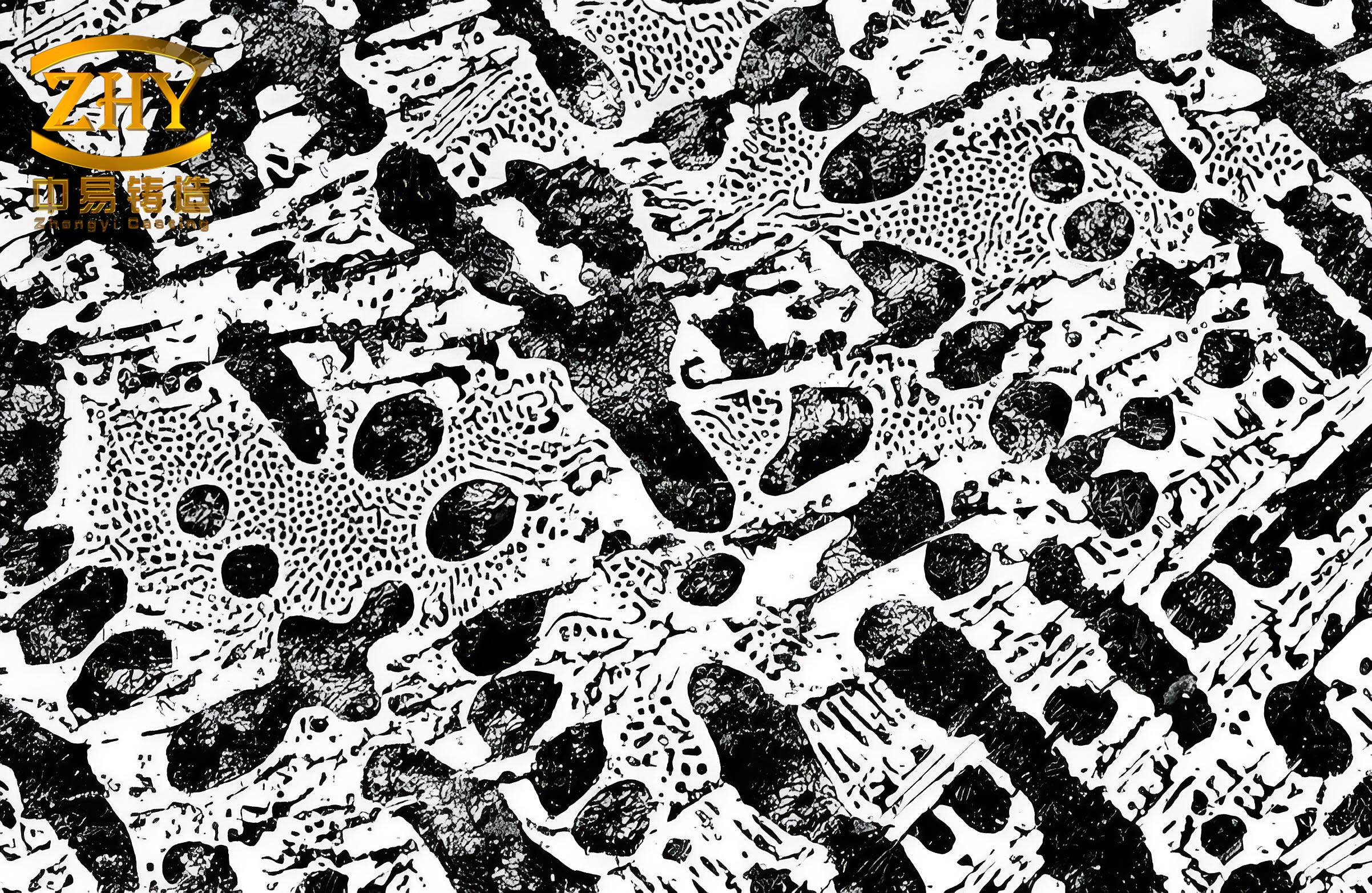
The fundamental requirement for this grade of white cast iron is a carefully constrained chemical composition that promotes a fully white, carbide-based structure without excessive brittleness. The target ranges, established through rigorous experimentation, are presented in the table below.
| Element | Target Composition (%) | Critical Function in White Cast Iron |
|---|---|---|
| Carbon (C) | 1.8 – 2.2 | Primary carbide former; controls hardness and volume fraction of carbides. |
| Silicon (Si) | 0.6 – 1.2 | Promotes graphitization (must be limited); aids in deoxidation. |
| Manganese (Mn) | 0.5 – 1.0 | Stabilizes carbides; combines with sulfur to form MnS. |
| Phosphorus (P) | ≤ 0.10 | Detrimental element; forms brittle phosphide eutectic, must be minimized. |
| Sulfur (S) | ≤ 0.05 | Generally detrimental; controlled via slag chemistry. |
The formula for calculating the carbide volume fraction (V_c) can be approximated, emphasizing the role of carbon:
$$ V_c \approx \frac{C\% – 0.8}{5.8} $$
where C% is the total carbon content. This highlights why precise carbon control between 1.8% and 2.2% is paramount for the desired abrasive properties of this white cast iron.
A significant advantage of using the arc furnace for this white cast iron is the extreme flexibility in charge materials. Scrap machine iron, steel scrap, slag steel, and even low-grade pig iron or returns that are unusable in a cupola can be incorporated. The primary rule for charge make-up is to ensure the carbon content at the end of the melting period, known as the melt-down carbon, is approximately 0.3% to 0.5% above the specified upper limit of 2.2%. This provides the necessary carbon reserve for the subsequent refining stage.
$$ C_{\text{melt-down}} \geq C_{\text{upper limit}} + (0.3\% \text{ to } 0.5\%) = 2.5\% \text{ to } 2.7\% $$
Achieving this initial high carbon level is straightforward with the aforementioned charge materials.
Melting and Refining Practice: A Semi-Oxidation Process
The melting and refining operation for low-carbon white cast iron is best described as a semi-oxidation process. Given the inherently high carbon content relative to steel, the total gas content in the melt is lower, allowing for a shorter and less vigorous oxidation period. The operational sequence closely mirrors that of carbon cast steel but with critical adjustments.
1. Melting Period: Vigorous effort is required to push unmelted charge material into the high-temperature zones beneath the electrodes. Lime (CaO) is added periodically to begin forming a basic slag, which helps protect the metal and start the early stages of dephosphorization. Upon complete melt-down, the first slag is aggressively flushed out to remove early phosphorus and any contaminants.
2. Oxidation Period (Boiling): Once the bath temperature exceeds approximately 1500°C and the melt-down carbon is verified, the controlled oxidation begins. Iron ore (Fe2O3) is added in batches. The primary objective here is not deep decarburization but a controlled “carbon boil.” The reaction is:
$$ \text{Fe}_2\text{O}_3 + 3\text{C} \rightarrow 2\text{Fe} + 3\text{CO} \uparrow $$
The escaping CO gas vigorously stirs the bath, promoting thermal and chemical homogeneity, aiding in the final melting of any residual solids in cooler spots (like the furnace bottom), and flushing out non-metallic inclusions. The target decarburization (ΔC) is modest:
$$ \Delta C = C_{\text{melt-down}} – C_{\text{post-boil}} \approx 0.2\% \text{ to } 0.4\% $$
Addition of ore stops once the carbon content reaches the middle of the specification range (~2.0%).
3. Reduction Period: After slagging off the oxidizing slag, a new basic slag is created with lime and fluorspar (CaF2) to achieve a high basicity index (B.I.):
$$ \text{B.I.} = \frac{\%\text{CaO}}{\%\text{SiO}_2} \geq 2.5 $$
Under this covering slag, powdered reducing agents like ferrosilicon (FeSi) and/or carbon (coke) are injected or raked into the slag. This creates a reducing atmosphere, leading to intensive deoxidation and, crucially, desulfurization. The desulfurization reaction proceeds in the slag-metal interface:
$$ [\text{FeS}] + (\text{CaO}) + \text{C} \rightarrow [\text{Fe}] + (\text{CaS}) + \text{CO} \uparrow $$
During this quiet period, final chemistry adjustments for silicon and manganese are made. When temperature and slag conditions are optimal, the furnace is powered off, electrodes are raised, and the bath is tapped.
Elemental Behavior and Control Strategies
Controlling the chemistry of white cast iron in an arc furnace involves understanding the distinct behavior of each element under the specific thermal and slag conditions.
| Element | Control Strategy & Behavior | Typical Recovery/Result |
|---|---|---|
| Carbon (C) | High initial charge carbon ensures enough for the controlled boil. Post-boil, carbon tends to decrease slightly due to residual oxygen and slag reactions. The rate of decrease is influenced by silicon content: $$ \left( \frac{dC}{dt} \right) \propto -\frac{1}{[Si]} $$ Higher silicon slows carbon oxidation. |
Controlled via ore addition. Final aim: 2.0±0.2%. |
| Silicon (Si) | Significant loss (40-60%) occurs during melting and oxidation. Final additions are made in the reduction period under the protective slag. | Recovery during final adjustment is stable, around 80-90%. |
| Manganese (Mn) | Behavior is similar to silicon but with less initial loss. Added during reduction for recovery. | Recovery is stable and high, typically 85-95%. |
| Sulfur (S) | Removal is highly effective in the alkaline EAF. Requires high slag basicity, reducing conditions (low FeO < 1%), good fluidity, and sufficient time in the reduction period. | Can be reduced to ≤0.03% consistently. Removal efficiency (ηS): $$ \eta_S = \frac{[S]_{\text{initial}} – [S]_{\text{final}}}{[S]_{\text{initial}}} \times 100\% > 70\% $$ |
| Phosphorus (P) | This is the most challenging element to remove when melting white cast iron, unlike steel. High bath carbon and silicon lower oxygen activity, reducing the formation of P2O5. The slag also contains significant SiO2, lowering its effective basicity. The key is aggressive early removal. | Requires “big slag volume and slag-off” operation during melting and early oxidation. Target: ≤0.10%. |
The dephosphorization reaction, which is optimal under oxidizing, high-basicity, and cooler conditions, is hindered:
$$ 2[P] + 5(FeO) + 4(CaO) \leftrightarrow (4CaO \cdot P_2O_5) + 5[Fe] $$
In the white cast iron bath, the low (FeO) and the competition from SiO2 limit the efficiency of this reaction, making charge selection low in phosphorus crucial.
Power Input and Temperature Management
The relatively low liquidus temperature of this white cast iron, approximately 1190°C, makes it highly susceptible to overheating in the intense, point-source heat of an arc furnace. Precise temperature control is therefore non-negotiable for both metallurgical quality and furnace lining life.
After the oxidation boil, power input must be reduced to a lower holding level. The bath temperature should be maintained just 20-30°C above the target tapping temperature to minimize superheat. The recommended tapping temperature range is 1350°C to 1380°C. Exceeding 1400°C dramatically increases the risk of excessive carbon loss, hydrogen/nitrogen pickup, and severe refractory erosion. The relationship between power input (P) and temperature rise (ΔT) must be carefully managed:
$$ \Delta T \propto \frac{P \cdot t}{m \cdot c_p} $$
where *t* is time, *m* is bath mass, and *c_p* is the specific heat of the white cast iron melt. A lower power setting (P) after boiling allows for precise control of ΔT.
Casting Considerations
The unique thermal characteristics of arc furnace melting—where the slag layer is often hotter than the underlying metal—necessitate specific casting practices. A conventional lip-pour ladle is unsuitable as the hotter slag would be the first to enter the mold, causing inclusions. A bottom-pour (teapot spout) ladle is mandatory to draw metal from beneath the slag layer.
Despite the lower melting point of this white cast iron compared to steel, its higher carbon content and the use of green sand molds require a lower pouring temperature, typically in the range of 1300-1340°C. This lower temperature can make the operation of the stopper rod in a bottom-pour ladle less fluid. The addition of rare earth elements (e.g., Cerium) can significantly improve the fluidity of the iron at a given temperature, easing casting. An advantage is that the lower pouring temperature results in markedly less erosion of the ladle refractories compared to steel tapping, extending ladle lining life.
Technical Challenges and Solutions
Despite the overall robustness of the process, several persistent challenges require specific countermeasures.
1. Recarburization Difficulty: If the melt-down carbon is below the target lower limit, attempting to increase carbon in the furnace bath is highly inefficient. The high baseline carbon content creates a small chemical potential (activity) gradient for carbon absorption. Methods like adding coke to the bath are slow and yield low recovery. The most effective, though still imperfect, technique is to inject powdered graphite into the metal stream during tapping. The key is to avoid this situation entirely by accurate charge calculation to achieve “one-shot” chemistry at melt-down, ensuring temperature stability and shorter cycle times.
2. Hearth Buildup (“Furnace Bottom Rise”): This is a common issue when melting white cast iron. The less vigorous boil, combined with significant vertical temperature gradients, can leave unmelted charge material (especially dense pig iron charged at the bottom) on the furnace hearth. This is compounded by excessive magnesite patching, improper tap-hole angle, viscous slag, and even residual metal left after tapping. The buildup reduces effective furnace volume and raises the slag line. Solutions include:
* Strict adherence to “hot, fast, and thin” patching practices.
* Ensuring proper tap-hole geometry and fluid pre-tap slag.
* Adding lump limestone (CaCO3) to the furnace bottom during charging. Upon heating, it decomposes:
$$ \text{CaCO}_3 \rightarrow \text{CaO} + \text{CO}_2 \uparrow $$
The evolving CO2 provides a gentle stirring action to promote melting homogeneity, and the resultant CaO contributes to the slag base.
3. Severe Lining Erosion: A paradoxical observation is that despite shorter heat times and lower temperatures compared to steelmaking, the furnace lining wears faster when melting this white cast iron. The root cause is the high silicon content of the charge materials (especially pig iron). During melting, this silicon oxidizes to form silica (SiO2), an acidic oxide:
$$ [Si] + O_2 \rightarrow (SiO_2) $$
Without a sufficient basic buffer in the early slag, this SiO2 aggressively attacks the basic magnesia (MgO) refractory, forming low-melting point silicates like magnesium orthosilicate (2MgO·SiO2) or monticellite (CaO·MgO·SiO2), which wash away. This is evidenced by the appearance of a dark, fluid slag running from the door early in the heat.
The preventive measure is to place a heel of lime (CaO, typically 1.5-2.0% of the charge weight) on the furnace hearth before charging. This serves multiple purposes: it cushions the charge impact, protects the hearth from the arc during “dig-in,” initiates early basic slag formation, and most critically, immediately neutralizes the acidic SiO2 as it forms, protecting the lining and establishing the necessary high basicity from the start of the melt.
$$ (SiO_2) + 2(CaO) \rightarrow (2CaO \cdot SiO_2) $$
This simple step is the single most important practice for extending lining campaign life when producing low-carbon white cast iron in an alkaline arc furnace.
In conclusion, the successful arc furnace production of high-quality low-carbon white cast iron for grinding balls hinges on recognizing it as a distinct metallurgical process, not merely a variant of steelmaking or high-carbon iron melting. It demands a tailored approach to chemistry control—especially for phosphorus and carbon—a disciplined semi-oxidation practice, meticulous temperature management, and specific countermeasures against hearth buildup and refractory erosion. By integrating the strategies outlined above, foundries can achieve consistent, economical production of this high-performance white cast iron alloy, leveraging the flexibility and control offered by the electric arc furnace.