
The pursuit of durability in comminution processes leads us inevitably to the domain of abrasion-resistant alloys, where high-chromium white cast iron stands as a cornerstone material. My extensive work with this remarkable alloy, particularly in its application for grinding media, has consistently revealed a paramount, yet often underappreciated, factor governing its performance and reliability: internal stress. The very attributes that grant this white cast iron its exceptional hardness and wear resistance also render it acutely susceptible to the development of complex, locked-in stress states during manufacturing and service. These are not mere academic concerns; they are the primary architects of catastrophic failures such as spalling, fracture, and abnormal wear patterns observed in service. Therefore, achieving mastery over internal stress is not an optional refinement—it is the fundamental pathway to unlocking the stable, high-quality performance promised by high-chromium white cast iron grinding balls.
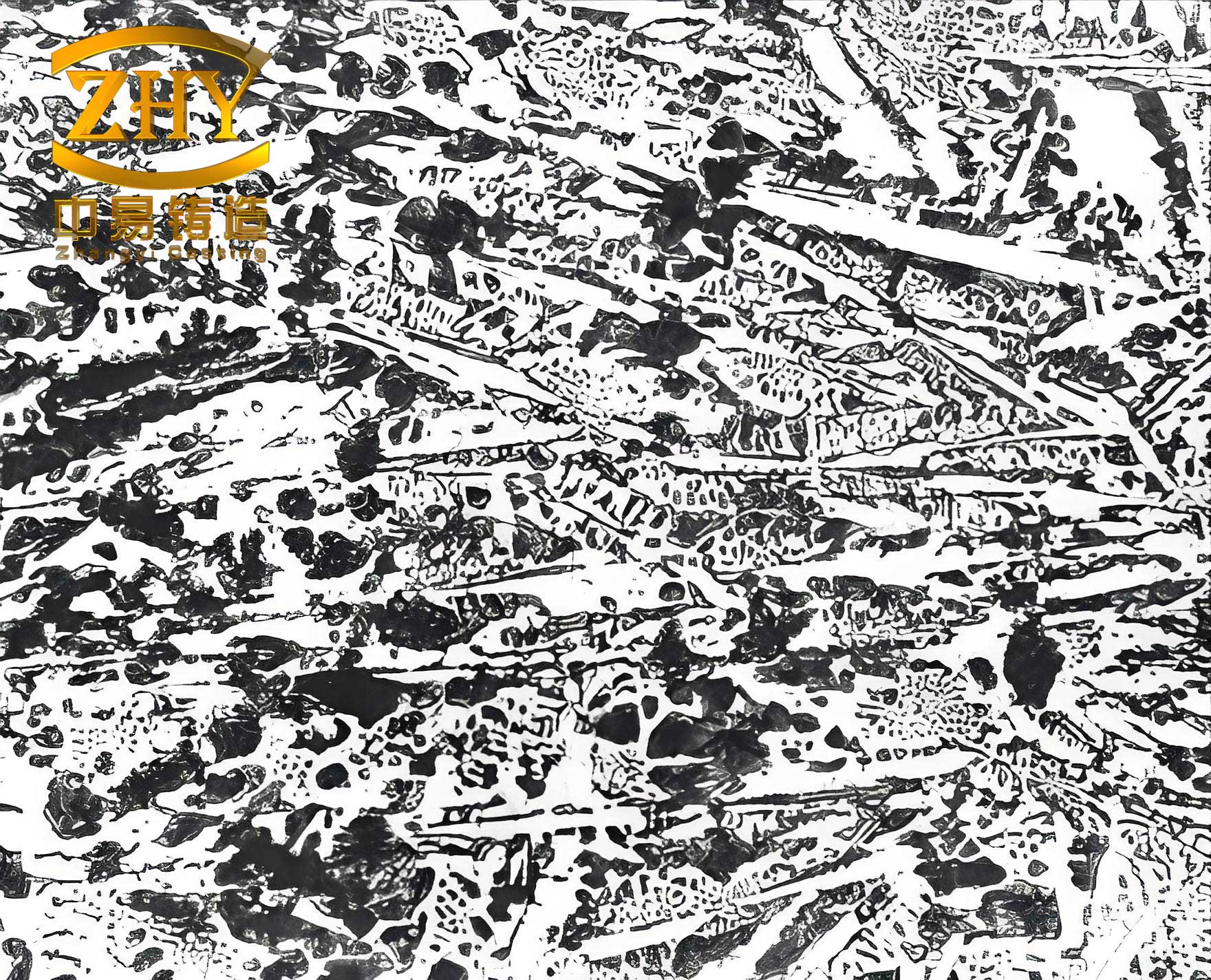
The ideal state for a grinding ball in service is one of dynamic rigidity, characterized by a specific and beneficial residual stress profile. Conceptually, the surface layers should exist under a state of uniform compressive stress. This compressive “shell” is highly desirable as it counteracts the tensile stresses induced by repetitive impact and abrasive loading during milling. The genesis of this favorable compressive layer can often be traced back to the solidification event itself, where the contraction of the solidifying shell is mechanically constrained by the still-molten core. The challenge, and the central theme of controlling quality in white cast iron grinding balls, lies in ensuring this stress state is uniform, predictable, and free from the deleterious peaks and gradients that lead to failure.
Deconstructing the Genesis of Internal Stress
The formation of internal stress within a high-chromium white cast iron grinding ball is not a singular event but a symphony of interrelated mechanisms acting across the entire manufacturing lifecycle. A comprehensive understanding requires dissecting each contributing factor.
1. The Legacy of Solidification
Unlike simple eutectic alloys, high-chromium white cast iron exhibits a strong tendency towards mushy or pasty zone solidification, especially with increasing chromium content. In a typical metal mold casting process, the reality is a hybrid mechanism: an initial external columnar growth from the mold wall, transitioning to an internal equiaxed, mushy zone towards the center. This creates a complex, three-dimensional temperature field. The resulting thermal gradients, $\nabla T(x,y,z,t)$, are asymmetric and drive differential contraction.
The stress arising from hindered thermal contraction during cooling from the solidification temperature can be conceptually framed. The instantaneous stress, $\sigma_{th}$, in an element constrained from contracting freely is related to the temperature change, the coefficient of thermal expansion ($\alpha$), and the material’s stiffness (Young’s modulus, $E$):
$$\sigma_{th}(t) \propto -E \cdot \alpha \cdot \Delta T(t)$$
The negative sign often indicates compressive stress if the surface cools faster than the core, but the sign and magnitude vary dramatically with position and time. Furthermore, macrosegregation of alloying elements like chromium and carbon towards the last-to-freeze regions (e.g., the geometric center and hot spots near the gate) creates local variations in the thermal expansion coefficient $\alpha$ and the phase transformation characteristics, further compounding the stress complexity. The intersection of columnar grains at the ball’s center often coincides with areas of micro-porosity and segregation, creating natural stress concentrators.
2. Phase Transformations and Volumetric Strain
The high hardness of this white cast iron is achieved through a heat treatment that transforms the metastable austenitic matrix into martensite. This shear transformation is accompanied by a significant increase in specific volume. The volumetric strain, $\epsilon_v^{A \rightarrow M}$, associated with the austenite ($\gamma$) to martensite ($\alpha’$) transformation is a key driver of transformation-induced stress:
$$\epsilon_v^{A \rightarrow M} \approx \frac{\Delta V}{V_{\gamma}}$$
where $\Delta V$ is the volume change. When this transformation occurs non-uniformly due to temperature gradients or composition variations, immense internal stresses are generated. If the heat treatment is suboptimal, leading to a mixed microstructure of martensite and pearlite, the situation worsens. The differing transformation kinetics and volumetric changes between these two constituents ($\gamma \rightarrow \alpha’$ vs. $\gamma \rightarrow \alpha + Fe_3C$) create localized stress mismatches at microscopic scales, severely undermining the structural integrity of the white cast iron.
3. The Challenge of Low Thermal Conductivity
The austenitic and martensitic matrices of high-chromium white cast iron possess relatively low thermal conductivity, $k$. The hard, chromium-rich carbides (primarily the desirable $M_7C_3$ type) have even lower conductivity. This composite structure acts as a thermal barrier, impeding the rapid equalization of temperature within the grinding ball. The heat flux, $q$, governed by Fourier’s law, $q = -k \nabla T$, is thus limited. During both solidification cooling and subsequent heat treatment cycles, large thermal gradients $\nabla T$ are sustained for longer periods, directly amplifying the thermal stresses calculated earlier. Moreover, if the carbide morphology is unfavorable—such as a continuous network of $M_3C$ or a coarse, interconnected mixture of $M_7C_3$ and $M_3C$—it can disrupt the continuity of the metallic matrix, creating localized “hot spots” and exacerbating the three-dimensional inhomogeneity of the temperature field.
4. The Cumulative Impact of Manufacturing Processes
Every step in the production chain imprints its own signature of stress onto the white cast iron product.
- Melting Practice: The liquid metal structure, influenced by superheating temperature, holding time, and electromagnetic stirring in induction furnaces, affects the nucleation potency and growth morphology during solidification. A more homogeneous melt with finely dispersed “clusters” can promote a finer, more uniform solidification structure, which inherently has lower stress.
- Mold Design & Cooling: The thermal properties of the metal mold and the application of insulating or chilling coatings dictate the initial cooling rate $(\frac{dT}{dt})_{cast}$. Premature de-molding at a high temperature, followed by uncontrolled air cooling, subjects the white cast iron ball to a severe thermal shock, locking in high stresses.
- Heat Treatment Cycle: Conventional hardening involves heating to austenitizing temperatures (920–1080°C) and quenching. Even with moderate industrial heating rates, the low thermal conductivity $k$ causes a significant temperature difference between the surface and core, $\Delta T_{S-C}$. The resulting thermal stress during heating, $\sigma_{heat}$, can be substantial before the phase transformation even begins. The subsequent quenching step introduces even more severe gradients.
5. Stress Concentrators: Inclusions and Defects
Non-metallic inclusions, gas pores, shrinkage cavities, or micro-cracks act as potent stress concentrators. According to the principles of fracture mechanics, the local stress, $\sigma_{local}$, at the tip of such a defect can be magnified many times over the nominal applied or residual stress, $\sigma_{nom}$:
$$\sigma_{local} \approx \sigma_{nom} \cdot (1 + 2\sqrt{\frac{a}{\rho}})$$
where $a$ is the defect size and $\rho$ the root radius. In the brittle matrix of hardened white cast iron, these localized stress intensities can directly nucleate cracks or dramatically accelerate fatigue and corrosion processes, leading to premature failure.
| Stage | Primary Mechanism | Governing Factors | Nature of Induced Stress |
|---|---|---|---|
| Solidification | Thermal contraction constrained by temperature gradients and mold. | Cooling rate, mold material, alloy composition (Cr/C ratio). | Thermal stress, often tensile at hot spots. |
| Phase Transformation | Volumetric expansion during austenite-to-martensite change. | Austenitizing temperature, cooling rate, alloy hardenability. | Transformation stress, typically compressive at surface, tensile in core. |
| Heat Conduction | Low thermal conductivity sustaining large thermal gradients. | Matrix phase, carbide morphology, size, and distribution. | Thermal stress (amplifies all other thermally-induced stresses). |
| Manufacturing Steps | Cumulative thermal/mechanical shocks from processing. | Melting practice, de-molding temp, heating/cooling rates in HT. | Complex, process-specific residual stress. |
| Material Imperfections | Stress concentration at defects. | Inclusion content, gas porosity, shrinkage, microcracks. | Localized tensile stress peaks. |
A Systematic Framework for Internal Stress Mitigation
Combating the multifaceted origins of internal stress demands an equally comprehensive and integrated strategy. Control must be exercised from the melting furnace through to the final heat treatment.
1. Refining Solidification through Advanced Processing
Moving beyond static metal mold casting is crucial. Centrifugal casting in metal molds offers profound advantages for white cast iron grinding balls. The centrifugal force promotes rapid, directional cooling akin to forced convection, increasing the undercooling $\Delta T$ and nucleation rate $N$. The intense fluid flow fragments dendritic arms, multiplying crystal nuclei. Furthermore, solidification occurs under significant pressure, feeding interdendritic regions more effectively and reducing shrinkage porosity. The resultant microstructure is a fine, equiaxed grain structure instead of coarse columnar grains, which inherently possesses a more homogeneous property distribution and lower inherent casting stress.
2. Strategic Alloy Design and Microstructure Engineering
Chemistry is not just about hardness; it is a lever for stress management. A well-designed composition for high-chromium white cast iron aims for a direct as-cast or heat-treated structure of fine martensite, a controlled amount of retained austenite (RA), and isolated, blocky $M_7C_3$ carbides. The retained austenite, with its lower specific volume, acts as a beneficial, ductile phase that accommodates the volumetric strain of the martensitic transformation, mitigating transformation stress. The volume fraction of retained austenite, $V_{RA}$, can be optimized via the carbon and chromium balance and the heat treatment parameters.
Micro-modification through “two-step” rare earth (RE) compound inoculation is highly effective. RE elements adsorb at the solid/liquid interface, restricting the growth of austenite dendrites and modifying carbide morphology. This results in refined austenite grains and the promotion of finer, more isolated $M_7C_3$ carbides over networked $M_3C$. The improved matrix continuity and carbide morphology enhance the effective thermal conductivity $k_{eff}$ of the composite white cast iron structure, facilitating more uniform heat dissipation during processing and reducing thermal stress gradients.
3. Precision-Controlled Manufacturing and Heat Treatment
Every thermal cycle must be meticulously managed to minimize its stress contribution.
- Melting: Utilize induction melting with controlled power input to manage superheat and employ programmed electromagnetic stirring to ensure chemical and thermal homogeneity of the white cast iron melt.
- Mold & Cooling: Employ engineered mold coatings. A baseline layer of ceramic fiber for insulation, topped with a carbonaceous coating (e.g., acetylene soot), provides an optimal balance: it moderates the initial cooling rate to prevent thermal shock yet allows sufficient heat extraction for sound solidification. The de-molding temperature and subsequent cooling medium (e.g., still air vs. forced air) must be experimentally determined to achieve the target as-cast microstructure with minimal stress.
- Revolutionizing Heat Treatment: Abandon the conventional high-temperature quench-for-maximum-hardness paradigm for a more intelligent approach. Implementing an intercritical or subcritical heat treatment is key. This involves heating the white cast iron ball to a temperature range between 550°C and 650°C—below the full austenitization temperature—and holding for a sufficient time. The slow, controlled heating rate is paramount to minimize $\Delta T_{S-C}$. This process temper any pre-existing martensite, promotes the precipitation of secondary carbides from austenite, and stabilizes the microstructure. The final cooling, even in air, results in a tough matrix with significantly lower internal stress compared to a conventionally quenched structure, while still achieving excellent wear resistance. The stress relief, $\sigma_{rel}$, during such a treatment can be modeled by a thermally activated process:
$$\sigma_{rel}(t) = \sigma_0 \cdot \exp\left(-\frac{Q}{RT}\right) \cdot t^n$$
where $\sigma_0$ is the initial stress, $Q$ is an activation energy, $R$ is the gas constant, $T$ is the absolute temperature, $t$ is time, and $n$ is a time exponent.
4. Elimination of Stress Raisers
A sound melt is the foundation. Effective deoxidation practices (using Al, Ca, or RE elements) combined with the aforementioned RE modification drastically reduce the population and size of non-metallic inclusions. When coupled with the superior feeding characteristics of centrifugal casting, this results in white cast iron grinding balls that are dense and free from major defects that could act as stress concentrators.
| Stress Source | Mitigation Strategy | Key Parameters & Goals | Expected Outcome |
|---|---|---|---|
| Solidification Stress | Centrifugal Casting; Controlled Mold Cooling. | High spin rate; Optimized coating system. Target: Fine equiaxed grains. | Homogeneous, low-stress casting with reduced segregation. |
| Transformation Stress | Alloy Design for RA; Intercritical Heat Treatment. | Optimize Cr/C for 10-25% RA; Heat to 550-650°C with slow ramp. | Matrix with high toughness & accommodated transformation strain. |
| Thermal Stress (Low k) | Microstructure Modification. | RE-treatment to spheroidize carbides and refine matrix. | Improved effective thermal conductivity, reducing thermal gradients. |
| Process-Induced Stress | Precision Thermal Management. | Controlled de-molding temp; Slow heating in all thermal cycles. | Minimized thermal shocks and locked-in process stresses. |
| Stress Concentrators | Melt Cleanliness & Soundness. | Effective deoxidation; Centrifugal casting pressure. | Dense, inclusion-free white cast iron microstructure. |
Validating the Strategy: Outcomes and Implications
Implementing this holistic framework yields tangible, measurable improvements in the quality of high-chromium white cast iron grinding balls. Residual stress measurements using techniques like X-ray diffraction or hole-drilling consistently show a transformation from an unpredictable, often tensile surface state to a uniform and beneficial compressive residual stress profile at the ball’s surface. Macroscopic examination of sectioned balls reveals a consistent, fine-grained structure without the obvious columnar zones and central imperfections characteristic of poorly controlled solidification in white cast iron.
Microstructurally, the material evolves as intended. The as-cast state exhibits a refined mixture of martensite, retained austenite, and well-distributed carbides. Following the intercritical treatment, the microstructure becomes even more uniform, with tempered martensite and fine secondary carbides. This microstructural refinement directly translates to performance. In controlled comparative abrasion tests—such as those performed using an MLD-1 type impact-abrasion wear tester—grinding balls produced under this stress-controlled protocol for white cast iron consistently demonstrate a superior relative wear life ($\beta$) compared to those made by conventional high-stress processes. Ratios on the order of 1.43:1 are achievable, representing a significant leap in cost-effectiveness and operational reliability. Most importantly, this approach successfully decouples the traditional, problematic linkage in white cast iron where high hardness was invariably accompanied by dangerously high internal stress. We can now produce grinding balls that are both exceptionally hard and inherently tough, with their internal stress state meticulously engineered as an asset, not a liability.
In conclusion, the journey toward optimal performance of high-chromium white cast iron grinding media is a journey of stress mastery. It requires a shift from viewing internal stress as an inevitable byproduct to recognizing it as the central variable to be controlled. By systematically addressing its origins in solidification, phase transformation, thermal transport, and manufacturing practice, we can transform the white cast iron grinding ball from a component prone to unpredictable failure into a reliable, high-performance consumable engineered for maximum service life and efficiency. The control and alleviation of internal stress is, unequivocally, the foundational principle for stabilizing and elevating the quality of this critical wear-resistant material.