
This study investigates the critical interplay between abrasive wear resistance and fracture toughness in high-chromium white cast iron, a material class paramount to industries involving crushing, grinding, and materials handling. The primary challenge in these applications lies not only in achieving high wear resistance but also in ensuring sufficient fracture toughness to withstand impact and loading, thereby preventing catastrophic failure. The focus here is on understanding how microstructural constituents—specifically, the volume fraction of hard carbides and the nature of the metallic matrix—govern these two, often competing, properties. We systematically examine the abrasive wear performance under different tribosystems, the static and dynamic fracture toughness, and the subcritical crack growth rates. The central thesis is that the optimal selection of matrix structure for a given white cast iron composition is not universal but is intrinsically linked to the specific wear environment, particularly the hardness of the abrasive medium.
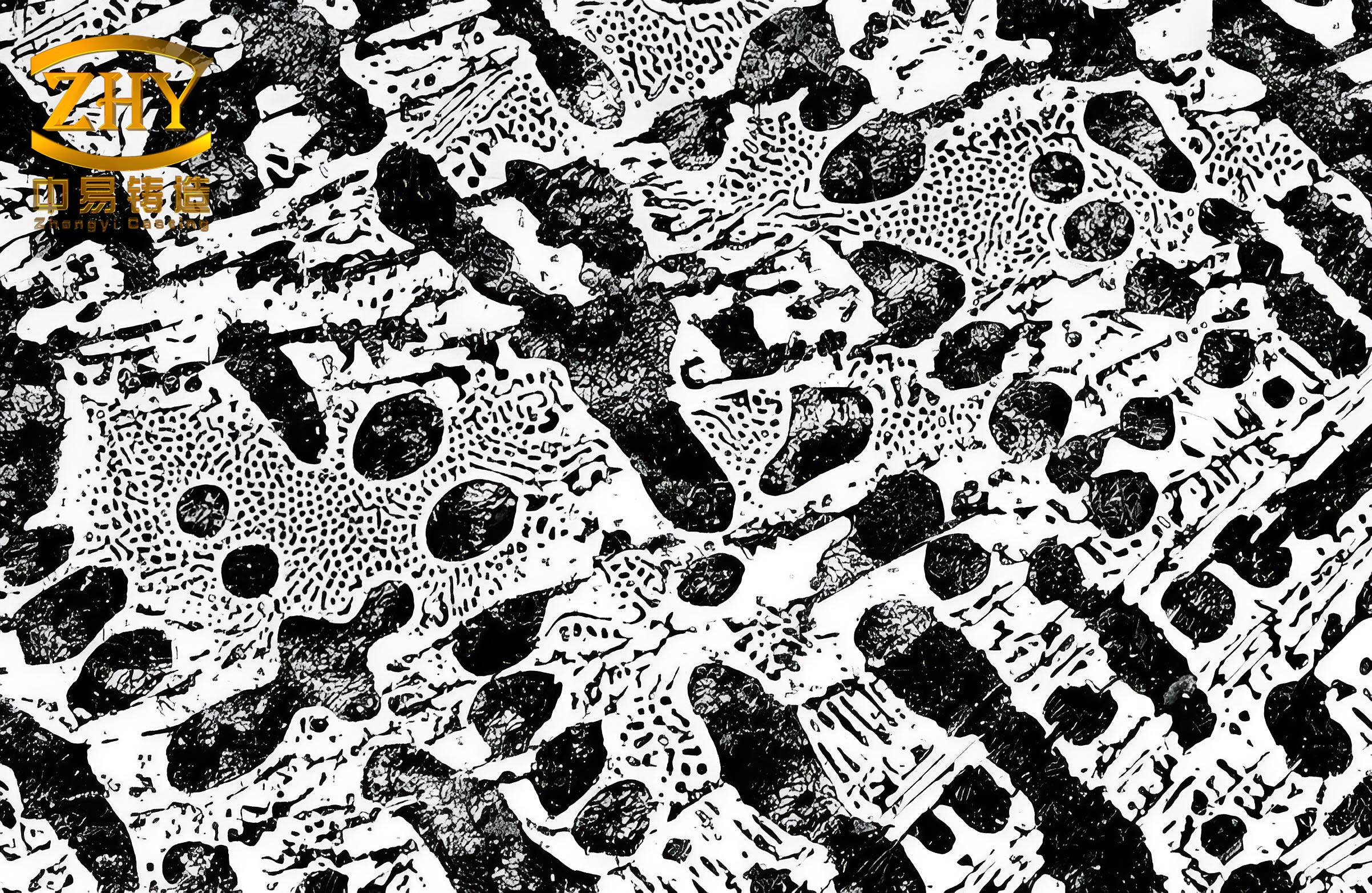
The high-chromium white cast iron family, typically based on the Fe-Cr-C system, derives its wear resistance primarily from a high volume fraction of (Cr, Fe)7C3 carbides embedded in a metallic matrix. The matrix can be tailored through heat treatment to be predominantly austenitic or martensitic, each imparting distinct mechanical properties. While the hard carbides resist penetration and cutting by abrasives, the matrix provides essential support, preventing premature spalling of carbides and contributing to overall toughness. This investigation was designed to deconvolute these effects. A series of white cast iron melts were produced with nominally constant chromium content but varying carbon levels to achieve a range of carbide volume fractions (Vc). Each composition was then subjected to two distinct heat treatment cycles to produce either a primarily martensitic or a primarily austenitic matrix, as summarized in Table 1.
| Material ID | Chemical Composition (wt.%) | Heat Treatment | Matrix Structure | Carbide Vol. Fraction, Vc (%) |
|---|---|---|---|---|
| M1 / A1 | ~2.3 C, 15 Cr | M: 980°C/2h, AC; 250°C/2h, AC A: 1150°C/2h, AC |
Martensite / Austenite | ~18 |
| M2 / A2 | ~2.8 C, 15 Cr | M: 980°C/2h, AC; 250°C/2h, AC A: 1150°C/2h, AC |
Martensite / Austenite | ~25 |
| M3 / A3 | ~3.3 C, 15 Cr | M: 980°C/2h, AC; 250°C/2h, AC A: 1150°C/2h, AC |
Martensite / Austenite | ~32 |
Abrasive wear tests were conducted under two distinct modes to simulate different service conditions. Two-body abrasion tests employed a pin-on-drum configuration with fixed abrasive papers, while three-body abrasion tests used a modified sand mixer with loose abrasives. Critically, two types of abrasives were used: silicon carbide (SiC, hardness ~2500 HV) and garnet (hardness ~1350 HV). Since the hardness of (Cr, Fe)7C3 carbides is approximately 1200-1600 HV, SiC is considered a “hard abrasive” capable of cutting the carbides, whereas garnet is a “soft abrasive” that primarily interacts with the matrix. Relative wear resistance, $E$, was calculated against a normalized steel standard:
$$E = \frac{W_{standard}}{W_{sample}}$$
where $W$ represents the wear volume loss.
Fracture resistance was evaluated through both quasi-static and dynamic lenses. Plane strain fracture toughness, $K_{IC}$, was determined using single-edge notched bend (SENB) specimens tested in three-point bending. Dynamic fracture toughness, $K_{Id}$, was derived from instrumented Charpy impact tests. To understand crack initiation and slow growth behavior, fatigue pre-cracking for the $K_{IC}$ tests also allowed for the measurement of fatigue crack growth rates (da/dN) as a function of the stress intensity factor range ($\Delta K$), following the Paris power law relationship:
$$\frac{da}{dN} = C (\Delta K)^m$$
where $C$ and $m$ are material constants.
The wear resistance of high-chromium white cast iron proved to be highly system-dependent. Under two-body abrasion conditions, a clear divergence was observed based on abrasive hardness. When abraded by hard SiC, the austenitic matrix materials consistently demonstrated a higher relative wear resistance $E$ compared to their martensitic counterparts, as shown conceptually in the data trend. The increase in $E$ with increasing carbide volume $V_c$ was relatively modest. In stark contrast, under two-body abrasion by soft garnet, the martensitic matrix provided superior wear resistance, and $E$ increased significantly with $V_c$. This behavior is explained by the ratio of abrasive hardness ($H_a$) to carbide hardness ($H_c$). For SiC ($H_a/H_c > 1$), the abrasive can effectively cut and fracture the carbides themselves, limiting their protective benefit. The more ductile, strain-hardenable austenitic matrix may better support the carbides under these conditions. For garnet ($H_a/H_c \leq 1$), the abrasive cannot effectively cut the carbides, which thus act as perfect protectors. The harder martensitic matrix resists penetration better than austenite, leading to higher overall $E$.
The three-body abrasion results further emphasized this system dependence. With loose SiC abrasives, the austenitic matrix again outperformed the martensitic one. However, an intriguing trend emerged: for some compositions, $E$ appeared to decrease with increasing $V_c$. In three-body conditions, rolling abrasives can cause carbide spalling via indentation and fatigue, a process where a high carbide content might become detrimental. With loose garnet, the martensitic matrix showed a slight advantage, and $E$ increased normally with $V_c$, as the carbides remained largely intact and protective.
The fracture toughness assessments revealed consistent advantages for the austenitic matrix white cast iron. Both static ($K_{IC}$) and dynamic ($K_{Id}$) toughness values were higher for austenitic matrices compared to martensitic ones across nearly all carbide levels. Representative data is consolidated in Table 2.
| Material ID (Matrix) | Vc (%) | $K_{IC}$ (MPa√m) | $K_{Id}$ (MPa√m) |
|---|---|---|---|
| M1 (Martensite) | ~18 | ~18.5 | ~14.2 |
| A1 (Austenite) | ~18 | ~25.1 | ~19.8 |
| M2 (Martensite) | ~25 | ~16.0 | ~12.5 |
| A2 (Austenite) | ~25 | ~20.5 | ~16.0 |
| M3 (Martensite) | ~32 | ~14.8 | ~11.0 |
| A3 (Austenite) | ~32 | ~17.2 | ~13.5 |
The data indicates that the matrix structure dominates fracture toughness at lower $V_c$. The superior plasticity and crack-blunting capability of austenite provide a much higher resistance to crack initiation and propagation. As $V_c$ increases, the difference in toughness between the two matrices diminishes, suggesting that the carbide network itself becomes the primary controller of fracture resistance. It is noteworthy that toughness did not increase monotonically with decreasing carbon (and $V_c$). For martensitic white cast iron, a peak in $K_{IC}$ and $K_{Id}$ was observed at a moderate $V_c$, likely because very low carbon contents can promote undesirable carbide morphologies, such as continuous grain boundary networks, which are detrimental to toughness.
The study of fatigue crack growth rates provided a micromechanical explanation for the toughness trends. For a given matrix type, the crack growth rate (da/dN) increased with higher carbide volume fraction $V_c$. More importantly, at any given $V_c$ and $\Delta K$, the austenitic matrix materials exhibited significantly slower crack growth rates compared to the martensitic ones. Microscopic examination of crack paths revealed that in austenitic white cast iron, cracks propagated in a highly tortuous manner, frequently deflected by the ductile matrix or along carbide interfaces. This meandering path increases the fracture surface area and dissipates more energy. In contrast, cracks in martensitic white cast iron tended to propagate in a straighter, less impeded path, often cutting through the brittle martensite laths and carbides with less resistance. The relationship can be generalized as:
$$\left( \frac{da}{dN} \right)_{Austenite} < \left( \frac{da}{dN} \right)_{Martensite}$$
for comparable $\Delta K$ and $V_c$.
The core engineering challenge is optimizing the combination of wear resistance and fracture toughness for a specific application. This work demonstrates that there is no single “best” matrix for high-chromium white cast iron; the choice is dictated by the abrasive environment. The performance trade-off can be summarized by two principal guidelines derived from the data trends. When the service environment involves abrasion by hard particles (where $H_a/H_c > 1$), such as with silica sand or crushed ore, the austenitic matrix offers the better overall compromise. It provides superior fracture toughness and, in both two-body and three-body wear systems with hard abrasives, it frequently matches or exceeds the wear resistance of the martensitic alternative. The inherent toughness of the austenite is crucial for withstanding impact in such harsh conditions.
Conversely, when the abrasive is soft relative to the carbides (where $H_a/H_c \leq 1$), such as in certain soil or ash handling applications, the martensitic matrix becomes the preferred choice. In this regime, the wear resistance of martensitic white cast iron is superior, and it benefits strongly from increased carbide content. While its fracture toughness is lower than that of the austenitic version, the generally less severe impact conditions often associated with soft abrasion may allow this trade-off to be acceptable, favoring maximal wear life. Thus, the selection paradigm is clear: for hard abrasive systems, prioritize toughness with an austenitic matrix; for soft abrasive systems, prioritize maximum wear resistance with a martensitic matrix. This framework provides a foundational principle for the material design and application of high-chromium white cast iron components subjected to abrasive wear.