
In the field of wear-resistant materials, chromium alloyed white cast iron stands as a cornerstone for combating abrasive wear. Over the past decades, extensive research and development have propelled this family of materials to the forefront, replacing traditional wear-resistant steels, high-manganese steels, and other alloys in numerous demanding applications. The continuous pursuit of higher performance, better toughness, and lower cost has driven innovation in both composition design and manufacturing processes. This article, from my perspective as a researcher in the field, aims to provide a comprehensive overview of the state-of-the-art regarding chromium white cast iron, synthesizing key findings on the influence of composition, microstructure, and processing on final properties. Special emphasis will be placed on recent advancements in medium-chromium irons, composite casting, and metal mold casting techniques, while also addressing prevailing challenges and future directions for this critical class of materials.
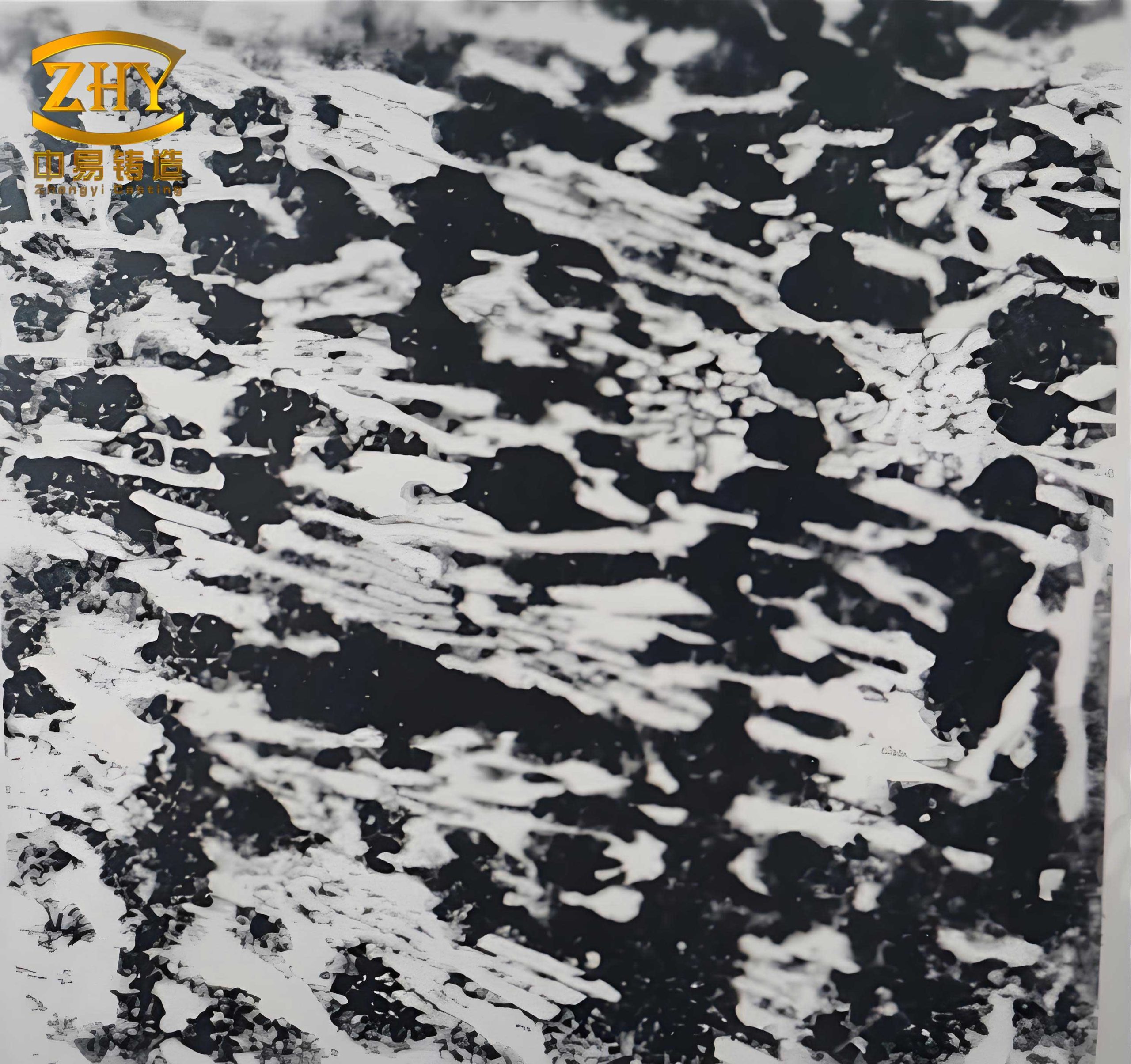
The fundamental characteristic of white cast iron is the presence of hard, brittle carbides within its metallic matrix, which provides exceptional resistance to abrasion. The addition of chromium profoundly modifies the nature, morphology, and distribution of these carbides, leading to a spectrum of materials with tailored properties. The performance of any chromium white cast iron is dictated by a complex interplay between its chemical composition, the resulting carbide type and volume fraction, and the microstructure of the supporting matrix, all of which are influenced by the chosen casting and heat treatment processes.
1. Classification and Characteristics of Chromium White Cast Irons
Chromium white cast irons are typically classified based on their chromium content, which directly correlates with the type of primary and eutectic carbides formed. This classification is central to understanding their behavior and applications.
| Classification | Typical Cr Content (wt.%) | Predominant Carbide Type | General Carbide Morphology | Key Characteristics |
|---|---|---|---|---|
| Low-Chromium White Cast Iron | 1 – 5 | (Fe,Cr)3C (M3C) | Continuous or semi-continuous network | Low cost, good hardenability, moderate wear resistance, lower toughness. |
| Medium-Chromium White Cast Iron | 5 – 12 | Mixed M3C and M7C3 | Disconnected network, improved isolation | Balance of cost, toughness, and wear resistance; alternative to Ni-Hard irons. |
| High-Chromium White Cast Iron | 12 – 30+ | (Cr,Fe)7C3 (M7C3) | Discontinuous, isolated rods/hexagons | High wear resistance, good corrosion/oxidation resistance, higher toughness than low-Cr types. |
1.1 Low-Chromium White Cast Iron
Low-chromium white cast iron, typically containing 1-5% Cr, is characterized by the formation of M3C-type eutectic carbides. These carbides, while alloyed and hardened by chromium, generally form a continuous or semi-continuous network, which is a primary factor limiting the toughness of this family of white cast iron. The primary advantage lies in its relatively low cost and the feasibility of melting in cupola furnaces. A classic and well-researched example is the martensitic chromium-molybdenum-copper white cast iron. The combined effect of Cr, Mo, and Cu enhances the hardness of the alloyed cementite and significantly improves the hardenability of the matrix, allowing a martensitic structure to be obtained after heat treatment.
The wear resistance of this white cast iron can surpass that of Ni-Hard types in certain low-to-medium stress abrasion conditions. Optimizing composition, particularly controlling carbon content, is crucial for applications involving some impact. For instance, increasing silicon content can refine the eutectic carbide morphology, and at an optimal level, properties like impact toughness and multi-impact resistance can peak. The wear performance can be further enhanced by adding vanadium (forming harder MC carbides) or tungsten, though often at increased cost. The major limitation remains the relatively lower microhardness of the M3C carbides (approx. 900-1200 HV) and their detrimental networked morphology. While inoculation can modestly improve morphology, toughness is still a constraint, guiding its use primarily towards low-stress abrasion scenarios.
1.2 High-Chromium White Cast Iron
This is the most prominent and widely studied class of abrasion-resistant white cast iron. With chromium content typically above 12%, the eutectic carbide shifts from M3C to the much harder M7C3 type (1300-1800 HV). This carbide grows in a discontinuous, isolated manner, dramatically improving both toughness and wear resistance compared to low-chromium white cast iron. Furthermore, high chromium content enhances hardenability and provides improved resistance to corrosion and oxidation.
The workhorse of this category is the 15-20% Cr, 2-3% Mo white cast iron, often designated as 15-3 or 20-2. Carbon content is the most critical variable, governing the carbide volume fraction (CVF) and thus the hardness/toughness balance. The carbide volume fraction can be approximated as a function of composition, though equilibrium calculations are complex. A simplified empirical relation for near-eutectic high-Cr iron suggests:
$$ CVF (vol. \%) \propto C_{eq} $$
where $C_{eq}$ is a carbon equivalent that accounts for strong carbide formers. The macro-hardness $H_m$ relates to the microhardness of the carbides $H_c$ and the matrix $H_{\alpha}$ via a rule-of-mixtures:
$$ H_m \approx f_c \cdot H_c + (1 – f_c) \cdot H_{\alpha} $$
where $f_c$ is the carbide volume fraction. High-carbon (>3.0%) variants are used for maximum wear resistance under low stress, while lower-carbon (<2.8%) versions are preferred for impact conditions.
Molybdenum’s primary role is to boost hardenability, allowing thicker sections to transform to martensite during air quenching. Research into substitutes like Cu, Mn, or W aims to reduce reliance on expensive Mo. Boron addition (0.2-0.8%) can promote as-cast martensite and form hard borocarbides, improving wear in some contexts (e.g., silica sand abrasion) but may reduce toughness and wear performance with harder abrasives like alumina. Vanadium addition leads to extremely hard MC carbides and can enable an as-cast martensitic matrix. Silicon, often kept low (<0.8%), has been shown to promote an isolated growth mode for M7C3 carbides at higher levels (>1.5%), potentially improving mechanical properties. The matrix structure is paramount: a tempered martensite base offers the best combination, while retained austenite’s role is debated—it can be detrimental by transforming under stress and causing microcracking, or beneficial by absorbing energy and inhibiting crack propagation, depending on its stability and service conditions.
High-chromium white cast iron with over 20% Cr finds use in elevated temperature or corrosive wear environments. For high-temperature service where oxidation dominates, a lower carbon content is suggested, whereas higher carbon is better for pure abrasion.
| Element | Primary Function | Effect on Carbides | Effect on Matrix/Hardenability |
|---|---|---|---|
| Carbon (C) | Controls carbide volume fraction (CVF) | Determines amount of M7C3. High C increases CVF. | Lowers Ms temperature, increases retained austenite. |
| Chromium (Cr) | Forms M7C3, improves corrosion/oxidation resistance | Higher Cr/C ratio promotes M7C3 over M3C. | Increases hardenability significantly. |
| Molybdenum (Mo) | Enhances hardenability | Can form fine Mo-rich carbides (M2C, M6C). | Strong hardenability agent, shifts CCT curves right. |
| Nickel (Ni) | Austenite stabilizer | Little direct effect. | Promotes austenite retention, improves toughness. |
| Copper (Cu) | Moderate hardenability, corrosion resistance | Minimal. | Enhances hardenability, less potent than Mo. |
| Vanadium (V) | Forms ultra-hard MC carbides | Forms primary and secondary V4C3/VC. | Can promote as-cast martensite via carbon depletion. |
| Boron (B) | Forms hard borides, promotes as-cast martensite | Forms M2B, M23(C,B)6, M3(C,B). | Enhances hardenability, but can embrittle grain boundaries. |
| Silicon (Si) | Deoxidizer, graphite inhibitor | May modify carbide growth to more isolated form. | Lowers hardenability, raises eutectoid temperature. |
1.3 Medium-Chromium White Cast Iron
Occupying the compositional gap between low and high-chromium white cast iron, medium-chromium irons (5-12% Cr) offer a compromise, often designed as cost-effective alternatives to nickel-hard white cast iron. Their microstructure typically contains a mixture of M3C and M7C3 carbides, with the proportion of the desirable M7C3 increasing with the Cr/C ratio. Achieving a fully martensitic matrix through air quenching requires careful balancing of alloying elements like Mo and Cu to ensure sufficient hardenability for a given section size.
Recent innovative approaches involve designing high-silicon, medium-chromium white cast iron. By intentionally raising silicon content, the partitioning of chromium between the matrix and carbides is altered, favoring the formation of a higher fraction of M7C3 during solidification. Furthermore, silicon shortens the incubation period for austenite transformation, facilitating the development of a multiphase matrix of martensite, bainite, and retained austenite upon cooling. This multiphase structure can yield an excellent combination of strength, toughness, and wear resistance. For example, such a medium-chromium white cast iron can exhibit hardness >60 HRC, impact toughness around 10 J/cm², and wear resistance in wet grinding that surpasses standard martensitic high-chromium iron, all at a significantly lower material cost.
2. Advanced Manufacturing Processes for Chromium White Cast Iron
Beyond alloy design, processing routes play an equally vital role in determining the service life and economic viability of white cast iron components. Two processes have garnered significant attention for addressing inherent limitations.
2.1 Composite Casting
The relatively low toughness of monolithic white cast iron, especially under high-impact conditions, can be mitigated by composite casting techniques. These processes integrally bond a wear-resistant white cast iron layer to a tough steel backing, creating a component with a hard, abrasion-resistant face supported by a ductile, impact-absorbing body. Several methods exist:
- Sequential Pouring (Bimetal Casting): A layer of molten steel is first poured into the mold. After a controlled delay, often protected by a flux to prevent oxidation at the interface, molten high-chromium white cast iron is poured. Interdiffusion creates a metallurgically sound, graded transition zone. The steel backing can constitute 40-50% of the section thickness, providing high overall toughness.
- Insert Casting (Cast-in Inserts): Pre-fabricated inserts of white cast iron (surface-treated to improve bonding) are placed in the mold, and molten steel is poured around them. This is effective for components like excavator teeth.
- Centrifugal Casting: Used predominantly for producing bimetal rolls, where a shell of white cast iron is cast onto a steel core via centrifugal force.
The successful application of composite casting for large ball mill liners and crusher hammers has demonstrated service life improvements of 2-3 times over traditional high-manganese steel components.
2.2 Metal Mold (Chill) Casting
Metal mold casting, particularly for grinding balls, has become a widespread and economically attractive process for producing chromium white cast iron. The rapid solidification imposed by the metal mold refines the microstructure, leading to finer carbides and a more uniform matrix. This can enhance both wear resistance and mechanical properties. A significant development is the design of compositions, such as high-chromium manganese-silicon white cast iron, specifically for metal mold casting.
The key innovation lies in utilizing the inherent cooling rate of the metal mold and the composition’s transformation characteristics to achieve a desired matrix (e.g., troostite or bainite) directly in the as-cast condition or after a simple in-mold annealing/heat treatment. This eliminates the need for expensive and energy-intensive high-temperature austenitizing and quenching operations required for martensitic white cast iron. The benefits are substantial: elimination of costly alloying elements like Mo and Cu used primarily for hardenability, increased yield (reduced pouring system weight), lower energy consumption, and reduced ball breakage rates due to a tougher matrix. The overall production cost per ton can be significantly reduced while maintaining excellent wear performance in cement, coal, and ore grinding applications.
| Process | Key Features | Typical Products | Advantages | Disadvantages/Limitations |
|---|---|---|---|---|
| Sand Casting + Heat Treat | Traditional, versatile, complex shapes possible. | Liners, plates, pump parts, complex impellers. | Design flexibility, well-understood process. | Slower cooling, coarser structure, higher scrap risk, energy-intensive heat treatment. |
| Metal Mold Casting | Rapid solidification, often near-net-shape. | Grinding balls, simple-shaped wear parts. | Finer microstructure, higher yield, potential for heat-treatment-free grades, lower cost. | Limited to simpler geometries, mold design and life are critical. |
| Composite Casting | Integrates two dissimilar materials (Fe/WCI). | Hammer heads, liner plates, crusher rolls. | Optimal property combination: hard face + tough backing, superior performance in high-impact wear. | Complex process control, potential for bonding defects, higher initial process cost. |
| Centrifugal Casting | Produces cylindrical parts with layered structure. | Pump sleeves, liners, rolls. | Dense structure, excellent for creating bimetal tubes/cylinders. | Limited to axisymmetric shapes, equipment-intensive. |
3. Quantitative Relationships and Performance Modeling
The engineering of white cast iron relies on understanding quantitative links between composition, processing, microstructure, and properties. Several empirical and semi-empirical models are useful.
Hardenability Prediction: The ability to form martensite upon air quenching is critical. A hardenability factor can be estimated using multiplicative factors similar to the ideal critical diameter $D_I$ concept in steel, but modified for high-carbon, high-alloy white cast iron:
$$ D_I^{WCI} = f(C) \cdot f(Cr) \cdot f(Mo) \cdot f(Mn) \cdot f(Ni) \cdot … $$
Where the functions $f(X)$ represent the potency of each element. Molybdenum and manganese have strong effects.
Abrasion Resistance Modeling: Wear resistance $W^{-1}$ (inverse of wear rate) often correlates with material hardness and carbide properties. A common model for high-chromium white cast iron under low-stress abrasion is:
$$ W^{-1} \propto H_m^{a} \cdot (f_c \cdot H_c)^{b} $$
where $a$ and $b$ are exponents, and $H_m$ is the matrix hardness. Under high-stress/impact abrasion, fracture toughness $K_{IC}$ becomes significant:
$$ W^{-1} \propto \frac{H_m \cdot K_{IC}^{c}}{E^{d}} $$
where $E$ is Young’s modulus and $c$, $d$ are empirical constants. This highlights the toughness requirement for impact conditions.
Thermal Processing: The austenitizing temperature $T_A$ for high-chromium white cast iron is chosen to dissolve sufficient carbon and alloy into austenite without causing excessive grain growth or destabilizing too much carbide. It is often related to the Acm temperature, which can be estimated from composition. A typical range is:
$$ T_A (^{\circ}C) \approx 950 – 1050 $$
The tempering response follows kinetics described by Hollomon-Jaffe parameter for secondary hardening:
$$ P = T (k + \log t) $$
where $T$ is tempering temperature (K), $t$ is time (h), and $k$ is a constant. Peak secondary hardness corresponds to an optimal $P$ value.
4. Current Challenges and Future Directions
Despite significant progress, challenges persist in the development and application of chromium white cast iron.
- Toughness-Cost Dilemma: Improving toughness without escalating cost (e.g., by reducing expensive alloy content) remains a primary goal. Further development of medium-chromium and metal-mold-optimized white cast iron compositions is a promising path.
- Performance in Complex Wear Modes: More research is needed for applications involving combined wear mechanisms, such as corrosion-erosion at elevated temperatures or in acidic/alkaline environments. The development of white cast iron grades with optimized compositions (e.g., high Cr, Ni, Mo, Cu) for these specific media is crucial.
- Process Reliability and Quality Control: Wider adoption of advanced processes like composite casting requires robust process control to ensure consistent, defect-free bonding. The development of reliable non-destructive testing methods for bimetal interfaces is needed.
- Microstructural Engineering: Deliberately designing for bainitic or multiphase (martensite-bainite-austenite) matrices in high-chromium white cast iron through novel alloying and heat treatment cycles could unlock better combinations of properties. The role and stabilization of beneficial retained austenite require clearer guidelines.
- Modeling and Digitalization: Integrating computational thermodynamics (e.g., CALPHAD) with solidification and property modeling can accelerate the design of new white cast iron grades and optimize heat treatment schedules, reducing costly trial-and-error.
- Sustainability: Efforts to improve yield, recycle scrap, and reduce energy consumption (e.g., via metal mold or as-cast processes) will enhance the environmental footprint of white cast iron component production.
In conclusion, chromium white cast iron continues to evolve as a vital material for industrial wear protection. The synergy between intelligent alloy design—spanning low, medium, and high-chromium variants—and innovative manufacturing processes like composite and metal mold casting, is key to solving the perennial challenges of toughness and cost. Future advancements will likely hinge on a deeper, more quantitative understanding of microstructure-property-process relationships, enabling the tailored design of white cast iron for ever more demanding and specific service environments. The journey of this versatile material is far from over, with its development poised to remain an active and fruitful field of research and industrial application.