
In the pursuit of enhancing the performance and durability of ground-engaging tools for agricultural and earth-moving machinery, material selection plays a pivotal role. Among various candidate materials, white cast iron stands out due to its exceptional wear resistance and inherent hardness, derived from its predominantly cementite (Fe3C) microstructure. This characteristic makes it an ideal choice for components subjected to severe abrasive wear. Furthermore, research has indicated that the coarse microstructure of white cast iron can reduce the specific surface area and interfacial energy, potentially contributing to soil adhesion reduction—a highly desirable property for tillage tools. However, the significant drawback of white cast iron is its extreme brittleness and poor toughness, rendering it unsuitable for applications requiring impact resistance or for fabricating complex structural parts.
Common methods to leverage the properties of white cast iron include casting entire components from it or applying it as a hard-facing layer via welding onto a tougher steel substrate. Both approaches have limitations. Monolithic casting is prone to solidification cracking and is restrictive in design complexity, while fusion welding often leads to issues such as cracking in the heat-affected zone (HAZ) and poor bonding due to the high carbon content and hard, brittle nature of the white cast iron. An alternative joining technique that circumvents these problems is brazing. Unlike welding, brazing does not melt the base metal, thereby minimizing thermal stresses and microstructural degradation. The use of copper-based filler metals, particularly CuZn alloys, for brazing various types of cast iron (gray, malleable, nodular) has been documented since the early 20th century and remains in practice. However, the specific challenges and mechanisms involved in brazing the highly abrasive, high-carbon white cast iron have not been extensively explored. This research gap is significant, as creating a reliable, high-strength brazed joint between white cast iron and a ductile steel backing could enable the manufacture of composite components that combine superior wear resistance with adequate structural integrity.
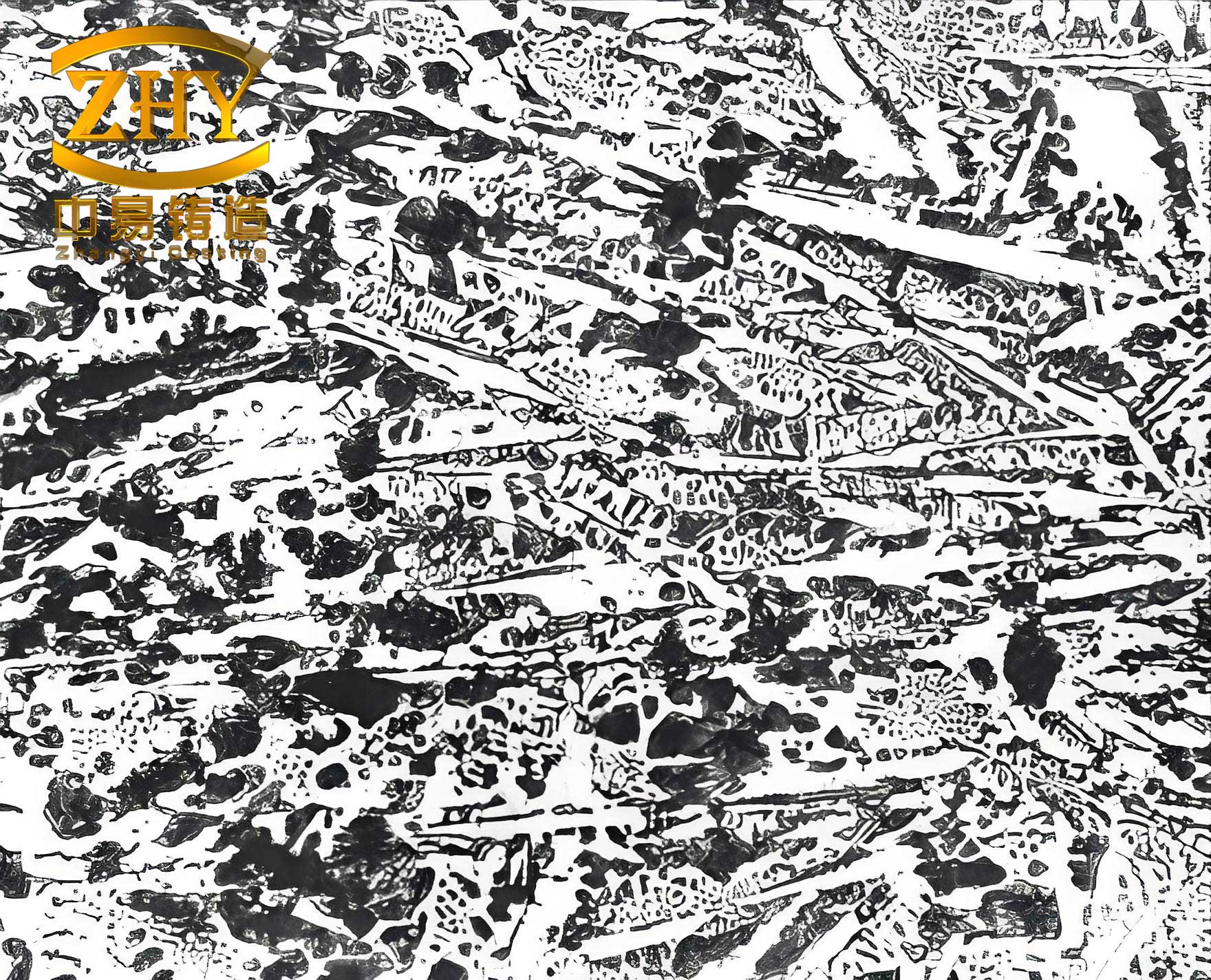
This investigation systematically examines the fundamental brazing characteristics of CuZn filler metals when applied to a medium-carbon low-alloy white cast iron. The primary focus is on two critical parameters that dictate the quality and reliability of a brazed joint: wettability and mechanical strength. Wettability, the ability of the molten filler metal to spread and adhere to the base metal surface, is essential for forming a continuous, sound joint. Mechanical strength, particularly shear strength, determines the joint’s load-bearing capacity under service conditions. The study aims to correlate the composition of the CuZn filler metal with its performance on white cast iron, compare its behavior to that on a standard steel substrate, and identify the underlying metallurgical phenomena at the brazing interface that govern the final joint properties.
1. Experimental Methodology
The experimental work was designed to quantitatively assess the brazability of white cast iron using a series of CuZn alloys and to analyze the resulting joint interfaces.
1.1 Materials
The base metals used were a medium-carbon low-alloy white cast iron and, for comparative purposes, a standard AISI 1035 (35#) steel. The chemical composition of the white cast iron is detailed in Table 1. Its microstructure consists of primary cementite and a pearlitic matrix, resulting in a high hardness of approximately 56 HRC. The 35# steel serves as a representative ductile substrate.
| C | Si | Mn | Cr | P | S |
|---|---|---|---|---|---|
| 3.2 – 3.4 | 0.4 – 0.9 | 1.0 – 1.3 | 1.5 – 2.0 | ≤ 0.1 | ≤ 0.1 |
Five different CuZn filler metals were selected, with zinc contents ranging from 10 to 52 weight percent. Their nominal compositions and common designations are listed in Table 2. A flux composed of a 3:7 mixture of boric acid and borax was used to remove surface oxides and promote wetting.
| Zn Content (wt.%) | Nominal Composition | Common Designation |
|---|---|---|
| 10 | Cu-10Zn | BCu90Zn |
| 30 | Cu-30Zn | BCu70Zn |
| 38 | Cu-38Zn | ZCu62Zn / BCu62Zn |
| 48 | Cu-48Zn | BCu52Zn |
| 52 | Cu-52Zn | BCu48Zn |
1.2 Wettability Testing
Wettability was evaluated according to the spread area test method (analogous to standards like GB11364-89). A fixed mass (200 mg) of filler metal was placed at the center of a polished 40 mm x 40 mm x 5 mm plate of white cast iron or 35# steel. Brazing was performed in an induction heating furnace under a protective atmosphere facilitated by the flux. The brazing temperature was set at 30–50°C above the liquidus temperature (TL) of each specific filler metal. After brazing and cleaning, the spread area of the filler metal on the substrate was accurately measured using an image analysis system. The spread area serves as a direct indicator of wettability, with a larger area signifying better wetting.
1.3 Shear Strength Testing
Single-lap shear specimens were prepared to evaluate the mechanical strength of the brazed joints. The configuration consisted of a white cast iron piece brazed to a 35# steel piece. To ensure a consistent braze gap, a 200g weight was placed on top of the assembly during brazing. The brazing parameters (temperature, time) were controlled. After brazing, the shear strength of the joints was determined using a universal testing machine, following the principle of standard shear test methods (e.g., GB11363-89). The failure load was recorded, and the shear strength (τ) was calculated using the formula:
$$ \tau = \frac{F_{max}}{A} $$
where \( F_{max} \) is the maximum load at failure and \( A \) is the overlapping braze area.
1.4 Microstructural and Compositional Analysis
To understand the mechanisms governing wettability and strength, cross-sections of brazed samples (both wetting test samples and shear specimens) were prepared for metallographic examination. Optical microscopy (OM) and scanning electron microscopy (SEM) were employed to study the interface morphology, reaction layers, and any defects. Energy-dispersive X-ray spectroscopy (EDS) attached to the SEM was used for semi-quantitative compositional analysis across the interfaces to identify elemental diffusion profiles and the formation of new phases.
2. Results and Discussion
2.1 Wettability of CuZn Filler Metals on White Cast Iron
The results of the wetting tests are summarized in Figure 1 and Table 3. The spread area, and thus the wettability, shows a clear dependence on the zinc content of the filler metal when brazing white cast iron.
| Filler Metal (Zn wt.%) | Spread Area on White Cast Iron (relative units) | Spread Area on 35# Steel (relative units) | Shear Strength (White Cast Iron to Steel) (MPa) |
|---|---|---|---|
| 10 (BCu90Zn) | Low | Moderate | ~120 |
| 30 (BCu70Zn) | High | High | ~165 |
| 38 (BCu62Zn) | Highest | Very High | ~170 |
| 48 (BCu52Zn) | Moderate | High | ~150 |
| 52 (BCu48Zn) | Low | Moderate | ~135 |
The filler metals containing 30% and 38% Zn exhibited the best wetting characteristics on the white cast iron surface. They displayed rapid spreading kinetics, quickly reaching an equilibrium wetting state. The superior performance of the BCu62Zn (38% Zn) filler can be attributed to an optimal balance of properties: a sufficiently low liquidus temperature for good fluidity, and a composition that promotes favorable interfacial energy with the substrate.
For filler metals with lower zinc content (e.g., 10% Zn), the higher liquidus temperature and lower fluidity likely result in slower spreading and a smaller final area. More notably, for filler metals with higher zinc content (48% and 52% Zn), the wettability deteriorated significantly despite their theoretically lower melting points. During brazing, intense fuming was observed for these high-zinc alloys, characterized by thick white smoke (zinc oxide). This indicates substantial evaporation of zinc due to its high vapor pressure at the brazing temperature. The loss of zinc alters the actual composition of the molten filler metal in real-time, increasing its liquidus temperature and viscosity. This phenomenon, known as “dezincification,” leads to poor fluidity, sluggish spreading, and the formation of a porous, pitted surface on the solidified braze bead, which directly correlates with the reduced measured spread area.
A critical finding was the stark difference in wettability between the two base metals. As shown in Table 3, all CuZn filler metals wetted the 35# steel surface more effectively than the white cast iron surface. On steel, spreading initiated faster, reached a larger equilibrium area, and produced smoother, brighter surfaces with less pronounced fuming for the high-Zn alloys. This comparative analysis underscores that the inherent properties of the white cast iron substrate itself pose a significant challenge to wetting by CuZn alloys.
The wettability of a liquid on a solid is classically described by Young’s equation, which relates the contact angle (θ) to the interfacial energies:
$$ \cos\theta = \frac{\gamma_{sv} – \gamma_{sl}}{\gamma_{lv}} $$
where \( \gamma_{sv} \), \( \gamma_{sl} \), and \( \gamma_{lv} \) are the solid-vapor, solid-liquid, and liquid-vapor surface tensions, respectively. Good wetting (small θ, large spread area) occurs when \( \gamma_{sv} \) is high and \( \gamma_{sl} \) is low. The high carbon and alloy content of white cast iron likely influences both these terms. The cementitic surface may have a different \( \gamma_{sv} \) compared to ferritic/pearlitic steel. More importantly, vigorous interactions at the white cast iron-filler metal interface (discussed in Section 2.3) dramatically increase \( \gamma_{sl} \), leading to poorer wetting compared to the more inert steel interface.
2.2 Shear Strength of Brazed Joints
The shear strength of joints brazed between white cast iron and 35# steel with different CuZn fillers is presented in Table 3 and graphically compared in Figure 2. The overall strength levels were found to be relatively modest. The highest average shear strength of approximately 170 MPa was achieved with the BCu62Zn (38% Zn) filler metal, which correlates with its superior wettability. Joints made with other fillers showed lower strengths.
Fracture analysis revealed a consistent pattern: failure predominantly occurred at the interface between the brazing alloy and the white cast iron, or within a reaction layer adjacent to this interface. The fracture surfaces indicated that the braze metal itself underwent some plastic deformation before final failure, suggesting that the interfacial bond was the weak link. This directly ties the mechanical performance to the quality of the interfacial bond formed during brazing, which is intrinsically linked to the wetting behavior and subsequent interfacial reactions.
To further isolate the factor governing joint strength, a series of joints were made using the best-performing BCu62Zn filler under identical conditions (960°C, 30s), but with different base metal combinations. The results are summarized in Table 4.
| Joint Configuration | Average Shear Strength (MPa) |
|---|---|
| White Cast Iron to 35# Steel | 148 – 171 |
| 35# Steel to 35# Steel | 290 – 320 |
| White Cast Iron to White Cast Iron | 143 – 174 |
The data in Table 4 is highly instructive. The strength of the white cast iron-to-steel joint is very similar to that of the white cast iron-to-white cast iron joint, and both are substantially lower (nearly 50% lower) than the steel-to-steel joint. This unequivocally demonstrates that the interaction between the CuZn filler metal and the white cast iron is the performance-limiting factor. The steel-filler metal interface is inherently stronger, as evidenced by the high strength of the steel-steel joint. Therefore, the metallurgical events occurring when molten CuZn contacts white cast iron are detrimental to joint integrity.
2.3 Interfacial Microstructure and the Mechanism of Erosion
Microstructural examination of the brazed interfaces provided the key to understanding the poor wettability and low shear strength. The interface between the CuZn filler metal and the 35# steel was typically smooth, planar, and devoid of any substantial diffusion layer or reaction zone.
In stark contrast, the interface between the CuZn filler metal and the white cast iron was markedly different, as illustrated in Figure 3. A distinct, often irregular reaction layer was always present. At higher magnification (Figure 4), this interface appeared jagged and non-planar. Most significantly, evidence of pronounced base metal dissolution was observed. Large, island-like particles of the white cast iron substrate were found protruding into, and surrounded by, the brazing alloy. EDS analysis confirmed these islands were rich in iron, while the surrounding regions were copper-rich.
This microstructure is characteristic of interfacial erosion or excessive dissolution. The phenomenon can be described as follows: Upon contact with the molten CuZn alloy, the white cast iron surface begins to dissolve. This dissolution is not uniform but is particularly severe along the grain boundaries of the white cast iron. The grain boundaries, being regions of higher energy and often enriched with carbon and other alloying elements, are chemically more active and have a lower local melting point. The molten CuZn alloy penetrates these boundaries, leading to a form of liquid metal penetration or intergranular attack.
The mechanism is driven by several factors related to the composition of the white cast iron. Firstly, the high carbon content (3.2-3.4 wt.%) is crucial. Research has shown that during contact with molten copper or copper-rich alloys, carbon can undergo “uphill diffusion” from the carbon-rich austenite (at brazing temperature) into the copper-rich liquid. Simultaneously, copper diffuses into the austenite, preferentially along grain boundaries. This interplay can lead to the formation of low-melting-point ternary or multi-component phases (e.g., Fe-C-Cu systems) at the grain boundaries. These phases liquefy at the brazing temperature, causing the grain boundaries to disintegrate and the grains themselves to detach and dissolve into the molten braze. This process is succinctly modeled by a simplified dissolution kinetics equation:
$$ \frac{d\delta}{dt} = k \cdot (C_{sat} – C_{bulk}) $$
where \( \delta \) is the thickness of the dissolved layer, \( t \) is time, \( k \) is a temperature-dependent rate constant, \( C_{sat} \) is the saturation solubility of Fe (from white cast iron) in the molten CuZn, and \( C_{bulk} \) is the instantaneous concentration of Fe in the bulk filler metal. For white cast iron, the dissolution rate is high due to favorable conditions for \( C_{sat} \) and the grain boundary attack mechanism, leading to rapid erosion.
The consequences of this erosion are twofold and explain the experimental observations perfectly:
- Detriment to Wettability: The dissolution of substantial amounts of iron (and carbon, chromium, etc.) into the molten filler metal changes its composition, increasing its liquidus temperature and viscosity. The brazing experiments were conducted at a fixed superheat (TL+30-50°C) based on the original filler composition. As the filler becomes enriched with Fe, its actual melting point rises, effectively reducing the available superheat. This leads to poorer fluidity, slower spreading, and ultimately a smaller wetting area. The process also destabilizes the molten pool, potentially contributing to zinc evaporation and porosity.
- Detriment to Shear Strength: The eroded interface is mechanically weak. The jagged, discontinuous boundary, filled with partially dissolved grains and micro-voids (see Figure 4), creates a path of easy crack propagation. The bond is no longer a sharp, coherent metallurgical junction but a diffuse, defective zone. Furthermore, the dissolution process can create stress concentrators and micro-notches at the interface. Consequently, when a shear load is applied, failure initiates and propagates through this weakened interfacial region, resulting in the low measured strengths. The strength of the joint is essentially governed by the integrity of this eroded layer, not by the intrinsic strength of the filler metal or the steel interface.
This mechanism of erosion is the core reason why brazing white cast iron with standard CuZn alloys is challenging. The high-carbon, multi-component white cast iron is inherently susceptible to aggressive interfacial reactions with copper-based melts, leading to detrimental dissolution that impairs both the formation (wetting) and the final integrity (strength) of the brazed joint.
3. Implications and Design Considerations
Despite the identified challenges, brazing remains a viable option for joining white cast iron to steel for specific applications, such as wear-resistant cladding on ground-engaging tools. The key is to acknowledge the limitations and design around them.
The BCu62Zn (Cu-38Zn) filler metal emerged as the best candidate among those tested, offering the best compromise between wettability and joint strength (approx. 170 MPa). While this strength is significantly lower than that achievable in a steel-to-steel joint, it may be sufficient for applications where the joint is primarily subjected to compressive loads and shear stresses from soil engagement, rather than high tensile or impact loads. The ductility of the copper-based braze can also help absorb some vibration and minor impacts.
A critical design strategy to compensate for the moderate shear strength is to increase the lap area of the joint. By providing a larger bonding area, the total force required to shear the joint can be increased proportionally, even if the shear strength (force per unit area) remains constant. This allows the brazed assembly to withstand higher operational loads. The design must ensure that the brazing process can reliably produce a continuous bond over this enlarged area, emphasizing the need for good fit-up, adequate fluxing, and controlled heating.
From a metallurgical perspective, this study highlights the need for further research into alternative filler metal systems for white cast iron. Potential avenues include:
- Modified CuZn Alloys: Adding small amounts of elements like Ni, Sn, or Mn to CuZn fillers might alter the interfacial reactivity and reduce the dissolution of white cast iron.
- Ag-Based Fillers: Although more expensive, silver-based brazing alloys (BAg series) often operate at lower temperatures and may exhibit less aggressive interaction with high-carbon iron.
- Barrier Coatings/Pre-Placement: Applying a thin, protective coating (e.g., nickel plating) on the white cast iron surface prior to brazing could act as a diffusion barrier, preventing direct contact and reaction between the molten CuZn and the cast iron substrate.
Controlling the brazing thermal cycle—specifically, using the lowest effective temperature and the shortest possible time at temperature—is also paramount to minimizing the extent of interfacial erosion.
4. Conclusion
This investigation into the brazing of medium-carbon low-alloy white cast iron with CuZn filler metals leads to the following principal conclusions:
- The wettability of CuZn filler metals on a white cast iron substrate is significantly inferior to their wettability on a mild steel (35#) substrate. Among the alloys tested, the filler metal containing 38 wt.% Zn (BCu62Zn) exhibited the most favorable wetting characteristics.
- The shear strength of brazed joints between white cast iron and steel using CuZn fillers is moderate, with the highest average strength (~170 MPa) also achieved using the BCu62Zn filler. Joint failure consistently originates at or near the interface between the filler metal and the white cast iron.
- The primary mechanism responsible for both the poor wettability and the low joint strength is excessive interfacial dissolution (erosion) of the white cast iron into the molten CuZn filler metal. This erosion, characterized by intergranular penetration and grain detachment, is driven by the high carbon and alloy content of the white cast iron, which promotes the formation of low-melting phases at grain boundaries and rapid dissolution into the copper-rich melt.
- The eroded interface is discontinuous, contains micro-voids, and acts as the weak link in the joint. The strength of a white cast iron-to-steel joint is fundamentally limited by the properties of this interfacial region.
- For practical applications, using the BCu62Zn filler metal and employing a design with an increased lap area can produce serviceable brazed joints between white cast iron and steel for wear-resistant components, provided the service stresses are primarily shear and compressive in nature.
This work underscores that brazing high-carbon white cast iron requires careful consideration of the vigorous interfacial reactions that occur. Future development of specialized filler metals or surface modification techniques to mitigate base metal erosion holds the promise for creating stronger, more reliable brazed joints for this important class of wear-resistant material.