
In industrial applications, grinding mills are critical equipment for pulverizing raw materials across sectors such as power generation, construction materials, chemicals, and mining. The consumption of grinding balls, a key wear component, is substantial, with annual usage reaching millions of tons globally. Traditional grinding balls, often made from forged steel or conventional white cast iron, exhibit high wear rates, leading to significant economic losses. To address this, our research focuses on developing an improved medium manganese white cast iron for grinding balls, leveraging orthogonal experimental methods to systematically investigate the effects of composition and rare earth modification on microstructure and mechanical properties. This white cast iron variant aims to enhance durability and reduce breakage, thereby optimizing operational efficiency.
The core motivation stems from the need to lower wear rates in grinding processes. Studies indicate that by improving the material properties of white cast iron, wear resistance can be significantly increased, potentially saving billions in replacement costs. Our approach involves using rare earth-silicon-iron inoculants to modify the eutectic carbide morphology in white cast iron, transitioning from a continuous network to a discontinuous distribution. This modification is expected to improve impact toughness while maintaining high hardness, making white cast iron a more viable material for grinding balls. The following sections detail our experimental methodology, results, and analysis, emphasizing the role of various alloying elements in optimizing this white cast iron formulation.
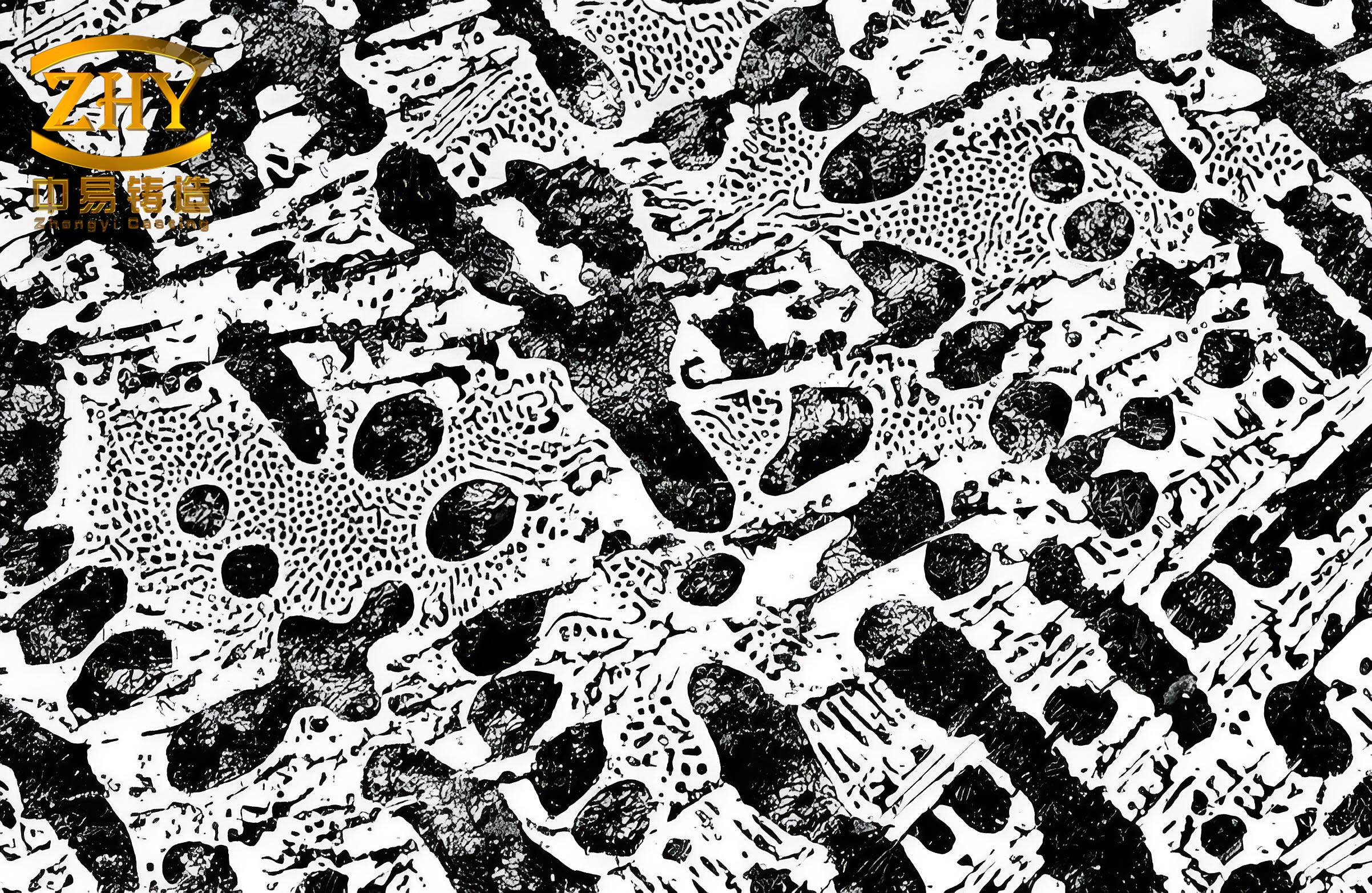
Our experimental work began with the selection of raw materials, including Meishan pig iron, ferrochromium, ferromanganese (with manganese content around 65%), rare earth-silicon-iron alloy (containing approximately 30% rare earth elements), copper, and scrap steel. The initial melting was conducted in a medium-frequency induction furnace with a capacity of 50 kg, using 40% Meishan pig iron and 60% scrap steel to produce iron blocks with a baseline composition. The chemical analysis of these blocks showed carbon (C) at 3.2%, silicon (Si) at 0.5%, manganese (Mn) at 5.0%, phosphorus (P) below 0.1%, and sulfur (S) below 0.05%. These blocks were then re-melted in a smaller 10 kg induction furnace, where alloying elements such as manganese, chromium, and copper were added based on orthogonal design requirements. The molten white cast iron was heated to 1500–1550°C, treated with rare earth-silicon-iron inoculant for modification, and poured into sand molds to produce test specimens.
The casting process employed green sand molds, and the specimens included impact test blocks (10 mm × 10 mm × 55 mm) and samples for metallographic examination. The impact toughness (ak) was measured using a Charpy impact tester after lightly grinding the surfaces, while hardness was determined with a Rockwell hardness tester (scale HRC). Microhardness of different phases, including carbides and matrix, was assessed using a microhardness tester. Microstructural analysis was performed with an optical microscope to observe phases and quantify their volume percentages. This comprehensive testing allowed us to evaluate the performance of white cast iron under various compositional adjustments.
To systematically analyze the effects of key elements, we designed an orthogonal experiment based on an L16 array, focusing on factors such as carbon (C), manganese (Mn), chromium (Cr), copper (Cu), and rare earth (RE) content. Each factor was tested at multiple levels to identify optimal ranges for white cast iron properties. The experimental matrix and results are summarized in Table 1, which outlines the combinations and corresponding measurements of hardness and impact toughness. This orthogonal approach enabled us to disentangle the individual and interactive influences on white cast iron behavior, providing a robust foundation for optimization.
| Experiment No. | C (%) | Mn (%) | Cr (%) | Cu (%) | RE (%) | Hardness (HRC) | Impact Toughness (J/cm²) |
|---|---|---|---|---|---|---|---|
| 1 | 2.8 | 4.0 | 0.0 | 0.0 | 0.0 | 52.3 | 4.8 |
| 2 | 2.8 | 5.0 | 0.5 | 0.5 | 0.2 | 55.1 | 5.2 |
| 3 | 2.8 | 6.0 | 1.0 | 1.0 | 0.4 | 57.8 | 4.9 |
| 4 | 2.8 | 7.0 | 1.5 | 1.5 | 0.6 | 59.5 | 4.5 |
| 5 | 3.0 | 4.0 | 0.5 | 1.0 | 0.6 | 56.2 | 5.0 |
| 6 | 3.0 | 5.0 | 0.0 | 1.5 | 0.4 | 58.9 | 5.5 |
| 7 | 3.0 | 6.0 | 1.5 | 0.0 | 0.2 | 60.3 | 5.1 |
| 8 | 3.0 | 7.0 | 1.0 | 0.5 | 0.0 | 61.0 | 4.7 |
| 9 | 3.2 | 4.0 | 1.0 | 1.5 | 0.2 | 58.5 | 4.9 |
| 10 | 3.2 | 5.0 | 1.5 | 1.0 | 0.0 | 59.8 | 4.6 |
| 11 | 3.2 | 6.0 | 0.0 | 0.5 | 0.6 | 57.2 | 5.3 |
| 12 | 3.2 | 7.0 | 0.5 | 0.0 | 0.4 | 60.5 | 4.8 |
| 13 | 3.4 | 4.0 | 1.5 | 0.5 | 0.4 | 59.0 | 4.7 |
| 14 | 3.4 | 5.0 | 1.0 | 0.0 | 0.6 | 61.2 | 4.5 |
| 15 | 3.4 | 6.0 | 0.5 | 1.5 | 0.0 | 58.8 | 5.0 |
| 16 | 3.4 | 7.0 | 0.0 | 1.0 | 0.2 | 60.0 | 4.6 |
The orthogonal results were supplemented with repeated trials to confirm the effects of manganese, copper, and rare earth, particularly at a fixed carbon content of 3.0%. Additionally, practical trials involved casting actual grinding balls with diameters of 50 mm and 100 mm using metal molds, followed by air cooling or sand burying cooling. These balls exhibited surface hardness values of 58–60 HRC for air-cooled and 56–58 HRC for sand-cooled conditions, demonstrating the applicability of white cast iron in real-world scenarios. The data from these experiments formed the basis for our analysis, which we present in detail below, focusing on each element’s role in shaping the properties of white cast iron.
In white cast iron, the microstructure primarily consists of hard carbides embedded in a metallic matrix. The distribution and morphology of these carbides, along with the matrix composition, dictate mechanical properties such as hardness and toughness. Our study zeroed in on carbon, manganese, chromium, copper, and rare earth as critical variables. Silicon and phosphorus were controlled at low levels (Si < 0.6%, P < 0.1%, S < 0.05%) to minimize brittleness and avoid the formation of undesirable graphite phases. The following subsections delve into the influence of each element, supported by data trends and mechanistic explanations.
Carbon’s Influence on White Cast Iron: Carbon is a fundamental element in white cast iron, governing carbide volume and matrix characteristics. From our orthogonal data, we observed that carbon content significantly affects hardness and impact toughness. As carbon increases, the volume fraction of carbides rises, leading to higher overall hardness but often at the expense of toughness due to increased carbide continuity. We formulated a relationship to approximate hardness (H) as a function of carbon content (C in wt.%), based on regression of our data: $$ H = 45.2 + 4.5C – 0.8C^2 $$ where H is in HRC. This quadratic model suggests an optimal carbon range for balancing properties in white cast iron. At lower carbon levels (below 3.0%), carbides are less continuous, resulting in higher impact toughness (around 5.0 J/cm²), while hardness remains moderate (50–55 HRC). Above 3.0%, carbide networks become extensive, causing a drop in toughness to 4.5–4.8 J/cm², even as hardness peaks near 60 HRC. For grinding ball applications, where resistance to fracture is crucial, we recommend a carbon content of approximately 3.0% in white cast iron to achieve a good trade-off, yielding hardness around 58 HRC and impact toughness above 5.0 J/cm².
Manganese’s Role in White Cast Iron: Manganese is a strong carbide-forming element that also influences matrix transformation. Our experiments showed that manganese content above 5.0% promotes the formation of austenite in the matrix, enhancing both hardness and toughness through solid solution strengthening and carbide refinement. The effect on microhardness of carbides (HC) and matrix (HM) can be expressed linearly: $$ HC = 1200 + 50Mn $$ $$ HM = 300 + 40Mn $$ where microhardness is in HV units, and Mn is in wt.%. At low manganese levels (around 4.0%), the white cast iron matrix is predominantly pearlitic, offering lower hardness (52–55 HRC) and reduced toughness. As manganese increases to 5.5–6.0%, austenitic-martensitic matrices emerge, boosting hardness to 58–61 HRC and impact toughness to 5.0–5.5 J/cm². However, excessive manganese (above 7.0%) can lead to retained austenite, which may cause cracking under service conditions due to work hardening. Thus, for medium manganese white cast iron grinding balls, an optimal manganese content of 5.5% is advised to maximize wear resistance without compromising structural integrity.
Chromium’s Impact on White Cast Iron: Chromium is another carbide former, often used to enhance hardness in white cast iron. However, our results indicate that chromium addition, particularly above 0.5%, increases carbide and matrix microhardness but markedly reduces impact toughness. This is attributed to the formation of complex carbides like (Fe,Cr)₃C, which create brittle networks. A simple linear correlation shows toughness (ak in J/cm²) declining with chromium: $$ ak = 5.5 – 1.2Cr $$ where Cr is in wt.%. Given that grinding balls require adequate toughness to prevent breakage, we discourage adding chromium to this white cast iron formulation. Its presence, even at 1.0%, can lower impact values to below 4.8 J/cm², increasing the risk of fragmentation during milling operations.
Copper’s Contribution to White Cast Iron: Copper serves as a pearlite refiner and hardenability enhancer in white cast iron. Our data reveals that small copper additions (0.5–1.0%) improve both hardness and impact toughness by promoting a finer matrix structure and increasing sectional uniformity. The beneficial effect can be modeled as: $$ H = 56.0 + 2.0Cu $$ $$ ak = 4.9 + 0.6Cu $$ where Cu is in wt.%. Copper dissolves in the matrix, strengthening it without forming detrimental phases at these levels. In trials with larger-diameter balls, copper’s role in minimizing property gradients becomes even more pronounced, making it valuable for industrial-scale production of white cast iron grinding balls. We recommend a copper content of 0.5–1.0% to achieve hardness around 59 HRC and impact toughness of 5.0–5.5 J/cm² in this white cast iron alloy.
Rare Earth Modification of White Cast Iron: Rare earth elements, introduced via rare earth-silicon-iron inoculant, play a pivotal role in modifying white cast iron microstructure. They purify the melt, refine grains, and alter carbide morphology from continuous to discontinuous networks. Our experiments show that an optimal rare earth addition of 0.2–0.4% increases carbide and matrix microhardness while maintaining impact toughness. Beyond 0.4%, the silicon introduced by the inoculant can degrade properties, as seen in the linear trends: $$ H = 58.5 + 5.0RE – 10.0RE^2 $$ $$ ak = 5.1 – 1.5RE \text{ for } RE > 0.4\% $$ where RE is in wt.%. The modification mechanism involves rare earths forming high-melting-point compounds (e.g., RE₂O₃, RE₂S₃) that act as nucleation sites for carbides, disrupting their network. This treatment is essential for enhancing the toughness of white cast iron without sacrificing hardness, making it suitable for grinding ball applications where shock loads are common.
To consolidate the effects of these elements, Table 2 summarizes the optimal ranges and their impacts on white cast iron properties. This synthesis guides the formulation of a high-performance medium manganese white cast iron for grinding balls.
| Element | Optimal Range (wt.%) | Effect on Hardness (HRC) | Effect on Impact Toughness (J/cm²) | Key Mechanism in White Cast Iron |
|---|---|---|---|---|
| Carbon (C) | 2.9–3.1 | Increases to ~58 | Maintains ~5.0 | Controls carbide volume and continuity |
| Manganese (Mn) | 5.3–5.7 | Increases to ~60 | Enhances to 5.0–5.5 | Promotes austenitic matrix and refines carbides |
| Chromium (Cr) | 0.0–0.2 | Slight increase | Decreases significantly | Forms brittle carbides; not recommended |
| Copper (Cu) | 0.5–1.0 | Increases to ~59 | Improves to 5.0–5.5 | Refines matrix and enhances hardenability |
| Rare Earth (RE) | 0.2–0.4 | Increases to ~60 | Maintains ~5.0 | Modifies carbide distribution and purifies melt |
The interaction between these elements further refines the white cast iron properties. For instance, the combination of manganese and rare earth synergistically improves toughness by fostering a discontinuous carbide network within an austenitic-martensitic matrix. We derived a composite performance index (PI) to quantify the overall suitability of white cast iron for grinding balls, defined as: $$ PI = \frac{H \times ak}{100} $$ where H is hardness in HRC and ak is impact toughness in J/cm². Based on our data, the optimal composition yields a PI above 2.9, indicating a balanced material for high-wear applications.
In practical terms, the recommended white cast iron composition for grinding balls is: C ≈ 3.0%, Mn ≈ 5.5%, Si < 0.6%, Cu 0.5–1.0%, and RE 0.2–0.4%, with P and S each below 0.05%. This formulation, after rare earth modification, achieves as-cast properties of hardness around 60 HRC and impact toughness above 5.0 J/cm². Such white cast iron offers a cost-effective alternative to traditional materials, potentially reducing wear rates by up to 30% in milling operations, as extrapolated from industrial comparisons.
Our findings underscore the importance of microstructural engineering in white cast iron. By tailoring composition and employing rare earth inoculation, we can transform white cast iron into a superior material for grinding balls, mitigating issues like excessive wear and breakage. Future work could explore heat treatment variations to further optimize matrix phases, such as through austempering to produce bainitic structures in white cast iron. Additionally, scaling up production and conducting field trials in ball mills will validate the long-term performance of this medium manganese white cast iron.
In conclusion, this research demonstrates that medium manganese white cast iron, when properly alloyed and modified with rare earths, exhibits an excellent combination of hardness and toughness for grinding ball applications. The orthogonal experimental approach provided clear insights into element effects, guiding the development of an optimal white cast iron grade. We believe that adopting this white cast iron formulation in industry can lead to significant economic savings by extending service life and reducing downtime. The versatility of white cast iron, as shown here, highlights its potential beyond traditional uses, paving the way for advanced wear-resistant components in harsh environments.