
As a professional engaged in the development of wear-resistant materials for industrial applications, I have long been interested in the potential of white cast iron. Its inherent high hardness and excellent abrasion resistance make it a prime candidate for components subjected to severe wear, such as grinding balls in pulverizers. However, the widespread application of white cast iron, particularly in large-scale equipment, has been historically limited by its characteristically low toughness and impact resistance. This brittleness stems directly from its as-cast microstructure, where the continuous network of eutectic carbides acts as a brittle skeleton, severely compromising the integrity of the matrix. The presence of inherent casting defects like micro-shrinkage and cracks further exacerbates this issue, leading to premature failure through fracture and excessive sphericity loss during service.
The conventional approach to mitigate these shortcomings has largely revolved around high-alloying (e.g., with substantial amounts of chromium, molybdenum, or nickel) coupled with sophisticated heat treatments. While effective to a degree, this strategy significantly escalates material costs and relies on alloying elements that may be scarce or expensive. This economic constraint prompted me to explore an alternative, more cost-effective pathway: thermomechanical processing, specifically forging. The premise is compelling. If the detrimental carbide network in white cast iron could be broken up and its distribution modified through plastic deformation, a dramatic improvement in toughness might be achievable without sacrificing its core wear-resistant properties. This document details my first-person experimental investigation and practical implementation of forged low-carbon alloyed white cast iron grinding balls.
1. Foundational Principles and Material Design
The successful forging of white cast iron hinges on a precise understanding of its composition and phase behavior. Unlike ductile steels, the plasticity of white cast iron is highly temperature-dependent. The key is to exploit the temperature window where the hard, brittle carbides soften sufficiently to co-deform with the matrix. Research indicates that the hardness of cementite (Fe$_3$C) drops from over 1000 HV at room temperature to approximately 500 HV at 900°C, closely approaching the hardness of the austenitic matrix at forging temperatures. This reduction in hardness disparity is critical for enabling plastic flow.
For this project, I selected a low-carbon, low-alloy composition to ensure adequate forgeability while maintaining target hardness. The primary design considerations for each element were as follows:
- Carbon (C): The most critical element. It primarily controls the volume fraction of carbides. A higher carbon content increases hardness but decreases toughness and forgeability. I aimed for a hypoeutectic composition to ensure a manageable amount of eutectic carbide. The carbon equivalent (CE) considering carbide-forming elements is a useful metric:
$$ CE = C + 0.04(Cr + Mo + V) $$
Our target CE was kept below 4.3% to avoid excessive carbide volume. - Silicon (Si): A strong graphitizer. To maintain a purely white iron structure and prevent graphite flotation during melting, silicon was kept at a low level.
- Manganese (Mn): Added to increase hardenability of the matrix and to counteract the deleterious effects of sulfur by forming MnS inclusions.
- Chromium (Cr): A moderate carbide-former. A small addition was used to enhance hardenability, improve wear resistance by stabilizing carbides, and slightly refine the as-cast structure, which can benefit subsequent hot workability.
- Sulfur (S) & Phosphorus (P): Strictly minimized. These elements form low-melting-point eutectics (e.g., FeS) that can cause hot shortness (intergranular failure) during forging.
The finalized target chemical composition for our white cast iron is summarized in Table 1.
| C | Si | Mn | Cr | S | P | Fe |
|---|---|---|---|---|---|---|
| 2.6 – 3.0 | ≤ 0.8 | 0.6 – 1.2 | 0.5 – 1.5 | ≤ 0.05 | ≤ 0.08 | Balance |
2. Manufacturing Process: From Melting to Forging
The production was conducted under industrial conditions to validate the process scalability. The sequence is outlined below.
2.1 Melting and Casting
Raw materials comprising steel scrap, pig iron, ferromanganese, and ferrochromium were charged into a 500 kg medium-frequency induction furnace. Melting was carried out with careful temperature control. The melt was superheated to approximately 1500°C to ensure proper fluidity and homogeneity. Upon reaching the target temperature and confirming a preliminary composition analysis, the furnace was powered off. Final deoxidation was performed using aluminum, followed by a rare-earth based inoculant treatment in the ladle to refine the solidification structure. After a brief holding period for slag removal, the molten white cast iron was poured into green sand molds to produce elliptical ball blanks. The geometry of the blank—with a major axis of approximately 110 mm and a minor axis of 100 mm—was designed to facilitate subsequent forging into a sphere. Castings were shaken out after 30 minutes and inspected. Blanks with surface defects like shrinkage cavities, cracks, or excessive flash were rejected.
2.2 Forging Procedure and Parameters
The qualified white cast iron blanks were loaded into a reverberatory furnace for heating. The forging temperature window is exceptionally narrow for this material. Excessive temperature leads to incipient melting or severe grain growth, destroying plasticity. Insufficient temperature causes the carbides to regain their brittleness, leading to cracking. Based on prior research and preliminary trials, I established the following thermal-mechanical regime:
- Heating: Slow and uniform heating to an austenitizing temperature of 1050 ± 20°C.
- Soaking: A holding time of 60-90 minutes at temperature to ensure complete austenitization and temperature uniformity throughout the blank.
- Forging: The hot blanks were transferred to a pneumatic hammer for die forging. The forging sequence followed a “light-heavy-light” principle. Initial light blows allow the metal to begin flowing and adapt to the die. This is followed by heavier blows to achieve the final shape and the desired true strain. Finally, light finishing blows ensure dimensional accuracy. A critical step is “rolling” or working the ball along different axes to ensure microstructural homogeneity and a truly spherical shape.
- Forging Ratio (Reduction): This is a key parameter quantifying the amount of plastic deformation. It was calculated based on the cross-sectional area change from the elliptical blank to the final spherical ball. The forging ratio (φ) was maintained between 1.4 and 1.6, corresponding to an area reduction of 30-40%.
$$ \varphi = \frac{A_0}{A_f} $$
$$ \text{Reduction in area (\%)} = \left(1 – \frac{1}{\varphi}\right) \times 100\% $$
where $A_0$ is the initial cross-sectional area and $A_f$ is the final area. - Finishing Temperature: Forging was terminated at a temperature no lower than 850°C to avoid the re-precipitation of carbides at grain boundaries in a damaging network.
| Parameter | Value / Range | Rationale | |
|---|---|---|---|
| Heating Temperature | 1050 ± 20°C | Full austenitization, optimal carbide softness. | |
| Soaking Time | 60-90 min | Temperature homogenization, phase equilibrium. | |
| Start Forging Temp. | > 1000°C | Maximum material plasticity. | |
| Finish Forging Temp. | ≥ 850°C | Prevent brittle carbide network formation during cooling. | |
| Forging Ratio (φ) | 1.4 – 1.6 | Sufficient strain to break carbide network, not excessive to cause defects. | |
| Deformation Strategy | Multi-directional (Light-Heavy-Light + Rolling) | Ensure uniform deformation, isotropic properties, and sphericity. |
3. Post-Forging Treatments and Microstructural Evolution
The as-forged white cast iron possesses a deformed but unstable microstructure. The subsequent cooling rate profoundly influences the final matrix structure (pearlite, bainite, martensite) and, consequently, the mechanical properties. I investigated several post-forging cooling paths:
- Air Cooling (Normalizing): The balls are left to cool in still air. This produces a predominantly pearlitic matrix.
- Oil Quenching: The balls are rapidly quenched in oil immediately after forging to produce a hard martensitic matrix.
- Austempering: The balls are quenched from the forging temperature into a salt bath held at an intermediate temperature (e.g., 250-350°C), held to allow isothermal transformation, then air-cooled. This aims to produce a bainitic matrix.
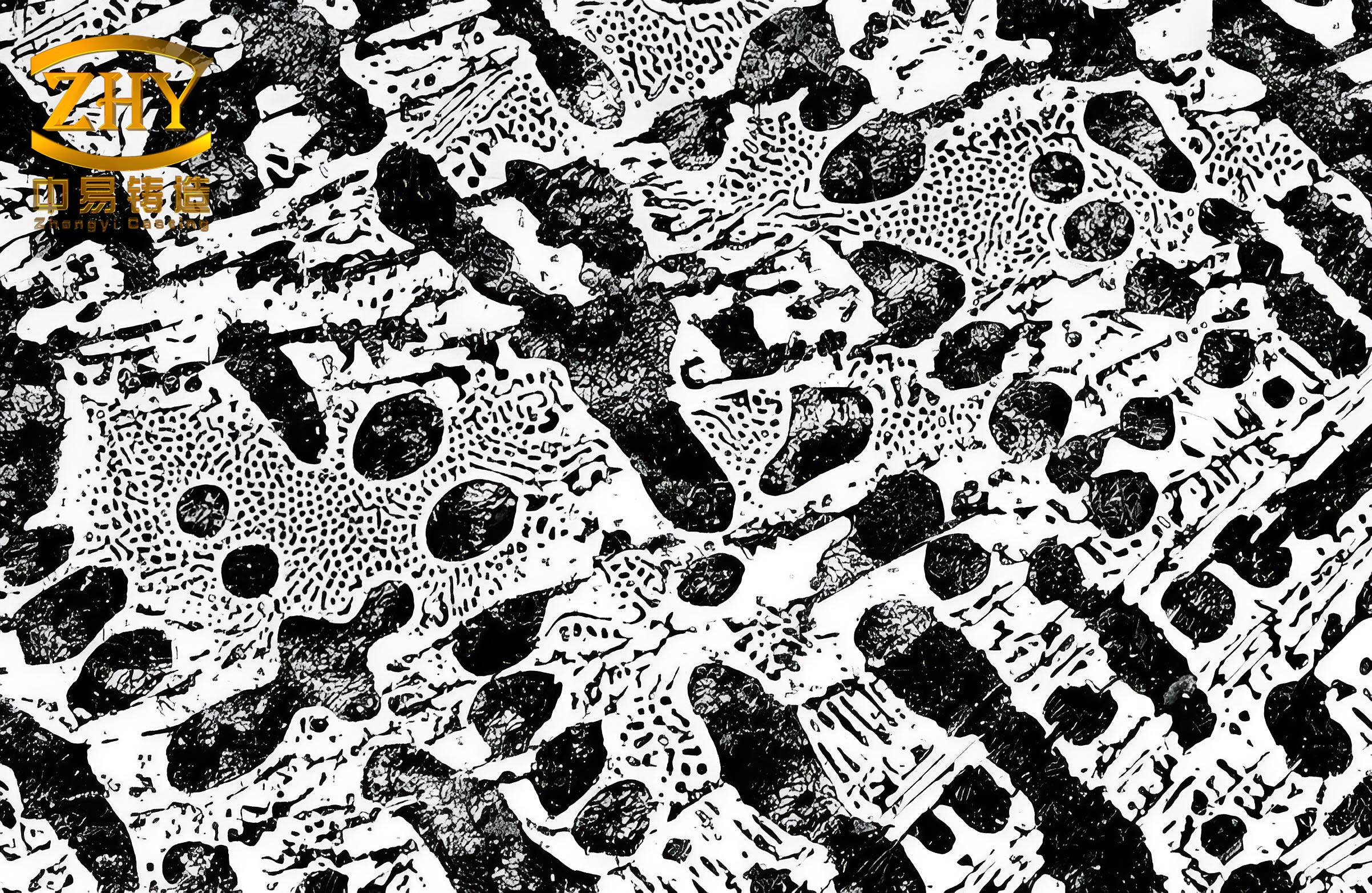
The fundamental metallurgical change induced by forging is the fragmentation of the continuous eutectic carbide network. Under the compressive and shear stresses of forging, the brittle carbide skeleton is broken into discrete, isolated particles. Concurrently, the austenitic grains are refined by dynamic recrystallization, and casting pores and micro-cracks are healed (“forged shut”). This transformation can be conceptually modeled. The mean free path (λ) for crack propagation, which is initially limited by the interdendritic carbide spacing, is increased after forging as the carbides become obstacles within a more continuous, ductile matrix. The Hall-Petch relationship also suggests strengthening from grain refinement:
$$ \sigma_y = \sigma_0 + k_y d^{-1/2} $$
where $d$ is the refined grain size post-forging.
4. Performance Evaluation: Property Testing and Analysis
Samples were extracted from both as-cast blanks and finished forged & heat-treated balls for comparative analysis. The results unequivocally demonstrate the benefits of thermomechanical processing on white cast iron.
4.1 Hardness and Toughness
Hardness was measured radially from the surface to the center of a sectioned Φ100 mm ball. Impact toughness was assessed using unnotched Charpy specimens (10x10x55 mm) machined from the core region.
| Material Condition | Average Hardness, HRC | Impact Toughness, J/cm² | Microstructural Description |
|---|---|---|---|
| As-Cast State | 50 – 53 | 4 – 6 | Continuous ledeburite network (eutectic carbides + pearlite). |
| Forged + Air Cooled | 52 – 55 | 10 – 12 | Fragmented, isolated carbides in a pearlitic matrix. |
| Forged + Oil Quenched | 58 – 62 | 8 – 10 | Fragmented carbides in a martensitic matrix (may contain retained austenite). |
| Forged + Austempered | 55 – 58 | 14 – 16 | Fragmented carbides in a bainitic matrix. Offers the best toughness/hardness combination. |
The hardness profile across the radius of a forged ball was remarkably uniform, a testament to the homogeneous deformation achieved. The variation was within ±2 HRC from surface to center. The volume-averaged hardness closely matched the arithmetic mean, indicating no significant soft core or hard case—a common issue in heat-treated large castings.
The most significant finding was the dramatic, often two-to-three fold, increase in impact toughness after forging, regardless of the final heat treatment. This confirms that the primary toughening mechanism is the microstructural modification induced by plastic deformation itself, not merely the final matrix transformation.
4.2 The Role of Post-Forging Cooling
Table 3 clearly shows that the cooling method tailors the final property set. Austempering yielded the optimal synergy of high hardness and superior toughness for this grade of white cast iron. The isothermal transformation to bainite provides a strong yet relatively ductile matrix that complements the hard, fragmented carbides. This combination is ideal for high-impact abrasive wear conditions.
The effect of cooling rate ($\dot{T}$) on the final hardness can be approximated for the matrix using constitutive equations for phase transformation kinetics, although the presence of massive carbides makes precise prediction complex. Empirically, we observe:
$$ \text{Hardness (HRC)} \approx f(\dot{T}, \text{Carbon in solution}) $$
where a higher $\dot{T}$ (quenching) traps more carbon in a supersaturated martensite, giving higher hardness but lower toughness than the slower bainitic transformation.
5. Industrial Field Trial in a Power Plant
The ultimate validation for any engineering material is its performance in real service. Approximately 50 tons of Φ100 mm forged white cast iron balls, subjected to an austempering treatment, were loaded into the coal pulverizers (DTM350/600 type ball mills) of a major thermal power plant. These mills are large, low-speed units where grinding balls are subjected to significant impact forces in addition to abrasion. The trial ran for over 12 months of continuous operation.
During a scheduled maintenance shutdown, the mills were emptied, and a statistical sampling of the charge was analyzed. The key performance metrics assessed were:
- Breakage Rate: The mass fraction of balls broken into fragments.
- Sphericity Loss Rate: The mass fraction of balls that had deformed significantly from their original spherical shape (major/minor axis ratio > 1.1).
- Wear Rate (Consumption): The mass of new balls added over time to maintain the charge level, relative to the processed coal tonnage.
| Performance Metric | Measured Value | Comparison to Previous Standard Alloyed Steel Balls |
|---|---|---|
| Breakage Rate (by mass) | < 0.05% (Negligible) | Significantly lower (Previous alloy showed periodic catastrophic failure). |
| Sphericity Loss Rate (by mass) | 3.2% | Marked improvement (Reported losses for other white cast iron balls could exceed 30%). |
| Estimated Wear Rate | < 600 g/ton of coal | At least 15% reduction in consumption. |
| Overall Service Life | Extended by >20% | Reduced mill downtime for ball charging and system cleaning. |
The results were highly encouraging. The forged white cast iron balls demonstrated exceptional integrity with virtually no breakage. The sphericity loss was minimal, ensuring consistent grinding efficiency. The wear rate reduction translated directly into lower operating costs and less frequent maintenance intervals. The plant’s annual consumption of grinding media showed a noticeable decrease following the introduction of this forged white cast iron product.
6. Discussion: The Synergy of Forging and White Cast Iron Metallurgy
This project substantiates that forging is a powerful and viable method to engineer the properties of white cast iron. The process fundamentally alters the material’s “Achilles’ heel”—its brittle carbide network. The property enhancements are not merely incremental but transformative, enabling the application of this cost-effective material in demanding, high-impact environments where it was previously considered unsuitable.
The economic calculus is favorable. While the forging step adds processing cost compared to simple casting, it eliminates the need for high percentages of expensive alloying elements like chromium or nickel. The total cost of a forged, low-alloy white cast iron ball is competitive with, or lower than, that of a high-alloy cast white iron or through-hardened steel ball, while offering superior or comparable performance in terms of wear life and reliability.
Further optimization is possible. The composition (e.g., precise Cr, Mo, or Cu additions) can be fine-tuned to widen the forging window or enhance the hardenability for thicker sections. The forging and austempering parameters can be optimized using advanced modeling to achieve specific microstructural targets, such as controlling the aspect ratio of the fragmented carbide particles.
7. Conclusions
Based on the comprehensive experimental work and successful field trial, I can draw the following definitive conclusions:
- Forgeability is Achievable: Low-carbon, low-alloy white cast iron possesses a sufficient hot workability window (1050°C to 850°C) to undergo significant plastic deformation via forging when process parameters are strictly controlled.
- Microstructural Transformation: Forging effectively breaks the continuous eutectic carbide network in white cast iron, leading to a homogeneous dispersion of hard carbide particles within a refined metallic matrix. This is the primary mechanism for property enhancement.
- Dramatic Property Improvement: The forging process, followed by appropriate heat treatment (particularly austempering), results in a simultaneous increase in both hardness and, most importantly, impact toughness. Toughness can be increased by 200-300% compared to the as-cast state.
- Superior In-Service Performance: Forged white cast iron grinding balls exhibit excellent performance in large ball mills: negligible breakage, minimal loss of sphericity (≈3%), and a wear rate reduction of at least 15% compared to conventional materials.
- Economic and Practical Viability: The manufacturing process is scalable under industrial conditions. The combination of low-alloy content, forging, and austempering provides a cost-effective, high-performance solution for heavy-duty grinding applications, offering a compelling alternative to both traditional high-alloy white cast irons and forged steel balls.
In summary, thermomechanical forging unlocks the latent potential of white cast iron, transforming it from a brittle casting into a tough, reliable, and highly wear-resistant engineered component. This approach represents a significant advancement in the application of white cast iron for demanding industrial wear parts.